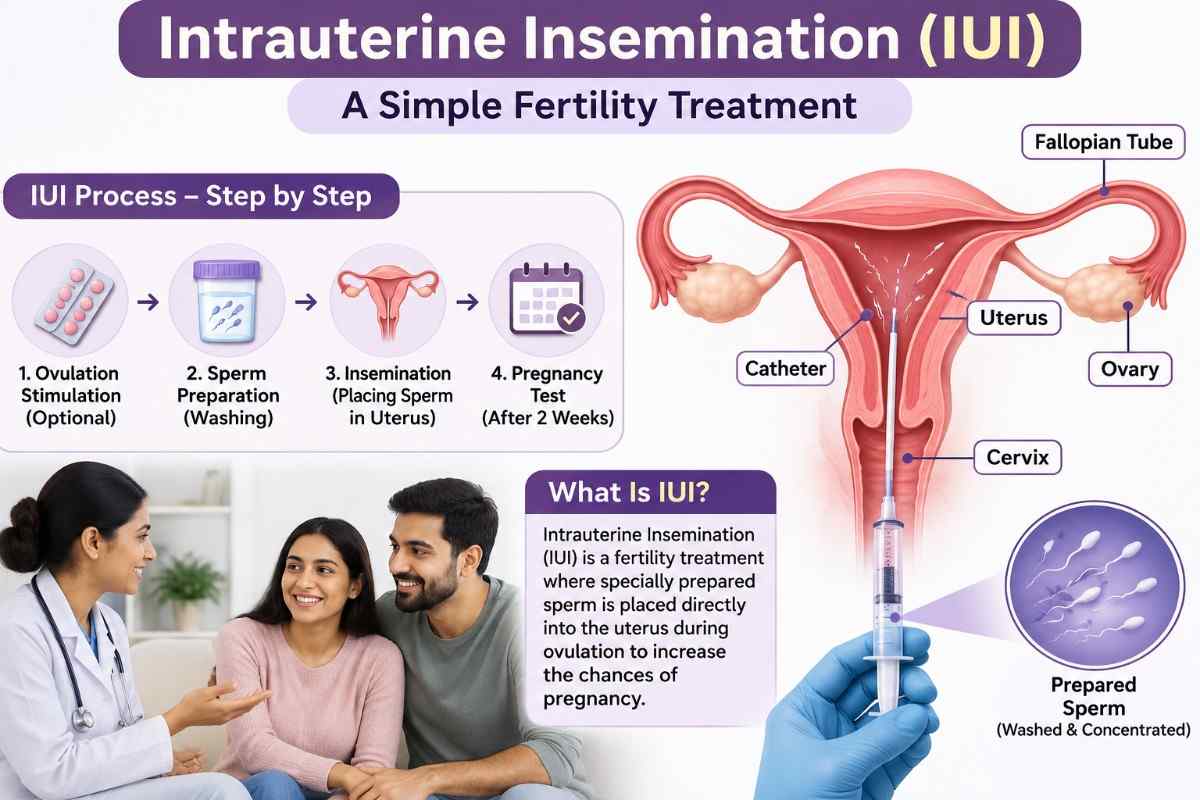
Starting a family is an important journey, but getting pregnant does not always happen naturally or as quickly as expected. For people experiencing fertility difficulties, several medical treatments can help improve their chances of conception. One commonly used option is Intrauterine Insemination (IUI).
IUI is a fertility treatment that involves placing specially prepared sperm directly into the uterus around the time of ovulation. This helps healthy sperm get closer to the egg, potentially increasing the chance of fertilization.
Unlike some advanced fertility treatments, IUI is relatively simple, minimally invasive, and usually does not require surgery or anesthesia. It can be performed using a partner’s sperm or donor sperm, depending on individual circumstances.
Let’s explore everything you need to know about intrauterine insemination, including its procedure, preparation, benefits, risks, costs, and recovery.
What Is Intrauterine Insemination (IUI)?
Intrauterine insemination (IUI) is a fertility treatment in which washed and concentrated sperm are placed directly inside the uterus using a thin, flexible tube called a catheter.
The procedure is carefully timed around ovulation, when an ovary releases an egg. By placing sperm closer to the fallopian tubes, IUI reduces the distance sperm must travel to reach the egg.
IUI is also commonly known as artificial insemination. It can use sperm from a woman’s partner or a screened donor.
One important thing to understand is that IUI does not involve fertilizing an egg outside the body. Fertilization still happens naturally inside the reproductive system, usually in a fallopian tube.
How Does IUI Work?
During natural conception, sperm travel through the vagina, pass through the cervix and uterus, and eventually reach the fallopian tubes, where fertilization may occur.
IUI makes this journey shorter by placing prepared sperm directly into the uterus.
The process generally works in the following way:
- Ovulation Monitoring: The fertility specialist monitors the menstrual cycle to identify when an egg is about to be released.
- Sperm Collection: A semen sample is collected from the partner or obtained from a donor sperm bank.
- Sperm Washing: The sample is processed in a laboratory to separate healthy, motile sperm from seminal fluid and other unwanted components.
- Sperm Insemination: The prepared sperm is placed into the uterus through a thin catheter.
- Fertilization: The sperm travels toward the fallopian tube, where it may meet and fertilize the egg.
- Implantation: If fertilization occurs, the resulting embryo may travel to the uterus and attach to its lining.
Intrauterine insemination helps sperm get closer to the egg, but it cannot guarantee fertilization or pregnancy.
Who Needs Intrauterine Insemination (IUI)?
IUI may be recommended for individuals or couples who have difficulty conceiving through natural intercourse or who need assistance using donor sperm.
Some common situations in which Intrauterine insemination may be considered include:
- Unexplained Infertility: When fertility testing does not identify a clear reason for difficulty conceiving.
- Mild Male Factor Infertility: When sperm count or movement is mildly reduced but enough healthy sperm are available after processing.
- Cervical Problems: When cervical mucus or other cervical factors make it difficult for sperm to reach the uterus.
- Ejaculation Difficulties: When a male partner has difficulty ejaculating during intercourse.
- Donor Sperm Use: When an individual or couple requires donor sperm to achieve pregnancy.
- Sexual or Physical Difficulties: When medical or physical conditions make vaginal intercourse difficult or impossible.
IUI is not suitable for everyone. A fertility specialist will evaluate reproductive health, medical history, and test results before recommending treatment.
Who Is a Good Candidate for IUI?
A person may be a suitable candidate for Intrauterine insemination if they have:
- At least one healthy, open fallopian tube.
- Regular ovulation or a condition that can be managed with ovulation-inducing medication.
- A uterus that can support pregnancy.
- An adequate number of healthy, moving sperm after sperm preparation.
- No major reproductive condition that would make IUI unlikely to succeed.
Age, ovarian reserve, sperm quality, and the underlying cause of infertility also influence whether Intrauterine insemination is a reasonable treatment option.
Who Should Avoid or May Not Benefit From IUI?
IUI is not always the most effective fertility treatment. A specialist may recommend another approach when certain reproductive conditions are present.
Examples include:
- Blocked Fallopian Tubes: Sperm and egg cannot meet normally if both fallopian tubes are blocked.
- Severe Male Factor Infertility: Very low sperm count or significant sperm abnormalities may make Intrauterine insemination less effective.
- Severe Endometriosis: Moderate to severe endometriosis can reduce the likelihood of successful conception through Intrauterine insemination.
- Poor Ovarian Reserve: A reduced number of available eggs may affect treatment outcomes.
- Advanced Reproductive Age: Age-related changes in egg quality and quantity can lower IUI success rates.
- Certain Uterine Conditions: Some structural abnormalities may interfere with implantation or pregnancy.
In these situations, IVF or other fertility treatments may offer a better chance of pregnancy.
Types of Intrauterine Insemination (IUI)
IUI can be performed using different types of sperm and treatment approaches.
1. Partner Sperm IUI
This method uses sperm collected from the woman’s male partner. The sample is processed in a fertility laboratory before being placed into the uterus.
2. Donor Sperm IUI
Donor sperm is used when a person or couple cannot or does not wish to use partner sperm. Donor sperm is generally obtained through an appropriate sperm bank or licensed fertility service and undergoes required screening.
3. Natural Cycle IUI
Natural cycle Intrauterine insemination is performed without medication to stimulate the ovaries. The fertility specialist monitors the natural menstrual cycle and schedules insemination around ovulation.
4. Stimulated Cycle IUI
In this approach, fertility medications are used to encourage the development of one or more mature eggs. Ultrasound scans and sometimes blood tests help monitor the ovaries and reduce the risk of developing too many follicles.
The appropriate approach depends on fertility test results and the individual’s medical needs.
How to Prepare for an IUI Procedure
Proper preparation helps the fertility team choose the right timing and treatment approach.
Before starting Intrauterine insemination, your doctor may recommend several tests and assessments.
1. Fertility Consultation: Your specialist reviews your medical history, menstrual cycle, previous pregnancies, and any history of fertility problems.
2. Ovulation Assessment: Blood tests, ultrasound scans, or ovulation predictor kits may help determine whether and when ovulation occurs.
3. Fallopian Tube Evaluation: A test such as a hysterosalpingogram (HSG) may be performed to check whether at least one fallopian tube is open.
4. Semen Analysis: If partner sperm will be used, a semen analysis helps assess sperm count, movement, and shape.
5. Infection Screening: Appropriate screening may be recommended for both partners, particularly when donor sperm is used.
6. Medication Review: Your doctor reviews medications and supplements and may prescribe fertility medication if needed.
7. Lifestyle Preparation: Maintaining a balanced diet, avoiding smoking, limiting alcohol, and taking recommended prenatal supplements such as folic acid can support preconception health.
Step-by-Step IUI Procedure
The IUI procedure is generally quick and is usually performed in a fertility clinic.
Here is what happens during the treatment.
Step 1: Monitoring Ovulation
The first step is identifying the right time for insemination.
Your fertility specialist may monitor follicle development through transvaginal ultrasound and blood tests. Some individuals may use ovulation predictor kits at home.
If fertility medication is prescribed, an injection may be used to trigger ovulation at a specific time.
Step 2: Collecting the Sperm Sample
On the day of the procedure, a sperm sample is collected from the partner or prepared donor sperm is obtained.
The sample is sent to the laboratory for processing.
Step 3: Washing the Sperm
Sperm washing is an important part of Intrauterine insemination.
The laboratory separates healthy, actively moving sperm from seminal fluid, dead sperm, and other unwanted material.
The final sample contains concentrated sperm suitable for insemination.
Step 4: Inserting the Catheter
The patient lies on an examination table, similar to a routine gynecological examination.
The doctor gently inserts a speculum into the vagina to visualize the cervix.
A thin, flexible catheter is then passed through the cervix into the uterus.
Step 5: Placing the Sperm
The prepared sperm sample is slowly introduced into the uterus through the catheter.
The catheter and speculum are carefully removed once the procedure is complete.
Step 6: Resting After the Procedure
Some clinics may recommend resting for a few minutes after insemination.
Most people can return home shortly afterward and resume their usual daily activities unless their doctor advises otherwise.
Does IUI Hurt?
IUI is generally considered a minimally invasive procedure, and most people experience little or no significant pain.
However, some may experience:
- Mild menstrual-like cramps during or after insemination.
- Slight discomfort when the speculum is inserted.
- Temporary pressure in the lower abdomen.
- Light spotting after the procedure.
The experience can vary depending on individual sensitivity and cervical anatomy.
Severe pain is not expected. Contact your fertility clinic if you experience significant or worsening pain, fever, or heavy bleeding.
How Long Does an IUI Procedure Take?
The actual insemination procedure usually takes around 5 to 10 minutes.
However, the complete clinic visit may take longer because of sperm preparation, paperwork, monitoring, and other necessary steps.
Most people can leave the clinic on the same day without needing an overnight hospital stay.
What Happens After IUI?
After insemination, the prepared sperm must travel through the reproductive system and potentially fertilize an egg.
If fertilization occurs, the resulting embryo may travel toward the uterus and implant into the uterine lining.
Not every IUI cycle results in fertilization or implantation.
During the waiting period, your doctor may recommend continuing prescribed fertility medications or progesterone support, depending on your treatment plan.
You can generally continue normal activities, but follow your clinic’s instructions regarding exercise, medication, and sexual activity.
Symptoms After IUI
Some people notice physical changes after IUI, while others experience no noticeable symptoms.
Possible symptoms include:
- Mild abdominal cramping.
- Light vaginal spotting.
- Breast tenderness.
- Bloating.
- Fatigue.
- Mild pelvic discomfort.
- Changes in vaginal discharge.
These symptoms do not necessarily indicate pregnancy. Some may result from ovulation, fertility medications, or hormonal changes.
A pregnancy test is the only reliable way to confirm whether the treatment worked.
When Should You Take a Pregnancy Test After IUI?
Most fertility specialists recommend taking a pregnancy test approximately 14 days after IUI, although the exact timing depends on the treatment protocol.
Testing too early may produce misleading results.
For example, if you received an hCG trigger injection, the remaining hormone can sometimes cause a false-positive pregnancy test for a period after treatment.
Follow your fertility clinic’s recommended testing date.
If your result is positive, contact your doctor for further evaluation and an ultrasound at the appropriate time.
IUI Success Rate: How Successful Is It?
The success rate of IUI varies from person to person. There is no single success percentage that applies to everyone.
Factors that influence the likelihood of pregnancy include:
- Age: Younger individuals generally have better pregnancy chances because egg quality and quantity tend to decline with age.
- Sperm Quality: Healthy sperm count and movement improve the possibility of fertilization.
- Fallopian Tube Health: At least one open and functional fallopian tube is generally necessary.
- Ovulation: Correctly identifying and timing insemination around ovulation is important.
- Underlying Fertility Condition: The reason for infertility can significantly affect treatment outcomes.
- Medication Use: Ovulation-stimulating medication may improve the chances for certain patients but can also increase the risk of multiple pregnancy.
Intrauterine insemination may require multiple treatment cycles. Your fertility specialist can estimate your chances based on your age, diagnosis, test results, and previous treatment history.
It is also important to distinguish between a positive pregnancy test, a clinical pregnancy, and a live birth when comparing success rates.
How Many IUI Cycles Are Usually Needed?
Some people become pregnant during their first IUI cycle, while others may need several attempts.
A fertility specialist may recommend trying approximately three to six cycles in suitable cases, depending on age, fertility diagnosis, and previous results.
However, continuing Intrauterine insemination indefinitely is not always beneficial.
If pregnancy does not occur after several attempts, your doctor may review the treatment plan and discuss whether IVF or another fertility option would be more appropriate.
Benefits of Intrauterine Insemination (IUI)
IUI offers several potential advantages for individuals and couples experiencing fertility difficulties.
- Minimally Invasive Procedure: Intrauterine insemination does not require surgery or general anesthesia.
- Short Treatment Time: The actual insemination procedure usually takes only a few minutes.
- Lower Cost Than IVF: Intrauterine insemination is generally less expensive than in vitro fertilization.
- Uses Partner or Donor Sperm: The procedure provides flexibility depending on individual fertility needs.
- No Egg Retrieval Required: Unlike IVF, IUI does not involve surgically collecting eggs.
- Less Complex Treatment: It generally involves fewer medical procedures than IVF.
- Natural Fertilization: Fertilization takes place inside the body rather than in a laboratory.
- Quick Recovery: Most people can return to their regular activities shortly after treatment.
Risks and Side Effects of IUI
Although IUI is generally considered safe, it is not completely free from risks.
Possible complications include:
- Mild Cramping: Temporary lower abdominal cramps may occur during or after the procedure.
- Light Spotting: Minor vaginal bleeding can occur due to cervical irritation.
- Infection: There is a small risk of infection following insemination.
- Multiple Pregnancy: Fertility medications can increase the possibility of twins or higher-order pregnancies.
- Ovarian Hyperstimulation Syndrome (OHSS): Certain fertility medications may overstimulate the ovaries, causing abdominal pain, bloating, and nausea.
- Ectopic Pregnancy: A pregnancy may occasionally develop outside the uterus, although this is uncommon.
- Emotional Stress: Repeated treatment cycles and waiting for pregnancy results can be emotionally challenging.
- Treatment Failure: IUI does not guarantee pregnancy, and some cycles may be unsuccessful.
Contact your fertility clinic if you develop severe abdominal pain, significant bloating, fever, heavy bleeding, or persistent vomiting. Seek urgent medical attention for breathing difficulties, chest pain, or fainting.
IUI vs IVF: What Is the Difference?
IUI and IVF are two different fertility treatments. Both aim to help people achieve pregnancy, but they work in different ways.
| Feature | IUI | IVF |
|---|---|---|
| Full form | Intrauterine Insemination | In Vitro Fertilization |
| Fertilization | Inside the body | Outside the body in a laboratory |
| Procedure | Sperm placed inside the uterus | Eggs retrieved and fertilized in a laboratory |
| Egg retrieval | Not required | Required |
| Invasiveness | Minimally invasive | More invasive |
| Medication | May or may not be needed | Usually requires ovarian stimulation |
| Embryo transfer | Not required | Required |
| Cost | Generally lower | Generally higher |
| Success rate | Generally lower per cycle | Generally higher per cycle |
How Much Does IUI Cost?
The average cost of Intrauterine Insemination (IUI) in the USA ranges from approximately $500 to $4,000 per cycle without insurance. The exact price depends on the fertility clinic, medications, ultrasound monitoring, sperm preparation, and whether donor sperm is required.
According to published fertility clinic pricing, a basic Intrauterine insemination procedure may cost a few hundred dollars, while a medicated cycle with additional monitoring can cost several thousand dollars. Illume Fertility
Average IUI Cost Breakdown
| IUI treatment type | Estimated cost per cycle |
|---|---|
| Natural (unmedicated) IUI | $300–$800 |
| IUI with oral fertility medications | $700–$1,500 |
| IUI with injectable medications | $2,000–$4,000 |
| Donor sperm | Additional $500–$1,200 |
Before starting treatment, ask your clinic for a detailed cost estimate that includes medication, monitoring, laboratory charges, and additional procedures.
What Factors Affect IUI Treatment Costs?
- Fertility Medications: Oral or injectable medications can increase the total treatment cost.
- Ultrasound Monitoring: Repeated scans and blood tests add to the expense.
- Sperm Washing: Laboratory preparation is usually charged separately or included in a treatment package.
- Donor Sperm: Purchasing donor sperm and arranging delivery can increase the overall cost.
- Clinic Location: Fertility treatment prices vary depending on the city and clinic.
Does Insurance Cover IUI?
Some health insurance plans cover IUI, fertility medications, or diagnostic testing, while others provide limited or no fertility benefits. Coverage also depends on state laws, employer policies, and individual insurance plans.
Check your insurance benefits and ask the fertility clinic for a complete cost estimate before beginning treatment.
Can You Get Pregnant Naturally After IUI?
Yes. IUI does not prevent natural conception in the future.
If the treatment is unsuccessful, some individuals may still conceive naturally, depending on their underlying fertility health.
Intrauterine insemination does not permanently change the reproductive system or damage the uterus when performed appropriately.
However, the possibility of natural conception depends on factors such as age, ovulation, sperm health, and fallopian tube function.
Tips to Support Your Fertility During IUI Treatment
Although no specific food, exercise, or home remedy can guarantee IUI success, maintaining healthy habits may support overall reproductive health.
- Eat a Balanced Diet: Include vegetables, fruits, whole grains, healthy fats, and adequate protein.
- Take Folic Acid: Follow your doctor’s recommendation for folic acid before conception.
- Avoid Smoking: Smoking can negatively affect reproductive health.
- Limit Alcohol: Avoid alcohol while trying to conceive, particularly when pregnancy may have occurred.
- Maintain a Healthy Weight: A healthy weight can support hormonal and reproductive function.
- Manage Stress: Gentle exercise, relaxation, and adequate sleep may help with emotional well-being.
- Follow Medical Instructions: Take prescribed medications exactly as directed.
- Attend Monitoring Appointments: Do not skip recommended ultrasound scans or blood tests.
Remember that healthy habits support general health but cannot guarantee a successful IUI cycle.
FAQ’s
Is IUI better than IVF?
Intrauterine insemination is less invasive and more affordable, while IVF generally offers higher success rates per cycle. The best option depends on individual fertility conditions.
How many days after IUI does implantation occur?
Implantation generally occurs around 6–10 days after ovulation if fertilization is successful.
Can IUI result in twins?
Yes, Intrauterine insemination can result in twins, particularly when fertility medications stimulate the release of multiple eggs.
Can I walk after IUI?
Yes, most women can walk and continue normal daily activities immediately after the procedure.
Does IUI guarantee pregnancy?
No, Intrauterine insemination does not guarantee pregnancy. Its success depends on several reproductive and medical factors.
Can unmarried women undergo IUI?
Eligibility depends on the laws and fertility treatment regulations of the country where the procedure is performed.
What is the difference between natural IUI and medicated IUI?
Natural IUI uses the body’s natural ovulation cycle, while medicated Intrauterine insemination involves fertility medications to stimulate egg development.
Can IUI fail even with healthy sperm?
Yes, Intrauterine insemination can fail because successful pregnancy also depends on egg quality, fertilization, embryo development, and implantation.
Is bed rest necessary after IUI?
No, extended bed rest is generally unnecessary. Most women can return to their normal routine shortly after treatment.
Is IUI a painful procedure?
Intrauterine insemination is usually not painful. Some people experience mild cramping or temporary discomfort during insemination.
How long should I rest after IUI?
Extended bed rest is generally unnecessary. Most people can return to their regular routine shortly after treatment.
When does IUI fail?
Intrauterine insemination may be unsuccessful when fertilization or implantation does not occur. Age, sperm quality, egg quality, fallopian tube health, and underlying fertility problems can all influence the outcome.
Is IUI 100% successful?
No, IUI does not guarantee pregnancy.
What is the best age for IUI?
Intrauterine insemination generally has better success rates before age 35.
How much is 3 cycles of IUI?
Three IUI cycles may cost around $1,500–$12,000 in the USA.
How much does IUI cost in India?
Intrauterine insemination generally costs ₹5,000–₹35,000 per cycle in India.
What happens 12 days after IUI?
Pregnancy may be developing, but a test around day 14 is more reliable.
How many injections are needed for IUI?
It varies from none to several injections, depending on the treatment plan.
How many sperm are needed for IUI?
The number depends on sperm quality and the total motile sperm count after washing.
How successful is IUI on the first try?
First-cycle pregnancy rates are often around 10–15%.
Can IUI work with low sperm count?
Yes, Intrauterine insemination may work with mildly low sperm counts.
How long does sperm survive after IUI?
Sperm can survive inside the reproductive tract for up to five days.
Sources / References:
- American Society for Reproductive Medicine (ASRM)
- NHS
- Cleveland Clinic
- Mayo Clinic
- Human Fertilisation and Embryology Authority (HFEA)
- American Society for Reproductive Medicine
Disclaimer:
This article is intended for educational and informational purposes only. It does not replace professional medical advice, diagnosis, or treatment. Consult a qualified fertility specialist for personalized guidance regarding IUI and other fertility treatments.
Also Read: