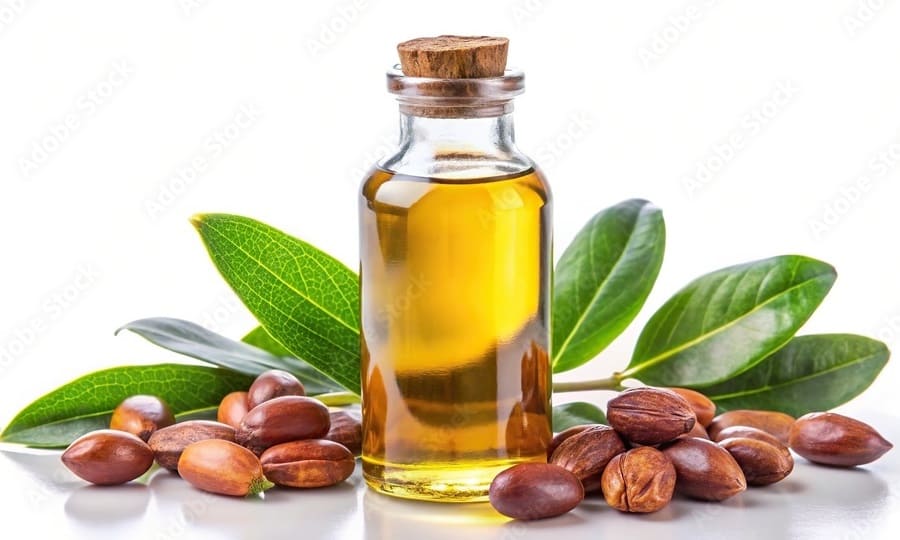
Nature has a beautiful way of providing us with ingredients that nurture, heal, and protect. Among these natural wonders, jojoba oil stands out as a golden liquid with countless benefits for your skin, hair, and overall wellness. Often referred to as a “liquid wax,” jojoba oil closely mimics the skin’s natural sebum, making it an ideal companion for skincare and cosmetic use.
Whether you’re struggling with dry skin, frizzy hair, acne, or simply looking for a multipurpose natural product — jojoba oil could be exactly what you need. In this guide, we’ll dive deep into what jojoba oil is, its nutritional value, science-backed benefits, side effects, and much more.
What is Jojoba Oil?
Jojoba oil is a natural liquid wax extracted from the seeds of the jojoba plant (Simmondsia chinensis), a shrub native to the deserts of Arizona, California, and Mexico. Unlike most vegetable oils, jojoba oil isn’t technically an oil—it’s a wax ester, which is why it’s so similar to human sebum (the oil our skin naturally produces).
This unique composition allows jojoba oil to be non-comedogenic, meaning it won’t clog pores. It also makes it incredibly stable—it doesn’t easily go rancid, giving it a long shelf life compared to most natural oils.
Traditionally, Native American tribes used jojoba oil for healing wounds, soothing skin, and protecting against dryness caused by harsh desert climates. Today, it’s a star ingredient in many cosmetic products, from moisturizers and shampoos to lip balms and serums.
Nutrition Facts of Jojoba Oil (Per 100 ml)
| Nutrients | Amount |
|---|---|
| Calories | 870 kcal |
| Total Fat | 100 g |
| Saturated Fat | 10–12 g |
| Monounsaturated Fat | 70–75 g |
| Polyunsaturated Fat | 10–12 g |
| Vitamin E (Tocopherol) | 4–5 mg |
| Omega-9 Fatty Acids | 65–70 g |
| Omega-6 Fatty Acids | 10–11 g |
| Phytosterols | Trace amounts |
| Wax Esters | 90–97% of total oil |
Note: Jojoba oil is not suitable for eating as it contains compounds that are indigestible by humans. It is meant for external use only, unless specified as edible-grade and used under professional supervision.
20 Proven Benefits of Jojoba Oil
Jojoba oil offers numerous health and beauty benefits. Here’s a detailed look at how this golden oil can transform your skin, hair, and wellness routine.
1. Deeply Moisturizes Skin
Jojoba oil forms a protective barrier that locks in moisture, keeping your skin soft and hydrated without feeling greasy.
2. Balances Oil Production
Because its structure mimics sebum, jojoba oil helps regulate oil production in both dry and oily skin types.
3. Prevents Acne Breakouts
Its antibacterial and non-comedogenic properties prevent pores from clogging, helping to reduce acne and blackheads.
4. Heals Cracked Lips
A few drops of jojoba oil can soothe dry, chapped lips and keep them smooth and supple.
5. Soothes Eczema and Psoriasis
Its anti-inflammatory effects calm skin irritation and itching caused by conditions like eczema and psoriasis.
6. Promotes Hair Growth
Jojoba oil unclogs hair follicles and nourishes the scalp, encouraging healthy hair growth.
7. Strengthens Hair
It coats the hair shaft, preventing breakage, split ends, and dryness.
8. Treats Dandruff
The oil’s moisturizing and antibacterial properties help eliminate dandruff and maintain scalp health.
9. Reduces Wrinkles
Jojoba oil contains antioxidants like Vitamin E, which help reduce fine lines and improve skin elasticity.
10. Removes Makeup Gently
It acts as an effective natural makeup remover that cleanses without stripping your skin’s natural oils.
11. Protects Against Sun Damage
Vitamin E in jojoba oil helps repair skin from UV damage and prevents premature aging.
12. Helps in Wound Healing
Studies show jojoba oil can stimulate collagen synthesis and speed up wound healing.
13. Soothes Razor Burns
Applying it after shaving reduces irritation, redness, and bumps.
14. Strengthens Nails and Cuticles
Regular application keeps nails strong and prevents cuticles from drying out.
15. Reduces Stretch Marks
Massaging jojoba oil on affected areas improves skin elasticity, reducing the appearance of stretch marks.
16. Relieves Chapped Hands and Feet
It restores moisture to dry, cracked skin, especially during winter months.
17. Helps with Scalp Inflammation
Its soothing properties relieve itchiness and redness caused by scalp irritation.
18. Anti-Aging Properties
Regular use of jojoba oil can reduce oxidative stress on the skin, promoting a youthful glow.
19. Enhances Product Absorption
It increases the absorption of other skincare ingredients when used as a carrier oil.
20. Works as a Natural Beard Conditioner
Men can use jojoba oil to soften facial hair and moisturize the skin underneath, preventing beard dandruff.
10 Side Effects of Jojoba Oil
While jojoba oil is generally safe for external use, there are a few precautions to keep in mind.
- Allergic Reactions: Some people may experience itching, redness, or rashes after applying jojoba oil.
- Eye Irritation: Avoid direct contact with eyes—it can cause mild irritation.
- Not for Internal Use: Raw jojoba oil contains erucic acid, which can be toxic if ingested.
- Skin Sensitivity: Overuse can lead to excess oil buildup in very oily skin types.
- May Interfere with Acne Treatments: If you’re using prescription acne creams, consult a dermatologist before mixing with jojoba oil.
- Possible Oxidation Issues: Although stable, expired oil can irritate the skin.
- Allergic Contact Dermatitis: Rare but possible in individuals with sensitive skin.
- Interaction with Essential Oils: Mixing with strong essential oils without dilution may cause skin burns.
- Breakouts in Some Cases: Some people with extremely oily skin may notice minor breakouts initially.
- Infant Use: Avoid using pure jojoba oil directly on infants without pediatric advice.
How to Use Jojoba Oil?
Jojoba oil can be used in numerous ways—depending on your beauty goals. Here are some common uses:
1. As a Moisturizer
Apply a few drops on clean skin and gently massage. It absorbs quickly and leaves no residue.
2. For Hair Care
Warm a small amount and massage into your scalp. Leave it for 30 minutes before washing with shampoo.
3. For Acne Treatment
Dab a small amount on acne-prone areas to soothe inflammation and reduce pimples.
4. As a Lip Balm
Use a drop to hydrate and heal cracked lips.
5. For Makeup Removal
Add a few drops to a cotton pad and gently wipe off makeup.
6. As a Massage Oil
Mix jojoba oil with a few drops of essential oil for a relaxing massage.
7. For Nail and Cuticle Care
Rub a few drops onto your nails and cuticles daily to strengthen them.
Other Uses of Jojoba Oil
Apart from personal care, jojoba oil serves several other purposes:
- Carrier Oil for Aromatherapy: It blends well with essential oils.
- Natural Shaving Cream: Reduces friction and prevents cuts.
- Body Scrub Base: Combine with sugar or coffee grounds for exfoliation.
- Anti-Frizz Serum: Apply a small amount to hair ends for smoothness.
- Massage Therapy: Widely used in spas due to its soothing texture.
- Lip Gloss Base: Used in natural lip glosses and balms.
- Makeup Primer: Creates a smooth base before foundation application.
- Tanning Oil: Some use it to maintain moisture while tanning.
- Pet Care: Helps moisturize dry patches on pets’ paws (use vet-approved products only).
- Leather Conditioner: Restores shine and flexibility in natural leather goods.
Tips for Consuming Jojoba Oil
Technically, jojoba oil is not meant for internal consumption due to its indigestible nature. However, here are some tips for safe topical use:
- Always do a patch test before using it on your face or scalp.
- Choose cold-pressed, organic jojoba oil for best results.
- Mix it with essential oils or other carrier oils for additional benefits.
- Store it away from sunlight to prevent oxidation.
- Use moderate quantities—a few drops go a long way.
How to Take Jojoba Oil?
If you’re using jojoba oil for beauty purposes:
- Topically: Apply directly to skin, hair, or nails.
- As a Carrier Oil: Mix with other oils for aromatherapy or skincare blends.
- In DIY Recipes: Add it to lotions, creams, or hair masks.
If labeled as edible-grade jojoba oil (very rare and specially processed), consult a healthcare professional before ingesting it.
How to Make Jojoba Oil at Home?
Making jojoba oil at home can be a fun and rewarding DIY project, especially if you enjoy natural skincare and want to control the purity of what you use on your body. However, it’s important to note that extracting pure jojoba oil like the one found in commercial bottles requires special equipment such as a cold-press machine or oil expeller—since jojoba seeds are very hard and waxy. You can make a homemade jojoba oil infusion or a simplified version using jojoba seeds (if available) and a carrier oil for cosmetic use.
1. Traditional Cold-Press Extraction Method (Authentic Jojoba Oil)
This is the method used commercially to produce pure jojoba oil. If you have access to jojoba seeds and an oil press machine, here’s how it’s done.
Ingredients and Equipment:
- 500 g of jojoba seeds (dried)
- Cold-press oil extractor or oil expeller
- Fine mesh strainer or cheesecloth
- Glass container or jar
- Dark glass bottle for storage
Steps:
- Clean and Dry the Jojoba Seeds
Remove any dust or debris. Make sure the seeds are completely dry before pressing — moisture can affect the oil’s quality. - Crush or Press the Seeds
Use a cold-press oil extraction machine to squeeze out the oil. The machine will press the seeds mechanically without using heat, ensuring that nutrients and natural properties remain intact. - Filter the Extracted Oil
Once the oil is pressed out, it may contain small particles. Filter it through a cheesecloth or fine mesh strainer to remove impurities. - Let the Oil Settle
Leave the filtered oil in a glass container for 24–48 hours to allow any remaining sediments to settle at the bottom. - Store the Pure Jojoba Oil
Pour the clean, golden liquid into a dark glass bottle and store it in a cool, dry place, away from direct sunlight.- Yield: Approximately 40–50 ml of oil per 100 g of seeds.
- Shelf Life: 2–3 years (if stored properly).
This method gives you 100% pure, cold-pressed jojoba oil, the same kind found in premium skincare brands.
2. Easy Homemade Jojoba-Infused Oil (DIY Method Without a Press)
If you don’t have access to a pressing machine, this infusion method is a simple alternative. It won’t produce true jojoba oil, but it creates a jojoba-infused carrier oil that captures many of the benefits of the seeds.
Ingredients:
- 1 cup of dried jojoba seeds (lightly crushed)
- 1 cup of carrier oil (olive oil, almond oil, or coconut oil)
- Double boiler or heatproof bowl
- Fine strainer or cheesecloth
- Sterilized glass jar
Steps:
- Crush the Jojoba Seeds Gently
Use a mortar and pestle or rolling pin to lightly crush the seeds to expose the inside. Don’t grind them into powder — just break the outer shell. - Combine with Carrier Oil
Add the crushed seeds to your carrier oil in a heatproof bowl or double boiler. The carrier oil helps extract the nutrients and wax esters from the jojoba seeds. - Heat the Mixture Gently
Place the bowl over low heat (not boiling) for 2–3 hours. Stir occasionally. The warmth will help infuse the beneficial properties of jojoba seeds into the oil. - Cool and Strain
After the mixture cools, strain it through a cheesecloth to remove seed particles. - Store the Infused Oil
Pour the finished oil into a dark glass bottle and store it in a cool, dark place.- Shelf Life: Up to 6 months.
- Uses: Skin moisturizer, hair oil, lip balm base, or massage oil.
3. Optional Additions (For Enhanced Benefits)
You can make your jojoba oil infusion more beneficial by adding:
- Vitamin E oil – for extended shelf life and antioxidant properties.
- Lavender or tea tree essential oil – for added aroma and antibacterial effects.
- Rose petals or aloe vera – for extra soothing effects (if used for skin).
Just add 2–3 drops of essential oil per tablespoon of your jojoba infusion.
Tips for Best Results
- Always use organic jojoba seeds and cold-pressed carrier oils.
- Avoid overheating; high temperatures can destroy nutrients.
- Store your oil in amber or dark-colored bottles to protect it from sunlight.
- Label your bottle with the date of preparation.
- Perform a patch test before using the oil on your face or scalp.
Summary: Homemade Jojoba Oil Methods:
| Method | Main Ingredient | Process Type | Time Required | Shelf Life | Result |
|---|---|---|---|---|---|
| Cold-Press Extraction | Jojoba Seeds | Mechanical (Cold Press) | 2–3 hours + settling | 2–3 years | Pure Jojoba Oil |
| Infusion Method | Jojoba Seeds + Carrier Oil | Gentle Heat (Double Boiler) | 2–3 hours | 6 months | Jojoba-Infused Oil |
How Much Jojoba Oil Can You Use Per Day?
- For Skin: 3–5 drops per application are enough for the face.
- For Hair: 1–2 teaspoons, depending on hair length.
- For Body Massage: 1–2 tablespoons diluted with another carrier oil.
Using too much can make your skin or hair greasy, so moderation is key.
Jojoba Oil Dosage
There is no official medical dosage for jojoba oil since it’s primarily a cosmetic ingredient. However, for topical use:
| Use | Recommended Amount |
|---|---|
| Facial moisturizer | 3–5 drops |
| Hair/scalp treatment | 1–2 teaspoons |
| Massage oil | 1 tablespoon |
| Lip care | 1 drop |
| Nail/cuticle care | A few drops per hand |
Always adjust according to your skin type and needs.
Best Time to Use Jojoba Oil
- Morning: Apply before makeup as a primer or moisturizer.
- Night: Use as part of your bedtime skincare routine for deep nourishment.
- Post-bath: Apply to damp skin to lock in moisture.
- Before Hair Wash: Massage 30 minutes before shampooing for soft hair.
Who Should Use Jojoba Oil?
Jojoba oil is beneficial for a wide range of people, including:
- Individuals with dry or sensitive skin.
- Those suffering from acne, eczema, or psoriasis.
- People dealing with dandruff, frizzy hair, or split ends.
- Anyone looking for a natural anti-aging remedy.
- Men wanting a natural beard oil or aftershave.
Who Should Not Use Jojoba Oil?
- Individuals allergic to jojoba or wax esters.
- Those with extremely oily skin that may react to additional oil.
- People with open wounds or infections should avoid direct application.
- Infants or pregnant women should consult a healthcare provider before use.
- Never consume oil internally unless it’s a certified edible version.
How to Store Jojoba Oil?
Proper storage ensures longevity and effectiveness:
- Store in a dark glass bottle away from sunlight.
- Keep in a cool, dry place below 25°C.
- Do not refrigerate—it may thicken.
- Always close the lid tightly after use to avoid oxidation.
- Shelf life: Up to 2–3 years if stored properly.
Precautions and Interactions
- Always perform a patch test before using oil on your face or body.
- Avoid mixing it with chemical-based skincare products without guidance.
- Keep away from eyes, nose, and mouth.
- Consult your dermatologist before using it alongside medicated creams or acne treatments.
- Pregnant and breastfeeding women should use oil only after medical advice.
Conclusion
Jojoba oil truly is one of nature’s most versatile gifts. Its close resemblance to human sebum makes it a perfect moisturizer, healer, and protector for both skin and hair. While it’s important to use it safely and avoid internal consumption, its benefits far outweigh its limitations when used correctly.
From softening dry skin and taming frizzy hair to promoting overall skin health—oil deserves a spot in your daily routine. Choose high-quality, organic jojoba oil, store it properly, and enjoy the golden glow it brings to your life.
FAQ’s
Can you use jojoba oil on your face every day?
Yes, oil is gentle enough for daily use. It helps moisturize and balance your skin’s oil production without clogging pores.
Is jojoba oil good for acne?
Absolutely. Its antibacterial and anti-inflammatory properties can reduce acne and prevent future breakouts.
Can jojoba oil be used on hair?
Yes. oil moisturizes the scalp, strengthens hair, and adds shine when used regularly.
Can pregnant women use jojoba oil?
Generally, yes—but it’s best to consult a healthcare provider before using any essential or carrier oil during pregnancy.
Is jojoba oil safe for children?
It’s typically safe for external use on children but should be patch-tested first to avoid allergic reactions.
Can you leave jojoba oil on your hair overnight?
Yes. Leaving it overnight allows deep conditioning, but cover your pillow to avoid stains.
Does jojoba oil expire?
It has a long shelf life of up to 2–3 years when stored properly in a cool, dark place.
Can you mix jojoba oil with other oils?
Yes. It blends well with essential oils like lavender, tea tree, and rosemary.
Is jojoba oil edible?
No, oil is not meant for internal consumption unless processed specifically as edible-grade.
What is jojoba oil used for?
Oil is used for moisturizing and protecting the skin, strengthening hair, and treating dryness or irritation. It helps balance natural oil production, making it great for both dry and oily skin. It’s also used as a makeup remover, massage oil, and carrier oil for essential oils.
What is jojoba called in India?
In India, jojoba is usually called “Jojoba” itself, pronounced ho-ho-ba. Sometimes it’s referred to by its botanical name, Simmondsia chinensis, or nicknamed “Desert Gold” because of its valuable skincare benefits. The plant grows well in dry regions like Rajasthan and Gujarat.
Can I use 100% jojoba oil on my face?
Yes, 100% pure jojoba oil is safe to use on your face. It’s lightweight, non-greasy, and similar to the skin’s natural sebum, which helps moisturize without clogging pores. Apply just a few drops on clean skin daily for soft, balanced, and glowing skin.
What is the main ingredient in jojoba oil?
The main component of oil is wax esters, which make up about 97% of its structure. These are very similar to the natural oils our skin produces, helping jojoba absorb easily. It also contains vitamin E, antioxidants, and essential fatty acids that nourish and protect the skin.
Can jojoba oil help with wrinkles?
Yes, oil can reduce wrinkles and fine lines over time. Its antioxidants, especially vitamin E, help fight free radicals that cause aging. Regular use keeps your skin firm, smooth, and hydrated, giving it a youthful appearance.
Which oil is better, argan or jojoba?
Both are excellent, but they suit different needs. Oil is lighter and better for oily or acne-prone skin, while argan oil is richer and ideal for dry or mature skin. You can even mix both for balanced hydration and nourishment.
What is the best brand of jojoba oil?
Some trusted brands include Cliganic, NOW Solutions, Desert Essence, Leven Rose, and The Jojoba Company. Always look for cold-pressed, unrefined, and 100% pure oil to ensure maximum skin and hair benefits.
Can I be allergic to jojoba oil?
Allergic reactions to oil are rare, but possible. Some people may experience redness, itching, or irritation. It’s best to do a patch test on a small area of skin before applying it to your face or scalp to check for sensitivity.
Is jojoba oil an antifungal?
Yes, oil has mild antifungal and antibacterial properties. It can help control fungal growth that causes dandruff or acne. While it’s not a medical antifungal treatment, it’s a great natural option for keeping your skin and scalp clean and healthy.
Do dermatologists recommend jojoba oil?
Yes, dermatologists often recommend oil because it’s gentle, non-comedogenic, and suitable for most skin types. It helps hydrate, soothe irritation, and balance oil levels, making it a great choice for sensitive and acne-prone skin.
What is better than jojoba oil?
It depends on what your skin needs. For deep hydration, coconut oil or marula oil may work better. For anti-aging, rosehip or argan oil can be more effective. But for lightweight daily care, oil remains one of the best and most versatile options.
How deep does jojoba oil penetrate skin?
Oil penetrates deeply into the outer skin layer (epidermis) and partially into the dermis. Because it mimics sebum, it absorbs quickly and nourishes from within, providing lasting hydration without leaving a greasy layer on the skin.
Is jojoba oil anti-aging?
Yes, oil has natural anti-aging properties. Its antioxidants and vitamin E protect the skin from environmental damage, while its moisturizing effect helps keep the skin smooth and supple. Over time, it can reduce fine lines and promote a youthful glow.
Also Read: