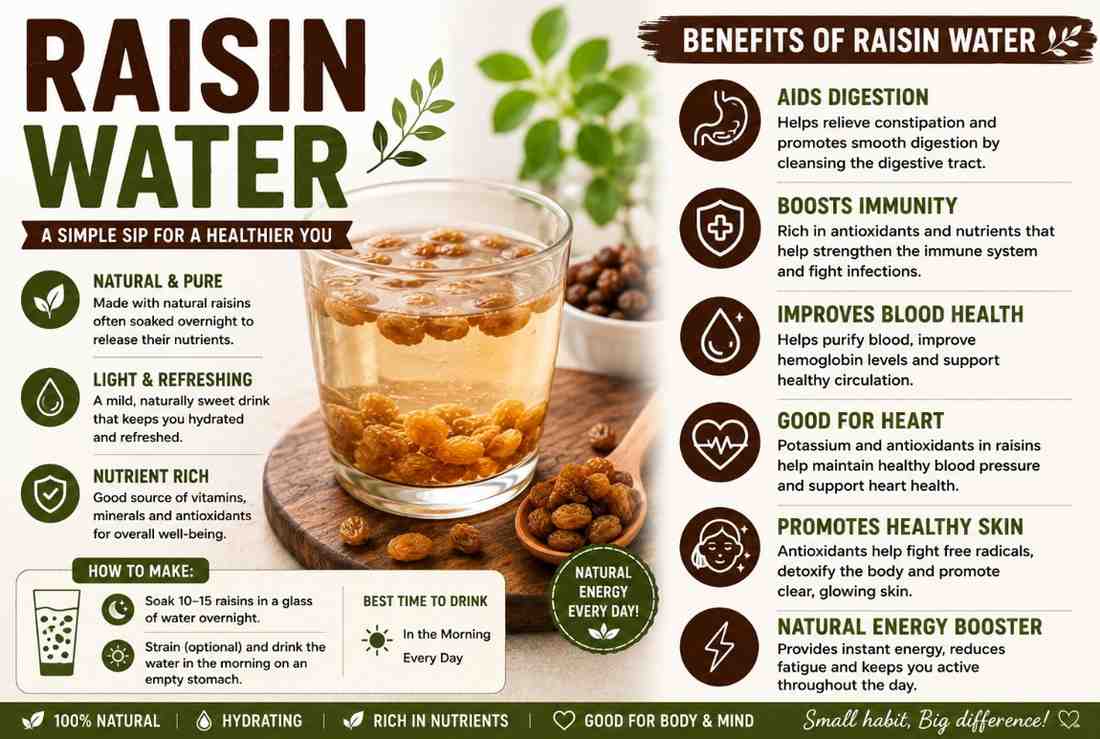
Raisin water is a simple homemade drink made by soaking raisins in water, usually overnight. The soaking process softens the raisins and allows some of their water-soluble compounds and sugars to diffuse into the water. Many people drink it as part of their morning routine, while others enjoy the softened raisins along with the water.
Raisins themselves are nutrient-dense dried grapes containing carbohydrates, dietary fiber, potassium, and various plant compounds, including phenolic compounds. Research on raisins suggests potential benefits for antioxidant status, satiety, glycemic response, and cardiovascular health, although much of the research has studied raisins as a food rather than raisin water specifically.
That distinction is important: raisin water should be viewed as a food-based beverage, not a detox drink or medical treatment.
What Is Raisin Water?
Raisin water is water infused with raisins after they have been soaked for several hours, commonly overnight. A typical preparation uses a small handful of raisins in a glass of drinking water.
During soaking, the raisins absorb water and become softer. Some soluble components from the raisins move into the surrounding water, although the exact amount depends on the soaking time, water temperature, raisin variety, and whether the soaked raisins are eaten afterward.
Unlike fruit juice, raisin water does not require blending or pressing the fruit. However, it should not be assumed to contain all the nutrients found in whole raisins because much of the fiber and other compounds remain in the soaked fruit.
Nutrition Facts of Raisin Water
The following is an approximate nutritional perspective based on a small serving of raisins, rather than claiming these amounts are present in the water itself.
| Nutrient | Approximate amount in 28 g raisins* | Why It Matters |
|---|---|---|
| Calories | ~84 kcal | Provides energy |
| Carbohydrates | ~22 g | Main source of energy |
| Natural sugars | ~18 g | Provides readily available carbohydrate |
| Dietary fiber | ~1–2 g | Supports digestive health |
| Protein | ~0.9 g | Small contribution to protein intake |
| Fat | ~0.1 g | Very low in fat |
| Potassium | ~210 mg | Supports fluid balance and normal muscle function |
| Iron | ~0.5 mg | Contributes to normal red blood cell production |
| Vitamin B6 | Small amount | Supports normal metabolism |
| Copper | Small amount | Involved in iron metabolism and connective tissue function |
| Plant compounds | Present | Includes phenolic compounds and other phytochemicals |
*Values are approximate and vary by raisin type. Raisins are concentrated dried fruit and contain substantial natural sugar. USDA-derived nutrition data for raisins show that they are particularly concentrated in carbohydrate and potassium.
Important: The table should not be interpreted as the nutrition content of the strained water. If you discard the soaked raisins, you also discard much of their fiber and other nutrients.
20 Proven Health Benefits of Raisin Water
1. Supports Hydration: Drinking raisin water contributes to daily fluid intake, while the water itself—not the raisins—is responsible for most of the hydration.
2. Provides Natural Carbohydrates: Raisins contain naturally occurring sugars that can provide a quick source of carbohydrate and energy.
3. Supplies Potassium: Raisins are a potassium-containing food, and potassium is important for normal muscle contraction, nerve function, and fluid balance.
4. May Support Digestive Regularity: Raisins provide dietary fiber, while adequate fluids help fiber function properly, making the combination useful as part of a fiber-rich diet.
5. Provides Antioxidant Compounds: Raisins contain phenolic compounds and other phytochemicals with antioxidant activity demonstrated in laboratory and food studies.
6. May Support Cardiovascular Health: Research reviews suggest that raisin consumption may have favorable effects on some cardiovascular risk factors, although stronger long-term studies are still needed.
7. May Help With Satiety: Studies reviewed in the scientific literature suggest raisins may influence appetite and satiety, potentially making them a useful alternative to highly processed sweet snacks.
8. May Have a Moderate Glycemic Response: Raisins have been reported to have a low-to-moderate glycemic index, although individual responses vary and portion size still matters.
9. May Help Support Healthy Eating Patterns: Choosing raisins instead of candy or other highly processed sweets can add fruit-derived nutrients and phytochemicals to the diet.
10. Provides Phenolic Compounds: Raisins contain compounds such as quercetin, kaempferol, phenolic acids, and tannins that contribute to their phytochemical profile.
11. May Support Normal Oxidative Balance: Raisin-derived phenolic compounds demonstrate antioxidant activity, although laboratory antioxidant findings should not be interpreted as proof of disease prevention in humans.
12. Supports Mineral Intake: Eating the soaked raisins as well as drinking the water provides minerals such as potassium, copper, and iron.
13. May Support Normal Muscle Function: The potassium supplied by raisins contributes to normal nerve transmission and muscle function.
14. May Support Normal Nerve Function: Potassium and other nutrients found in raisins contribute to normal nervous-system function.
15. Can Be a Convenient Morning Drink: Raisin water is easy to prepare in advance and can help people establish a consistent hydration routine.
16. May Complement a Fiber-Rich Diet: Eating the softened raisins provides more dietary fiber than drinking the strained soaking water alone.
17. May Support Gut Microbiome Diversity: Research on dried fruits suggests possible effects on gut microbiota, although evidence is still limited and this research does not specifically prove benefits from raisin water.
18. Provides Naturally Occurring Plant Nutrients: Raisins contain a variety of bioactive plant compounds that contribute to their nutritional value.
19. Can Replace Sugary Drinks: Unsweetened raisin water can be an alternative to sugar-sweetened beverages, although it still contains compounds derived from naturally sugary fruit.
20. May Add Variety to a Healthy Diet: Used in reasonable portions, raisin water and soaked raisins can be one simple way to include dried fruit in an overall balanced eating pattern.
A realistic expectation: Raisin water is not a proven detox, fat-burning, blood-cleansing, or disease-curing beverage. Most of the stronger nutritional evidence concerns eating raisins themselves rather than drinking their soaking water.
10 Side Effects of Raisin Water
1. May Add Natural Sugar: Raisins are concentrated dried fruit, so regularly consuming large amounts can substantially increase carbohydrate and sugar intake.
2. May Cause Bloating: A sudden increase in dried fruit or fiber may cause gas, bloating, or abdominal discomfort in some people.
3. May Cause Loose Stools: Larger amounts of raisins may have a bowel-loosening effect in sensitive individuals, particularly when combined with increased fluid intake.
4. May Affect Blood Glucose: Although raisins can have a low-to-moderate glycemic index, their carbohydrate content means portions still matter, particularly for people managing diabetes.
5. May Cause Digestive Discomfort: People with sensitive digestive systems may experience cramps or discomfort after consuming dried fruit.
6. May Be High in Potassium for Some People: Raisins are potassium-rich, so people with certain kidney conditions may need to limit them.
7. May Contain Sulfites: Some commercially processed raisins, particularly certain golden raisins, may contain sulfites, which can cause reactions in sensitive individuals.
8. May Contribute to Excess Calories: Drinking raisin water while also eating a large quantity of soaked raisins can increase total calorie intake.
9. May Not Suit Everyone With IBS: Dried fruit can trigger digestive symptoms in some people with irritable bowel syndrome or other sensitive gastrointestinal conditions.
10. May Encourage Excessive Intake: Because raisin water is often promoted online as a detox or cleansing drink, some people may consume more than necessary despite limited evidence for special therapeutic effects.
How to Make Raisin Water?
Making raisin water requires only raisins and drinking water.
Ingredients:
- 1–2 tablespoons raisins
- 1 glass, approximately 200–250 ml, drinking water
Method:
- Choose good-quality raisins and remove any visible debris.
- Rinse them thoroughly under clean running water.
- Place the raisins in a clean glass or covered container.
- Add approximately 200–250 ml of drinking water.
- Cover and allow the raisins to soak for about 6–12 hours.
- In the morning, strain the water if you prefer.
- You can also eat the softened raisins to retain their fiber and nutrients.
There is no strong scientific evidence showing that soaking raisins overnight makes the water medically superior to ordinary water.
How to Drink Raisin Water?
Raisin water can be consumed at room temperature or slightly chilled.
A practical approach is to drink approximately one glass and eat the soaked raisins if they fit your dietary needs. There is generally no need to add sugar, honey, or another sweetener because raisins already contain considerable natural sugar.
If you are trying raisin water for digestive regularity, remember that adequate total fluid and dietary fiber intake matter more than the timing of one particular drink. NIDDK recommends sufficient fluids alongside fiber to help keep stools softer and easier to pass.
Tips for Consuming Raisin Water
- Start with a small quantity if you are not accustomed to eating dried fruit.
- Choose unsweetened raisins without added sugar.
- Read the ingredient label, particularly if you are sensitive to sulfites.
- Wash raisins before soaking them.
- Use clean drinking water and a clean container.
- Avoid adding extra sugar.
- Eat the soaked raisins if you want to obtain more of the original fruit’s fiber.
- Keep portions moderate because raisins are concentrated in natural sugars.
- Drink ordinary water throughout the day as your main source of hydration.
- Treat raisin water as a food-based drink rather than a detox treatment.
Other Uses of Raisin Water
Raisin water can be used in several simple ways beyond drinking it plain.
As a Breakfast Drink
It can be served alongside breakfast as a mildly sweet, fruit-infused beverage.
In Smoothies
A small amount can be incorporated into a smoothie, although blending the soaked raisins provides more of their original fiber than using strained water alone.
In Oatmeal
The soaked raisins can be added to oatmeal, porridge, or overnight oats for natural sweetness.
In Chia Pudding
Raisin water can be used as part of the liquid in homemade chia pudding, although the total carbohydrate content should be considered.
In Homemade Grain Dishes
The soaked raisins themselves can be added to rice, quinoa, couscous, or other grain-based dishes.
How Much Raisin Water Can You Drink in a Day?
For most healthy adults, one glass of homemade raisin water per day is a reasonable food-based portion, particularly when made with a modest amount of raisins.
There is no scientifically established therapeutic dose for raisin water. More is not necessarily better.
If you eat the soaked raisins too, remember that they count as dried fruit. A commonly used serving reference is about ¼ cup of dried fruit, including raisins.
People with diabetes, kidney disease, or other conditions requiring carbohydrate or potassium restrictions should discuss appropriate portions with their healthcare professional.
Best Time to Drink Raisin Water
There is no scientifically proven “best” time to drink raisin water.
Morning
Many people prefer it in the morning because it is easy to incorporate into a daily routine and provides fluids after waking.
Before Breakfast
Drinking it before breakfast is a common traditional practice, but there is no strong evidence that drinking it on an empty stomach produces special detoxification or weight-loss benefits.
With Breakfast
Having it with breakfast may be more comfortable for people who experience stomach sensitivity when drinking sweet beverages alone.
Evening
There is no established health advantage to drinking raisin water at night. If it makes you feel bloated or increases nighttime bathroom visits, morning or daytime may be more practical.
Who Should Drink Raisin Water?
- Healthy Adults: Healthy adults can generally enjoy a moderate serving of raisin water as part of a balanced diet.
- People Seeking a Simple Hydration Routine: Individuals who enjoy naturally flavored beverages may use unsweetened raisin water as one way to vary their fluid intake.
- People Who Eat Little Dried Fruit: Raisin water can accompany a balanced diet, particularly when the soaked raisins are eaten too.
- People Looking for a Naturally Sweet Drink: It may appeal to people who want a mildly sweet alternative to artificially sweetened beverages.
- People With Occasional Constipation: The combination of fluids and the fiber from eating soaked raisins may complement a generally fiber-rich diet, although it is not a treatment for chronic constipation.
Who Should Avoid Raisin Water?
- People With Certain Kidney Conditions: Individuals who have been advised to restrict potassium may need to limit raisins because they are relatively high in potassium.
- People With Sulfite Sensitivity: Check labels carefully because some raisins may contain added sulfites.
- People Managing Blood Glucose: Raisins contain concentrated carbohydrates, so portion size should be considered when managing diabetes.
- People With Certain Digestive Disorders: Those who know that dried fruit worsens their digestive symptoms may want to avoid or limit raisin water.
- People With Raisin or Grape Allergy: Anyone with a known allergy to grapes or raisins should avoid them.
- People Following a Medically Prescribed Diet: If you have been prescribed restrictions on potassium, carbohydrates, or fluids, follow your healthcare professional’s recommendations rather than general raisin-water advice.
How to Store Raisin Water?
- Refrigerate Promptly: Store prepared raisin water in a clean, covered container in the refrigerator rather than leaving it at room temperature for prolonged periods.
- Use It Fresh: For the best quality and food safety, prepare a fresh batch regularly rather than storing it for several days.
- Keep the Container Covered: A covered glass container helps reduce contamination and unwanted odors.
- Discard If It Smells or Looks Unusual: Do not consume raisin water if it develops an unusual odor, appearance, or signs of spoilage.
- Store Soaked Raisins Separately: If you are keeping the raisins for later use, refrigerate them in a clean covered container as well.
- Do Not Repeatedly Top Up Old Water: Make a fresh batch rather than continually adding water to previously soaked raisins.
Precautions and Interactions
Raisin water is a food beverage, not a medicine, but a few precautions are worth keeping in mind.
- Blood glucose: Raisins contain substantial natural sugars and carbohydrates. People with diabetes should account for the raisins and any soaked fruit they consume within their overall carbohydrate plan. The American Diabetes Association emphasizes nutrient-dense, high-fiber foods and appropriate portion control.
- Kidney disease: Raisins are relatively high in potassium. People with chronic kidney disease or those following a potassium-restricted diet should ask their healthcare professional whether raisins fit their dietary plan.
- Sulfite sensitivity: Some commercially processed raisins contain sulfites. People with significant sulfite sensitivity should read food labels carefully and choose products appropriate for their needs. FDA safety alerts have documented undeclared sulfites in certain raisin products.
- Medication interactions: Raisin water is not known to have a specific drug interaction profile like a concentrated herbal supplement, but its potassium and carbohydrate content may matter for people taking medications or following diets that affect potassium or glucose management.
- Digestive symptoms: Increase dried fruit gradually if you are not used to it. Sudden increases in fiber can cause bloating or discomfort. NIDDK recommends increasing fiber gradually and drinking adequate fluids.
- Pregnancy and breastfeeding: Ordinary food amounts of raisins are generally considered a normal food choice for most people, but raisin water should not be used as a treatment for pregnancy-related constipation, anemia, swelling, or other medical concerns without professional advice.
The Bottom Line
Raisin water is a simple, naturally sweetened drink made by soaking raisins in water. It can contribute to hydration and may provide small amounts of compounds from raisins, but many of the nutrients and fiber remain in the fruit itself.
The most important evidence-based takeaway is that raisins can be a nutritious dried fruit when consumed in appropriate portions, providing fiber, potassium, and plant compounds. Research suggests potential benefits involving antioxidant activity, appetite, glycemic response, and cardiovascular markers, but more human research is needed.
Soaking raisins overnight is perfectly reasonable as a food habit if you enjoy it, but there is no strong scientific evidence that raisin water “detoxes” the body, melts belly fat, cleanses the liver, or cures constipation.
FAQ’s
What is raisin water good for?
Raisin water can contribute to hydration and provide some compounds from raisins, while eating the soaked raisins provides additional fiber and nutrients.
Can I drink raisin water every day?
Yes, most healthy adults can generally enjoy a moderate amount of raisin water daily, but there is no proven need to drink it every day.
Is raisin water good for constipation?
It may help support regular bowel movements because raisins contain fiber and water helps support normal bowel function, but raisin water is not a treatment for chronic constipation.
Does raisin water help with weight loss?
There is no strong evidence that raisin water directly causes weight loss. Weight management depends primarily on overall diet, physical activity, sleep, and calorie balance.
Is raisin water good for the skin?
Raisins contain antioxidant compounds, but there is insufficient evidence to show that drinking raisin water specifically improves skin health.
Can I drink raisin water on an empty stomach?
Yes, if it feels comfortable for you. However, there is no strong scientific evidence that drinking it on an empty stomach provides special health benefits.
Is raisin water good in the morning?
Raisin water can be consumed in the morning as part of a hydration routine, but there is no scientifically established best time to drink it.
Should I eat the soaked raisins?
Yes. Eating the soaked raisins provides fiber and nutrients that may remain in the fruit rather than transferring completely into the water.
Does raisin water increase blood sugar?
Raisins contain concentrated natural sugars and carbohydrates, so consuming large amounts can affect blood glucose. People with diabetes should pay attention to portion size.
Can I drink raisin water at night?
Yes, but there is no proven advantage to drinking it at night. Morning or daytime may be more convenient for most people.
How long should raisins be soaked in water?
Raisins can commonly be soaked for about 6–12 hours. Overnight soaking is a convenient option.
Can children drink raisin water?
Children can generally consume raisins as part of a balanced diet, but raisin water is not necessary for health. Portions should be age-appropriate, and young children should be supervised when eating whole or soaked raisins.
Is raisin water good for anemia?
Raisins contain some iron, but raisin water should not be considered a treatment for iron-deficiency anemia. Confirmed anemia requires appropriate evaluation and treatment.
Does raisin water detox the body?
No. There is no good scientific evidence that raisin water detoxifies or cleanses the liver or kidneys. Your liver and kidneys naturally perform these functions.
Can raisin water help digestion?
It may support digestion as part of an overall diet containing adequate fluids and fiber, particularly when the soaked raisins are eaten.
Is raisin water safe during pregnancy?
Raisins can be included in a balanced pregnancy diet for most people, but there is no proven special benefit from raisin water during pregnancy. Those with gestational diabetes or other dietary restrictions should ask their healthcare provider about appropriate portions.
Can I drink raisin water if I have diabetes?
You may need to limit the amount because raisins are concentrated in carbohydrates and natural sugars. Discuss suitable portions with your healthcare professional or dietitian.
What does Raisin Water taste like?
Raisin water has a mildly sweet, fruity taste.
How long does it take for Raisin Water to work?
There is no fixed time; effects vary depending on the person and purpose.
What does Raisin Water smell like?
It usually has a mild, sweet, fruity aroma.
What happens when raisins are soaked in water?
Raisins absorb water, become soft, and release some soluble compounds into the water.
Which is better, soaked raisins or dry raisins?
Both are nutritious, but soaked raisins may be easier to chew, while both provide more nutrients than raisin water alone.
Do soaked raisins increase hemoglobin?
Not significantly. Raisins contain some iron but cannot reliably treat low hemoglobin or anemia.
Sources / References:
- PubMed
- NIH/NIDDK
- NIH Office of Dietary Supplements
- American Diabetes Association
- FDA
- U.S. Food and Drug Administration
Disclaimer:
This article is for general education only and does not replace personalized medical advice. If you have diabetes, kidney disease, food allergies, or another medical condition, consult a qualified healthcare professional before making significant dietary changes.
Also Read: