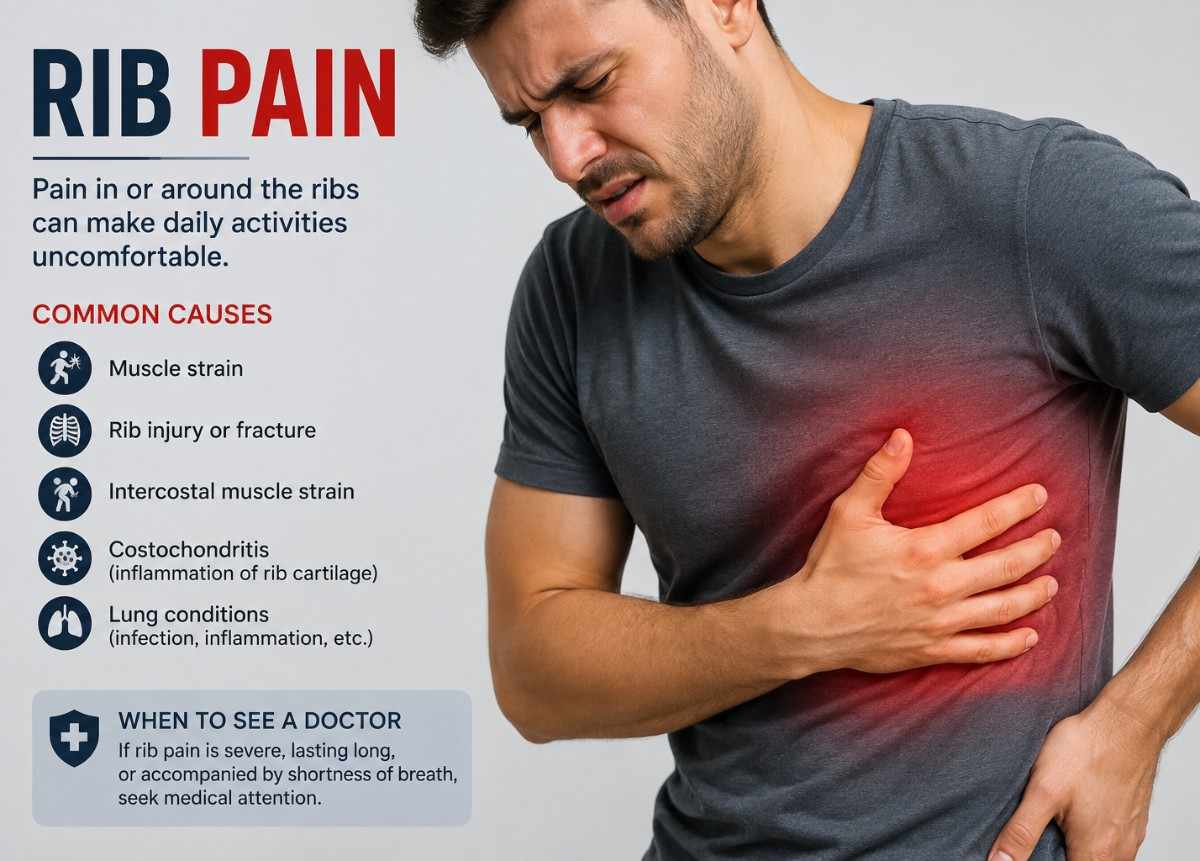
Rib pain can be uncomfortable, distracting, and sometimes alarming, especially when it gets worse with breathing, coughing, or movement. While rib pain is often caused by a muscle strain, minor injury, inflammation, or a bruised rib, it can sometimes be related to problems involving the lungs, heart, digestive system, or other structures around the chest.
Understanding where the pain occurs, what triggers it, and whether other symptoms are present can help you decide what to do next. Rib pain that is unexplained, persistent, severe, or accompanied by breathing difficulty should be medically evaluated.
What Is Rib Pain?
Rib pain refers to discomfort felt around the rib cage, which surrounds and protects organs such as the heart and lungs. The pain may occur at the front, side, or back of the rib cage and can range from mild soreness to sharp or severe pain.
Rib pain may feel:
- Sharp or stabbing
- Dull or aching
- Burning
- Tender when touched
- Worse when taking a deep breath
- Worse when coughing or sneezing
- Worse when twisting or bending
- Painful during physical activity
The location and character of the pain can provide clues about its possible cause, but they cannot reliably diagnose the condition by themselves.
Common Causes of Rib Pain
Rib pain has many possible causes. Some are relatively minor, while others require prompt medical attention.
1. Muscle Strain
The muscles between and around the ribs can become strained after lifting, exercise, repetitive movements, coughing, or sudden twisting. This type of pain may become more noticeable when moving the upper body.
2. Bruised Rib
A direct blow to the chest can bruise the tissues around a rib. Bruising may cause tenderness, soreness, swelling, or skin discoloration. Breathing, coughing, laughing, and sneezing can make the discomfort worse.
3. Broken or Fractured Rib
A strong impact from a fall, accident, sports injury, or other trauma can fracture a rib. Osteoporosis and reduced bone density can also increase fracture risk.
Broken ribs can cause significant pain, particularly when breathing, coughing, bending, or twisting.
4. Costochondritis
Costochondritis is inflammation of the cartilage connecting the ribs to the breastbone. It can cause sharp pain in the front or side of the chest and may become worse with movement, deep breathing, or pressure over the affected area.
5. Pleurisy
Pleurisy involves inflammation of the tissues surrounding the lungs. Pain may become particularly noticeable during deep breathing or coughing.
6. Slipping Rib Syndrome
Slipping rib syndrome can cause pain around the lower ribs, sometimes accompanied by a clicking or popping sensation. The condition involves abnormal movement of the lower rib cartilage.
7. Persistent Coughing
Frequent or forceful coughing can strain the muscles between the ribs and make the chest wall sore. In some situations, repeated coughing can contribute to rib injury.
8. Arthritis and Joint Problems
Inflammation or degeneration affecting joints around the chest wall can sometimes contribute to discomfort near the ribs.
9. Osteoporosis
Osteoporosis weakens bones and can make fractures more likely, sometimes even after relatively minor trauma.
10. Digestive Conditions
Problems such as acid reflux, gallbladder disease, gastritis, or other digestive disorders can sometimes produce discomfort that is felt around the chest or upper abdomen.
Types of Rib Pain
Rib pain can be classified according to where it occurs and what it feels like.
| Type of Pain | Possible Causes |
|---|---|
| Sharp pain with deep breathing | Pleurisy, rib injury, costochondritis |
| Pain after an injury | Bruised or fractured rib |
| Pain when pressing the area | Chest wall inflammation, muscle strain, costochondritis |
| Pain after exercise | Muscle strain or overuse |
| Lower rib pain with clicking | Slipping rib syndrome |
| Burning chest discomfort | Acid reflux or other causes |
| Pain with coughing | Muscle strain, respiratory illness, rib injury |
| Sudden severe chest pain | Requires urgent evaluation |
These patterns are only general clues. Chest and rib pain can have overlapping symptoms, so persistent or unexplained pain should be evaluated by a healthcare professional.
Symptoms That May Occur With Rib Pain
Depending on the underlying cause, you may experience:
- Tenderness over the ribs
- Bruising or swelling
- Pain when taking a deep breath
- Pain when coughing or sneezing
- Pain when twisting or bending
- Pain when lifting
- Muscle tightness
- Clicking or popping around the ribs
- Shortness of breath
- Fever
- Cough
- Increased mucus
- Pain that spreads toward the back or shoulder
Some accompanying symptoms are more concerning than others. Shortness of breath, significant chest pressure, coughing up blood, fainting, or severe sudden chest pain requires urgent medical attention.
Where Can Rib Pain Occur?
1. Right-Sided Rib Pain
Pain under the right ribs may come from the ribs, muscles, lungs, or upper abdominal structures. Gallbladder and digestive problems can also sometimes cause pain in the right upper abdomen or nearby areas.
2. Left-Sided Rib Pain
Left-sided rib pain may result from an injury, muscle strain, costochondritis, or other chest-wall conditions. Because the heart is located toward the left side of the chest, unexplained chest pain should not automatically be assumed to be a rib problem.
3. Rib Pain in the Front
Pain toward the front of the rib cage is commonly associated with chest-wall conditions such as costochondritis or muscle strain, but other causes are possible.
4. Rib Pain in the Back
Pain around the back of the ribs may involve muscles, joints, the spine, or structures inside the chest. Kidney and other upper abdominal conditions can also cause pain in the flank or back.
Rib Pain When Breathing
Pain that becomes worse with deep breathing can occur with rib injuries, costochondritis, muscle strain, or inflammation around the lungs.
After a rib injury, people may instinctively take shallow breaths because deep breathing hurts. However, avoiding normal breathing and coughing for prolonged periods can contribute to complications. People recovering from rib fractures are often advised to perform appropriate deep-breathing exercises and remain appropriately active according to medical guidance.
If rib pain is accompanied by significant difficulty breathing, seek urgent medical care.
Rib Pain When Coughing
Coughing activates the muscles between the ribs and moves the chest wall. If those tissues are injured or inflamed, coughing can make the pain significantly worse.
A persistent cough can also strain chest muscles and, in some cases, contribute to rib injury.
If coughing is accompanied by difficulty breathing, high fever, chest pain that is worsening, or coughing up blood, medical evaluation is important.
Rib Pain After Exercise
Exercise-related rib pain can result from:
- Muscle strain
- Overuse
- Sudden changes in activity
- Poor lifting technique
- Repetitive twisting
- Contact or impact injuries
Chest-wall pain can also occur after changes in exercise levels or activities involving heavy lifting and repetitive upper-body movements.
Resting the painful area from activities that trigger symptoms and gradually returning to normal activity can help in uncomplicated muscle-related pain.
How Is Rib Pain Diagnosed?
A healthcare professional will usually begin by asking about:
- When the pain started
- Whether there was an injury
- The exact location of the pain
- Whether the pain changes with breathing
- Whether movement makes it worse
- Whether you have a cough or fever
- Whether you have shortness of breath
- Any relevant medical conditions
- Medications you take
A physical examination may help identify tenderness, muscle-related pain, or other abnormalities.
Depending on the symptoms and suspected cause, testing may include a chest X-ray or other imaging. Not every rib injury requires imaging, and the appropriate test depends on the clinical situation.
Treatment for Rib Pain
Treatment depends on the underlying cause.
1. Rest and Activity Modification
For muscle strains and uncomplicated rib injuries, temporarily avoiding movements that increase pain can help the area recover.
However, prolonged bed rest is generally not recommended after a rib injury. Gentle movement and appropriate breathing exercises can help reduce complications.
2. Ice
After an acute injury, an ice pack wrapped in a cloth may help reduce pain and swelling. MedlinePlus recommends icing a bruised rib for about 20 minutes at a time, several times a day during the first one to two days.
3. Heat
For some chest-wall conditions, warm compresses may provide comfort. Heat should not be applied directly to bare skin.
4. Pain Medication
Depending on your health history, over-the-counter medicines such as acetaminophen or anti-inflammatory medicines may help.
However, medicines such as ibuprofen and naproxen are not appropriate for everyone. People with certain kidney, liver, heart, blood-pressure, stomach, or bleeding problems should speak with a healthcare professional before using them. Always follow the product label or medical advice.
5. Physical Therapy
Physical therapy may be useful when persistent chest-wall or musculoskeletal pain is related to movement, posture, muscle weakness, or recurring strain.
6. Treatment of the Underlying Condition
If rib pain is caused by an infection, digestive condition, inflammatory disorder, fracture, or another medical problem, treatment should focus on the underlying cause.
Home Care Tips for Mild Rib Pain
For mild pain that appears related to a minor strain or injury:
- Avoid activities that clearly increase the pain.
- Use an ice pack during the first couple of days after an injury.
- Continue gentle everyday movement as tolerated.
- Take slow, comfortable deep breaths regularly.
- Avoid heavy lifting until your symptoms improve.
- Support your chest gently with a pillow when coughing if it makes the pain more comfortable.
- Follow medication instructions carefully.
- Avoid smoking because it can worsen respiratory symptoms and interfere with recovery.
- Gradually return to exercise rather than immediately resuming intense activity.
Do not tightly wrap or bind the chest after a rib injury unless specifically instructed by a healthcare professional. Restricting chest movement can interfere with breathing and may increase the risk of respiratory complications.
Exercises for Rib Pain Relief
For mild rib pain caused by a muscle strain or chest-wall irritation, gentle movement and breathing exercises may help reduce stiffness and maintain comfortable chest movement. Do not exercise through sharp or worsening pain.
1. Deep Breathing Exercise
Sit comfortably and slowly breathe in through your nose, allowing your ribs to expand. Hold briefly, then slowly breathe out. Repeat 5–10 times, several times throughout the day.
2. Shoulder Rolls
Sit or stand upright. Slowly roll your shoulders backward in a circular motion. Repeat 10 times, then reverse the direction.
3. Gentle Side Stretch
Raise one arm overhead and gently lean to the opposite side until you feel a mild stretch along your ribs. Hold for 10–20 seconds and repeat on the other side.
4. Chest Opening Stretch
Place your hands behind your back or gently hold them together. Draw your shoulders slightly backward and open your chest without forcing the movement. Hold for 10–15 seconds.
5. Upper-Back Rotation
Sit upright with your arms crossed over your chest. Slowly rotate your upper body to one side, return to the center, and repeat on the other side. Perform 5–10 repetitions per side.
6. Gentle Walking
Walking can help prevent stiffness while keeping your body moving. Start with 5–10 minutes at a comfortable pace and gradually increase as your pain improves.
7. Diaphragmatic Breathing
Place one hand on your abdomen. Breathe slowly through your nose, allowing your abdomen to rise, then gently exhale. Continue for 5 minutes.
Exercises to Avoid During Rib Pain
Until the cause of the pain is clear or the injury has healed, avoid:
- Heavy weightlifting
- Push-ups and pull-ups if they increase pain
- Sit-ups and crunches
- Intense twisting exercises
- Contact sports
- Heavy overhead exercises
- Any movement that causes sharp pain
Important: If you have a suspected or confirmed broken rib, significant injury, severe pain, or pain accompanied by shortness of breath, don’t rely on exercises for treatment. Get medical advice. Seek urgent care for sudden severe chest pain, significant difficulty breathing, fainting, or coughing up blood.
When Is Rib Pain Serious?
Rib pain should be taken seriously when it is unexplained, severe, persistent, or associated with symptoms involving breathing or the cardiovascular system.
Seek emergency medical help if you experience:
- Sudden severe chest pain
- Crushing, squeezing, or heavy pressure in the chest
- Chest pain spreading to the arm, jaw, neck, or back
- Significant difficulty breathing
- Fainting or severe dizziness
- Rapid heartbeat with chest pain
- Sweating or nausea with concerning chest pain
- Coughing up blood
- Sudden chest pain with severe shortness of breath
- Chest pain following major trauma
These symptoms can indicate serious conditions that require immediate assessment rather than home treatment.
When Should You See a Doctor for Rib Pain?
Make a medical appointment if:
- You do not know what caused the pain.
- The pain continues or keeps returning.
- Pain is interfering with normal breathing.
- You have persistent coughing.
- You develop fever.
- You have increasing pain after an injury.
- You suspect a rib fracture.
- You have osteoporosis or another condition that increases fracture risk.
- Pain does not improve with appropriate home care.
Contacting a healthcare professional when ribcage pain has no known cause or does not go away.
How Long Does Rib Pain Last?
The recovery time depends on the cause.
A mild muscle strain may improve within days to several weeks, while a bruised rib can take approximately four to six weeks to heal. Rib fractures commonly require at least six weeks for healing, although recovery varies according to the injury and the individual’s health.
Costochondritis may improve within weeks but can sometimes last for several months. Persistent or worsening pain should be reassessed rather than simply waiting for it to disappear.
Can Rib Pain Be Prevented?
Not every cause of rib pain can be prevented, but several habits can reduce your risk:
- Use proper technique when lifting weights.
- Increase exercise intensity gradually.
- Wear appropriate protective equipment during contact sports.
- Maintain good posture during prolonged computer work.
- Strengthen the muscles supporting the upper body.
- Address persistent coughing with appropriate medical care.
- Take steps to maintain strong bones.
- Reduce fall risks, particularly if you have low bone density.
- Avoid smoking.
Maintaining adequate calcium and vitamin D intake and engaging in appropriate weight-bearing physical activity are among the measures used to support bone health and reduce fracture risk.
Rib Pain vs. Chest Pain
Rib pain and chest pain can overlap.
Rib or chest-wall pain is more likely to be musculoskeletal when it is clearly related to movement, pressing on a specific area reproduces the pain, or it follows an injury or unusual physical activity.
However, the ability to reproduce pain by touching or moving the area does not by itself rule out a serious condition. New or unexplained chest pain should be medically assessed, especially when accompanied by shortness of breath or other concerning symptoms.
FAQ’s
What is the fastest way to relieve rib pain?
Rest from painful activities, use ice after a recent injury, and practice gentle breathing. Avoid movements that worsen the pain.
Should I stretch with rib pain?
Gentle stretching can help some muscle-related rib pain, but stop if it causes sharp or increasing pain.
Can I exercise with a bruised rib?
Light activity such as walking may be appropriate, but avoid heavy lifting, contact sports, and exercises that increase pain until you recover.
How long does rib pain take to heal?
Mild muscle-related pain may improve within days or weeks. Bruised or fractured ribs can take several weeks to heal.
Why does my rib hurt when I breathe?
Rib injuries, muscle strain, costochondritis, and inflammation around the lungs can cause pain that becomes worse with deep breathing.
Can coughing cause rib pain?
Yes. Frequent or forceful coughing can strain the muscles between the ribs and cause chest-wall soreness.
Should I use ice or heat for rib pain?
Ice is generally useful during the first day or two after an acute injury. Heat may provide comfort for some muscle-related pain later.
When is rib pain an emergency?
Seek emergency medical attention for severe or sudden chest pain, significant difficulty breathing, fainting, coughing up blood, or chest pain spreading to the arm, jaw, neck, or back.
Can gas cause rib pain?
Digestive problems such as gas or acid reflux can sometimes produce discomfort that feels like it is near the ribs or chest. Persistent or severe chest pain should not automatically be attributed to gas.
Can stress cause rib pain?
Stress can contribute to muscle tension and may make existing chest-wall discomfort more noticeable. However, new or unexplained chest pain should not simply be attributed to stress.
How do I know if my rib is bruised or broken?
Both can cause tenderness and pain with breathing or movement, and symptoms can overlap. A healthcare professional can determine whether imaging or additional evaluation is needed.
Can a broken rib heal on its own?
Many isolated rib fractures heal without surgery, commonly over at least six weeks. Appropriate pain control and breathing exercises are important during recovery.
Should I exercise with rib pain?
Avoid activities that worsen the pain. Gentle movement may be appropriate for some causes, but suspected fractures and significant injuries require medical guidance before returning to strenuous exercise.
Is rib pain on the left side always related to the heart?
No. Muscles, ribs, cartilage, lungs, and digestive conditions can cause left-sided pain. However, heart-related conditions can also cause chest pain, so concerning or unexplained symptoms should be assessed promptly.
Sources / References:
About the Author:
Written by: Kirti Solanki, Health Content Researcher
Kirti Solanki creates evidence-informed health content designed to make medical and wellness topics easier for general readers to understand. Content is researched using reputable medical and public-health sources.
Disclaimer:
This article is for general educational purposes and does not replace professional medical advice, diagnosis, or treatment. Seek medical care for severe, persistent, unexplained, or emergency symptoms.
Also Read: