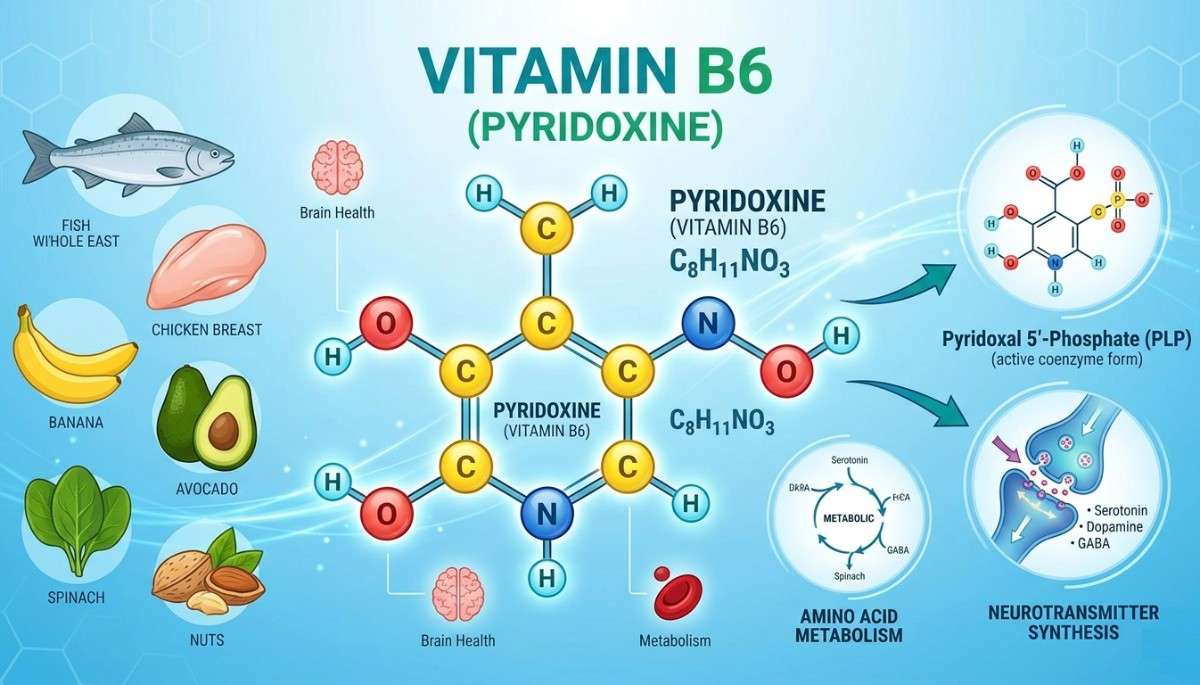
Vitamin B6 is one of the most important water-soluble vitamins your body needs every day. Also known as pyridoxine, this essential nutrient plays a powerful role in brain development, hormone balance, metabolism, and immune health. Despite being widely available in food, many people still suffer from mild to moderate vitamin B6 deficiency without realizing it.
In this guide, you will learn everything about Vitamin B6 — what it is, recommended dosage, health benefits, deficiency symptoms, side effects of excess intake, food sources, and who should or should not take supplements.
What is Vitamin B6?
Vitamin B6 is a water-soluble vitamin that belongs to the B-complex group. It exists in three natural forms:
- Pyridoxine
- Pyridoxal
- Pyridoxamine
The active form in the body is pyridoxal-5-phosphate (PLP), which functions as a coenzyme in more than 100 enzymatic reactions.
Vitamin B6 is crucial for:
- Protein metabolism
- Brain neurotransmitter production
- Red blood cell formation
- Immune system support
- Hormone regulation
- Homocysteine metabolism
Because it is water-soluble, the body does not store large amounts. That means regular intake from food or supplements is necessary.
Vitamin B6 Dosage
The required amount of Vitamin B6 varies by age, gender, and life stage.
Recommended Daily Intake and Upper Limit
| Age Group | Recommended Daily Intake (RDA) | Upper Intake Limit (UL) |
|---|---|---|
| 0–6 months | 0.1 mg | Not established |
| 7–12 months | 0.3 mg | Not established |
| 1–3 years | 0.5 mg | 30 mg |
| 4–8 years | 0.6 mg | 40 mg |
| 9–13 years | 1.0 mg | 60 mg |
| 14–18 years (Male) | 1.3 mg | 80 mg |
| 14–18 years (Female) | 1.2 mg | 80 mg |
| Adults 19–50 years | 1.3 mg | 100 mg |
| Men 51+ years | 1.7 mg | 100 mg |
| Women 51+ years | 1.5 mg | 100 mg |
| Pregnant women | 1.9 mg | 100 mg |
| Breastfeeding women | 2.0 mg | 100 mg |
The upper limit refers to the maximum safe intake from supplements and fortified foods. Exceeding it regularly may cause nerve damage.
20 Benefits of Vitamin B6
- Supports Brain Function – Pyridoxine helps produce neurotransmitters like serotonin and dopamine, improving mood and cognitive performance.
- Reduces Symptoms of Depression – Adequate B6 levels support serotonin production, which may lower the risk of depressive symptoms.
- Prevents Anemia – Vitamin B6 helps produce hemoglobin, reducing the risk of microcytic anemia.
- Boosts Immune System – It enhances immune cell production and supports the body’s ability to fight infections.
- Regulates Hormones – Pyridoxine helps balance estrogen and progesterone levels.
- Relieves PMS Symptoms – It may reduce bloating, irritability, and mood swings associated with premenstrual syndrome.
- Reduces Morning Sickness – Vitamin B6 is commonly recommended to relieve nausea during pregnancy.
- Supports Heart Health – It helps lower homocysteine levels, reducing cardiovascular disease risk.
- Improves Metabolism – Pyridoxine assists in breaking down proteins, fats, and carbohydrates.
- Promotes Healthy Skin – It may reduce acne and skin inflammation.
- Supports Nervous System Health – B6 is essential for proper nerve signaling and protection.
- Enhances Cognitive Development – It plays a key role in brain development in infants and children.
- Helps Manage Rheumatoid Arthritis – Adequate levels may reduce inflammation markers.
- Improves Sleep Quality – Vitamin B6 supports melatonin production.
- Reduces Risk of Kidney Stones – It may help reduce oxalate formation in some individuals.
- Supports Eye Health – Combined with other B vitamins, it may reduce macular degeneration risk.
- Improves Protein Utilization – Athletes may benefit due to enhanced amino acid metabolism.
- Supports Thyroid Function – Pyridoxine assists in hormone regulation.
- Enhances Energy Production – It plays a role in converting food into usable energy.
- Supports Healthy Pregnancy – Essential for fetal brain and nervous system development.
10 Side Effects of Excess Vitamin B6
- Peripheral Neuropathy – High doses over time can cause nerve damage leading to numbness and tingling.
- Loss of Coordination – Excess B6 may affect muscle control and balance.
- Sensitivity to Sunlight – Some individuals may develop photosensitivity.
- Nausea – High supplemental doses can irritate the digestive system.
- Heartburn – Large amounts may cause acid reflux symptoms.
- Painful Skin Lesions – Chronic overdose may lead to skin reactions.
- Fatigue – Excessive intake may paradoxically cause tiredness.
- Headaches – High doses may trigger headaches.
- Numbness in Extremities – A classic sign of toxicity.
- Difficulty Walking – Severe nerve damage may impair mobility.
Toxicity usually occurs from long-term supplementation above 100 mg per day.
Symptoms of Vitamin B6 Deficiency
Pyridoxine deficiency can develop gradually and may include:
- Fatigue
- Irritability
- Depression
- Confusion
- Cracked lips
- Glossitis (swollen tongue)
- Weak immune system
- Anemia
- Peripheral neuropathy
- Skin rashes
Causes of Vitamin B6 Deficiency
Several factors can lead to low B6 levels:
- Poor diet
- Alcohol abuse
- Kidney disease
- Liver disorders
- Autoimmune diseases
- Certain medications (such as anti-seizure drugs)
- Malabsorption disorders
- Pregnancy
Best Food Sources of Vitamin B6
Here are some of the richest natural sources:
| Food | Vitamin B6 (mg per serving) |
|---|---|
| Chickpeas (1 cup) | 1.1 mg |
| Tuna (3 oz) | 0.9 mg |
| Salmon (3 oz) | 0.6 mg |
| Chicken breast (3 oz) | 0.5 mg |
| Potatoes (1 medium) | 0.4 mg |
| Banana (1 medium) | 0.4 mg |
| Fortified cereals | 0.5–2.0 mg |
| Spinach (1 cup cooked) | 0.4 mg |
| Sunflower seeds | 0.5 mg |
| Turkey (3 oz) | 0.5 mg |
Animal-based foods contain the most bioavailable form.
Who is at Risk of Vitamin B6 Deficiency?
- Elderly adults
- Pregnant women
- People with kidney disease
- Alcohol-dependent individuals
- Those with autoimmune disorders
- People with malabsorption conditions
- Individuals on certain medications
Complications of Vitamin B6 Deficiency
Untreated deficiency can lead to:
- Severe anemia
- Nerve damage
- Depression
- Seizures (in severe cases)
- Weakened immune function
- Increased cardiovascular risk
Preventing Vitamin B6 Deficiency
You can prevent deficiency by:
- Eating a balanced diet rich in whole foods
- Including lean meats, legumes, and vegetables
- Limiting alcohol intake
- Using supplements only when medically recommended
- Monitoring levels if you have chronic illness
Symptoms of Vitamin B6 Toxicity
Vitamin B6 toxicity primarily affects the nervous system. Symptoms include:
- Tingling hands and feet
- Numbness
- Burning sensations
- Muscle weakness
- Balance problems
- Sensory nerve damage
These symptoms are usually reversible if supplementation is stopped early.
How to Maintain Healthy Vitamin B6 Levels
- Consume B6-rich foods daily
- Avoid unnecessary high-dose supplements
- Follow RDA guidelines
- Get blood tests if experiencing symptoms
- Maintain gut health for proper absorption
Who Should Take Vitamin B6?
Supplementation may benefit:
- Pregnant women with nausea
- Individuals with confirmed deficiency
- People with anemia
- Those with high homocysteine levels
- Individuals with PMS symptoms
- Elderly adults with poor dietary intake
Always consult a healthcare provider before starting supplements.
Who Should Not Take Vitamin B6?
Avoid high-dose supplements if you:
- Already consume adequate amounts
- Have nerve damage
- Are taking medications that interact
- Are sensitive to B-complex supplements
Best Time to Take Vitamin B6
- Morning with breakfast
- With food to reduce stomach irritation
- Can be taken with other B-complex vitamins
Avoid taking very high doses at night if it affects sleep patterns.
Precautions and Interactions
Vitamin B6 may interact with:
- Anti-seizure medications
- Levodopa (Parkinson’s medication)
- Certain antibiotics
- Theophylline
- Hormonal contraceptives
Precautions:
- Do not exceed 100 mg per day unless prescribed
- Monitor nerve symptoms if using long-term
- Pregnant women should follow medical guidance
Conclusion
Vitamin B6 is a vital nutrient that supports brain health, hormone balance, metabolism, and immune function. While deficiency can lead to anemia, depression, and nerve damage, excessive supplementation can also cause serious neurological issues.
The best approach is to maintain balanced intake through food sources and use supplements only when necessary. By understanding the recommended dosage, benefits, and risks, you can safely support your overall health with adequate Pyridoxine intake. If you suspect a deficiency or experience symptoms of toxicity, consult a healthcare professional for proper testing and guidance.
FAQ’s
What is Vitamin B6 used for?
Pyridoxine is used to support brain function, improve mood, produce red blood cells, boost immunity, and help the body metabolize proteins and carbohydrates.
Can Vitamin B6 help with depression?
Yes, Pyridoxine supports the production of serotonin and other neurotransmitters that regulate mood, which may help reduce symptoms of depression.
Is Vitamin B6 good for anxiety?
Pyridoxine may help reduce anxiety by supporting GABA and serotonin production, which calm the nervous system.
Does Vitamin B6 help with PMS symptoms?
Yes, it may reduce mood swings, irritability, and bloating associated with premenstrual syndrome.
Can pregnant women take Vitamin B6?
Yes, Pyridoxine is often recommended during pregnancy to relieve nausea and morning sickness, but dosage should follow medical advice.
What happens if you take too much Vitamin B6?
Excessive intake, especially above 100 mg daily for long periods, can cause nerve damage, numbness, and difficulty walking.
Is Vitamin B6 good for skin?
Pyridoxine supports healthy skin by reducing inflammation and helping manage certain types of acne and dermatitis.
Can Vitamin B6 increase energy levels?
Yes, it helps convert food into energy, which may reduce fatigue when deficiency is present.
Is it better to get Vitamin B6 from food or supplements?
It is generally better to get Pyridoxine from whole foods unless you have a deficiency or a medical reason for supplementation.
Can Vitamin B6 help lower homocysteine levels?
Yes, Pyridoxine helps regulate homocysteine, which may support heart health when combined with other B vitamins.
Does Vitamin B6 improve sleep?
Pyridoxine supports melatonin production, which may help regulate sleep patterns.
Is vitamin B6 folic acid?
No, Pyridoxine and folic acid are different vitamins; B6 is pyridoxine, while folic acid is vitamin B9.
Which fruit has high B6?
Bananas are one of the best fruit sources of vitamin B6, along with avocados and watermelon.
What foods should I avoid with high B6?
There are no specific foods to avoid, but limit high-dose supplements and excessive fortified foods if your intake is already high.
What happens if you take vitamin B6 every day?
Taking Pyridoxine daily within the recommended dose is safe and supports metabolism, brain function, and immunity, but excessive long-term doses may cause nerve damage.
What not to mix with B6?
Pyridoxine may interact with certain medications like levodopa, anti-seizure drugs, and some antibiotics, so consult a healthcare provider if you take these.
Can B6 deficiency cause depression?
Yes, low Pyridoxine levels may contribute to depression because it helps produce mood-regulating neurotransmitters like serotonin.
Is B6 good for the nervous system?
Yes, Pyridoxine supports healthy nerve signaling and helps maintain proper nervous system function.
Does B6 increase dopamine?
Pyridoxine helps the body produce dopamine, a neurotransmitter involved in mood, motivation, and focus.
Also Read: