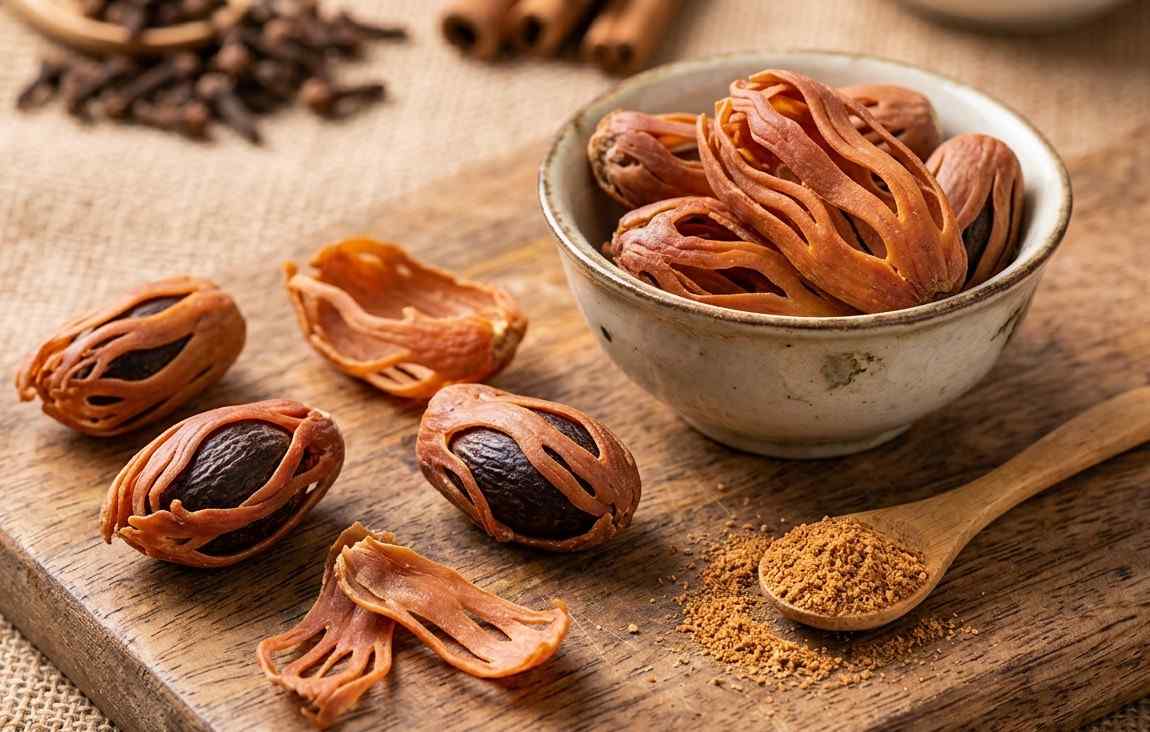
Mace (also known as Javitri, Nutmeg Aril or Macis) is a fragrant spice obtained from the bright red outer covering (aril) of the nutmeg seed. It comes from the tropical evergreen tree Myristica fragrans, which is native to Indonesia and widely cultivated in several tropical regions. Although mace and nutmeg come from the same fruit, mace has a more delicate, sweeter, and slightly peppery flavor.
For centuries, mace has been valued in traditional medicine, culinary practices, and natural wellness remedies. It contains antioxidants, essential oils, vitamins, and minerals that may contribute to overall health when consumed in moderation.
What is Mace?
Mace is the dried, lacy outer covering that surrounds the nutmeg seed. After harvesting, the red aril is carefully separated from the seed and dried until it turns yellowish-orange. It is then sold as whole blades or ground into powder.
Mace is commonly used in baking, soups, sauces, curries, spice blends, desserts, and beverages. It offers a warm, aromatic flavor that is often described as a combination of cinnamon, pepper, and nutmeg.
Nutrition Facts of Mace
The following values are approximate per 100 grams of ground mace.
| Nutrient | Amount |
|---|---|
| Calories | 475 kcal |
| Carbohydrates | 50 g |
| Protein | 7 g |
| Fat | 32 g |
| Dietary Fiber | 21 g |
| Calcium | 252 mg |
| Iron | 13.8 mg |
| Magnesium | 163 mg |
| Phosphorus | 110 mg |
| Potassium | 463 mg |
| Sodium | 16 mg |
| Zinc | 2.3 mg |
| Vitamin A | 102 IU |
| Vitamin C | 21 mg |
Since mace is typically used in small quantities, actual nutrient intake per serving is much lower.
20 Proven Health Benefits of Mace
- Rich in Antioxidants – Nutmeg Aril contains antioxidant compounds that help protect cells from oxidative stress and free radical damage.
- Supports Digestive Health – Nutmeg Aril may stimulate digestive enzymes and improve digestion.
- Reduces Bloating – The spice has traditionally been used to relieve gas and abdominal discomfort.
- Promotes Oral Health – Its antimicrobial properties may help maintain healthier gums and teeth.
- Supports Brain Function – Certain compounds in mace may help support memory and cognitive performance.
- May Improve Mood – Traditional medicine uses Nutmeg Aril to promote relaxation and emotional well-being.
- Supports Heart Health – Antioxidants in mace may contribute to cardiovascular wellness.
- Possesses Anti-Inflammatory Properties – Nutmeg Aril contains compounds that may help reduce inflammation in the body.
- Helps Fight Harmful Bacteria – Natural antimicrobial compounds may help inhibit certain bacteria.
- Supports Liver Health – Some studies suggest mace may help protect liver tissues from oxidative damage.
- May Improve Sleep Quality – Small amounts of Nutmeg Aril have been traditionally used to promote restful sleep.
- Supports Healthy Appetite – Nutmeg Aril may help stimulate appetite in individuals with poor eating habits.
- Promotes Healthy Skin – Antioxidants may support skin protection and overall skin health.
- Supports Respiratory Health – Traditional remedies use mace to help ease minor respiratory discomfort.
- May Help Regulate Blood Sugar – Preliminary research suggests compounds in mace may support healthy glucose metabolism.
- Enhances Nutrient Absorption – Nutmeg Aril may improve digestive efficiency and nutrient utilization.
- Supports Joint Health – Its anti-inflammatory compounds may contribute to joint comfort.
- May Aid Weight Management – Improved digestion and metabolism may indirectly support healthy weight goals.
- Supports Immune Function – The spice contains compounds that may help strengthen the body’s natural defenses.
- Provides Natural Energy – Nutmeg Aril may help reduce fatigue and support overall vitality when included in a balanced diet.
10 Side Effects of Mace
- Nausea and Vomiting – Excessive consumption may cause digestive upset.
- Dizziness – Large amounts of mace can affect the nervous system and lead to dizziness.
- Hallucinations – Very high doses may cause psychoactive effects due to compounds similar to those in nutmeg.
- Rapid Heart Rate – Overconsumption can sometimes increase heart rate.
- Dry Mouth – Some individuals may experience mouth dryness after consuming large quantities.
- Allergic Reactions – Sensitive individuals may develop allergic symptoms.
- Headaches – Excessive intake may trigger headaches in some people.
- Stomach Irritation – Large amounts may irritate the digestive tract.
- Drug Interactions – Nutmeg Aril may interact with certain medications.
- Toxicity Risk – Extremely high doses can result in serious adverse effects and require medical attention.
How to Eat Mace?
Mace can be incorporated into your diet in several ways:
- Add ground mace to curries and soups.
- Sprinkle it into oatmeal or porridge.
- Mix it into smoothies.
- Use it in baked goods such as cakes and cookies.
- Add it to tea or warm milk.
- Blend it into spice mixes.
- Use it in sauces and marinades.
- Add a pinch to rice dishes.
- Include it in desserts and puddings.
- Use it as a seasoning for vegetables.
Tips for Consuming Mace
- Use mace in small amounts because it has a strong flavor.
- Purchase high-quality mace from reputable sources.
- Combine it with other spices for balanced flavor.
- Store it properly to preserve freshness.
- Avoid excessive consumption.
- Start with small quantities if using it for the first time.
- Use freshly ground mace whenever possible.
- Consult a healthcare professional if using it medicinally.
Other Uses of Mace
- Natural Flavoring Agent – Nutmeg Aril is widely used to flavor foods and beverages.
- Baking Ingredient – It adds warmth and aroma to baked products.
- Spice Blends – Nutmeg Aril is an ingredient in many traditional spice mixtures.
- Herbal Remedies – It has been used in traditional medicinal preparations.
- Aromatherapy Applications – The essential oil is sometimes used in aromatic products.
- Perfume Production – Its pleasant scent makes it useful in fragrances.
- Natural Preservative – Antimicrobial properties may help preserve certain foods.
- Massage Oil Ingredient – Mace oil is occasionally included in massage formulations.
- Cosmetic Products – Some skincare products use mace extracts.
- Traditional Ceremonies – Nutmeg Aril has historical significance in various cultural practices.
How Much Mace Can You Eat in a Day?
Mace should be consumed in moderation. For most healthy adults, about ¼ to ½ teaspoon (approximately 0.5–1 gram) of ground mace per day is generally considered sufficient for culinary use.
Higher amounts should only be consumed under professional guidance because excessive intake may cause unwanted side effects.
| Purpose | Suggested Amount |
|---|---|
| Culinary Use | 0.5–1 gram daily |
| Tea Preparation | A pinch to ¼ teaspoon |
| Baking Recipes | ¼–½ teaspoon per recipe |
| Traditional Use | As directed by a healthcare professional |
Dosage requirements may vary based on age, health status, and individual tolerance.
Best Time to Eat Mace
There is no strict rule regarding the best time to consume mace.
- Morning: Can be added to tea, milk, or breakfast dishes.
- Afternoon: Works well in meals and snacks.
- Evening: Small amounts may promote relaxation and restful sleep.
- With Meals: Often best tolerated when consumed as part of food.
Who Should Eat Mace?
- People Seeking Digestive Support – Nutmeg Aril may help promote healthy digestion.
- Individuals Looking for Antioxidants – Its antioxidant compounds may support cellular health.
- Those Interested in Natural Spices – Nutmeg Aril provides flavor and potential wellness benefits.
- People Wanting Culinary Variety – It adds unique aroma and taste to foods.
- Adults Seeking Occasional Relaxation Support – Small amounts may promote calmness.
- Individuals Following Traditional Wellness Practices – Nutmeg Aril has a long history of traditional use.
- Home Bakers – Nutmeg Aril is an excellent ingredient for baked goods.
- People Interested in Herbal Teas – Nutmeg Aril can be used in warming herbal beverages.
Who Should Not Eat Mace?
- Pregnant Women Without Medical Advice – Large amounts should be avoided unless approved by a healthcare provider.
- Breastfeeding Mothers Without Guidance – Safety data on high intake is limited.
- People with Spice Allergies – Allergic individuals should avoid mace.
- Children Consuming Large Amounts – Excessive intake may cause adverse effects.
- Individuals Taking Certain Medications – Potential interactions should be discussed with a healthcare professional.
- People with Severe Liver Conditions – Medical advice is recommended before use.
- Individuals Sensitive to Nutmeg-Related Compounds – They may experience adverse reactions.
- Anyone Planning High-Dose Consumption – Large quantities should be avoided.
How to Store Mace?
- Keep in an Airtight Container – This helps preserve aroma and freshness.
- Store in a Cool Place – Heat can reduce quality over time.
- Protect from Sunlight – Direct light may degrade its essential oils.
- Keep Away from Moisture – Moisture can encourage spoilage.
- Use Dry Utensils – Prevents contamination and clumping.
- Label Storage Date – Helps track freshness.
- Store Whole Mace Longer – Whole blades retain flavor longer than powder.
- Check for Aroma Regularly – A strong fragrance usually indicates freshness.
Precautions and Interactions
- Avoid Excessive Intake – High doses may cause toxicity and unwanted effects.
- Monitor Medication Use – Consult a healthcare professional if taking prescription medicines.
- Use Caution During Pregnancy – Large medicinal doses are not recommended.
- Watch for Allergic Reactions – Stop use if symptoms develop.
- Avoid Combining with Similar High-Dose Spices – Excessive spice consumption may increase side effects.
- Keep Out of Children’s Reach – Large amounts may be harmful to children.
- Do Not Use as a Medical Substitute – Nutmeg Aril should complement, not replace, medical treatment.
- Consult Healthcare Providers for Therapeutic Use – Professional guidance is advisable.
- Start with Small Amounts – This helps assess individual tolerance.
- Use Quality Products – Fresh, high-quality mace provides the best flavor and safety.
Conclusion
Mace is a versatile and aromatic spice derived from the outer covering of the nutmeg seed. Rich in antioxidants and beneficial plant compounds, it has been used for centuries in cooking and traditional wellness practices. Nutmeg Aril may support digestion, heart health, immunity, and overall well-being when consumed in moderation. However, like many spices, excessive intake can lead to side effects and should be avoided. By using mace responsibly and incorporating it into a balanced diet, you can enjoy both its unique flavor and potential health benefits.
FAQ’s
What does mace taste like?
Nutmeg Aril has a warm, slightly sweet, peppery flavor with hints of cinnamon and nutmeg. It is often considered more delicate and aromatic than nutmeg.
Is mace the same as nutmeg?
No. Mace and nutmeg come from the same fruit, but mace is the dried outer covering (aril) of the seed, while nutmeg is the seed itself.
What is mace good for?
Nutmeg Aril is commonly used to support digestion, add flavor to foods, provide antioxidants, and promote overall wellness when consumed in moderation.
Can mace help with digestion?
Yes. Nutmeg Aril has traditionally been used to help reduce bloating, gas, and indigestion while supporting healthy digestion.
Is mace safe to eat daily?
Yes, small culinary amounts of Nutmeg Aril are generally safe for most healthy adults when consumed as part of a balanced diet.
Can mace help with sleep?
Traditionally, small amounts of Nutmeg Aril have been used in warm milk or herbal drinks to promote relaxation and restful sleep.
Does mace contain caffeine?
No. Nutmeg Aril is naturally caffeine-free.
Is mace good for weight loss?
Nutmeg Aril is not a weight-loss food, but its potential digestive and metabolic benefits may support a healthy lifestyle.
Can pregnant women eat mace?
Small amounts used in cooking are generally considered safe, but medicinal or large doses should only be used with medical advice.
Is mace safe for children?
Yes, when used in small amounts as a spice in food. Large quantities should be avoided.
How long does mace stay fresh?
Ground mace typically stays fresh for about 1–2 years, while whole Nutmeg Aril blades can retain quality for up to 3–4 years when properly stored.
Can mace be used in baking?
Yes. Nutmeg Aril is a popular ingredient in cakes, cookies, pastries, puddings, and other baked goods.
Is mace good for immunity?
Nutmeg Aril contains antioxidants and beneficial plant compounds that may help support the body’s natural immune defenses.
Can I use mace instead of nutmeg?
Yes. Nutmeg Aril can often be substituted for nutmeg in recipes, although its flavor is slightly milder and more aromatic.
What is mace called in India?
Mace is commonly called Javitri in India. It is the dried outer covering of the nutmeg seed and is widely used in Indian cooking, spice blends, and traditional remedies.
Is mace a spice?
Yes, mace is a spice. It comes from the reddish outer layer (aril) that surrounds the nutmeg seed and is valued for its warm, aromatic, and slightly sweet flavor.
What is another name for mace?
Another name for mace is Javitri. It is also sometimes referred to as nutmeg aril because it is the outer covering of the nutmeg seed.
Also Read: