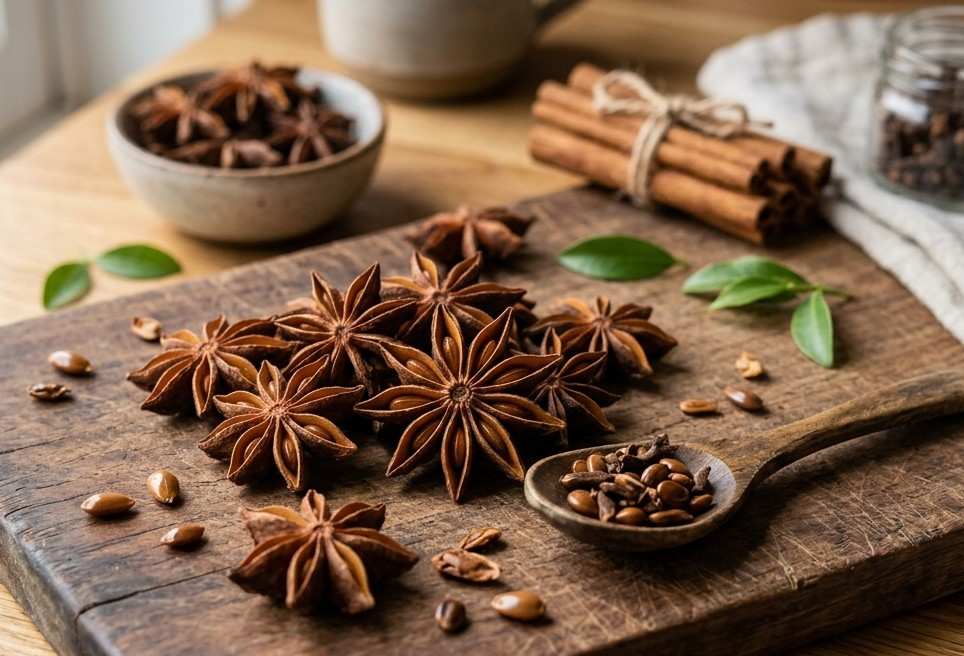
Star anise is one of the most recognizable spices in the world due to its beautiful star-shaped appearance and sweet, licorice-like flavor. Commonly used in Asian cuisine, herbal teas, traditional remedies, and spice blends, star anise has been valued for centuries for both its culinary and medicinal properties.
Rich in antioxidants, essential oils, and plant compounds, star anise is more than just a flavoring agent. Research suggests that it may support digestion, immunity, respiratory health, and overall wellness when consumed in moderation.
In this guide, you’ll learn everything about star anise (also known as Chakra Phool, Chinese Star Anise, Eight-Cornered Anise, Anise Star, Badian or Badiyan), including its nutritional value, science-backed health benefits, side effects, uses, daily intake recommendations, storage methods, and precautions.
What is Star Anise?
Star anise is the dried fruit of the evergreen tree Illicium verum, native to China and Vietnam. The fruit forms a distinctive star shape with six to eight points, each containing a seed.
The spice is known for its sweet, aromatic flavor, which resembles licorice due to the presence of anethole, the same compound found in fennel and anise seeds.
Star anise is widely used in:
- Chinese cuisine
- Vietnamese pho
- Indian spice blends
- Herbal teas
- Traditional medicine
- Baking and desserts
It is also an important source of shikimic acid, a compound used in the production of certain antiviral medications.
Nutrition Facts of Star Anise
The following nutritional values are approximate for 100 grams of dried star anise.
| Nutrient | Amount |
|---|---|
| Calories | 337 kcal |
| Protein | 18 g |
| Carbohydrates | 50 g |
| Dietary Fiber | 15 g |
| Fat | 16 g |
| Calcium | 646 mg |
| Iron | 37 mg |
| Magnesium | 170 mg |
| Phosphorus | 440 mg |
| Potassium | 1441 mg |
| Zinc | 5 mg |
| Vitamin C | 21 mg |
| Vitamin A | Small amounts |
| Essential Oils | Rich source |
| Antioxidants | High |
Because star anise is usually consumed in small quantities, actual nutrient intake per serving is much lower.
20 Proven Health Benefits of Star Anise
- Rich in Antioxidants: Star anise contains powerful antioxidants that help protect cells from oxidative stress and free radical damage.
- Supports Immune Health: Its natural plant compounds may strengthen the body’s immune defenses against infections.
- Promotes Healthy Digestion: Star anise has traditionally been used to relieve indigestion, bloating, and stomach discomfort.
- May Help Fight Bacteria: Certain compounds in anise star possess antibacterial properties that may inhibit harmful microbes.
- Supports Respiratory Health: Star anise tea is commonly used to soothe coughs and support respiratory function.
- May Have Antiviral Properties: The spice contains shikimic acid, which is used in the production of antiviral medications.
- Reduces Gas and Bloating: It may help relax digestive muscles and reduce intestinal gas.
- Supports Heart Health: Antioxidants in anise star may contribute to better cardiovascular function.
- May Help Regulate Blood Sugar: Some studies suggest that anise star compounds may assist in maintaining healthy glucose levels.
- Promotes Healthy Skin: Antioxidants may help protect skin cells from environmental damage.
- Supports Oral Health: Its antimicrobial effects may help reduce harmful bacteria in the mouth.
- May Reduce Inflammation: Natural compounds in anise star may help manage inflammatory processes in the body.
- Supports Better Sleep: The calming aroma and tea preparations may encourage relaxation before bedtime.
- May Ease Menstrual Discomfort: Traditional medicine uses anise star to support women’s reproductive health.
- Enhances Nutrient Absorption: Healthy digestion supported by star anise may improve nutrient utilization.
- Supports Healthy Circulation: Certain compounds may help promote proper blood flow.
- May Freshen Breath: Its pleasant aroma can naturally help combat bad breath.
- Supports Metabolic Health: The spice may contribute to overall metabolic efficiency when included in a balanced diet.
- May Help Relieve Nausea: Star anise tea is sometimes used as a traditional remedy for mild nausea.
- Supports Overall Wellness: Its combination of antioxidants, minerals, and beneficial plant compounds contributes to general health.
10 Side Effects of Star Anise
- Allergic Reactions: Some individuals may experience itching, swelling, or allergic responses after consuming anise star.
- Digestive Discomfort: Excessive intake may cause stomach irritation, nausea, or digestive upset.
- Drug Interactions: Star anise may interact with certain medications and herbal supplements.
- Hormonal Effects: Its compounds may influence hormone-sensitive conditions in susceptible individuals.
- Headaches: Consuming large amounts may occasionally trigger headaches in sensitive people.
- Dizziness: Excessive intake may cause mild dizziness in rare cases.
- Skin Irritation: Direct contact with concentrated anise star oil may irritate the skin.
- Pregnancy Concerns: Pregnant women should consult a healthcare provider before using medicinal amounts.
- Neurological Symptoms: Contaminated products containing Japanese anise star may cause serious neurological effects.
- Overconsumption Risks: Excessive consumption may increase the likelihood of unwanted side effects.
How to Eat Star Anise?
There are many enjoyable ways to include star anise in your diet:
- Brew it into herbal tea.
- Add whole pods to soups and broths.
- Use it in curries and stews.
- Include it in rice dishes.
- Add it to baked goods.
- Use it in spice blends.
- Flavor desserts and puddings.
- Add it to mulled beverages.
- Infuse it into syrups.
- Use it in marinades for meat and vegetables.
Tips for Consuming Star Anise
- Use only food-grade Chinese anise star.
- Start with small amounts.
- Remove whole pods before serving dishes if desired.
- Store properly to preserve flavor.
- Pair with cinnamon, cloves, and fennel for enhanced taste.
- Avoid excessive daily consumption.
- Use fresh, aromatic pods for best results.
- Consult a healthcare professional before medicinal use.
- Check labels carefully when purchasing.
- Drink plenty of water when consuming concentrated preparations.
Other Uses of Star Anise
- Natural Air Freshener: Its pleasant aroma can help freshen indoor spaces naturally.
- Potpourri Ingredient: Star anise is commonly used in decorative potpourri blends.
- Essential Oil Production: The spice is used to produce aromatic essential oils.
- Soap Making: Anise star oil is added to some handmade soaps.
- Candle Fragrance: It is frequently used in scented candles.
- Traditional Medicine: Various cultures have used anise star in herbal remedies for centuries.
- Perfume Ingredient: Its sweet scent is valued in fragrance formulations.
- Flavoring Agent: Star anise is widely used in beverages and confectionery products.
- Holiday Decorations: Whole pods are often used in seasonal decorations.
- Natural Insect Repellent: The aroma may help discourage certain insects.
How Much Star Anise Can You Eat in a Day?
For most healthy adults, using 1–2 whole star anise pods per day in tea, soups, or recipes is generally considered sufficient.
Since star anise is highly concentrated in flavor and active compounds, moderation is recommended. Excessive consumption does not necessarily provide additional benefits and may increase the risk of side effects.
Children, pregnant women, breastfeeding women, and individuals with medical conditions should consult a healthcare professional before consuming medicinal quantities.
Star Anise Dosage
The appropriate dosage depends on how it is being used.
| Form | Typical Dosage |
|---|---|
| Whole Pods | 1–2 pods daily |
| Tea | 1 pod per cup |
| Powder | ¼–½ teaspoon daily |
| Culinary Use | As required in recipes |
| Essential Oil | External use only as directed |
Always follow product instructions when using supplements or extracts.
Best Time to Eat Star Anise
The ideal time depends on your purpose:
- Morning: May support digestion and metabolism.
- After Meals: Often used to reduce bloating and digestive discomfort.
- Afternoon: Can be enjoyed as a refreshing herbal tea.
- Evening: Warm anise star tea may promote relaxation.
- During Cold Weather: Frequently consumed in warming beverages and soups.
There is no single best time; consistency and moderation matter most.
Who Should Eat Star Anise?
- People Seeking Digestive Support: Anise star may help reduce bloating and support healthy digestion.
- Tea Enthusiasts: It provides a unique flavor and aroma in herbal beverages.
- Individuals Looking for Antioxidants: Star anise contains beneficial antioxidant compounds.
- People Interested in Natural Spices: It is a versatile addition to healthy cooking.
- Those Wanting Flavor Without Excess Salt: Its strong taste can enhance meals naturally.
- Adults Seeking Variety in Their Diet: Anise star adds both flavor and nutritional value.
- People Enjoying Traditional Remedies: It has a long history of use in herbal practices.
- Home Cooks: The spice can elevate soups, curries, and desserts.
- Individuals Seeking Respiratory Comfort: Traditional uses include support for respiratory wellness.
- People Interested in Herbal Teas: Anise star tea is a popular caffeine-free option.
Who Should Not Eat Star Anise?
- People With Known Allergies: Those allergic to anise star should avoid it completely.
- Infants and Young Babies: Star anise tea is generally not recommended for infants.
- Individuals Sensitive to Spices: It may trigger discomfort in sensitive people.
- People Taking Certain Medications: Potential interactions should be discussed with a healthcare provider.
- Pregnant Women Without Medical Advice: Medicinal use should only occur under professional guidance.
- Breastfeeding Women Without Medical Advice: Consultation is recommended before regular use.
- People With Hormone-Sensitive Conditions: Medical guidance may be necessary.
- Individuals With Severe Digestive Disorders: Excessive spice intake may worsen symptoms.
- Those Using Herbal Supplements Frequently: Combining multiple herbs may increase interaction risks.
- People Using Unknown Star Anise Products: Unverified products may pose contamination risks.
How to Store Star Anise?
- Use Airtight Containers: Airtight storage helps preserve flavor and aroma.
- Keep Away From Moisture: Moisture can reduce quality and encourage spoilage.
- Store in a Cool Place: Cool environments help maintain freshness.
- Avoid Direct Sunlight: Sunlight can degrade essential oils and flavor compounds.
- Keep Away From Heat Sources: Excessive heat shortens shelf life.
- Store Whole Pods When Possible: Whole pods retain flavor longer than ground anise star.
- Label Purchase Dates: Tracking dates helps ensure freshness.
- Avoid Frequent Opening: Limiting air exposure preserves quality.
- Check for Mold Regularly: Discard any pods showing signs of spoilage.
- Use Within One to Two Years: Properly stored anise star maintains best quality during this period.
Precautions and Interactions
- Medication Interaction Risk: Consult a healthcare professional if taking prescription medications.
- Pregnancy Precaution: Avoid medicinal doses unless approved by a healthcare provider.
- Breastfeeding Consideration: Seek professional advice before regular use.
- Allergy Awareness: Stop use immediately if allergic symptoms occur.
- Source Verification: Purchase from reputable suppliers to avoid contamination.
- Children’s Safety: Keep concentrated products out of reach of children.
- Essential Oil Caution: Never consume essential oil unless specifically instructed by a qualified professional.
- Moderation Is Important: Excessive consumption may increase side effects.
- Medical Condition Monitoring: Individuals with chronic health conditions should seek medical guidance.
- Supplement Combination Warning: Use caution when combining anise star with other herbal supplements.
Conclusion
Star anise is a flavorful and aromatic spice that offers much more than culinary appeal. Rich in antioxidants, minerals, and beneficial plant compounds, it has long been used in traditional medicine and modern cooking alike. From supporting digestion and respiratory health to enhancing soups, teas, and desserts, anise star is a versatile ingredient with many potential benefits.
When consumed in moderation and sourced from reputable suppliers, anise star can be a valuable addition to a balanced diet. As with any herb or spice used for medicinal purposes, proper dosage, storage, and awareness of possible interactions are important for safe consumption.
FAQ’s
What does star anise taste like?
Anise star has a sweet, warm, and licorice-like flavor with slightly spicy undertones.
Is star anise the same as anise seed?
No. Although they have a similar flavor due to the compound anethole, anise star and anise seed come from different plants.
Can I eat star anise every day?
Yes, most healthy adults can consume small amounts of anise star daily as part of a balanced diet.
What is star anise good for?
Anise star may support digestion, immune health, respiratory wellness, and overall antioxidant intake.
Can star anise help with digestion?
Yes, Anise star has traditionally been used to help relieve bloating, gas, and mild digestive discomfort.
Does star anise contain caffeine?
No, Anise star is naturally caffeine-free.
Can star anise help with coughs?
Anise star tea is commonly used in traditional remedies to soothe coughs and support respiratory comfort.
Is star anise safe during pregnancy?
Pregnant women should consult a healthcare professional before consuming medicinal amounts of anise star.
Can star anise lower blood sugar?
Some studies suggest it may support healthy blood sugar levels, but it should not replace medical treatment.
Is star anise good for weight loss?
Anise star may support digestion and healthy eating habits, but it is not a direct weight-loss solution.
Can children consume star anise?
Children should only consume anise star under appropriate guidance, and star anise tea is generally not recommended for infants.
How long does star anise last?
When stored properly in an airtight container, whole anise star can retain quality for up to 1–2 years.
Can I eat star anise pods directly?
Yes, but the pods are hard and intensely flavored, so they are more commonly used in cooking or tea and then removed before serving.
Is star anise good for immunity?
Its antioxidant and antimicrobial compounds may help support a healthy immune system.
What is the difference between Chinese and Japanese star anise?
Chinese star anise is edible, while Japanese star anise is toxic and should never be consumed.
Can star anise be used in desserts?
Yes, it is commonly used in cakes, cookies, puddings, syrups, and other sweet recipes.
Does star anise have antioxidants?
Yes, anise star is rich in antioxidants that help protect cells from oxidative stress.
What spices pair well with star anise?
Star anise pairs well with cinnamon, cloves, cardamom, fennel, ginger, and nutmeg.
What is star anise called in India?
Star anise is commonly called Chakri Phool, Chakra Phool, or Badian in India. It is widely used in biryanis, curries, masala blends, and herbal teas.
Can I mix cloves and star anise?
Yes, cloves and anise star can be mixed together. They complement each other well in teas, soups, curries, desserts, and spice blends, creating a warm, aromatic flavor while providing antioxidant benefits.
What does star anise do for a woman?
Star anise may help support digestion, provide antioxidants, promote relaxation, and traditionally has been used to support women’s hormonal and menstrual health. However, more research is needed to confirm some of these effects.
What is the best way to consume star anise?
The best way to consume anise star is by using 1–2 whole pods in herbal tea, soups, broths, curries, or rice dishes. Brewing it as tea is one of the most popular and convenient methods.
Also Read: