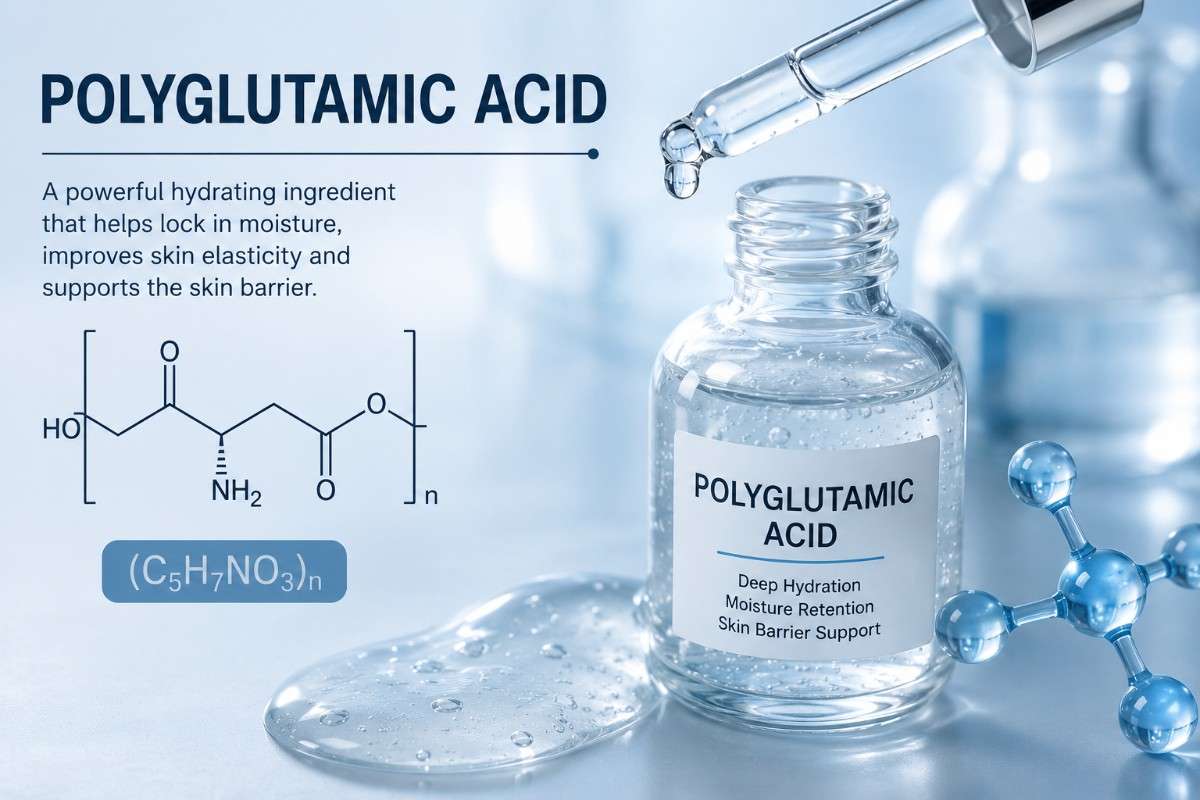
Polyglutamic Acid (PGA) has become one of the most talked-about skincare ingredients in recent years due to its exceptional hydrating properties. While ingredients such as hyaluronic acid and glycerin have long dominated the skincare industry, polyglutamic acid is gaining recognition for its ability to attract and retain large amounts of moisture, helping the skin appear smoother, plumper, and healthier.
Polyglutamic Acid acts as a powerful humectant that supports skin hydration. It also works well alongside ingredients like Niacinamide, Ceramides, and Peptides, which are commonly used to strengthen the skin barrier and improve overall skin health.
Originally derived from the fermentation of soybeans used in traditional Japanese natto, polyglutamic acid is a naturally occurring biopolymer made up of glutamic acid molecules linked together. Researchers have found that this ingredient forms a lightweight moisture-retaining film on the skin’s surface, helping reduce water loss while improving overall skin hydration.
This guide explores everything you need to know about polyglutamic acid (also known as Poly-γ-Glutamic Acid, Gamma-Polyglutamic Acid or Poly Gamma Glutamic Acid), including its properties, benefits, side effects, dosage recommendations, precautions, and scientific evidence.
What is Polyglutamic Acid?
Polyglutamic Acid (PGA) is a naturally occurring peptide polymer composed of multiple glutamic acid molecules connected through amide bonds. It is commonly produced through the fermentation process involving Bacillus subtilis bacteria.
Polyglutamic acid is highly valued in skincare because of its remarkable ability to bind water molecules and create a protective moisture barrier on the skin. Studies suggest that it can hold several times more water than many traditional moisturizing ingredients, making it particularly effective for dry and dehydrated skin.
Unlike exfoliating acids such as glycolic acid or salicylic acid, polyglutamic acid is not an exfoliant. Instead, it functions primarily as a humectant and film-forming agent that helps lock moisture into the skin.
Properties of Polyglutamic Acid
Polyglutamic acid possesses several unique characteristics that make it valuable in cosmetic and dermatological applications:
Water-Soluble
It dissolves easily in water, making it suitable for serums, lotions, creams, and masks.
Excellent Moisture Retention
It can attract and retain significant amounts of water, helping maintain skin hydration.
Biodegradable
Polyglutamic acid is naturally biodegradable and environmentally friendly.
Film-Forming Ability
It creates a lightweight protective layer that helps reduce moisture loss.
Biocompatible
The ingredient is generally well tolerated by most skin types.
Non-Comedogenic
It typically does not clog pores when used appropriately.
Transparent and Lightweight
It leaves minimal residue and works well under makeup.
Fermentation-Derived
Most commercial polyglutamic acid is produced through microbial fermentation.
Skin-Friendly pH Compatibility
It remains stable within pH ranges commonly used in skincare products.
Synergistic with Other Ingredients
It works effectively alongside hyaluronic acid, ceramides, peptides, niacinamide, and vitamin C.
How Does Polyglutamic Acid Work?
Polyglutamic Acid Formula
Polyglutamic acid is represented as:
(C5H7NO3)n
where “n” represents the number of repeating glutamic acid units.
Mechanism of Action
Polyglutamic acid works through multiple pathways:
- It attracts moisture from the environment.
- It forms a breathable protective film over the skin.
- It reduces transepidermal water loss (TEWL).
- It helps preserve natural moisturizing factors.
- It supports skin barrier integrity.
- It enhances skin softness and elasticity.
- It may improve the effectiveness of other hydrating ingredients.
This multi-layered hydration support makes polyglutamic acid particularly useful for individuals experiencing dryness, dehydration, or compromised skin barriers.
20 Science Backed Benefits of Polyglutamic Acid
- Deep Hydration Support: Polyglutamic acid attracts and retains water, helping keep skin hydrated throughout the day.
- Reduces Water Loss: It forms a protective barrier that helps decrease transepidermal water loss.
- Improves Skin Elasticity: Better hydration may contribute to improved skin flexibility and resilience.
- Supports Skin Barrier Function: It helps strengthen the skin’s natural protective barrier.
- Enhances Skin Smoothness: Regular use may make the skin feel softer and smoother.
- Plumping Effect: Increased moisture retention can create a fuller, plumper skin appearance.
- Minimizes Dry Patches: It helps relieve visible dryness and rough texture.
- May Reduce Fine Lines: Hydrated skin often shows fewer dehydration-related fine lines.
- Boosts Hyaluronic Acid Performance: Polyglutamic acid may enhance moisture retention when combined with hyaluronic acid.
- Improves Skin Texture: Consistent use can support a more refined skin surface.
- Supports Healthy Aging: Maintaining hydration may help reduce visible signs of aging.
- Calms Mild Irritation: Improved barrier function may help reduce discomfort associated with dryness.
- Enhances Skin Radiance: Well-hydrated skin often appears brighter and healthier.
- Provides Long-Lasting Moisture: The protective film helps sustain hydration for extended periods.
- Suitable for Sensitive Skin: Its gentle nature makes it appropriate for many sensitive skin types.
- Improves Makeup Application: Hydrated skin can provide a smoother canvas for cosmetics.
- Supports Post-Exfoliation Recovery: It may help replenish moisture after exfoliating treatments.
- May Improve Skin Firmness: Enhanced hydration can contribute to a firmer appearance.
- Helps Maintain Skin Comfort: Proper moisture levels reduce feelings of tightness and dryness.
- Versatile Cosmetic Ingredient: It functions effectively in various skincare formulations and delivery systems.
Related Articles:
10 Side Effects of Polyglutamic Acid
Although generally considered safe, some individuals may experience side effects.
- Skin Irritation: Sensitive individuals may experience mild irritation after application.
- Redness: Temporary redness can occur in susceptible users.
- Itching: Some users may notice mild itching during initial use.
- Burning Sensation: Rare cases of slight burning or stinging have been reported.
- Allergic Reactions: Individuals allergic to formulation ingredients may experience reactions.
- Rash Development: Skin rashes may occur in sensitive individuals.
- Product Build-Up: Excessive application can leave a sticky residue on the skin.
- Interaction with Other Actives: Combining multiple active ingredients may increase sensitivity in some users.
- Eye Irritation: Accidental contact with eyes may cause discomfort.
- Breakouts in Rare Cases: Certain formulations may contribute to acne in susceptible individuals.
How to Use Polyglutamic Acid?
Proper use maximizes the benefits of polyglutamic acid.
Step 1: Cleanse Your Face
Use a gentle cleanser to remove dirt, oil, and impurities.
Step 2: Apply Toner (Optional)
Use a hydrating toner if desired.
Step 3: Apply Polyglutamic Acid Serum
Apply a few drops to slightly damp skin.
Step 4: Gently Massage
Spread evenly across the face and neck.
Step 5: Apply Moisturizer
Seal in hydration with a moisturizer.
Step 6: Use Sunscreen During Daytime
Apply broad-spectrum SPF 30 or higher every morning.
What is the Best Time to Use Polyglutamic Acid?
Polyglutamic acid can be used both morning and evening.
Morning Use
Morning application helps maintain hydration throughout the day and creates a smoother makeup base.
Evening Use
Nighttime use supports overnight moisture replenishment and skin recovery.
Twice-Daily Use
Most individuals can safely use polyglutamic acid twice daily for optimal hydration.
Who Should Use Polyglutamic Acid?
- People with Dry Skin: Individuals experiencing dryness may benefit from its strong moisture-retaining properties.
- People with Dehydrated Skin: It helps replenish water content in moisture-deficient skin.
- Individuals with Aging Skin: Mature skin may benefit from improved hydration and plumpness.
- People Living in Dry Climates: Environmental dryness increases the need for moisture retention.
- Sensitive Skin Types: Many sensitive skin users tolerate polyglutamic acid well.
- People Using Retinoids: It may help offset dryness associated with retinoid use.
- Frequent Travelers: Air travel often contributes to skin dehydration.
- People with Dull Skin: Enhanced hydration can improve overall radiance.
- Individuals with Compromised Skin Barriers: It supports barrier function and moisture balance.
- Anyone Seeking Enhanced Hydration: Most skin types can benefit from improved moisture retention.
Who Should Not Use Polyglutamic Acid?
- Individuals with Known Allergies: Anyone allergic to product ingredients should avoid use.
- People Experiencing Active Skin Reactions: Existing irritation may worsen with new products.
- Users with Severe Contact Dermatitis: Dermatologist guidance is recommended before use.
- People with Open Wounds: Avoid application on broken or damaged skin.
- Individuals with Product Sensitivities: Patch testing is advised before full application.
- Those Experiencing Severe Rosacea Flares: Consult a healthcare professional before introducing new products.
- People with Severe Eczema Flares: Active flare-ups may require specialized treatment.
- Users Ignoring Patch Testing: Sensitive individuals should patch test first.
- Children Unless Recommended: Use should be guided by healthcare professionals.
- Individuals Advised Against Use by a Dermatologist: Follow personalized medical recommendations.
How Much Polyglutamic Acid Should You Use Daily?
There is no officially established Recommended Daily Allowance (RDA) for topical polyglutamic acid.
Serum
Typically 2–4 drops per application.
Cream or Moisturizer
A pea-sized amount is usually sufficient.
Frequency
One to two applications daily are commonly recommended.
Concentration
Most skincare products contain approximately 0.1%–5% polyglutamic acid depending on formulation goals.
Using more product does not necessarily improve results and may increase residue or irritation.
Other Uses of Polyglutamic Acid
Although best known in skincare, Poly-γ-Glutamic acid has several additional applications.
Cosmetic Industry
Used in moisturizers, masks, serums, and anti-aging products.
Drug Delivery Systems
Researchers investigate PGA as a carrier for pharmaceutical compounds.
Wound Care Materials
Its moisture-retaining properties may support wound-dressing technologies.
Food Industry
Certain forms are used as food additives and texture modifiers.
Agriculture
Polyglutamic acid can improve water retention in soil.
Biomedical Engineering
Used in biomaterials and tissue engineering research.
Nutraceutical Applications
Studied for potential dietary and health-support functions.
Personal Care Products
Included in shampoos, conditioners, and body care products.
Precautions and Interactions
- Patch Test First: Apply to a small area before widespread use.
- Avoid Eye Contact: Keep products away from the eyes to prevent irritation.
- Follow Product Instructions: Use according to manufacturer recommendations.
- Do Not Overapply: Excessive use may leave a sticky residue.
- Monitor Skin Response: Discontinue use if irritation develops.
- Use Sunscreen Daily: Sun protection supports overall skin health.
- Combine Carefully with Active Ingredients: Introduce new ingredients gradually.
- Store Properly: Keep products away from excessive heat and sunlight.
- Consult a Dermatologist if Unsure: Professional guidance is beneficial for sensitive skin.
- Check Ingredient Lists: Review formulations for potential allergens.
Conclusion:
Polyglutamic acid is a powerful hydration-focused skincare ingredient that has earned attention for its ability to attract, retain, and preserve moisture within the skin. Unlike exfoliating acids, it functions primarily as a humectant and barrier-supporting ingredient, making it suitable for a wide variety of skin types.
Research suggests that Poly-γ-Glutamic acid may improve hydration, skin smoothness, elasticity, radiance, and barrier function while helping reduce moisture loss. When incorporated into a well-rounded skincare routine, it can complement ingredients such as hyaluronic acid, ceramides, niacinamide, and peptides.
Although generally well tolerated, patch testing and proper product selection remain important, especially for individuals with sensitive skin or known allergies. As with any skincare ingredient, consistent use and realistic expectations are key to achieving optimal results.
FAQ’s
What does Polyglutamic Acid do to the skin?
Poly-γ-Glutamic Acid hydrates the skin, helps lock in moisture, supports the skin barrier, and makes the skin appear smoother and plumper.
Is Polyglutamic Acid good for hair?
Yes, Poly-γ-Glutamic Acid helps retain moisture in the hair, improving softness, hydration, and manageability.
What is Polyglutamic Acid used for?
Poly-γ-Glutamic Acid is primarily used in skincare products to improve hydration, reduce moisture loss, support the skin barrier, and help the skin appear smoother and plumper.
Is Polyglutamic Acid better than Hyaluronic Acid?
Poly-γ-Glutamic Acid and Hyaluronic Acid serve similar hydration purposes but work differently. Polyglutamic Acid helps lock moisture into the skin’s surface, while Hyaluronic Acid attracts water into the skin. Many skincare experts recommend using both together for enhanced hydration.
Can I use Polyglutamic Acid every day?
Yes, Poly-γ-Glutamic Acid is generally gentle enough for daily use and can be applied once or twice daily as part of a skincare routine.
What skin types can use Polyglutamic Acid?
Poly-γ-Glutamic Acid is suitable for most skin types, including dry, normal, combination, oily, and sensitive skin.
Can Polyglutamic Acid cause acne?
Poly-γ-Glutamic Acid itself is generally non-comedogenic and unlikely to cause acne. However, breakouts may occur if other ingredients in the product are not suitable for your skin type.
Can I use Polyglutamic Acid with Vitamin C?
Yes, Poly-γ-Glutamic Acid works well with Vitamin C and may help reduce dryness while enhancing overall skin hydration.
Can I use Polyglutamic Acid with Retinol?
Yes, Poly-γ-Glutamic Acid can be paired with retinol. Its moisturizing properties may help counteract the dryness and irritation sometimes associated with retinol use.
How long does Polyglutamic Acid take to work?
Many users notice improved hydration and smoother-feeling skin within a few days, while more noticeable improvements in skin texture may take several weeks of consistent use.
Is Polyglutamic Acid safe for sensitive skin?
Yes, Poly-γ-Glutamic Acid is generally considered suitable for sensitive skin, though a patch test is recommended before first use.
Can Polyglutamic Acid be used around the eyes?
Yes, many formulations are gentle enough for use around the eye area, but avoid direct contact with the eyes and follow product instructions.
Can I use Polyglutamic Acid with Niacinamide?
Yes, Poly-γ-Glutamic Acid and niacinamide work well together and are commonly combined in skincare routines to support hydration and skin barrier health.
Is Polyglutamic Acid vegan?
Most commercially produced Poly-γ-Glutamic Acid is made through bacterial fermentation and is considered vegan-friendly, but it is best to check the manufacturer’s labeling.
Can pregnant women use Polyglutamic Acid?
Topical Poly-γ-Glutamic Acid is generally considered low risk, but pregnant or breastfeeding women should consult their healthcare provider before using new skincare products.
Does Polyglutamic Acid lighten skin?
Poly-γ-Glutamic Acid is not a skin-lightening ingredient. However, improved hydration may make the skin appear brighter and more radiant.
Can Polyglutamic Acid replace a moisturizer?
No, Poly-γ-Glutamic Acid is best used alongside a moisturizer. It helps attract and retain moisture, while moisturizers help seal that hydration into the skin.
Is Polyglutamic Acid an exfoliating acid?
No, Poly-γ-Glutamic Acid is not an exfoliating acid. Unlike glycolic acid or salicylic acid, it primarily functions as a hydrating and moisture-retaining ingredient.
Can men use Polyglutamic Acid?
Yes, Poly-γ-Glutamic Acid is suitable for both men and women and can be incorporated into any skincare routine focused on hydration.
What should not be mixed with Polyglutamic Acid?
Poly-γ-Glutamic Acid is compatible with most skincare ingredients, including hyaluronic acid, niacinamide, peptides, ceramides, retinol, and Vitamin C. There are no widely recognized ingredient conflicts.
How should Polyglutamic Acid be stored?
Store Poly-γ-Glutamic Acid products in a cool, dry place away from direct sunlight and heat. Keep the container tightly closed after use.
Sources / References:
- National Center for Biotechnology Information (NCBI) – Poly-γ-Glutamic Acid: Production, Properties and Applications
- NCBI – Biomedical Applications of Polyglutamic Acid
- International Journal of Biological Macromolecules – Polyglutamic Acid Research
- Journal of Cosmetic Dermatology – Advances in Skin Hydration Ingredients
- International Journal of Cosmetic Science – Humectants and Skin Barrier Function
- American Academy of Dermatology (AAD) – Moisturizing and Skin Barrier Health
- Dermatologic Therapy. Hydration and Anti-Aging Skincare Research
- Cosmetic Ingredient Review (CIR) Safety Assessments
- Frontiers in Bioengineering and Biotechnology. Polyglutamic Acid-Based Biomaterials
Also Read:
- Azelaic Acid: 15 Benefits, Side Effects, Precautions & How to Use
- Lactic Acid: 15 Benefits, Side Effects, Precautions & How to Use
- Hyaluronic Acid: 15 Benefits, Side Effects, Precautions & How to Use
About the Author:
Written by: Kirti Solanki (Health Content Researcher)
Kirti Solanki is a Health Content Researcher who creates evidence-based articles on nutrition, wellness, skincare, and natural health. Her content is developed using scientific studies, reputable medical sources, and expert-reviewed research to provide accurate and reliable health information.
Disclaimer:
This article is for informational and educational purposes only and is not intended as medical advice, diagnosis, or treatment. Always consult a qualified healthcare professional before using any new skincare product or supplement, especially if you have a medical condition, allergies, or are pregnant or breastfeeding.