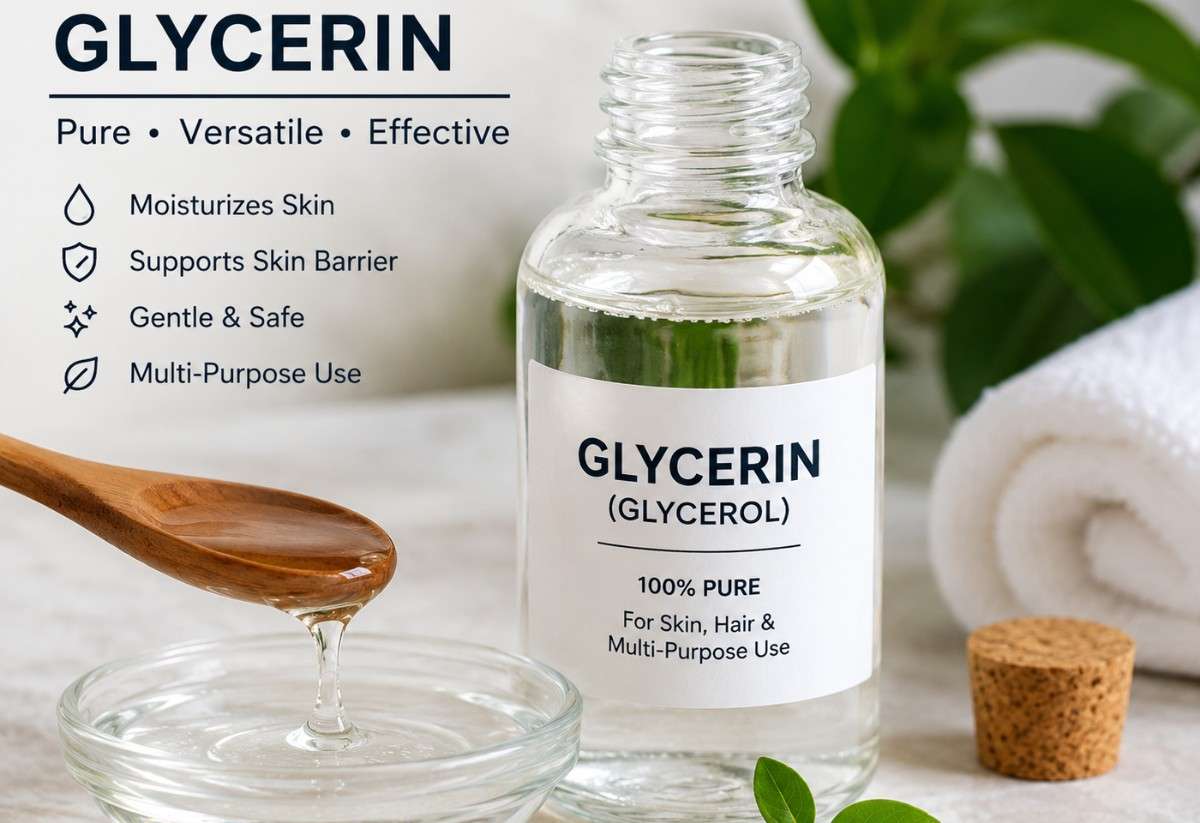
Glycerin is one of the most widely used ingredients in skincare, cosmetics, pharmaceuticals, and food products. Known for its exceptional moisturizing properties, glycerin helps attract and retain water, making it a popular ingredient in lotions, creams, soaps, shampoos, and personal care products. Similar to Hyaluronic Acid, Polyglutamic Acid, and Mandelic Acid, glycerin is highly valued for its ability to improve skin hydration and strengthen the skin barrier.
Whether used in skincare routines, medicinal formulations, or food products, glycerin offers numerous benefits backed by scientific research. Understanding how glycerin works, its benefits, potential side effects, and proper usage can help you get the most out of this versatile compound.
What is Glycerin?
Glycerin, also known as glycerol, is a colorless, odorless, sweet-tasting liquid naturally derived from plant oils, animal fats, or produced synthetically. It belongs to a class of compounds called polyols (sugar alcohols) and is highly valued for its humectant properties.
As a humectant, glycerin attracts water from the surrounding environment and deeper layers of the skin, helping maintain hydration. Due to its safety profile and effectiveness, glycerin is commonly found in skincare products, pharmaceuticals, food products, and oral care formulations.
Glycerin Also Known As:
- Glycerol
- Propane-1,2,3-triol
- Vegetable Glycerin
- Glycerine
- E422 (Food Additive)
Properties of Glycerin
| Property | Description |
|---|---|
| Chemical Name | Glycerol |
| Molecular Formula | C₃H₈O₃ |
| Molecular Weight | 92.09 g/mol |
| Appearance | Clear, colorless liquid |
| Odor | Odorless |
| Taste | Sweet |
| Solubility | Highly soluble in water |
| Source | Plant oils, animal fats, synthetic production |
| pH | Neutral to slightly acidic |
| Function | Humectant, moisturizer, solvent |
| Boiling Point | 290°C |
| Density | Approximately 1.26 g/cm³ |
| Stability | Stable under normal conditions |
| Common Uses | Cosmetics, pharmaceuticals, food products |
How Does Glycerin Work?
Glycerin primarily functions as a humectant. When applied to the skin, it attracts moisture from the atmosphere and pulls water into the outer layer of the skin known as the stratum corneum. This process helps keep skin hydrated, soft, and supple.
Glycerin also supports the skin’s natural protective barrier by reducing water loss through the epidermis. By improving hydration levels, it helps maintain skin elasticity and promotes healthy skin function.
In pharmaceutical and digestive applications, glycerin works as an osmotic agent. It draws water into the intestines, softening stool and supporting bowel movements. In oral care products, it helps maintain moisture and improve texture.
20 Science-Backed Benefits of Glycerin
- Deep Skin Hydration:Glycerin attracts and retains moisture, helping keep skin hydrated for extended periods.
- Strengthens Skin Barrier: Regular use supports the skin’s protective barrier and may enhance results when combined with techniques such as Slugging.
- Improves Skin Elasticity: Consistent use can result in smoother and healthier-looking skin, supporting the dewy appearance associated with Glass Skin.
- Softens Rough Skin: Glycerin helps smooth dry, flaky, and rough skin areas.
- Reduces Skin Dryness: It is highly effective for managing dry skin conditions.
- Supports Wound Healing: Research suggests glycerin may aid the skin’s natural healing process.
- Protects Against Environmental Damage: Hydrated skin is better equipped to defend against pollutants and irritants.
- Improves Skin Texture: Consistent use can result in smoother and healthier-looking skin.
- Helps Manage Eczema Symptoms: Glycerol-containing moisturizers may reduce eczema-related dryness.
- May Reduce Itching: Proper hydration can help soothe itchiness caused by dry skin.
- Enhances Product Absorption: Moisturized skin often absorbs skincare ingredients more effectively.
- Suitable for Sensitive Skin: Glycerin is generally gentle and well tolerated.
- Promotes Healthy Aging: Well-hydrated skin may show fewer visible signs of aging.
- Reduces Appearance of Fine Lines: Moisture retention can temporarily plump the skin.
- Supports Lip Hydration: Glycerol is frequently used in lip balms to combat chapping.
- Improves Hair Moisture: It helps attract water to hair strands, reducing dryness.
- May Reduce Hair Breakage: Hydrated hair tends to be less prone to damage.
- Supports Scalp Health: Moisturizing effects may help relieve scalp dryness.
- Acts as a Gentle Solvent: It helps stabilize and deliver active ingredients in formulations.
- Aids Constipation Relief: Medicinal glycerin suppositories can help stimulate bowel movements.
Related Articles:
10 Side Effects of Glycerin
- Skin Irritation: Some individuals may experience mild redness or irritation.
- Sticky Feeling: Excessive application may leave a tacky residue.
- Allergic Reactions: Rare allergic responses can occur in sensitive individuals.
- Skin Dryness in Low Humidity: In extremely dry environments, Glycerol may draw moisture from deeper skin layers.
- Clogged Pores in Certain Formulations: Some glycerin-containing products may contribute to breakouts depending on formulation.
- Burning Sensation: Sensitive skin may occasionally experience temporary discomfort.
- Eye Irritation: Accidental contact with eyes can cause irritation.
- Digestive Upset: Oral consumption in large amounts may cause nausea or diarrhea.
- Headache: Excessive intake may occasionally trigger headaches.
- Dehydration Risk: Large medicinal doses may contribute to fluid loss if hydration is inadequate.
How to Use Glycerin?
For Skin
- Dilute pure glycerin with water or rose water.
- Apply a small amount to slightly damp skin.
- Follow with a moisturizer if needed.
- Use once or twice daily.
For Face Masks
- Mix glycerin with honey, aloe vera gel, or yogurt.
- Apply for 10–15 minutes.
- Rinse thoroughly.
For Hair
- Add a few drops to hair masks or conditioners.
- Apply to damp hair.
- Avoid excessive amounts to prevent stickiness.
For Lips
- Mix glycerin with honey.
- Apply before bedtime.
- Leave overnight for hydration.
For Constipation
- Use Glycerol suppositories only as directed by a healthcare professional.
What is the Best Time to Use Glycerin?
The best time to use glycerin depends on your purpose:
Morning
Using Glycerol in the morning helps maintain skin hydration throughout the day and provides a smooth base for skincare and makeup products.
Night
Nighttime application allows Glycerol to work while the skin undergoes natural repair and regeneration processes.
After Bathing
Applying Glycerol immediately after bathing helps lock in moisture and prevents dryness.
During Dry Weather
Glycerol can be especially beneficial during winter months or in air-conditioned environments where skin tends to lose moisture more rapidly.
Who Should Use Glycerin?
- People With Dry Skin: Glycerol effectively improves skin hydration levels.
- Individuals With Dehydrated Skin: It helps restore moisture balance.
- People With Sensitive Skin: Most users tolerate glycerin well.
- Individuals With Eczema-Prone Skin: Moisturizing properties may provide relief from dryness.
- People Living in Cold Climates: It helps combat winter-related skin dryness.
- Individuals Seeking Anti-Aging Support: Hydrated skin often appears smoother and healthier.
- People With Chapped Lips: Glycerol helps soften and moisturize lips.
- Individuals With Dry Hair: It may improve hair hydration and softness.
- People Using Active Skincare Ingredients: Glycerol helps reduce dryness associated with certain treatments.
- Individuals Needing Gentle Moisturization: It offers effective hydration without harsh effects.
Who Should Not Use Glycerin?
- People With Known Glycerin Allergies: Avoid use if allergic reactions have occurred previously.
- Individuals Experiencing Severe Skin Irritation: Consult a dermatologist before use.
- People Using Undiluted Glycerin on Very Sensitive Skin: Direct application may cause irritation.
- Individuals With Certain Medical Conditions: Seek medical advice before medicinal use.
- People With Severely Damaged Skin: Professional guidance may be necessary.
- Individuals Experiencing Persistent Breakouts: Some formulations may not suit acne-prone skin.
- People With Open or Infected Wounds: Medical supervision is recommended.
- Individuals Taking Certain Medications: Potential interactions should be discussed with a healthcare provider.
How Much Glycerin Should You Use Daily?
For skincare, only a small amount is generally required.
Face
- 2–5 drops mixed with water, toner, or moisturizer.
Body
- Apply enough glycerin-containing lotion to cover the desired area.
Hair
- A few drops mixed into conditioners or leave-in treatments.
Medicinal Use
- Follow product instructions or healthcare provider recommendations.
Excessive application does not necessarily improve results and may cause stickiness or irritation.
Other Uses of Glycerin
Pharmaceutical Industry
Glycerol is used in cough syrups, suppositories, capsules, and medicinal formulations.
Food Industry
It functions as a sweetener, humectant, and preservative in processed foods.
Oral Care Products
Many toothpastes and mouthwashes contain Glycerol for moisture retention and texture improvement.
Cosmetic Manufacturing
It is widely used in creams, lotions, serums, soaps, and makeup products.
Personal Lubricants
Glycerol is sometimes included in water-based lubricants.
Herbal Preparations
It is used as a solvent for botanical extracts.
Soap Making
Glycerin contributes to moisturizing and transparency in soaps.
Tobacco Products
Some products use Glycerol to maintain moisture content.
Precautions and Interactions
- Patch Test First: Test on a small skin area before full application.
- Avoid Eye Contact: Direct exposure may cause irritation.
- Do Not Overuse: Excessive amounts can leave skin sticky.
- Dilute Pure Glycerin: Undiluted use may irritate sensitive skin.
- Stay Hydrated: Adequate water intake supports glycerin’s moisturizing effects.
- Monitor Allergic Reactions: Discontinue use if irritation develops.
- Consult During Pregnancy: Seek professional advice for medicinal use.
- Check Product Ingredients: Additional ingredients may affect skin tolerance.
- Follow Medical Directions: Use medicinal Glycerol according to instructions.
- Store Properly: Keep containers tightly sealed to maintain quality.
How to Store Glycerin?
Proper storage helps preserve glycerin’s quality and effectiveness.
- Store in a cool, dry place.
- Keep away from direct sunlight.
- Ensure the container remains tightly closed.
- Avoid contamination by using clean applicators.
- Keep away from excessive heat sources.
- Store out of reach of children and pets.
- Check expiration dates before use.
- Do not transfer Glycerol to unlabeled containers.
Conclusion:
Glycerin is a versatile and scientifically supported ingredient known for its exceptional moisturizing abilities. Whether used in skincare, haircare, pharmaceuticals, or food products, Glycerol plays an important role in maintaining hydration and supporting overall health. Its ability to attract and retain moisture makes it one of the most effective humectants available today.
When used appropriately, Glycerol can help improve skin texture, support barrier function, reduce dryness, and enhance overall skin appearance. Although generally safe for most individuals, proper usage, dilution, and storage are essential for achieving the best results while minimizing potential side effects.
FAQ’s
What is glycerin used for?
Glycerol is commonly used in skincare, cosmetics, pharmaceuticals, food products, and oral care products. It is primarily valued for its moisturizing and water-attracting properties.
Is glycerin good for the skin?
Yes, Glycerol is considered one of the best humectants for the skin. It helps attract moisture, improves hydration, and supports the skin’s natural barrier.
Can I apply glycerin directly to my face?
Pure Glycerol is usually best diluted with water, rose water, or mixed with a moisturizer before applying to the face, especially for sensitive skin.
What does glycerin do to the skin?
Glycerol draws moisture into the outer layer of the skin, helping keep it hydrated, soft, smooth, and healthy-looking.
Is glycerin suitable for oily skin?
Yes, Glycerol is lightweight and non-greasy, making it suitable for oily, combination, and acne-prone skin when used in appropriate formulations.
Can glycerin help with dry skin?
Yes, Glycerol is highly effective for dry skin because it helps retain moisture and reduces water loss from the skin.
Does glycerin lighten skin?
Glycerol does not directly lighten skin. However, improved hydration and skin barrier health may help the skin appear brighter and more radiant.
Can glycerin remove dark spots?
Glycerol cannot directly remove dark spots, but it may support overall skin health and improve the appearance of uneven skin texture when used consistently.
Is glycerin good for acne-prone skin?
Glycerol is generally considered safe for acne-prone skin because it hydrates without adding excess oil. However, individual reactions may vary.
Can glycerin clog pores?
Pure Glycerol is generally non-comedogenic, but some Glycerol-containing products may contain ingredients that could clog pores in certain individuals.
Is glycerin good for hair?
Yes, Glycerol can help moisturize hair, reduce dryness, improve softness, and support healthier-looking strands.
Can glycerin help with dandruff?
Glycerol may help reduce scalp dryness that contributes to flaking, but it is not a direct treatment for dandruff.
Can I leave glycerin on my face overnight?
Yes, diluted glycerin or Glycerol-containing moisturizers can generally be left on the skin overnight to support hydration.
Is glycerin safe for sensitive skin?
Yes, Glycerol is usually well tolerated by sensitive skin, though a patch test is recommended before regular use.
Is vegetable glycerin different from glycerin?
Vegetable glycerin is Glycerol derived from plant oils such as coconut, soy, or palm oil. Chemically, it is the same compound as Glycerol.
Can glycerin be consumed?
Food-grade Glycerol can be consumed in approved amounts and is commonly used in foods and beverages as a sweetener and humectant.
Is Glycerin Good for Acne?
Yes, Glycerol can help acne-prone skin by providing lightweight hydration without adding oil. It supports the skin barrier and may reduce dryness caused by acne treatments, but it does not directly treat acne.
How to Make Bubble Solution with Glycerin?
Mix 4 cups warm water, ½ cup dish soap, and 2 tablespoons Glycerol. Stir gently and let the mixture sit for 12–24 hours before use. Glycerol helps create stronger, longer-lasting bubbles.
Sources / References:
- National Center for Biotechnology Information (NCBI) – Glycerol and Skin Hydration Research
- National Library of Medicine (PubMed) – Glycerin Skin Barrier Studies
- American Academy of Dermatology (AAD)
- National Eczema Association
- U.S. Food & Drug Administration (FDA) – Glycerin Information
- European Medicines Agency (EMA)
- International Journal of Cosmetic Science
- Mayo Clinic – Dry Skin Care Guide
- Cleveland Clinic – Skin Moisturization and Hydration
- DermNet NZ – Glycerol (Glycerin) Information
Also Read:
- Polyglutamic Acid: 20 Benefits, Side Effects, Precautions & How to Use
- Collagen Banking: Benefits, Side Effects, Treatments & How to Build It
- Skin Flooding: Benefits, Routine & Side Effects & How to Do It
About the Author:
Written by: Kirti Solanki (Health Content Researcher)
Kirti Solanki is a health content researcher and wellness writer who specializes in simplifying scientific and medical topics into easy-to-understand, evidence-based content. Her work focuses on nutrition, skincare, natural remedies, fitness, and preventive health to help readers make informed lifestyle decisions.
Disclaimer:
This guide is for educational and informational purposes only and should not be considered medical advice. Glycerin is not intended to diagnose, treat, cure, or prevent any disease. Always consult a qualified healthcare professional or dermatologist before using glycerol for medical or skincare purposes, especially if you have underlying health conditions, allergies, are pregnant, or are taking medications. Information presented here is based on publicly available research and may not apply to every individual.