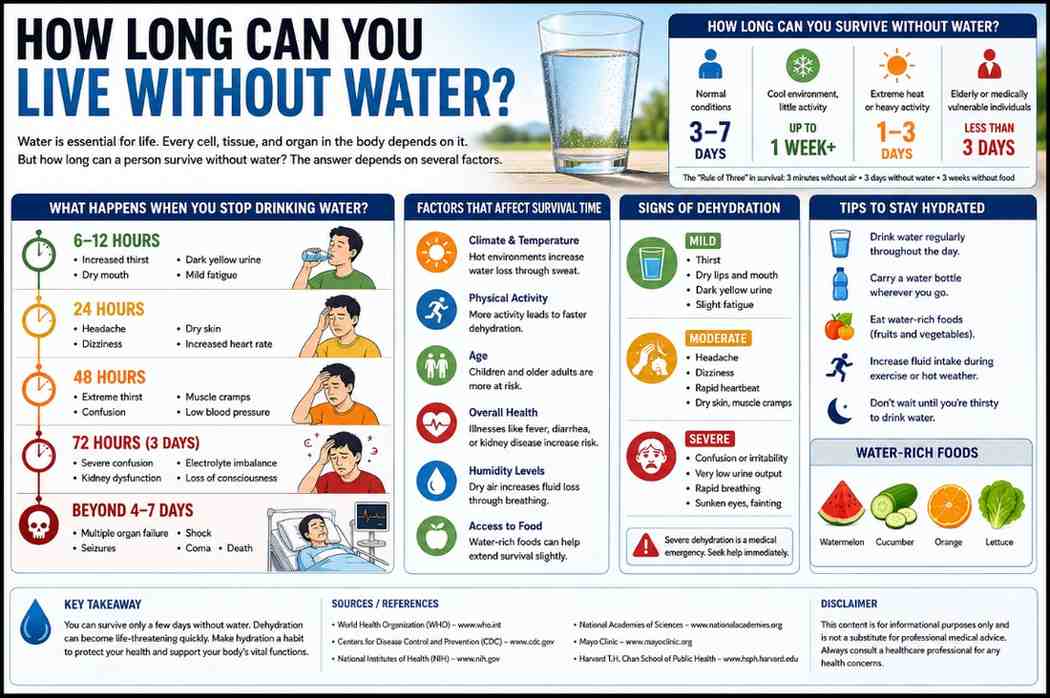
Water is one of the most important substances for human survival. While people can survive for weeks without food under certain conditions, the body can only function for a limited time without water. Every cell, tissue, and organ depends on adequate hydration to maintain normal processes such as circulation, digestion, temperature regulation, and waste removal.
A common question many people ask is: How long can you live without water?
The answer depends on several factors, including age, health status, environmental conditions, physical activity levels, and access to food. However, in most cases, a person can survive only a few days without water before severe dehydration becomes life-threatening.
In this guide, we’ll explore how long humans can survive without water, the stages of dehydration, warning signs, factors affecting survival, and practical hydration tips to stay healthy.
What Is Water and Why Does the Body Need It?
Water makes up approximately 50%–70% of the human body. It is involved in nearly every biological function, including:
- Regulating body temperature
- Transporting nutrients and oxygen
- Supporting digestion
- Lubricating joints
- Removing toxins and waste
- Maintaining blood pressure
- Protecting organs and tissues
- Supporting brain function
Without enough water, the body begins to lose its ability to perform these critical functions efficiently.
How Long Can You Live Without Water?
There is no exact survival time that applies to everyone. However, research and survival reports suggest that most healthy adults can survive approximately:
| Condition | Estimated Survival Time |
|---|---|
| Normal conditions | 3–7 days |
| Cool environment with little activity | Up to 1 week or slightly longer |
| Extreme heat or heavy activity | 1–3 days |
| Elderly or medically vulnerable individuals | Less than 3 days in severe cases |
The often-cited “Rule of Three” in survival situations states:
- 3 minutes without oxygen
- 3 days without water
- 3 weeks without food
While this is a useful guideline, actual survival times vary significantly.
What Happens When You Stop Drinking Water?
The body begins reacting to water deprivation surprisingly quickly.
Within 6–12 Hours
Early dehydration symptoms may appear:
- Increased thirst
- Dry mouth
- Dark yellow urine
- Reduced urination
- Mild fatigue
At this stage, the body attempts to conserve water by reducing fluid loss.
After 24 Hours
Dehydration becomes more noticeable.
Symptoms may include:
- Headache
- Dizziness
- Dry skin
- Reduced sweating
- Difficulty concentrating
- Increased heart rate
Physical and mental performance begin to decline.
After 48 Hours
Moderate to severe dehydration develops.
Possible symptoms include:
- Extreme thirst
- Significant weakness
- Confusion
- Rapid breathing
- Muscle cramps
- Low blood pressure
- Sunken eyes
Kidneys start conserving every possible drop of water, producing very little urine.
After 72 Hours (3 Days)
The risk of organ failure increases dramatically.
Symptoms may include:
- Severe confusion
- Delirium
- Hallucinations
- Kidney dysfunction
- Dangerous electrolyte imbalance
- Loss of consciousness
Without access to fluids, survival becomes increasingly unlikely.
Beyond 4–7 Days
Severe dehydration can lead to:
- Multiple organ failure
- Shock
- Seizures
- Coma
- Death
This stage is considered a medical emergency.
Related Articles:
- How Much Water Should You Drink Per Day to Lose Weight?
- What Happens When You Drink Too Much Water & What to Do
- How Long Can You Live Without Food? Survival Limits & Risks
Why Can Humans Survive Longer Without Food Than Water?
Food primarily provides energy and nutrients, while water is essential for immediate physiological processes.
The body can use stored:
- Fat
- Glycogen
- Muscle tissue
for energy during starvation.
However, there is no significant water reserve that can fully replace daily fluid needs. As water loss continues through:
- Sweating
- Breathing
- Urination
- Bowel movements
the body’s systems begin to fail rapidly.
Factors That Affect Survival Without Water
Not everyone survives the same amount of time without hydration.
1. Climate and Temperature
Hot environments accelerate water loss through sweating.
People stranded in deserts may experience life-threatening dehydration within one to three days.
2. Physical Activity
Exercise increases:
- Sweating
- Respiratory water loss
- Body temperature
The more active a person is, the faster dehydration develops.
3. Age
Infants and older adults are more vulnerable to dehydration because they have:
- Lower fluid reserves
- Reduced thirst perception
- Greater sensitivity to fluid imbalance
4. Overall Health
People with certain medical conditions may dehydrate faster, including those with:
- Kidney disease
- Diabetes
- Gastrointestinal illnesses
- Fever
- Severe infections
5. Humidity Levels
Dry climates can increase water loss through respiration and skin evaporation.
6. Access to Food
Foods with high water content can slightly extend survival because they provide additional fluids.
Examples include:
- Watermelon
- Cucumber
- Oranges
- Tomatoes
- Lettuce
However, these cannot fully replace drinking water.
Can You Survive on Food Alone Without Drinking Water?
Some foods contain significant amounts of water.
For example:
| Food | Water Content |
|---|---|
| Cucumber | 95–96% |
| Watermelon | 91–92% |
| Lettuce | 95% |
| Celery | 95% |
| Tomatoes | 94% |
In survival situations, consuming water-rich foods may delay severe dehydration.
However, eventually the body still requires direct fluid intake.
Signs of Mild, Moderate, and Severe Dehydration
Mild Dehydration
Symptoms include:
- Thirst
- Dry lips
- Slight fatigue
- Dark urine
Moderate Dehydration
Symptoms include:
- Dizziness
- Headaches
- Rapid heartbeat
- Muscle cramps
- Dry skin
Severe Dehydration
Symptoms include:
- Confusion
- Fainting
- Extremely low urine output
- Rapid breathing
- Sunken eyes
- Shock
Severe dehydration requires immediate medical attention.
How Much Water Does the Human Body Lose Daily?
Even when resting, the body continuously loses water through normal processes.
Average daily fluid loss:
| Source | Approximate Water Loss |
|---|---|
| Urine | 1.5–2 liters |
| Sweat | 0.5–1 liter |
| Breathing | 0.3–0.5 liters |
| Stool | 0.1–0.2 liters |
Total daily loss often ranges between 2–3 liters or more.
This is why regular hydration is necessary even if you do not feel thirsty.
How Long Can Children Live Without Water?
Children are at greater risk because their bodies:
- Have higher water requirements
- Lose fluids faster
- Become dehydrated more quickly
Severe dehydration in children can become dangerous within 24–48 hours, especially if accompanied by:
- Vomiting
- Diarrhea
- Fever
Medical care should be sought immediately when dehydration symptoms appear.
How Long Can Older Adults Live Without Water?
Older adults often experience reduced thirst sensation.
As a result, dehydration may develop unnoticed.
Factors increasing risk include:
- Medications
- Chronic illnesses
- Reduced kidney function
- Mobility limitations
In elderly individuals, serious complications can occur within a few days of inadequate fluid intake.
Can You Drink Too Much Water?
Yes. Although dehydration is dangerous, excessive water intake can also be harmful.
Drinking excessive amounts in a short period may lead to:
Water Intoxication
Also called:
- Overhydration
- Hyponatremia
This occurs when sodium levels become dangerously diluted.
Symptoms include:
- Nausea
- Headache
- Confusion
- Seizures
- Coma
Balance is essential.
What Is the Recommended Daily Water Intake?
Fluid needs vary based on age, climate, activity, and health.
General recommendations:
| Group | Daily Fluid Intake |
|---|---|
| Men | About 3.7 liters |
| Women | About 2.7 liters |
| Pregnant women | About 3 liters |
| Breastfeeding women | About 3.8 liters |
These totals include fluids obtained from beverages and food.
Best Sources of Hydration
Water is the healthiest hydration source, but other options include:
- Coconut water
- Milk
- Herbal teas
- Soups
- Fresh fruits
- Vegetables
Water-rich foods can contribute significantly to daily hydration.
Hydration Tips for Everyday Health
1. Drink Before You Feel Thirsty
Thirst often appears after mild dehydration has already started.
2. Carry a Water Bottle
Keeping water nearby encourages regular sipping throughout the day.
3. Monitor Urine Color
Pale yellow urine generally indicates adequate hydration.
4. Increase Intake During Hot Weather
Higher temperatures increase sweat loss.
5. Replace Fluids During Exercise
Sports activities require additional hydration.
6. Eat Water-Rich Foods
Include:
in your daily diet.
Survival Stories and Real-Life Cases
Throughout history, there have been documented cases of people surviving without water for varying lengths of time.
Most survivors benefited from factors such as:
- Cool temperatures
- Limited physical activity
- Access to moisture-rich foods
- Rapid rescue
However, prolonged water deprivation almost always results in severe health consequences.
Common Myths About Living Without Water
Myth 1: Everyone Dies After Exactly Three Days
Reality: Survival time varies widely depending on conditions and individual factors.
Myth 2: Food Can Fully Replace Water
Reality: Water-rich foods help, but they cannot indefinitely replace drinking water.
Myth 3: Thirst Is Always a Reliable Indicator
Reality: Many people, especially older adults, may already be dehydrated before feeling thirsty.
Myth 4: Cold Weather Eliminates Dehydration Risk
Reality: People still lose water through breathing, urination, and normal body functions even in cold environments.
When to Seek Medical Help?
Seek immediate medical attention if dehydration causes:
- Confusion
- Fainting
- Inability to drink fluids
- Rapid heartbeat
- Very low urine output
- Persistent vomiting
- Severe weakness
Prompt treatment can prevent serious complications.
Final Thoughts
Water is essential for life, and the human body cannot survive long without it. While some people may survive up to a week under favorable conditions, severe dehydration can become life-threatening within just a few days. Factors such as climate, activity level, age, and overall health greatly influence survival time.
The best approach is prevention. Drinking enough fluids daily, consuming water-rich foods, and recognizing early dehydration symptoms can help protect your health and support proper body function.
FAQs
Can a person survive 7 days without water?
Some individuals may survive up to a week under ideal conditions, but severe dehydration often becomes life-threatening within 3–5 days.
Is it possible to live without water for 3 days?
Yes, many healthy adults can survive around three days without water, though serious dehydration symptoms usually develop during this period.
What happens after 24 hours without water?
Common symptoms include intense thirst, fatigue, headache, dizziness, and reduced urine production.
Which organ fails first from dehydration?
The kidneys are among the first organs significantly affected because they rely heavily on adequate fluid levels to filter waste.
How do I know if I am dehydrated?
Signs include thirst, dark urine, dry mouth, fatigue, dizziness, headaches, and reduced urination.
Can dehydration cause death?
Yes. Severe dehydration can lead to organ failure, shock, coma, and death if not treated promptly.
Does coffee count toward daily hydration?
Yes. Coffee contributes to fluid intake, although plain water remains the best hydration source.
Does drinking less water shorten your lifespan?
Chronic dehydration may contribute to health problems affecting the kidneys, heart, and overall well-being, but occasional mild dehydration does not directly determine lifespan.
Can you live without water if you eat fruits and vegetables?
Water-rich fruits and vegetables can provide some hydration, but they cannot fully replace drinking water for long-term survival.
Can dehydration cause permanent damage?
Severe or prolonged dehydration can potentially cause kidney damage, heat-related illness, and other serious complications if left untreated.
What is the fastest way to rehydrate?
Drinking water, oral rehydration solutions (ORS), and electrolyte-containing fluids can help restore hydration levels. Severe dehydration may require intravenous (IV) fluids.
Can you survive 10 days without water?
Surviving 10 days without water is extremely rare. Most people experience life-threatening dehydration well before that point, particularly in hot climates or during physical activity.
Does thirst mean you’re already dehydrated?
Yes. Thirst is often one of the body’s first warning signs that mild dehydration has already begun.
Can cold weather prevent dehydration?
No. People still lose fluids through breathing, sweating, and urination during cold weather, making hydration important year-round.
Can dehydration be fatal?
Yes. Severe dehydration can lead to shock, organ failure, coma, and death if not treated promptly.
Sources / References:
- World Health Organization (WHO) – Water, Sanitation and Health
- U.S. Centers for Disease Control and Prevention (CDC) – Dehydration and Water Intake
- National Institutes of Health (NIH) – Hydration and Human Health
- National Academies of Sciences, Engineering, and Medicine – Dietary Reference Intakes for Water
- Harvard T.H. Chan School of Public Health – Hydration Guide
- Mayo Clinic – Dehydration Overview
- Cleveland Clinic – Signs and Symptoms of Dehydration
Also Read:
- 20 Proven Ways to Live Longer and Healthier Life
- Can Drinking Urine Cure Knee Pain? Doctors Reveal the Truth
- 7 Best Tips for Sustainable Living That Everyone Can Follow
About the Author:
Written by: Kirti Solanki (Health Content Researcher)
Kirti Solanki is a health content researcher who specializes in creating evidence-based, reader-friendly articles on nutrition, wellness, hydration, pregnancy, parenting, and healthy living. Her content focuses on simplifying complex health topics using trusted medical sources and current scientific research to help readers make informed health decisions.
Disclaimer:
This guide is for educational and informational purposes only and should not be considered medical advice, diagnosis, or treatment. Always consult a qualified healthcare professional regarding any medical concerns, dehydration symptoms, or health conditions.