In a world filled with endless notifications, podcasts, music playlists, and constant conversations, true silence has become surprisingly rare. Many people spend nearly every waking moment consuming information through their phones, headphones, or screens. As a result, a simple wellness habit known as silent walking has gained significant popularity.
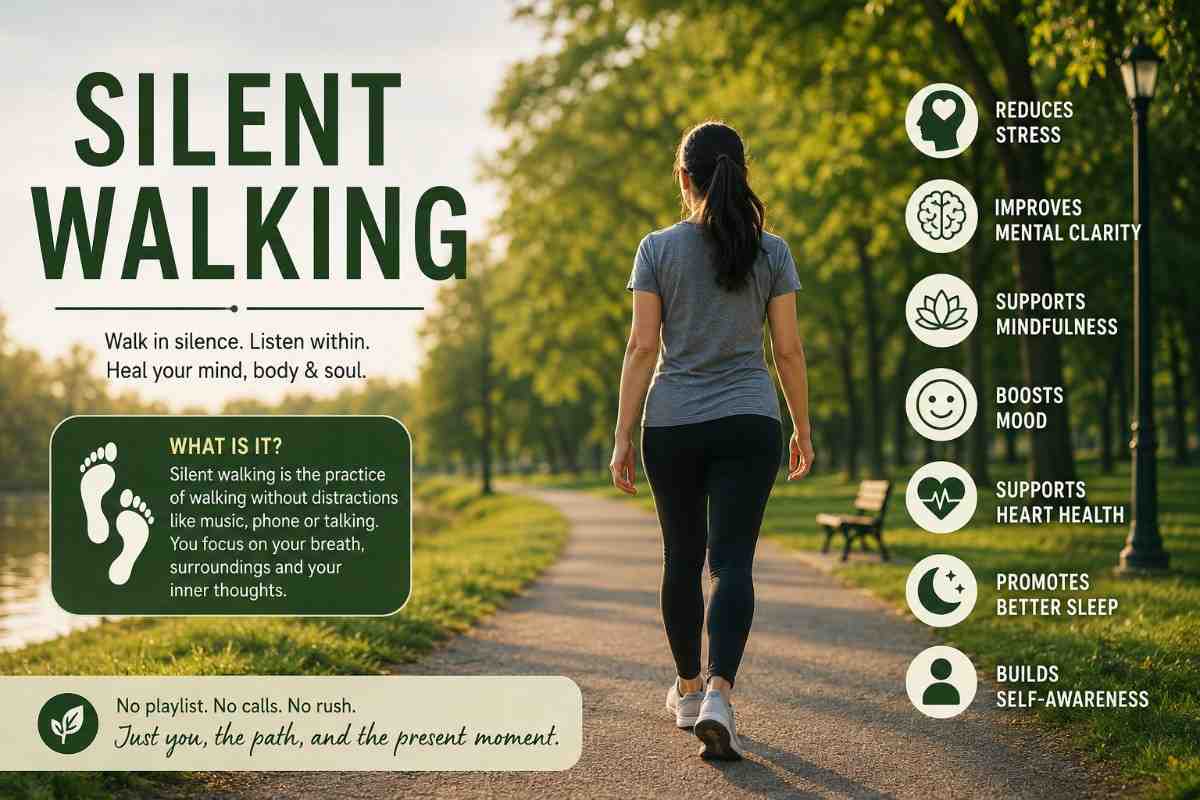
Silent walking is exactly what it sounds like—walking without distractions. Instead of listening to music, scrolling through your phone, or talking with someone, you simply walk in silence while paying attention to your surroundings and your thoughts.
Although the concept is simple, many people report feeling calmer, more focused, and mentally refreshed after practicing silent walking regularly. It requires no expensive equipment, no gym membership, and no advanced fitness level. All you need is a safe place to walk and a willingness to be present.
In this guide, you’ll learn what silent walking is, its science-backed benefits, how to practice it properly, potential drawbacks, and practical tips for making it part of your daily routine.
What Is Silent Walking?
Silent walking is the practice of walking without external distractions such as:
- Music
- Podcasts
- Audiobooks
- Phone calls
- Social media
- Texting
- Watching videos
Instead, you focus on your breathing, footsteps, surroundings, body movements, and natural sounds.
Unlike traditional walking workouts that emphasize speed, calorie burning, or distance, silent walking focuses equally on physical movement and mental awareness. It combines gentle exercise with mindfulness, creating a relaxing experience that supports both physical and emotional well-being.
Why Has Silent Walking Become So Popular?
Several factors have contributed to the growing popularity of silent walking:
- Increased awareness of mental health
- Digital fatigue from excessive screen time
- Interest in mindfulness practices
- Rising stress and anxiety levels
- Social media wellness trends
- Growing appreciation for slow living
People are realizing that wellness doesn’t always require complicated routines. Sometimes, simply slowing down and walking quietly can have meaningful benefits.
How Silent Walking Works
Silent walking encourages your brain to shift away from constant stimulation.
Without headphones or digital distractions, your attention naturally moves toward:
- Your breathing
- Your walking rhythm
- Bird sounds
- Wind
- Trees
- Buildings
- Natural light
- Body sensations
- Thoughts and emotions
This mindful awareness may help reduce mental clutter while improving emotional regulation and concentration.
15 Proven Benefits of Silent Walking
1. Reduces Stress
Walking itself lowers stress hormones, while silence reduces mental overstimulation. Together, they create a calming effect that helps your nervous system relax.
2. Improves Mental Clarity
Many people find that solutions to problems come naturally during quiet walks because the brain has space to process information without interruptions.
3. Supports Mindfulness
Silent walking naturally encourages mindfulness by bringing your attention to the present moment instead of worrying about the past or future.
4. Boosts Mood
Physical activity stimulates the release of endorphins, often called “feel-good hormones,” which may improve emotional well-being.
5. Enhances Creativity
Research suggests that walking can stimulate creative thinking. Silence gives your mind additional freedom to form new ideas and connections.
6. Improves Focus
Taking regular silent walks may help reset attention, making it easier to concentrate when you return to work or study.
7. Encourages Emotional Processing
Without distractions, you may become more aware of your emotions, allowing you to process feelings in a healthy way.
8. Promotes Better Sleep
Walking during daylight and reducing mental stimulation can contribute to improved sleep quality, especially when practiced in the evening.
9. Supports Heart Health
Like other forms of walking, silent walking supports cardiovascular health by improving circulation and encouraging regular physical activity.
10. Helps Lower Blood Pressure
Routine walking may help reduce blood pressure when combined with a healthy lifestyle.
11. Improves Balance and Coordination
Walking regularly strengthens muscles involved in balance, posture, and coordination.
12. Encourages Better Posture
Walking without looking at your phone often leads to improved posture and reduced neck strain.
13. Reduces Digital Overload
Even a 20-minute silent walk provides a valuable break from screens and constant digital notifications.
14. Builds Self-Awareness
Many people discover recurring thought patterns, emotions, or habits during silent walks, increasing self-awareness.
15. Creates a Healthy Daily Routine
Silent walking is easy to maintain because it requires little planning or equipment, making it one of the most sustainable wellness habits.
Mental Health Benefits
Although silent walking is not a treatment for mental health conditions, it may support overall emotional well-being by helping people:
- Slow racing thoughts
- Reduce everyday stress
- Improve emotional awareness
- Feel more grounded
- Increase relaxation
- Practice gratitude
- Develop healthier coping habits
People with anxiety, depression, or other mental health concerns should continue following guidance from qualified healthcare professionals.
Physical Health Benefits
Regular silent walking provides many of the same physical advantages as traditional walking, including:
- Better cardiovascular fitness
- Improved circulation
- Stronger muscles
- Healthier joints
- Increased stamina
- Better mobility
- Weight management support
- Improved metabolism
Related Articles:
- What Persistent Leg Pain While Walking Indicates?
- What Calluses on Your Feet Say About Your Walking Pattern?
- Walking vs Running: Which Is Truly Better for Your Health?
Silent Walking vs Regular Walking
| Feature | Silent Walking | Regular Walking |
|---|---|---|
| Music | No | Optional |
| Podcasts | No | Common |
| Phone Use | Avoided | Often used |
| Mindfulness | High | Variable |
| Mental Focus | Strong | Moderate |
| Physical Benefits | Excellent | Excellent |
| Stress Relief | Often Greater | Good |
How to Practice Silent Walking?
1. Choose a Safe Location
Good options include:
- Parks
- Quiet neighborhoods
- Walking trails
- Botanical gardens
- Beaches
- Residential streets
2. Leave Your Phone in Your Pocket
Carry it for safety but avoid checking messages or social media.
3. Remove Headphones
Allow yourself to hear the sounds around you instead of listening to entertainment.
4. Walk Naturally
There’s no need to walk unusually slowly. Choose a comfortable pace that feels relaxed.
5. Focus on Your Breathing
Notice each inhale and exhale without trying to control your breathing.
6. Observe Your Surroundings
Pay attention to:
- Birds
- Trees
- Flowers
- Clouds
- Wind
- Temperature
- Sunlight
- Buildings
- People
7. Notice Your Body
Become aware of:
- Your footsteps
- Muscle movement
- Arm swing
- Posture
- Balance
8. Accept Your Thoughts
Rather than trying to stop thinking, simply notice your thoughts without judging them.
How Long Should You Walk?
Beginners can start with:
- 10 minutes daily
Intermediate walkers may aim for:
- 20–30 minutes
Experienced walkers often enjoy:
- 45–60 minutes
Consistency matters more than duration.
Best Time for Silent Walking
The ideal time depends on your schedule.
Morning
Benefits include:
- Fresh air
- Improved focus
- Positive mood for the day
- Natural sunlight exposure
Afternoon
Helpful for:
- Breaking up work
- Reducing stress
- Refreshing the mind
Evening
Can help:
- Unwind after work
- Reduce stress
- Prepare for sleep
Silent Walking Tips for Beginners
- Start with short walks.
- Walk somewhere peaceful.
- Leave notifications off.
- Avoid multitasking.
- Stay hydrated.
- Wear comfortable shoes.
- Focus on breathing.
- Practice consistently.
Can Silent Walking Help Anxiety?
Some people find silent walking relaxing because it combines movement with mindfulness.
Walking may help reduce stress, while quiet surroundings encourage emotional regulation. However, silent walking should not replace professional treatment for anxiety disorders.
If silent walking increases uncomfortable thoughts, shorten the walk or consider practicing with guidance from a mental health professional.
Can Silent Walking Help with Weight Loss?
Silent walking burns calories similarly to regular walking.
Weight loss depends primarily on:
- Total daily calorie intake
- Physical activity level
- Sleep quality
- Nutrition
- Overall lifestyle
Silent walking may indirectly support weight management by reducing stress and encouraging healthier daily habits.
Is Silent Walking Better Than Listening to Music?
Neither approach is universally better.
Music can:
- Increase motivation
- Improve workout enjoyment
- Boost walking speed
Silent walking may:
- Improve mindfulness
- Reduce overstimulation
- Increase self-awareness
- Support stress reduction
Many people enjoy alternating between both styles depending on their goals.
Potential Challenges
Silent walking may feel uncomfortable at first because many people are accustomed to constant stimulation.
Common challenges include:
- Boredom
- Racing thoughts
- Habit of checking the phone
- Feeling restless
These feelings often lessen as the practice becomes more familiar.
Safety Tips
Always prioritize safety while walking.
- Stay aware of traffic.
- Walk in well-lit areas.
- Wear reflective clothing when necessary.
- Tell someone your route if walking alone.
- Carry water during long walks.
- Avoid isolated areas at night.
Who Should Try Silent Walking?
Silent walking may be suitable for:
- Students
- Office workers
- Parents
- Older adults
- Remote workers
- Busy professionals
- Beginners starting a fitness routine
- Anyone seeking a simple mindfulness practice
People with medical conditions that affect walking should consult their healthcare provider before beginning a new exercise routine.
FAQs
How long should I do silent walking each day?
Beginners can start with 10–15 minutes daily. As you become more comfortable, you can gradually increase your walks to 20–30 minutes or longer.
Is silent walking good for mental health?
Walking may help reduce everyday stress and improve mindfulness, which can support mental well-being. However, it is not a substitute for professional mental health care.
Is silent walking better than walking while listening to music?
Both have benefits. Walking promotes mindfulness and self-awareness, while music can increase motivation and make walking more enjoyable.
What should I focus on during silent walking?
Focus on your breathing, footsteps, posture, surroundings, and natural sounds while allowing your thoughts to come and go without judgment.
Is it okay to carry my phone during silent walking?
Yes. Carry your phone for safety, but keep it in your pocket and avoid checking messages or social media during your walk.
Where is the best place to practice silent walking?
Quiet parks, walking trails, gardens, residential neighborhoods, beaches, or any safe outdoor space are ideal for walking.
Can I practice silent walking indoors?
Yes. If outdoor walking isn’t possible, you can practice walking on an indoor track, treadmill, or spacious hallway while avoiding distractions.
Is silent walking suitable for beginners?
Absolutely. Silent walking is simple, requires no special equipment, and is suitable for most people regardless of fitness level.
Can silent walking improve sleep?
Regular walking and reducing mental stimulation may help improve sleep quality, especially when practiced consistently as part of a healthy lifestyle.
Is silent walking safe every day?
For most healthy adults, yes. Daily walking is generally safe and beneficial, but anyone with a medical condition or mobility issues should consult a healthcare provider before starting a new exercise routine.
Is silent walking better than meditation?
They serve different purposes. Silent walking combines physical activity with mindfulness, while meditation is usually practiced while sitting still.
Does silent walking burn calories?
Yes. It burns calories similarly to regular walking at the same pace.
Do I need to walk in nature?
No. Parks and natural settings can be calming, but silent walking can also be practiced in neighborhoods, quiet streets, or indoor walking tracks.
Final Thoughts
Silent walking reminds us that wellness doesn’t always require expensive gadgets, complicated routines, or hours at the gym. Sometimes, the most meaningful health habits are also the simplest. By removing constant distractions and allowing yourself to walk quietly, you create space for your mind to slow down, your body to move naturally, and your attention to return to the present moment.
Sources / References:
- Harvard Health Publishing – Walking
- Centers for Disease Control and Prevention (CDC) – Physical Activity Basics
- World Health Organization (WHO) – Physical Activity Guidelines
- American Heart Association – Walking for Heart Health
- National Institute of Mental Health (NIMH)
- American Psychological Association – Mindfulness Resources
Also Read:
- How Many Steps Should You Walk Daily? A Guide by Age
- Walking Before or After a Meal: Which is Better for Your Health?
- What is Proper Walking Form? Foot Placement, Posture & Breathing
About the Author:
Written by: Kirti Solanki (Health Content Researcher)
This guide was written by a health and wellness content writer dedicated to creating evidence-based, reader-friendly articles on nutrition, fitness, mental well-being, and healthy lifestyle habits. Every article is researched using trusted medical organizations and peer-reviewed guidance to ensure accurate, practical, and up-to-date information for readers.
Disclaimer:
This guide is intended for educational and informational purposes only and should not be considered medical advice, diagnosis, or treatment. Always consult a qualified physician or other licensed healthcare professional before starting a new exercise program or making significant changes to your health routine, especially if you have an underlying medical condition, are pregnant, or are recovering from an injury.