Regular exercise is one of the best investments you can make for your health. It strengthens your heart, improves mental well-being, builds muscle, increases endurance, and lowers the risk of many chronic diseases. However, there is a point where “more” is no longer “better.”
Many fitness enthusiasts believe that pushing harder every day guarantees faster results. Unfortunately, exercising without allowing your body enough time to recover can lead to overtraining syndrome (OTS)—a condition that affects physical performance, mental health, hormone balance, and even immunity.
Overtraining doesn’t happen overnight. Your body usually gives subtle warning signs long before serious problems develop. Recognizing these signals early can help you recover quickly and avoid long-term setbacks.
In this guide, you’ll learn the 15 warning signs you’re overtraining, why they occur, how to recover, and practical ways to prevent overtraining while continuing to make healthy progress.
What Is Overtraining?
Overtraining is a condition that occurs when the body experiences more physical stress than it can recover from. Recovery is when your muscles repair, energy stores replenish, and your nervous system adapts to exercise.
Normally, training causes tiny amounts of stress that make you stronger after adequate rest. But when intense workouts continue without enough recovery, nutrition, hydration, or sleep, your body’s recovery system becomes overwhelmed.
This can eventually lead to:
- Declining athletic performance
- Persistent fatigue
- Hormonal imbalance
- Frequent illness
- Mood changes
- Chronic muscle soreness
- Increased injury risk
There are two commonly discussed stages:
Functional Overreaching: Temporary fatigue that resolves after several days of rest.
Overtraining Syndrome (OTS): A more serious condition that may require weeks or even months of recovery.
What Causes Overtraining?
Several factors contribute to overtraining, including:
- Increasing workout intensity too quickly
- Exercising every day without rest days
- Performing excessive cardio
- Lifting heavy weights too frequently
- Poor sleep quality
- Inadequate calorie intake
- Low protein consumption
- Chronic emotional stress
- Dehydration
- Training while sick
Often, multiple factors occur together rather than a single cause.
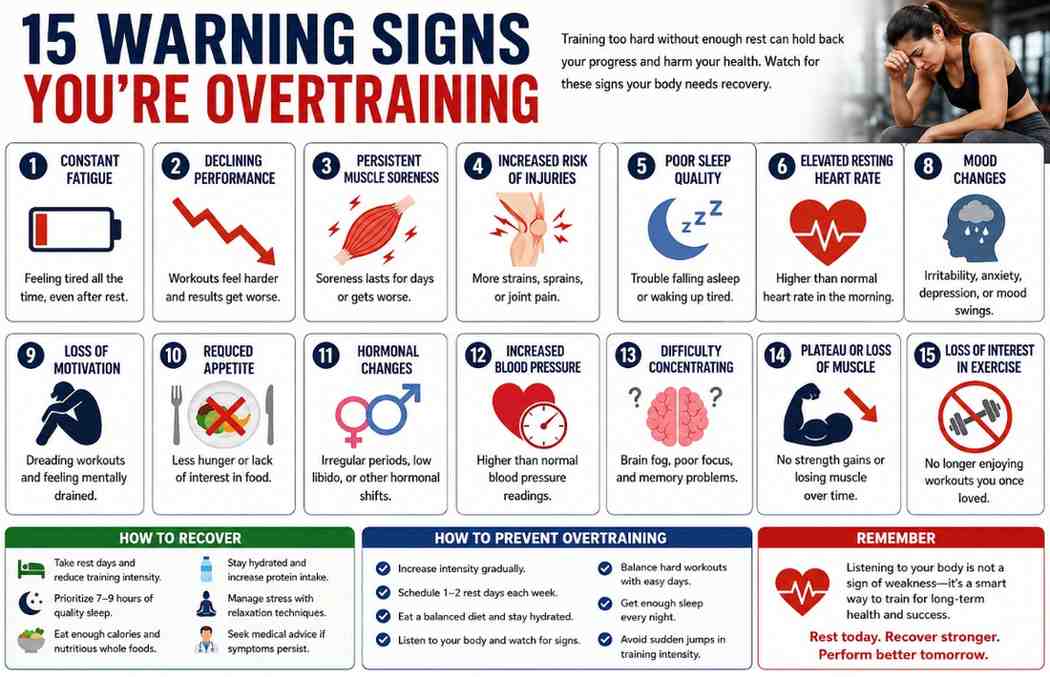
15 Warning Signs You’re Overtraining
1. Constant Fatigue
One of the earliest signs is feeling tired all the time—even after sleeping well.
Unlike normal post-workout tiredness, overtraining fatigue lingers throughout the day and affects work, school, and daily activities.
You may notice:
- Low energy
- Heavy legs
- Lack of motivation
- Feeling exhausted after simple tasks
2. Declining Athletic Performance
Ironically, training harder often causes performance to get worse.
You may notice:
- Slower running pace
- Reduced endurance
- Lower strength
- Difficulty lifting usual weights
- Longer recovery between sets
When your performance continues declining despite consistent training, your body may be asking for rest.
3. Persistent Muscle Soreness
Delayed onset muscle soreness (DOMS) usually improves within 24–72 hours.
With overtraining, soreness may last much longer.
Muscles can feel:
- Tender
- Tight
- Weak
- Heavy
- Painful during everyday movements
Persistent soreness suggests your muscles aren’t fully recovering.
4. Increased Risk of Injuries
Recovery allows tissues to repair.
Without adequate recovery, the body becomes more vulnerable to:
- Stress fractures
- Tendinitis
- Muscle strains
- Joint pain
- Ligament injuries
Frequent injuries are often one of the strongest indicators of excessive training volume.
5. Poor Sleep Despite Feeling Exhausted
Many people assume they’ll sleep better after intense exercise.
However, overtraining may overstimulate the nervous system, making sleep difficult.
Common symptoms include:
- Trouble falling asleep
- Frequent nighttime waking
- Restless sleep
- Feeling unrefreshed in the morning
Poor sleep further slows recovery.
6. Elevated Resting Heart Rate
A consistently higher resting heart rate can signal that your body is under stress.
Many athletes monitor morning heart rate because it often rises before other symptoms appear.
If your resting heart rate stays noticeably higher than normal for several days, consider reducing training intensity.
7. Frequent Illness
Excessive training can weaken immune function.
Signs include:
- Repeated colds
- Sore throat
- Minor infections
- Slow recovery from illness
Moderate exercise strengthens immunity, but excessive exercise without recovery may have the opposite effect.
8. Mood Changes
Overtraining affects both the brain and body.
You may experience:
- Irritability
- Anxiety
- Depression
- Mood swings
- Feeling emotionally drained
Some people also lose enthusiasm for workouts they previously enjoyed.
9. Loss of Motivation
If you’re suddenly dreading every workout despite previously loving exercise, your body may be overwhelmed.
Mental burnout often appears before physical symptoms become severe.
You may:
- Skip workouts
- Feel mentally exhausted
- Lose competitive drive
- Feel indifferent toward fitness goals
10. Reduced Appetite
Intense training sometimes suppresses hunger hormones.
Overtrained individuals may notice:
- Less interest in food
- Skipping meals unintentionally
- Feeling full quickly
Unfortunately, eating less while training harder only delays recovery.
11. Hormonal Changes
Long-term overtraining can disrupt hormone production.
Possible effects include:
For women:
- Irregular menstrual cycles
- Missed periods
For men:
- Reduced testosterone
- Lower libido
For everyone:
- Elevated cortisol
- Poor recovery
- Low energy
Hormonal imbalance is one reason prolonged overtraining should never be ignored.
12. Increased Resting Blood Pressure
Although exercise usually lowers blood pressure over time, excessive physical stress may temporarily increase it.
Monitoring blood pressure can provide another clue that recovery is insufficient.
13. Difficulty Concentrating
Overtraining doesn’t only affect muscles.
Many people report:
- Brain fog
- Poor concentration
- Memory lapses
- Difficulty making decisions
- Reduced productivity
The nervous system also needs recovery.
14. Plateau or Loss of Muscle Mass
Without proper recovery and nutrition, muscle growth slows.
Instead of gaining muscle, you may notice:
- Smaller muscles
- Reduced strength
- Slower recovery
- Difficulty progressing
Muscle is built during recovery—not during workouts.
15. Loss of Interest in Exercise
Perhaps the most obvious warning sign is losing enjoyment completely.
Exercise should improve your quality of life.
If every workout feels like a burden, it’s worth evaluating whether your body needs rest rather than more effort.
Related Articles:
- 10 Warning Signs of Weak Immune System & How to Strengthen It
- 14 Digestive Warning Signs You Should Never Ignore
- 19 Warning Signs Your Liver Is Not Working Properly
Who Is Most at Risk?
Certain groups have a higher risk of overtraining:
- Competitive athletes
- Marathon runners
- CrossFit participants
- Bodybuilders
- Triathletes
- Military personnel
- Fitness beginners doing too much too soon
- People following extreme workout challenges
Anyone can develop overtraining if recovery is consistently neglected.
Why Recovery Matters?
Recovery is where fitness improvements actually happen.
During recovery your body:
- Repairs muscle fibers
- Restores glycogen
- Balances hormones
- Strengthens bones
- Rebuilds connective tissue
- Supports immune health
- Improves cardiovascular fitness
Without recovery, adaptation cannot occur effectively.
How to Recover from Overtraining?
Recovery depends on severity, but the following strategies help most people.
1. Take Several Rest Days
Reduce or stop intense exercise temporarily.
Light walking, stretching, or gentle yoga may be appropriate if approved by your healthcare provider.
2. Prioritize Sleep
Aim for 7–9 hours of quality sleep every night.
Sleep is the body’s most powerful recovery tool.
3. Eat Enough Calories
Fuel your body adequately with:
- Whole grains
- Lean proteins
- Healthy fats
- Fruits
- Vegetables
Under-fueling prolongs recovery.
4. Increase Protein Intake
Protein supports muscle repair.
Include protein-rich foods such as:
- Eggs
- Greek yogurt
- Chicken
- Fish
- Lentils
- Beans
- Tofu
- Cottage cheese
5. Stay Hydrated
Dehydration increases fatigue and slows recovery.
Drink fluids consistently throughout the day, especially after exercise.
6. Reduce Training Volume
Instead of quitting permanently, gradually reduce:
- Workout duration
- Weekly frequency
- Training intensity
Your body will often respond positively within several weeks.
7. Manage Stress
Mental stress adds to physical stress.
Helpful strategies include:
- Meditation
- Deep breathing
- Reading
- Nature walks
- Relaxation techniques
8. Consult a Healthcare Professional
If symptoms continue for several weeks despite rest, seek evaluation from a physician or sports medicine specialist.
How to Prevent Overtraining?
Preventing overtraining is much easier than recovering from it.
Follow these healthy habits:
- Schedule at least one or two rest days each week.
- Increase training gradually.
- Avoid sudden jumps in workout intensity.
- Warm up before every workout.
- Cool down afterward.
- Eat enough calories.
- Consume sufficient protein.
- Stay hydrated.
- Sleep consistently.
- Listen to your body’s warning signs.
- Track workouts and recovery.
- Rotate between hard and easy training days.
- Don’t ignore pain or persistent fatigue.
Common Myths About Overtraining
Myth 1: More exercise always produces better results.
Truth: Recovery is essential for improvement.
Myth 2: Rest days make you weaker.
Truth: Rest helps muscles rebuild stronger.
Myth 3: Pain means progress.
Truth: Persistent pain often signals injury or inadequate recovery.
Myth 4: Only elite athletes overtrain.
Truth: Beginners can overtrain just as easily by doing too much too soon.
When Should You See a Doctor?
Seek medical advice if you experience:
- Fatigue lasting several weeks
- Frequent injuries
- Chest pain
- Severe dizziness
- Persistent insomnia
- Significant weight loss
- Missed menstrual periods
- Depression symptoms
- Exercise intolerance
A healthcare provider can rule out other medical conditions with similar symptoms.
FAQs
Is overtraining dangerous?
If ignored, it may increase injury risk, weaken immunity, disrupt hormones, and reduce long-term athletic performance.
Should I stop exercising completely?
Not always. Mild cases may benefit from reducing intensity and increasing recovery, but severe symptoms require professional guidance.
What is the difference between overreaching and overtraining?
Overreaching is a short-term decline in performance that improves with adequate rest, while overtraining syndrome is a prolonged condition requiring much longer recovery.
Can poor nutrition contribute to overtraining?
Absolutely. Inadequate calories, protein, carbohydrates, and fluids reduce recovery capacity and increase the likelihood of overtraining.
Is walking okay during overtraining recovery?
Light walking may be appropriate for some people, provided it does not worsen symptoms. More severe cases may require complete rest under medical guidance.
How do I know if I’m overtraining or just tired?
Normal tiredness improves after one or two days of rest, while overtraining symptoms can persist for days or weeks and may include reduced performance, frequent illness, and ongoing fatigue.
How long does it take to recover from overtraining?
Recovery time depends on the severity. Mild overtraining may improve within a few days to two weeks, while overtraining syndrome can take several weeks or even months.
Can overtraining cause weight gain?
Yes. Overtraining may increase stress hormones like cortisol, disrupt sleep, and reduce activity levels, which can contribute to temporary weight gain in some people.
Can overtraining cause weight loss?
Yes. Some people may experience unintended weight loss due to increased calorie expenditure, reduced appetite, or muscle breakdown caused by excessive training.
Is it okay to exercise every day?
It depends on the intensity. Light activities like walking or stretching can often be done daily, but high-intensity workouts require adequate recovery days to prevent overtraining.
Can beginners overtrain?
Yes. Beginners are especially at risk if they increase workout intensity or duration too quickly without allowing enough recovery time.
Does overtraining weaken the immune system?
Yes. Excessive training without proper recovery may temporarily suppress immune function, increasing the risk of colds and other infections.
Can overtraining affect mental health?
Yes. Overtraining can contribute to mood swings, anxiety, irritability, poor concentration, and even symptoms of depression in some individuals.
Can overtraining affect sleep?
Yes. Many people who overtrain experience difficulty falling asleep, restless sleep, or waking up feeling unrefreshed despite being physically exhausted.
Should I stop exercising if I think I’m overtraining?
Reducing or temporarily stopping intense exercise is often recommended. Focus on rest, sleep, hydration, and proper nutrition until symptoms improve. If symptoms persist, consult a healthcare professional.
Can overtraining cause muscle loss?
Yes. Without enough recovery and adequate protein intake, the body may break down muscle tissue, making it difficult to gain or maintain muscle mass.
How can I prevent overtraining?
Prevent overtraining by scheduling regular rest days, increasing workout intensity gradually, eating a balanced diet, staying hydrated, getting 7–9 hours of sleep, and listening to your body’s recovery needs.
Is muscle soreness always a sign of overtraining?
No. Mild muscle soreness after a new or intense workout is normal. However, soreness that lasts longer than several days or worsens over time may indicate inadequate recovery or overtraining.
Final Thoughts
Exercise should leave you feeling stronger, healthier, and more energized—not constantly exhausted. While challenging workouts are an important part of improving fitness, your body also needs adequate rest, quality nutrition, hydration, and sleep to adapt and recover.
Ignoring early warning signs like persistent fatigue, declining performance, frequent illness, or chronic muscle soreness can eventually lead to more serious health problems and prolonged recovery. Listening to your body isn’t a sign of weakness—it’s a smart training strategy.
Sources / References:
- American College of Sports Medicine (ACSM)
- National Academy of Sports Medicine (NASM)
- Centers for Disease Control and Prevention (CDC) – Physical Activity
- World Health Organization (WHO) – Physical Activity
- National Institutes of Health (NIH)
- MedlinePlus – Exercise and Physical Fitness
- Mayo Clinic – Exercise and Fitness
- Cleveland Clinic – Overtraining Syndrome
Also Read:
- 15 Warning Signs of Hormonal Imbalance You Should Never Ignore
- 15 Natural Ways to Increase Estrogen Levels & Balance Hormones
- 13 Warning Signs in Your Toenails You Should Never Ignore
About the Author:
Written by: Kirti Solanki (Health Content Researcher)
Kirti Solanki is a Health Content Researcher who creates evidence-based, reader-friendly health and wellness articles. She focuses on translating trusted medical research into practical, easy-to-understand information to help readers make informed decisions about fitness, nutrition, pregnancy, and overall well-being. Every guide is carefully researched using reputable medical organizations and current scientific evidence.
Disclaimer:
This guide is intended for educational and informational purposes only and should not be considered medical advice, diagnosis, or treatment. Always consult a qualified healthcare professional before starting a new exercise program or making significant changes to your fitness routine, especially if you have an underlying medical condition, injury, or persistent symptoms. Never ignore professional medical advice or delay seeking care because of information you have read in this guide.