A healthy smile is more than just an attractive feature—it is an important part of your overall well-being. One of the most common dental problems affecting both children and adults is cavities. Also known as dental caries or tooth decay, cavities can develop slowly over time and often go unnoticed until they cause pain or sensitivity.
The good news is that cavities are largely preventable. By understanding what causes them and following good oral hygiene habits, you can significantly reduce your risk of tooth decay.
In this guide, you’ll learn everything you need to know about cavities, including their causes, symptoms, stages, treatment options, prevention tips, and answers to frequently asked questions.
What Are Cavities?
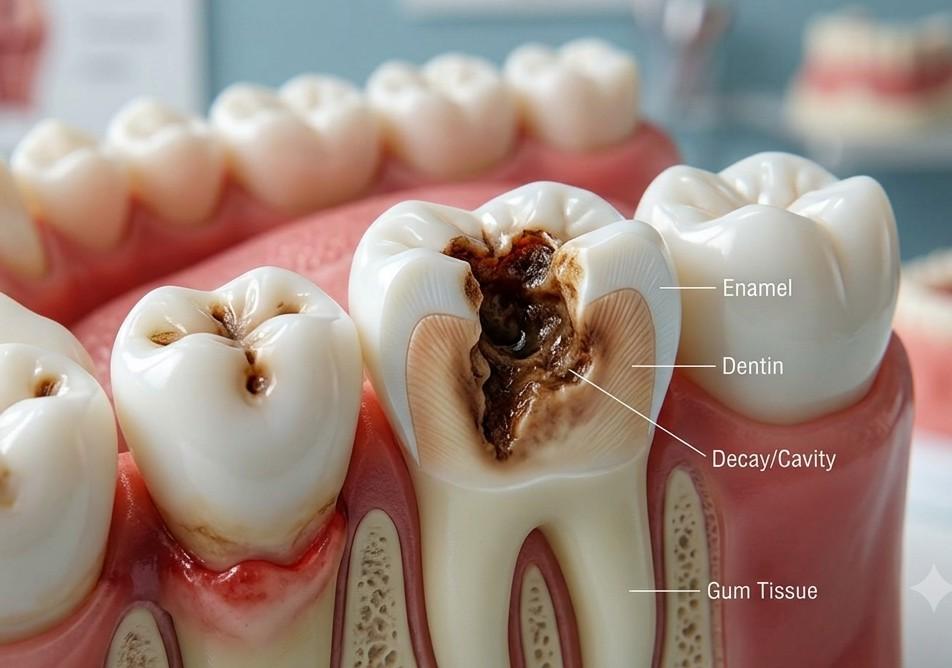
Cavities are permanently damaged areas in the hard surface of a tooth that develop into tiny holes. They occur when bacteria in the mouth produce acids that gradually erode the enamel, the protective outer layer of the teeth.
If left untreated, cavities continue to grow deeper, eventually reaching the dentin and tooth pulp, where nerves and blood vessels are located. At this stage, the condition can become painful and may require more extensive dental treatment.
Cavities can affect people of all ages, from young children to older adults, making them one of the most common chronic health conditions worldwide.
How Do Cavities Form?
The cavity formation process usually follows these steps:
- Food particles, especially sugars and starches, remain on the teeth.
- Mouth bacteria feed on these sugars.
- Bacteria produce acids.
- Acid combines with bacteria and food debris to form plaque.
- Plaque attacks tooth enamel.
- Minerals are gradually lost from the enamel.
- Tiny holes begin to form.
- If untreated, decay spreads deeper into the tooth.
Causes of Cavities
Several factors contribute to tooth decay.
1. Poor Oral Hygiene
Not brushing and flossing regularly allows plaque to accumulate on teeth.
2. Frequent Sugar Consumption
Sugary snacks, candies, desserts, and sweetened beverages provide food for cavity-causing bacteria.
3. Acidic Drinks
Soft drinks, sports drinks, and fruit juices can weaken tooth enamel.
4. Dry Mouth
Saliva naturally protects teeth by washing away bacteria. Reduced saliva increases cavity risk.
5. Frequent Snacking
Constant eating gives bacteria a continuous supply of sugars.
6. Inadequate Fluoride
Fluoride strengthens enamel and helps prevent decay.
7. Poor Dental Care
Skipping routine dental checkups allows cavities to progress unnoticed.
8. Receding Gums
Exposed tooth roots are more vulnerable to decay.
9. Worn Dental Fillings
Old fillings can crack, allowing bacteria to enter.
10. Certain Medical Conditions
Acid reflux, eating disorders, diabetes, and some medications may increase cavity risk.
Risk Factors for Cavities
You may have a higher risk if you:
- Consume sugary foods daily
- Drink soda frequently
- Smoke or use tobacco
- Have dry mouth
- Wear braces
- Skip brushing and flossing
- Have poor nutrition
- Have existing gum disease
- Rarely visit a dentist
- Have deep grooves in the chewing surfaces of teeth
Signs and Symptoms of Cavities
Symptoms vary depending on the size and location of the cavity.
Common signs include:
- Toothache
- Tooth sensitivity
- Pain when eating sweets
- Pain when drinking hot or cold beverages
- Visible holes in teeth
- Brown, black, or white stains
- Bad breath
- Pain while chewing
- Swelling around a tooth
- Food frequently getting stuck in the same tooth
Early cavities often have no symptoms, making regular dental examinations essential.
Stages of Tooth Decay
Stage 1: Demineralization
White spots appear as minerals are lost from the enamel.
Stage 2: Enamel Decay
Small holes begin forming in the enamel.
Stage 3: Dentin Decay
Decay reaches the softer dentin, causing sensitivity.
Stage 4: Pulp Damage
The infection reaches the pulp, leading to severe pain.
Stage 5: Tooth Abscess
A pocket of infection forms, requiring urgent dental treatment.
Types of Cavities
1. Smooth Surface Cavities
Develop on the sides of teeth.
2. Pit and Fissure Cavities
Occur on the chewing surfaces of molars.
3. Root Cavities
Develop on exposed tooth roots, especially in older adults.
4. Recurrent Cavities
Form around existing fillings or crowns.
How Dentists Diagnose Cavities?
A dentist may use several methods:
- Visual examination
- Dental probe
- Dental X-rays
- Laser cavity detection
- Bitewing radiographs
Early diagnosis often allows for simpler and less expensive treatment.
Treatment Options for Cavities
Treatment depends on the severity of the decay.
1. Fluoride Treatment
Very early cavities may be reversed with professional fluoride applications.
2. Dental Fillings
The decayed portion is removed and replaced with:
- Composite resin
- Amalgam
- Gold
- Ceramic
3. Dental Crowns
Large cavities may require a crown to restore strength.
4. Root Canal Therapy
When decay reaches the pulp, infected tissue is removed, and the tooth is sealed.
5. Tooth Extraction
Severely damaged teeth may need removal if they cannot be saved.
Can Cavities Heal Naturally?
Once a true hole forms in the tooth, it cannot heal on its own.
However, very early enamel damage (before a cavity forms) may be reversed through:
- Fluoride toothpaste
- Professional fluoride treatments
- Improved oral hygiene
- Reduced sugar intake
- Healthy nutrition
Home remedies cannot repair established cavities.
How to Prevent Cavities?
Prevention is much easier than treatment.
1. Brush Twice Daily
Use fluoride toothpaste for at least two minutes.
2. Floss Every Day
Floss removes plaque from areas your toothbrush cannot reach.
3. Limit Sugary Foods
Reduce candy, desserts, and sugary drinks.
4. Drink More Water
Water helps rinse away food particles and supports saliva production.
5. Use Fluoride
Fluoride strengthens enamel and lowers cavity risk.
6. Visit Your Dentist Regularly
Professional cleanings remove hardened plaque (tartar).
7. Eat a Balanced Diet
Include foods rich in:
8. Chew Sugar-Free Gum
Xylitol-containing gum may help reduce harmful bacteria and stimulate saliva.
9. Replace Your Toothbrush
Replace it every 3–4 months or sooner if the bristles are frayed.
Foods That Support Healthy Teeth
Certain foods can help maintain strong teeth.
| Food | Benefit |
|---|---|
| Milk | Rich in calcium |
| Cheese | Neutralizes acids |
| Yogurt | Supports healthy bacteria |
| Leafy greens | High in minerals |
| Apples | Increase saliva production |
| Carrots | Clean tooth surfaces |
| Almonds | Low in sugar |
| Eggs | Provide vitamin D |
| Salmon | Supports tooth strength |
| Water | Washes away food particles |
Foods That Increase Cavity Risk
Try to limit:
- Candy
- Sticky sweets
- Cookies
- Cakes
- Sugary cereals
- Soda
- Energy drinks
- Sweetened coffee
- Ice cream
- Dried fruits that stick to teeth
Enjoy these foods in moderation and brush afterward when possible.
Are Cavities Contagious?
The bacteria associated with cavities can be transferred through saliva, such as by sharing utensils or kissing. However, cavities themselves are not contagious. Good oral hygiene and regular dental care help reduce bacterial buildup and lower the risk of tooth decay.
Cavities in Children
Children are particularly susceptible because:
- Their enamel is thinner.
- They often consume sugary snacks.
- They may not brush effectively.
- Baby teeth are more vulnerable to decay.
Parents should:
- Brush their child’s teeth twice daily.
- Avoid putting babies to bed with bottles containing milk or juice.
- Limit sugary snacks and drinks.
- Schedule regular pediatric dental visits.
- Ask a dentist about dental sealants for molars.
Cavities in Older Adults
Older adults may experience increased cavity risk due to:
- Dry mouth caused by medications.
- Receding gums exposing tooth roots.
- Difficulty brushing because of arthritis or reduced mobility.
- Worn dental restorations.
Extra attention to oral hygiene and regular dental care is especially important with age.
When Should You See a Dentist?
Schedule a dental appointment if you experience:
- Persistent tooth pain
- Tooth sensitivity lasting several days
- Swollen gums
- Bleeding around one tooth
- Visible holes
- Tooth discoloration
- Bad breath that doesn’t improve
- Pain while chewing
Early treatment helps prevent more serious complications.
Cavities Treatment Cost
The cost of cavity treatment depends on the severity of the decay, the type of procedure required, the tooth’s location, and your country or dental clinic. Treating cavities early is usually much less expensive than waiting until the damage becomes severe.
| Treatment | Estimated Cost (USA) |
|---|---|
| Dental Exam | $50–$200 |
| Dental X-rays | $25–$250 |
| Fluoride Treatment | $20–$60 |
| Composite (Tooth-Colored) Filling | $150–$450 per tooth |
| Silver Amalgam Filling | $100–$300 per tooth |
| Ceramic Filling (Inlay/Onlay) | $650–$1,500 per tooth |
| Dental Crown | $800–$2,000 per tooth |
| Root Canal Therapy | $700–$1,800 per tooth |
| Tooth Extraction | $150–$600 per tooth |
| Dental Implant (if tooth replacement is needed) | $3,000–$6,000 per tooth |
Factors That Affect Treatment Cost
- The size and depth of the cavity
- The type of filling material used
- Whether the front or back tooth is affected
- Your dentist’s experience and clinic location
- Dental insurance coverage
- Additional procedures such as X-rays or anesthesia
Tip: Treating a cavity in its early stages with a simple filling is significantly less expensive than waiting until it requires a root canal, crown, or tooth replacement. Regular dental checkups can help detect cavities early and reduce long-term treatment costs.
FAQs
Does Dental Insurance Cover Cavities?
Many dental insurance plans cover preventive care and part of the cost of cavity treatments, including fillings and crowns. Coverage varies by provider and policy, so check with your insurance company for specific benefits.
Can cavities go away without treatment?
Only very early enamel damage may be reversed. Established cavity require dental treatment.
How long does it take for a cavity to form?
It varies. Depending on oral hygiene, diet, and individual risk factors, cavity can take months to years to develop.
Do cavities always hurt?
No. Early cavity are often painless, which is why regular dental checkups are important.
Can adults get cavities?
Yes. Adults of all ages can develop cavity, especially around old fillings or exposed tooth roots.
Can brushing remove a cavity?
No. Brushing helps prevent cavity but cannot repair an existing hole in the tooth.
Are cavities permanent?
Yes. Once a cavity forms, the damaged tooth structure does not regenerate and typically requires professional treatment.
Can cavities cause bad breath?
Yes. Decaying teeth and the bacteria associated with them can contribute to persistent bad breath.
Do cavities always cause pain?
No. Small cavity often have no symptoms until they become larger.
How often should I visit the dentist?
Most people should have a dental checkup and cleaning every six months or as recommended by their dentist.
Can children get cavities in baby teeth?
Yes. Baby teeth can develop cavity, which may affect permanent teeth if left untreated.
Is tooth sensitivity always a cavity?
Not always. Sensitivity can also result from gum recession, worn enamel, or cracked teeth.
Can cavities spread to other teeth?
The cavity itself doesn’t spread, but the bacteria that cause tooth decay can affect other teeth if oral hygiene is poor.
Is fluoride safe for preventing cavities?
Yes. Fluoride is safe and effective when used as recommended in toothpaste and professional dental treatments.
How do you get rid of cavities?
Once a cavity forms, it cannot be removed at home. Treatment usually involves a dental filling, crown, root canal, or other professional dental procedure, depending on the severity.
How can I heal cavities in 2 days at home?
You cannot heal a true cavity in two days at home. Good oral hygiene and fluoride may help protect early enamel damage, but established cavity require treatment by a dentist.
Can you stop cavities from getting worse?
Yes. Brushing with fluoride toothpaste, flossing daily, reducing sugar intake, and seeing a dentist promptly can help stop cavity from progressing.
Is cavity removal painful?
Modern cavity treatment is usually not painful. Dentists use local anesthesia to numb the area, and most patients experience little to no discomfort during the procedure.
Can vitamin D deficiency cause cavities?
Vitamin D deficiency may increase the risk of cavity because it affects calcium absorption, which is essential for strong teeth. However, cavities usually result from multiple factors, including poor oral hygiene and frequent sugar consumption.
Have people reversed cavities naturally?
Very early enamel demineralization (before a cavity forms) may improve with fluoride, a healthy diet, and excellent oral hygiene. However, a true cavity (a hole in the tooth) cannot be reversed naturally.
Which deficiency causes cavities?
Deficiencies in vitamin D, calcium, and phosphorus can weaken teeth and increase the risk of cavities. Poor nutrition combined with inadequate oral hygiene further raises the likelihood of tooth decay.
Final Thoughts
Cavities are one of the most common oral health problems, but they are also among the most preventable. Daily brushing and flossing, limiting sugary foods and drinks, using fluoride, and visiting your dentist regularly can greatly reduce your risk of tooth decay.
Recognizing the early signs of cavities and seeking prompt treatment can help preserve your natural teeth, avoid pain, and prevent more extensive dental procedures. Good oral hygiene is an investment in your overall health and quality of life.
Sources / References:
- World Health Organization (WHO)
- Centers for Disease Control and Prevention (CDC)
- National Institute of Dental and Craniofacial Research (NIDCR)
- American Dental Association (ADA)
- Mayo Clinic
- Cleveland Clinic
About the Author:
Written by: Kirti Solanki (Health Content Researcher)
Kirti Solanki is a Health Content Researcher who creates evidence-based, easy-to-understand health content using trusted medical sources.
Disclaimer:
This guide is for informational purposes only and is not a substitute for professional medical or dental advice. Consult a qualified dentist or healthcare provider for diagnosis or treatment.
Also Read: