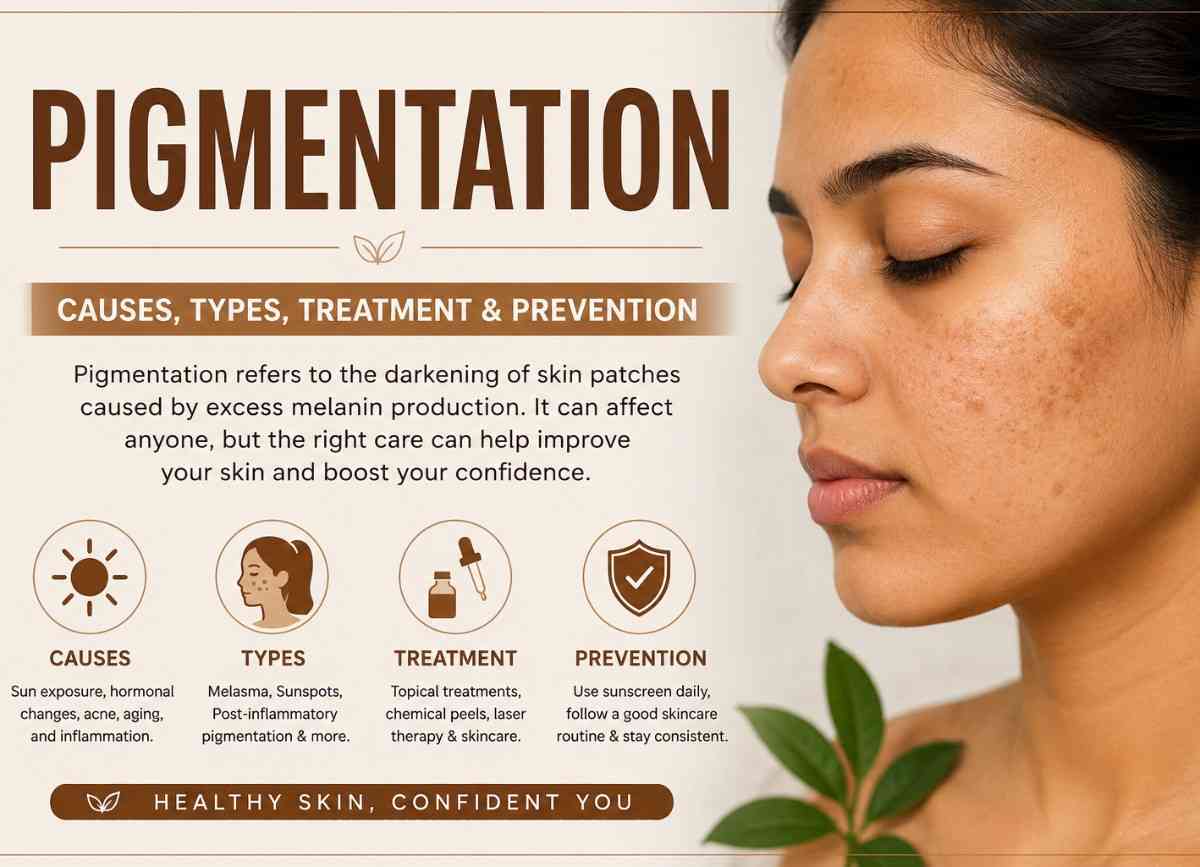
Pigmentation is one of the most common skin concerns, especially when dark spots, uneven skin tone, or patches become more noticeable on the face, neck, hands, or other exposed areas. While pigmentation is often harmless, it can sometimes be linked to sun exposure, acne, hormonal changes, inflammation, medications, or an underlying skin condition.
The good news is that many forms of pigmentation can improve when the underlying trigger is identified and treated. However, pigmentation does not disappear overnight. Consistent sun protection and a gentle skincare routine are usually more important than using several strong products at once.
In this guide, we explain what pigmentation is, its common types and causes, symptoms, treatment options, home-care measures, prevention tips, and when you should see a dermatologist.
What Is Pigmentation?
Pigmentation refers to the natural color of your skin and the way that color changes when your body produces more or less melanin.
Melanin is a pigment produced by specialized skin cells called melanocytes. It helps determine the color of your skin, hair, and eyes and provides some natural protection against ultraviolet radiation.
When the skin produces excess melanin in certain areas, those areas can become darker than the surrounding skin. This is called hyperpigmentation. When the skin produces less pigment, lighter patches may develop, known as hypopigmentation.
Pigmentation can affect people of every skin tone. However, pigmentation following inflammation or skin injury can be particularly noticeable and may persist longer in people with darker skin tones. (DermNet®)
Common Types of Pigmentation
Pigmentation is not a single condition. Different types have different causes and may require different treatments.
| Type | Common Appearance | Common Causes |
|---|---|---|
| Hyperpigmentation | Brown, dark brown, or grayish areas | Sun exposure, inflammation, hormones |
| Post-inflammatory hyperpigmentation | Dark marks after acne, cuts, burns, or irritation | Skin inflammation or injury |
| Melasma | Brown or gray-brown patches, often on the face | Hormones, sunlight, genetics |
| Age spots | Flat brown spots, usually on sun-exposed areas | Long-term sun exposure |
| Freckles | Small, flat brown spots | Genetics and sun exposure |
| Drug-induced pigmentation | Diffuse or localized darkening | Certain medications |
| Hypopigmentation | Lighter areas of skin | Inflammation, injury, infections, or other skin disorders |
What Causes Pigmentation?
Pigmentation can develop for many different reasons. Identifying the cause is an important part of successful treatment.
1. Sun Exposure
Sunlight is one of the biggest triggers for unwanted pigmentation. Ultraviolet radiation stimulates melanin production, which can lead to dark spots and uneven skin tone.
Visible light can also worsen hyperpigmentation, particularly in people with darker skin tones. This is one reason dermatologists may recommend tinted sunscreen containing iron oxide for people who are prone to pigmentation. (American Academy of Dermatology)
2. Acne and Pimples
A pimple may disappear, but the dark mark it leaves behind can remain for months. This is called post-inflammatory hyperpigmentation.
The inflammation associated with acne can stimulate pigment production. Picking or squeezing pimples may also increase inflammation and make discoloration more noticeable.
3. Hormonal Changes
Hormonal changes can contribute to pigmentation, particularly melasma. Pregnancy, hormonal contraceptives, and other hormonal influences can be associated with melasma in susceptible individuals.
4. Skin Irritation
Aggressive skincare products, frequent scrubbing, waxing, burns, or irritating ingredients can cause inflammation. In some people, this inflammation is followed by darkening of the affected area.
This is why using more products does not necessarily mean faster results.
5. Skin Injuries
Cuts, insect bites, burns, scratches, and other injuries may leave behind temporary dark marks as the skin heals.
Post-inflammatory pigmentation occurs when inflammation or injury stimulates pigment production or causes pigment to move deeper into the skin.
6. Certain Medications
Some medications can cause changes in skin pigmentation. Drug-induced pigmentation can occur through changes in melanin production or deposition of a drug or its metabolites in the skin.
If pigmentation appears after starting a new medication, do not stop the medicine on your own. Speak with your healthcare professional.
7. Aging and Cumulative Sun Damage
With age, repeated sun exposure can contribute to flat brown spots commonly called age spots or sun spots. These are especially common on areas such as the face, hands, shoulders, and arms.
8. Certain Skin Conditions
Pigmentation can sometimes occur alongside conditions such as eczema, psoriasis, or other inflammatory skin disorders. Treating the underlying condition can help reduce the development of additional dark marks.
Symptoms of Pigmentation
Pigmentation may look different depending on its cause and depth.
Common signs include:
- Brown or dark brown patches
- Grayish or bluish discoloration
- Small dark spots
- Uneven skin tone
- Dark marks after acne
- Darkening around areas of previous irritation
- Symmetrical patches on the cheeks, forehead, upper lip, or nose
- Lighter patches where pigment production has decreased
Pigmentation itself is often not painful or itchy. However, symptoms such as itching, bleeding, rapid growth, scaling, or significant changes in a pigmented spot should be evaluated by a dermatologist.
Pigmentation on the Face
Facial pigmentation is particularly common because the face receives frequent sun exposure and may also be affected by acne, skincare products, hormonal changes, and cosmetic procedures.
Common causes of facial pigmentation include:
- Melasma
- Acne marks
- Sun spots
- Freckles
- Post-inflammatory hyperpigmentation
- Irritation from skincare products
- Hormonal changes
Melasma commonly appears as brown or gray-brown patches on the cheeks, forehead, nose, and upper lip. Sunlight and visible light can worsen it, so consistent photoprotection is an important part of management.
Pigmentation on the Neck
Darkening of the neck can have several causes. Friction, irritation, sun exposure, inflammation, and certain medical conditions can contribute.
If the skin becomes noticeably darker, thicker, or velvety rather than simply developing flat brown spots, it is worth discussing with a healthcare professional because conditions such as acanthosis nigricans may need medical evaluation.
Do not assume that every dark neck is caused by poor hygiene or try to aggressively scrub it away.
Pigmentation After Acne
Acne-related pigmentation is extremely common.
When an acne lesion becomes inflamed, the skin may produce additional melanin during the healing process. The result can be a brown or dark mark that remains after the pimple has disappeared.
The most effective approach is usually to manage both problems:
- Control active acne.
- Avoid picking or squeezing pimples.
- Reduce skin irritation.
- Use daily sun protection.
- Consider dermatologist-recommended pigmentation treatments if marks persist.
AAD notes that many dark spots gradually fade once the original skin condition is controlled, although deeper pigmentation can take considerably longer.
How Is Pigmentation Diagnosed?
A dermatologist usually diagnoses pigmentation by examining the skin and reviewing your medical and skincare history.
They may ask:
- When did the pigmentation begin?
- Has it changed recently?
- Did it appear after acne or an injury?
- What skincare products do you use?
- Are you taking any medications?
- Have you recently experienced hormonal changes?
- Does the pigmentation become darker after sun exposure?
- Is there itching, pain, scaling, or bleeding?
In some cases, additional examination or testing may be necessary to determine the cause.
Correct diagnosis matters because treatments that help one type of pigmentation may not be appropriate for another.
Treatment for Pigmentation
Treatment depends on the cause, skin type, location, and depth of pigmentation.
1. Sunscreen
Sun protection is one of the most important steps in managing pigmentation.
Dermatologists generally recommend a broad-spectrum, water-resistant sunscreen with SPF 30 or higher. For people concerned about hyperpigmentation, a tinted sunscreen containing iron oxide may provide additional protection against visible light.
When outdoors for extended periods, sunscreen should generally be reapplied about every two hours and after swimming or sweating, according to product directions.
2. Treat the Underlying Cause
If pigmentation is caused by acne, eczema, or another inflammatory condition, controlling that condition is essential.
Otherwise, new pigmentation may continue appearing even while older marks are being treated.
3. Topical Treatments
Depending on the diagnosis, dermatologists may recommend ingredients such as:
- Azelaic acid
- Retinoids
- Hydroquinone
- Vitamin C
- Kojic acid
- Other pigment-targeting treatments
Not every ingredient is suitable for every person. Prescription treatments should be used under appropriate medical guidance.
4. Chemical Peels
Chemical peels can sometimes improve certain forms of pigmentation by removing damaged surface skin and encouraging skin renewal.
However, peels can also cause irritation and potentially worsen pigmentation, particularly when used incorrectly or in people prone to post-inflammatory hyperpigmentation.
Professional evaluation is therefore important.
5. Laser and Light-Based Treatments
Certain lasers and light-based procedures may be used for specific pigmentation problems.
However, these procedures are not automatically better simply because they are more intensive. Inappropriate settings can cause burns, inflammation, and further pigmentation.
Laser treatment should be performed by an appropriately trained dermatologist or qualified medical professional experienced with the patient’s skin type.
Can Pigmentation Be Removed Permanently?
There is no single treatment that permanently prevents every form of pigmentation.
Some dark spots gradually fade once their trigger is removed. Others, particularly melasma, may require long-term management because they can return with sun exposure or hormonal triggers. Think of pigmentation management as a long-term skincare process rather than a quick fix.
Skincare Routine for Pigmentation
A simple skincare routine can support healthier-looking skin.
Morning Routine
Step 1: Gentle cleanser
Use a mild cleanser rather than aggressively scrubbing the skin.
Step 2: Antioxidant or pigment-targeting product
Depending on your skin’s needs, a dermatologist or skincare professional may recommend ingredients such as vitamin C or azelaic acid.
Step 3: Moisturizer
Keeping the skin barrier comfortable can reduce irritation.
Step 4: Sunscreen
Apply broad-spectrum SPF 30 or higher. Consider a tinted iron-oxide sunscreen if pigmentation is a major concern.
Evening Routine
Step 1: Cleanse gently.
Step 2: Apply an appropriate treatment product.
Step 3: Moisturize.
Avoid introducing several active ingredients at the same time. If your skin becomes red, burning, or irritated, simplify the routine.
What Not to Do for Pigmentation?
Trying to remove pigmentation aggressively can sometimes make the problem worse.
Avoid:
- Scrubbing dark spots repeatedly
- Using undiluted lemon juice on the skin
- Applying household bleach
- Picking acne lesions
- Using unregulated skin-lightening creams
- Combining multiple strong exfoliants without guidance
- Using prescription medicines without medical supervision
- Getting aggressive procedures from unqualified providers
The American Academy of Dermatology specifically warns against applying liquid bleach to dark spots because it can harm the skin.
Home Remedies for Pigmentation
Home remedies may support a simple skincare routine, but they usually cannot remove pigmentation quickly or permanently. The safest approach is to avoid irritating DIY treatments and focus on protecting the skin while addressing the underlying cause.
- Aloe Vera Gel: Apply pure, fragrance-free aloe vera gel to soothe the skin and support a healthy skin barrier.
- Vitamin C-Rich Fruits: Include oranges, guava, kiwi, strawberries, and other vitamin C-rich fruits in a balanced diet to support overall skin health.
- Daily Sunscreen: Apply broad-spectrum SPF 30 or higher every morning to prevent pigmentation from becoming darker.
- Gentle Cleansing: Use a mild face wash and avoid harsh scrubbing, which can irritate the skin and worsen dark spots.
- Healthy Moisturization: Keep the skin moisturized to maintain the skin barrier and reduce dryness and irritation.
- Avoid Picking: Do not squeeze pimples or pick at healing skin because inflammation can leave darker marks.
- Stay Hydrated: Drink enough water throughout the day to support overall skin health and hydration.
- Eat Antioxidant-Rich Foods: Include colorful fruits, vegetables, nuts, and seeds as part of a balanced diet for overall skin nutrition.
- Use Gentle Skincare: Choose fragrance-free and non-irritating products, especially if your skin is sensitive or prone to pigmentation.
- Avoid Lemon Juice: Do not apply lemon juice directly to the skin because it can cause irritation and potentially worsen pigmentation.
- Protect From Sunlight: Use hats, umbrellas, and shade along with sunscreen when spending extended time outdoors.
- Be Consistent: Pigmentation often takes time to fade, so maintain a gentle skincare routine consistently rather than relying on quick DIY treatments.
How to Prevent Pigmentation?
Prevention is often easier than treating established pigmentation.
1. Use Sunscreen Daily
Make sunscreen part of your everyday morning routine, not something reserved for vacations or very sunny days.
2. Protect Your Skin From Direct Sunlight
Hats, umbrellas, shade, and protective clothing can reduce direct sun exposure. This is particularly helpful if you are prone to melasma or sun-induced pigmentation.
3. Avoid Picking Your Skin
Picking pimples, scabs, or insect bites can increase inflammation and raise the chance of leaving a dark mark.
4. Keep Your Skincare Gentle
Burning and stinging are not signs that a product is working better. Persistent irritation can contribute to pigmentation.
5. Treat Acne Early
Managing acne can reduce the number of new inflammatory marks that develop.
6. Be Careful After Cosmetic Procedures
Procedures such as waxing, peels, lasers, or other treatments can cause inflammation. Appropriate aftercare and sun protection are important.
How Long Does Pigmentation Take to Fade?
There is no universal timeline.
A superficial dark spot may fade over several months, while deeper pigmentation can take much longer. AAD notes that some spots a few shades darker than the person’s natural skin color may take around 6 to 12 months to fade, while deeper discoloration may persist for years.
The timeline depends on:
- Cause
- Depth of pigmentation
- Skin tone
- Sun exposure
- Inflammation
- Treatment
- Whether the original trigger continues
Consistency is usually more useful than constantly switching products.
When Should You See a Dermatologist?
See a dermatologist if:
- Pigmentation suddenly appears without an obvious cause.
- A mole or dark spot changes in size, shape, or color.
- A spot bleeds, crusts, or does not heal.
- Pigmentation is rapidly spreading.
- Dark patches are accompanied by other unusual symptoms.
- Over-the-counter products are not helping.
- Pigmentation keeps returning.
- You are considering chemical peels, lasers, or prescription treatments.
- You are unsure whether a dark patch is pigmentation or another skin condition.
Some pigmented lesions can resemble harmless discoloration, while certain skin cancers can also appear as pigmented spots. Proper evaluation is therefore important when a lesion looks unusual or changes over time.
Final Thought
Pigmentation is a broad term that describes changes in skin color, and its causes range from everyday sun exposure and acne to hormonal changes, inflammation, medications, and specific skin conditions.
The most important first step is identifying why the pigmentation developed. Daily sun protection, gentle skincare, avoiding unnecessary irritation, and treating the underlying problem can make a significant difference.
If pigmentation is persistent, severe, rapidly changing, or difficult to diagnose, professional dermatological evaluation is the safest approach. There is rarely a need to rush into aggressive treatments. A consistent, evidence-based routine is often a better long-term strategy.
FAQ’s
How can I reduce pigmentation naturally?
Protect your skin from the sun, avoid picking or irritating the skin, use gentle skincare products, and maintain a consistent routine. Avoid harsh DIY remedies that can cause further irritation.
Which vitamin is good for pigmentation?
Vitamin C is commonly used in skincare to help improve the appearance of uneven skin tone and dark spots. Other ingredients, such as azelaic acid and retinoids, may also be recommended depending on the cause.
Does sunscreen reduce pigmentation?
Yes. Regular sunscreen use helps protect against UV radiation and can prevent existing pigmentation from becoming darker while reducing the formation of new dark spots.
Can acne cause pigmentation?
Yes. Inflammation from acne can trigger excess melanin production, leaving brown or dark marks after the pimple has healed.
Is pigmentation the same as melasma?
No. Melasma is a specific type of hyperpigmentation that commonly appears as brown or gray-brown patches on the face and is often influenced by hormones and sun exposure.
Why is my pigmentation getting darker?
Sun exposure, hormonal changes, inflammation, skin irritation, and inadequate sun protection can cause pigmentation to become darker.
Can pigmentation go away on its own?
Yes, some pigmentation, particularly post-inflammatory hyperpigmentation, can gradually fade once the underlying cause has healed. However, some types require treatment.
Is pigmentation harmful?
Most pigmentation is harmless, but a new or changing dark spot should be evaluated by a dermatologist, especially if it grows, changes color or shape, bleeds, or does not heal.
Can pigmentation be caused by hormones?
Yes. Hormonal changes can contribute to conditions such as melasma, particularly during pregnancy or when using certain hormonal medications.
Does lemon remove pigmentation?
Lemon juice is not recommended as a safe pigmentation treatment. Its acidity can irritate the skin and potentially worsen discoloration.
Can pigmentation occur on the neck?
Yes. Darkening on the neck can result from sun exposure, friction, inflammation, or conditions such as acanthosis nigricans. Persistent or thickened dark skin should be evaluated by a healthcare professional.
Can pigmentation come back after treatment?
Yes. Pigmentation can return if the original trigger continues. Sun protection and ongoing skincare are particularly important for conditions prone to recurrence.
Which face wash is best for pigmentation?
A gentle, non-irritating cleanser is best. Face wash alone cannot remove pigmentation.
Which fruit is good for pigmentation?
Vitamin C-rich fruits such as guava, oranges, kiwi, and strawberries support healthy skin.
Does Cetaphil remove pigmentation?
Cetaphil cleansers do not directly remove pigmentation, but some targeted products may help improve dark spots.
Which cream is best for hyperpigmentation?
Creams containing azelaic acid, retinoids, vitamin C, or hydroquinone may help, depending on the cause.
Which serum removes pigmentation from the face?
Serums with vitamin C, niacinamide, or azelaic acid may help fade dark spots over time.
What skincare reduces pigmentation?
Use a gentle cleanser, moisturizer, pigmentation-targeting treatment, and SPF 30+ sunscreen daily.
Sources / References:
- American Academy of Dermatology – How to Fade Dark Spots in Darker Skin Tones
- American Academy of Dermatology – How to Apply Sunscreen
- American Academy of Dermatology – Choosing the Right Sunscreen
- DermNet – Post-inflammatory Hyperpigmentation
- DermNet – Pigmentation Disorders
- DermNet – Drug-induced Skin Pigmentation
Disclaimer:
This article is for general educational purposes only and does not replace professional medical advice, diagnosis, or treatment. If you have persistent, changing, painful, bleeding, or unusual skin pigmentation, consult a qualified dermatologist.
About the Author:
Written by: Kirti Solanki, Health Content Researcher
Kirti Solanki is a health content researcher focused on creating reader-friendly, evidence-informed articles on health, wellness, nutrition, and skincare topics. Her content is developed using reputable medical and scientific sources and is intended for general educational purposes.
Also Read: