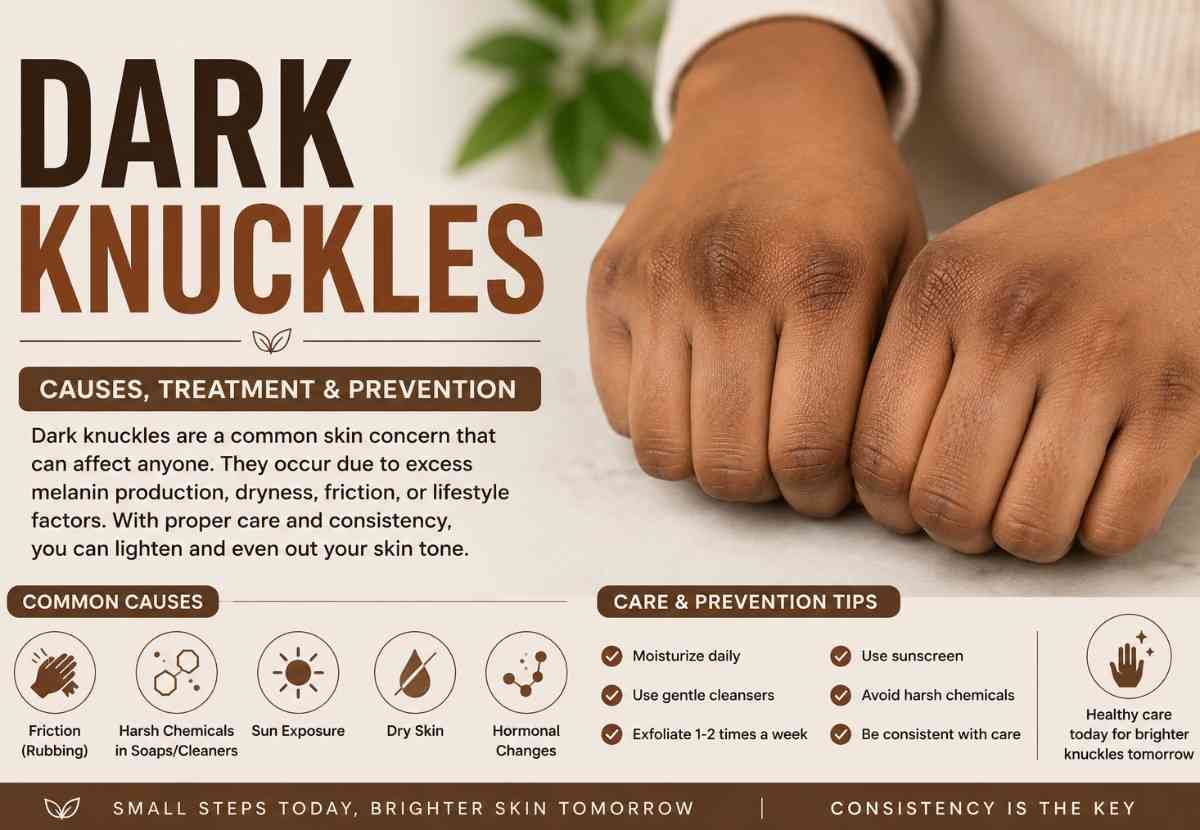
Dark knuckles are a common skin concern in which the skin around the finger joints becomes darker than the surrounding skin. For some people, the discoloration is mild and mainly cosmetic, while for others, it may become more noticeable, rough, dry, or thick over time.
Dark knuckles can happen for many reasons, including dryness, friction, sun exposure, certain skin conditions, nutritional problems, hormonal changes, and metabolic conditions such as insulin resistance. In some cases, darker knuckles can be part of a condition called acanthosis nigricans, which can also affect the neck, underarms, elbows, knees, and other body folds. The good news is that dark knuckles are often manageable once the underlying cause is identified. However, simply scrubbing the skin or applying strong bleaching products may make the problem worse.
What Are Dark Knuckles?
Dark knuckles refer to increased pigmentation around the joints of the fingers. The affected skin may appear brown, gray, or darker than the person’s natural skin tone.
The discoloration can occur on one or both hands and may develop gradually. Sometimes the skin is completely smooth, while in other cases it may feel dry, rough, thickened, or slightly velvety.
Dark knuckles are not a diagnosis by themselves. They are a visible skin change that can have several possible causes. Therefore, the right treatment depends on why the pigmentation developed.
What Causes Dark Knuckles?
There is no single cause of dark knuckles. Some of the most common possibilities include:
1. Dry Skin
Dry skin can make the knuckles look dull, rough, and darker than the surrounding skin. Frequent hand washing, hot water, cold weather, and low humidity can all contribute to dryness.
When the skin barrier becomes irritated, inflammation may also encourage increased pigmentation, particularly in people prone to post-inflammatory hyperpigmentation.
2. Friction and Repeated Irritation
Repeated rubbing or pressure can contribute to darker skin around the knuckles. Activities that place frequent pressure on the hands, harsh cleaning products, and repetitive friction may irritate the area.
Constant irritation can stimulate pigment production and leave the affected skin darker even after the initial irritation has settled.
3. Sun Exposure
The hands are exposed to sunlight regularly, often without the same level of protection given to the face. Ultraviolet exposure can stimulate melanin production and contribute to hyperpigmentation.
Sun protection is therefore an important part of preventing existing pigmentation from becoming darker.
4. Post-Inflammatory Hyperpigmentation
Skin inflammation, eczema, allergic reactions, cuts, burns, or other irritation can leave behind darker pigmentation after the skin heals.
This is called post-inflammatory hyperpigmentation. It is particularly noticeable in people with medium to deep skin tones.
5. Acanthosis Nigricans
Acanthosis nigricans is a skin condition characterized by darker, thicker, often velvety skin. Although it is more commonly noticed on the neck, underarms, and groin, it can also affect the knuckles and hands.
Acanthosis nigricans can be associated with insulin resistance, obesity, prediabetes, type 2 diabetes, hormonal conditions such as PCOS, thyroid disorders, and certain medications. (American Academy of Dermatology)
If black knuckles occur along with darkening of the neck, underarms, elbows, or other areas, it is worth discussing the changes with a healthcare professional.
6. Hormonal Changes
Certain hormonal conditions may contribute to changes in skin pigmentation. Thyroid disorders and some reproductive or metabolic conditions can be associated with hyperpigmentation or acanthosis nigricans. (Cleveland Clinic)
7. Nutritional Deficiencies
Certain nutritional deficiencies may contribute to changes in skin color. For example, vitamin B12 and folate deficiency can sometimes be associated with hyperpigmentation.
However, it is not a good idea to start supplements simply because your knuckles look dark. A healthcare professional can determine whether testing is appropriate.
8. Certain Medications
Some medicines can cause pigmentation changes or contribute to acanthosis nigricans. Examples include certain hormonal medicines, corticosteroids, and other drugs.
If your knuckles became darker after starting a new medication, discuss it with your healthcare provider rather than stopping the medicine yourself.
Symptoms of Dark Knuckles
Common signs include:
- Darker Skin Around the Knuckles: The skin over the finger joints appears brown, gray, or darker than the surrounding skin.
- Uneven Skin Tone: Pigmentation may be limited to the knuckles or extend to other parts of the hands.
- Dry or Rough Texture: The affected area may feel rough, flaky, or unusually dry.
- Thickened Skin: Some conditions can cause the skin around the knuckles to become thicker.
- Velvety Texture: A dark, velvety appearance may occur with acanthosis nigricans.
- Itching or Irritation: Darkening caused by eczema, dermatitis, or irritation may also cause itching, redness, or discomfort.
- Pigmentation in Other Areas: Dark patches on the neck, armpits, elbows, knees, or groin may provide clues about the underlying cause.
Dark knuckles alone do not necessarily indicate a medical problem. However, sudden or widespread pigmentation should be evaluated by a healthcare professional.
What Does Acanthosis Nigricans on the Knuckles Look Like?
Acanthosis nigricans may cause brown or black discoloration accompanied by thicker or velvety skin. Knuckles can be one of the affected areas, although the condition commonly appears in skin folds such as the neck and armpits. (American Academy of Dermatology)
One important point is that acanthosis nigricans is not simply “dirty skin.” Scrubbing harder will not remove it, and aggressive exfoliation can irritate the skin.
If you notice similar dark, thickened patches on several parts of your body, consider getting evaluated rather than treating the pigmentation only with cosmetic products.
How to Get Rid of Dark Knuckles?
The best approach depends on the cause. A gentle skincare routine is a good starting point, but persistent or unusual pigmentation may require professional evaluation.
1. Moisturize Regularly
Apply a fragrance-free moisturizer to the hands, especially after washing them.
Ingredients such as ceramides, glycerin, petrolatum, urea, or lactic acid may help improve dryness and strengthen the skin barrier.
Well-moisturized skin is less likely to become rough and irritated.
2. Use Sunscreen on Your Hands
Apply a broad-spectrum sunscreen with SPF 30 or higher to exposed hands during the day. Reapply when appropriate, particularly after washing your hands or prolonged outdoor exposure.
Sun protection is important because UV exposure can contribute to increased pigmentation and make existing dark spots more noticeable.
3. Avoid Aggressive Scrubbing
One of the biggest mistakes people make with dark knuckles is trying to scrub the pigmentation away.
Using rough scrubs, pumice stones, brushes, or repeated friction can cause irritation and inflammation. This may lead to more pigmentation rather than less.
4. Choose Gentle Exfoliation
If dryness or buildup is contributing to rough-looking knuckles, a gentle exfoliating product containing ingredients such as lactic acid or glycolic acid may help.
However, start slowly and avoid combining several strong exfoliating products at the same time.
If your skin becomes burning, red, itchy, or excessively dry, stop the product.
5. Consider Niacinamide
Niacinamide, also known as vitamin B3, is commonly used in skincare for uneven skin tone and may help support the skin barrier.
A low-concentration product may be suitable for some people, but sensitive skin should always be introduced to new products gradually.
6. Consider Azelaic Acid
Azelaic acid is another ingredient used to manage certain forms of hyperpigmentation and inflammation.
Because different causes of dark knuckles respond differently to treatment, it is better to discuss persistent pigmentation with a dermatologist before using stronger treatments.
7. Treat the Underlying Condition
If dark knuckles are related to acanthosis nigricans, treating the underlying problem is more important than simply trying to lighten the skin.
For example, improving insulin resistance or managing an underlying metabolic or hormonal condition may help the pigmentation improve.
Home Remedies for Dark Knuckles
Home remedies cannot treat every underlying cause, gentle care can help improve dryness and prevent pigmentation from becoming worse.
1. Aloe Vera Gel
Apply a thin layer of plain aloe vera gel to clean knuckles and leave it on for 15–20 minutes before rinsing. It can help soothe dry or irritated skin.
2. Coconut Oil
Massage a small amount of coconut oil onto dry knuckles before bedtime. It can help moisturize the skin and reduce dryness-related roughness.
3. Petroleum Jelly
Apply petroleum jelly to the knuckles after moisturizing, especially at night. It helps lock in moisture and protect the skin barrier.
4. Oatmeal
Mix finely ground oatmeal with water or a gentle moisturizer to create a soft paste. Apply without scrubbing, leave for 10–15 minutes, and rinse gently.
5. Milk or Yogurt
Plain yogurt contains lactic acid, which may provide mild exfoliation. Apply a small amount for a few minutes and rinse thoroughly. Stop if irritation occurs.
6. Shea Butter
Apply a small amount of shea butter to dry knuckles regularly. Its moisturizing properties may help soften rough, dry skin.
7. Use a Gentle Moisturizer
Apply a fragrance-free hand moisturizer after washing your hands. Ingredients such as ceramides, glycerin, urea, or lactic acid can be useful for dry and rough skin.
8. Protect Your Hands From the Sun
Use a broad-spectrum SPF 30 or higher on exposed hands during the day. Sun exposure can make existing pigmentation darker.
9. Avoid Harsh Scrubbing
Do not use pumice stones, rough scrubs, or stiff brushes on dark knuckles. Repeated irritation can worsen pigmentation rather than remove it.
10. Avoid Lemon and Baking Soda
Although lemon juice and baking soda are popular online remedies, they can irritate or dry the skin. Irritation may lead to more pigmentation, so they are better avoided.
Simple Night Routine for Dark Knuckles
Clean hands → apply a gentle moisturizer → seal with petroleum jelly → leave overnight.
For best results, focus on consistency rather than aggressive treatments. If dark knuckles are thick, velvety, spreading, or also present on the neck or underarms, consult a dermatologist because they may sometimes be associated with acanthosis nigricans or an underlying health condition.
Can Dark Knuckles Be a Sign of Diabetes?
Sometimes, yes.
Darkened, thickened, velvety skin can be a sign of acanthosis nigricans, which is associated with insulin resistance and can occur in people with prediabetes or diabetes.
However, having dark knuckles does not automatically mean that you have diabetes.
Dryness, friction, pigmentation after inflammation, sun exposure, genetics, and other causes can produce similar changes.
If your dark knuckles are accompanied by dark patches on the neck or underarms, unexplained skin thickening, or other concerning changes, a healthcare professional can determine whether blood glucose or other tests are appropriate.
When Should You See a Dermatologist?
Consider seeing a dermatologist if:
- The pigmentation keeps getting darker.
- The skin becomes thick or velvety.
- Dark patches appear on your neck, armpits, elbows, or knees.
- The change develops suddenly.
- The area becomes itchy, painful, inflamed, or scaly.
- You have unexplained pigmentation in several areas of the body.
- Dark knuckles develop without an obvious cause.
- Home skincare does not improve the problem after several weeks.
- You recently started a medication and noticed new pigmentation.
Sudden, widespread development of dark, velvety patches deserves prompt medical evaluation because, although rare, rapidly developing acanthosis nigricans can sometimes be associated with an underlying malignancy.
This does not mean that sudden dark knuckles are likely to indicate cancer. Such cases are uncommon, but unexpected and rapid changes should not be ignored.
How to Prevent Dark Knuckles?
Prevention largely involves protecting the skin barrier and reducing repeated irritation.
1. Moisturize After Hand Washing
Keep a hand cream nearby and apply it after washing, particularly if your hands frequently become dry.
2. Protect Your Hands From Chemicals
Use appropriate protective gloves when cleaning or handling irritating household chemicals.
3. Avoid Excessive Exfoliation
Exfoliating more frequently does not necessarily produce faster results. Over-exfoliation can damage the skin barrier and worsen discoloration.
4. Apply Sunscreen
Make sunscreen part of your daily hand-care routine, especially when spending time outdoors.
5. Maintain a Balanced Diet
A varied diet containing vegetables, fruits, whole grains, legumes, protein sources, and healthy fats supports overall health and provides important nutrients for the skin.
6. Manage Underlying Health Conditions
If you have diabetes, prediabetes, thyroid disease, PCOS, or another condition associated with pigmentation changes, following your healthcare provider’s treatment plan may help improve the underlying cause.
How Long Does It Take to Lighten Dark Knuckles?
There is no universal timeline.
If pigmentation is caused by dryness or irritation, the skin may look better after the underlying irritation is controlled. Post-inflammatory pigmentation can take considerably longer to fade.
Some forms of hyperpigmentation may take several months to improve, and treatment results vary depending on skin type, cause, severity, and consistency.
If the pigmentation is caused by acanthosis nigricans, improvement may depend largely on treating the underlying condition. Even after the underlying problem improves, the skin may not return to its previous color immediately.
Patience is important. Trying several aggressive products at once can create more irritation and delay improvement.
Can You Permanently Get Rid of Dark Knuckles?
It depends on the cause.
Dark knuckles caused by temporary irritation, dryness, or inflammation may improve significantly once the trigger is removed.
Pigmentation related to chronic conditions may require longer-term management. Some people may also naturally have darker pigmentation around their joints as part of their normal skin pattern.
A dermatologist can help distinguish between normal variation, hyperpigmentation, eczema-related changes, acanthosis nigricans, and other conditions.
Final Thoughts
Dark knuckles are common, but they should not always be treated as a simple cosmetic problem. While dryness, friction, sun exposure, and irritation are frequent contributors, darker and thicker skin can sometimes be associated with conditions such as insulin resistance, diabetes, hormonal disorders, or medication effects.
The safest approach is to start with gentle skincare: moisturize regularly, protect your hands from the sun, avoid harsh scrubbing, and be cautious with strong bleaching or exfoliating products.
If the pigmentation is persistent, spreading, thickened, velvety, or accompanied by similar changes elsewhere on the body, consider consulting a dermatologist or healthcare professional. Identifying the cause is often more effective than repeatedly trying different skin-lightening remedies.
Most importantly, dark knuckles are not a sign that your skin is “dirty.” Healthy skin naturally comes in many shades, and the goal of treatment should be to address abnormal pigmentation or an underlying condition safely rather than trying to change your natural skin tone.
FAQ’s
Can lemon remove dark knuckles?
Lemon is not recommended for treating dark knuckles. Its acidity can irritate the skin and potentially make pigmentation worse, especially after sun exposure.
Does baking soda clear dark knuckles?
No. Baking soda is not a proven treatment for dark knuckles and may irritate or dry the skin. Irritation can potentially make pigmentation worse.
Can moisturizer reduce dark knuckles?
Moisturizer can help when dryness and irritation contribute to darker-looking knuckles. It may improve the skin barrier but does not directly treat every cause of pigmentation.
Which cream is best for dark knuckles?
The best cream depends on the cause. Moisturizers containing ingredients such as ceramides, urea, or lactic acid may help dryness, while dermatologists may recommend specific pigmentation treatments when appropriate.
Does vitamin C help dark knuckles?
Vitamin C may help improve uneven pigmentation in some people, but results vary. It should be introduced gradually and combined with daily sun protection.
Can dark knuckles go away naturally?
Yes, some cases caused by dryness, irritation, or temporary inflammation may gradually improve after the trigger is removed. Other causes may require treatment.
Can scrubbing remove dark knuckles?
No. Aggressive scrubbing can irritate the skin and may worsen pigmentation. Gentle cleansing and moisturizing are preferable.
Why are my knuckles darker than my hands?
Knuckles naturally contain folds and areas of thicker skin, but increased darkness can also result from friction, dryness, inflammation, sun exposure, or hyperpigmentation.
Does sunscreen help dark knuckles?
Yes. Regular use of broad-spectrum sunscreen can help prevent UV exposure from worsening pigmentation and supports the overall management of hyperpigmentation.
Which deficiency causes dark knuckles?
Vitamin B12 deficiency can sometimes cause skin hyperpigmentation, but dark knuckles have many possible causes. A deficiency should be confirmed with appropriate testing rather than assumed.
Do dark knuckles indicate a health problem?
Not always. Dryness, friction, sun exposure, and irritation are common causes. However, dark, thick, or velvety knuckles can sometimes be associated with acanthosis nigricans, insulin resistance, or other conditions.
What vitamins help lighten dark knuckles?
There is no specific vitamin proven to remove dark knuckles. Correcting a confirmed deficiency, such as vitamin B12 deficiency, may help when it is the underlying cause. Avoid taking supplements without medical advice.
What to eat to remove dark knuckles?
No food directly removes dark knuckles. A balanced diet containing vegetables, fruits, whole grains, legumes, protein, healthy fats, and essential vitamins and minerals supports overall skin health.
Can Vaseline remove black knuckles?
Vaseline does not directly remove pigmentation. However, it can lock in moisture and help improve dry, rough skin, which may make the knuckles look healthier.
What is the best oil for dark knuckles?
There is no oil proven to remove hyperpigmentation. Coconut oil or other moisturizing oils may help dryness, but sunscreen and appropriate pigmentation treatment are generally more useful.
Sources / References:
- DermNet
- MedlinePlus
- National Institute of Arthritis and Musculoskeletal and Skin Diseases – Skin Health
- Mayo Clinic
- Cleveland Clinic
- NHS
- StatPearls
About the Author:
Written by: Kirti Solanki, Health Content Researcher
Kirti Solanki is a health content researcher focused on creating reader-friendly, evidence-informed content on skincare, nutrition, wellness, and common health concerns. Her content emphasizes practical information, credible medical references, and responsible health communication.
Disclaimer:
This article is for general educational purposes only and does not replace professional medical advice, diagnosis, or treatment. Persistent, sudden, spreading, or unusual skin pigmentation should be evaluated by a qualified healthcare professional.
Also Read: