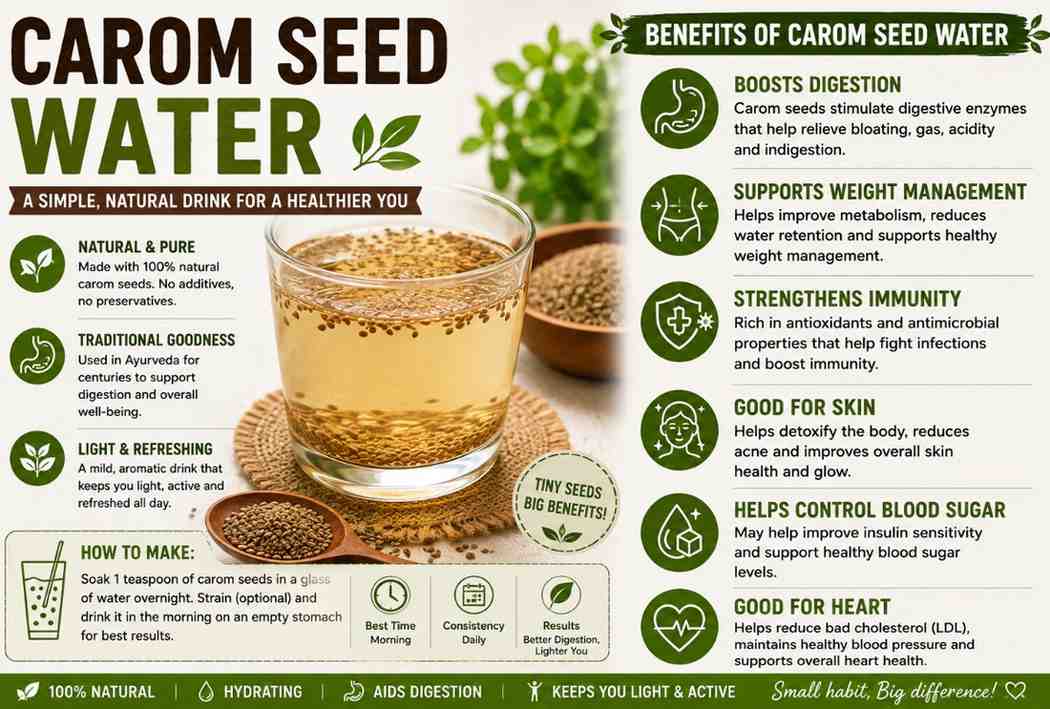
Carom seed water, commonly called ajwain water, is a simple herbal drink made by soaking or gently boiling carom seeds in water. Carom seeds come from Trachyspermum ammi, a fragrant spice traditionally used in Indian cooking and traditional medicine, particularly for digestive discomfort.
Ajwain contains aromatic compounds such as thymol, carvacrol, p-cymene, and γ-terpinene. Research on ajwain and its constituents has investigated digestive, antioxidant, antimicrobial, antispasmodic, and anti-inflammatory properties. However, an important distinction is that much of the scientific evidence comes from laboratory, animal, essential-oil, or concentrated-extract studies—not specifically from drinking ajwain-infused water.
That means carom seed water can be a flavorful addition to a healthy routine, but it should not be considered a treatment or cure for a medical condition.
What Is Carom Seed Water?
Carom seed water is water infused with ajwain (Trachyspermum ammi) seeds. It is usually prepared by soaking the seeds overnight or simmering them briefly in water and then straining the liquid.
The seeds contain volatile oils, with thymol being one of the major constituents. These aromatic compounds are thought to contribute to many of the traditional uses of ajwain. Experimental research has found that ajwain preparations can influence intestinal smooth-muscle activity, while reviews have described antioxidant and antimicrobial properties associated with its phytochemicals.
Unlike a concentrated ajwain extract or essential oil, however, homemade carom seed water is much more diluted. Therefore, results from concentrated preparations should not automatically be applied to a cup of infused water.
Nutrition Facts of Carom Seed Water
Because homemade carom seed water is an infusion rather than a standardized nutritional product, its exact nutritional composition can vary depending on the amount of seeds, soaking time, temperature, and whether the seeds are consumed afterward.
| Nutrient/Component | Approximate Amount in 1 Cup (240 ml) | Notes |
|---|---|---|
| Calories | Very low | Depends on whether seeds are consumed |
| Protein | Negligible | Most seed protein remains in the seeds |
| Carbohydrates | Very low | Not a significant source in strained water |
| Fat | Negligible | Most seed fat remains in the seeds |
| Fiber | Negligible when strained | Fiber mainly remains in the seeds |
| Sodium | Very low | No salt is normally added |
| Potassium | Small/variable | Amount extracted into water varies |
| Calcium | Small/variable | Not a major source in the infusion |
| Iron | Small/variable | Not a significant source in strained water |
| Thymol and other volatile compounds | Variable | Extraction depends on preparation |
| Caffeine | 0 mg | Naturally caffeine-free |
For comparison, whole ajwain seeds themselves contain substantially more nutrients than the strained water. Food-composition data list ajowan-caraway seeds as providing calories, protein, fat, carbohydrate, fiber, and minerals.
20 Proven Health Benefits of Carom Seed Water
1. May Support Digestion: Ajwain has a long history of traditional use for indigestion and gastrointestinal discomfort, while experimental research suggests its constituents may influence intestinal smooth-muscle activity.
2. May Help With Bloating: The carminative reputation of ajwain is traditionally linked with reducing gas and abdominal fullness, although strong human trials specifically examining ajwain water are still lacking.
3. May Support Healthy Gut Motility: Laboratory research on Trachyspermum ammi preparations has demonstrated effects on intestinal contractions, suggesting potential influence on gastrointestinal motility.
4. May Have Antispasmodic Properties: Ajwain essence reduced acetylcholine-induced contractions in isolated rat intestinal tissue, indicating antispasmodic activity in experimental settings.
5. May Provide Antioxidant Compounds: Ajwain contains phenolic and volatile compounds with antioxidant activity demonstrated in experimental research.
6. May Support the Body’s Antioxidant Defenses: Research on thymol, a prominent ajwain constituent, has identified free-radical-scavenging and antioxidant effects in experimental models.
7. May Have Anti-Inflammatory Potential: Thymol has demonstrated anti-inflammatory activity in experimental research, although this does not establish that drinking ajwain water treats inflammation in humans.
8. May Have Antimicrobial Properties: Ajwain’s volatile compounds, particularly thymol and carvacrol, have demonstrated antimicrobial activity in laboratory studies.
9. May Support Oral Microbial Control: Thymol has antimicrobial properties and is used in some oral-care formulations, but drinking ajwain water should not replace brushing, flossing, or dental treatment.
10. May Support Respiratory Comfort: Ajwain has traditionally been used for respiratory complaints, while experimental research on thymol has investigated effects related to airway smooth muscle and mucus clearance.
11. May Help With Occasional Stomach Discomfort: Traditional applications of ajwain include abdominal pain and stomach discomfort, although modern clinical evidence for the water preparation remains limited.
12. May Support Appetite: Traditional medical literature has described ajwain as useful for loss of appetite, but there is not enough human evidence to recommend it specifically as an appetite treatment.
13. May Have Gastroprotective Potential: Animal research has found that ajwain essential oil and thymol can reduce experimentally induced gastric ulcers, but these findings involve concentrated preparations rather than ordinary ajwain water.
14. May Support Healthy Inflammatory Responses: Experimental research indicates that thymol can influence inflammatory signaling pathways, providing a possible biological explanation for some traditional uses.
15. May Have Antifungal Activity: Ajwain-derived compounds have demonstrated antifungal effects in laboratory research, although drinking the infused water should not be considered an antifungal treatment.
16. May Have Antiparasitic Potential: Reviews of Trachyspermum ammi have reported antiparasitic activity in experimental studies, but human evidence is insufficient to establish ajwain water as a treatment for parasites.
17. May Support Healthy Lipid Metabolism: Ajwain has been investigated for potential hypolipidemic effects, but available evidence is not strong enough to claim that carom seed water lowers cholesterol in humans.
18. May Offer a Caffeine-Free Hydration Option: Plain carom seed water contains no caffeine and can add flavor to your daily fluid intake without the stimulants found in tea or coffee.
19. May Provide Small Amounts of Plant Phytochemicals: Water infused with ajwain can extract some water-soluble and volatile compounds from the seeds, although the amount varies considerably with preparation.
20. May Complement a Healthy Digestive Routine: Used sensibly, a mild cup of ajwain water can be part of a balanced eating pattern, particularly for people who enjoy its warming, aromatic flavor.
10 Side Effects of Carom Seed Water
Carom seed water is generally consumed in small quantities, but stronger preparations or excessive intake may cause problems in some people.
1. Stomach Irritation: A strong ajwain infusion may irritate the stomach or produce a burning sensation, especially in sensitive individuals.
2. Heartburn: The pungent compounds in ajwain may aggravate reflux or heartburn in some people rather than relieve digestive symptoms.
3. Nausea: Drinking a concentrated preparation may cause nausea or an unpleasant stomach sensation in sensitive individuals.
4. Mouth or Throat Irritation: Strong ajwain water can feel irritating because of its concentrated aromatic compounds.
5. Allergic Reactions: People allergic to ajwain or related plants may develop itching, rash, swelling, or other allergic symptoms.
6. Diarrhea: Large amounts may disturb digestion and potentially cause loose stools in susceptible individuals.
7. Increased Gastric Discomfort: People with gastritis or an already irritated stomach may find spicy herbal preparations uncomfortable.
8. Possible Medication Interactions: Concentrated herbal preparations may interact with medicines, so people taking regular medications should discuss frequent use with a healthcare professional.
9. Pregnancy-Related Concerns: Medicinal or concentrated amounts of ajwain should not be routinely used during pregnancy without professional advice because safety data are limited and traditional literature has raised reproductive-safety concerns.
10. Excessive Intake May Increase Irritation: More is not necessarily better, and repeatedly drinking very strong ajwain preparations can increase the likelihood of digestive discomfort.
How to Make Carom Seed Water?
Method 1: Soaked Carom Seed Water
Ingredients:
- 1 teaspoon carom seeds
- 1 to 1½ cups drinking water
Method:
- Add the carom seeds to a clean glass or bottle.
- Pour in the water.
- Cover and leave it overnight.
- Strain the water in the morning.
- Drink it fresh.
Method 2: Warm Carom Seed Water
Ingredients:
- ½ to 1 teaspoon carom seeds
- 1½ cups water
Method:
- Add the seeds and water to a small saucepan.
- Bring the mixture to a gentle boil.
- Simmer for approximately 5 minutes.
- Turn off the heat and allow it to cool slightly.
- Strain and drink warm.
A mild preparation is preferable to making an extremely concentrated drink. There is no standardized medically established recipe for “therapeutic” ajwain water.
How to Drink Carom Seed Water?
Drink carom seed water slowly rather than consuming a large quantity at once. Many people prefer it warm, particularly after waking or around meals.
If you are trying it for the first time, begin with a mild preparation and observe how your body responds. There is no need to add large amounts of seeds to make it more effective.
It can be consumed plain. If you add lemon, ginger, honey, or another ingredient, remember that the resulting drink is no longer simply carom seed water and may have different effects for people with reflux, allergies, diabetes, or medication considerations.
Tips for Consuming Carom Seed Water
- Use clean, good-quality food-grade carom seeds.
- Start with a small amount rather than preparing a highly concentrated infusion.
- Strain the seeds before drinking if you prefer a smoother beverage.
- Avoid adding excessive sugar or sweeteners if your goal is a low-calorie drink.
- Stop drinking it if you develop burning, rash, swelling, severe stomach discomfort, or another unusual reaction.
- Do not use ajwain water as a replacement for prescribed medication.
- If you have a chronic digestive condition, ask your healthcare professional before using it regularly.
- Remember that research on concentrated ajwain extracts or essential oils cannot automatically be applied to homemade infused water.
Other Uses of Carom Seed Water
Carom seed water is primarily consumed as a beverage, but some people also use a cooled infusion as a traditional household preparation.
It may be used as:
- A flavorful caffeine-free drink.
- A warm beverage after meals.
- A traditional digestive drink.
- A base for certain homemade herbal beverages.
- An ingredient in some traditional food and wellness preparations.
There is currently insufficient evidence to recommend carom seed water as a scientifically proven skin, hair, weight-loss, or disease-treatment remedy.
How Much Carom Seed Water Can You Drink in a Day?
There is no scientifically established therapeutic daily dose for homemade carom seed water.
For a healthy adult who tolerates it well, a practical approach is to keep the drink mild and limit it to approximately 1 cup once or twice daily rather than consuming several strong cups throughout the day.
This is a general food-use suggestion, not a medically established dosage. Individual tolerance can vary.
People who are pregnant, breastfeeding, taking medication, or managing a chronic medical condition should ask a healthcare professional before making concentrated herbal drinks a daily habit.
Best Time to Drink Carom Seed Water
There is no proven “best” time that has been established through clinical trials. Common options include:
- In the Morning: Some people enjoy a mild cup after waking as a caffeine-free beverage.
- After a Meal: Traditionally, ajwain is associated with digestive comfort, so some people prefer drinking it after eating.
- Between Meals: A small cup can be used as a warm, flavored drink between meals.
If you experience acidity or heartburn after drinking it on an empty stomach, avoid that timing and consider taking it after food—or discontinue it if symptoms persist.
Who Should Drink Carom Seed Water?
- Healthy Adults: Healthy adults who enjoy ajwain and tolerate it well can consume a mild preparation occasionally or as part of their beverage routine.
- People Looking for a Caffeine-Free Drink: Those who want an aromatic alternative to tea or coffee may enjoy carom seed water.
- People Interested in Traditional Digestive Drinks: Adults who traditionally use ajwain after meals may choose a mild infusion, while recognizing that clinical evidence remains limited.
- People Who Prefer Low-Calorie Beverages: Plain strained carom seed water contains very few calories and can be used instead of sweetened beverages.
- People Trying New Herbal Foods Carefully: Adults without relevant allergies or medical restrictions can introduce a small amount and monitor their tolerance.
Who Should Avoid Carom Seed Water?
- Pregnant Women: Avoid medicinal or concentrated amounts during pregnancy unless specifically recommended by a qualified healthcare professional because safety evidence is inadequate.
- People With Ajwain Allergy: Anyone who has previously reacted to carom seeds should avoid them.
- People With Severe Acid Reflux: Ajwain may worsen burning or reflux symptoms in some individuals.
- People With Sensitive Stomachs: Those who develop stomach irritation from spicy foods or herbal preparations should use caution.
- Young Children: Do not routinely give concentrated herbal preparations to young children without pediatric guidance.
- People Taking Multiple Medicines: Anyone taking regular prescription medicines should check with a healthcare professional before frequent medicinal use.
- People With a Chronic Medical Condition: Those with ongoing gastrointestinal, liver, kidney, or other health problems should seek individualized advice before regular use.
- People Who Develop Adverse Symptoms: Anyone experiencing swelling, breathing difficulty, severe rash, persistent vomiting, or significant abdominal pain should stop using it and seek appropriate medical care.
How to Store Carom Seed Water?
- Refrigerate Freshly Prepared Water: Store leftover strained carom seed water in a clean, covered container in the refrigerator.
- Use It Promptly: Homemade herbal infusions do not contain commercial preservatives, so fresh preparation is preferable.
- Avoid Room-Temperature Storage: Do not leave prepared carom seed water sitting out for long periods.
- Use a Clean Container: A thoroughly washed glass bottle or jar can help reduce contamination.
- Check Before Drinking: Discard the water if it develops an unusual smell, appearance, taste, or signs of spoilage.
- Keep Seeds Dry: Store unused carom seeds in an airtight container away from moisture, heat, and direct sunlight.
Precautions and Interactions
Carom seed water should be treated as a food-based herbal beverage rather than a medicine.
The most important precaution is concentration. Homemade infused water is relatively dilute, whereas essential oils and extracts can contain much higher concentrations of active compounds. Research involving ajwain essential oil or isolated thymol should therefore not be used to determine a safe dose of homemade ajwain water.
People who are pregnant or breastfeeding, children, older adults taking several medicines, and people with chronic medical conditions should seek professional advice before using concentrated ajwain preparations regularly.
If you take medicines for blood pressure, blood sugar, blood clotting, gastrointestinal conditions, or other chronic conditions, discuss regular herbal-product use with your doctor or pharmacist rather than assuming that “natural” means interaction-free.
Most importantly, do not use carom seed water to delay evaluation of persistent abdominal pain, recurrent vomiting, blood in the stool, unexplained weight loss, severe heartburn, difficulty swallowing, or other concerning symptoms.
What Does the Science Actually Say?
Ajwain has an interesting phytochemical profile, particularly because of its volatile-oil constituents. Reviews identify thymol as one of its important compounds and describe experimental antioxidant, antimicrobial, anti-inflammatory, and antispasmodic activities.
Research on isolated intestinal tissue has also found that Trachyspermum ammi essence can reduce experimentally induced intestinal contractions. (PubMed Central (PMC))
However, it is important not to overstate these findings. A laboratory study on ajwain essential oil is not the same as a clinical trial of one cup of homemade carom seed water. More well-designed human studies are needed to determine whether regular consumption of ajwain water produces meaningful health benefits.
This distinction is an important part of evidence-based nutrition and helps separate traditional use from proven medical treatment.
FAQ’s
What is carom seed water good for?
Carom seed water is traditionally used to support digestion and may help with occasional gas, bloating, and stomach discomfort.
Can I drink carom seed water every day?
A mild serving may be tolerated by many healthy adults, but there is no established need to drink it daily. Stop if it causes irritation or other symptoms.
Does carom seed water reduce belly fat?
There is no strong human evidence that carom seed water directly burns belly fat or causes significant weight loss.
Can I drink carom seed water on an empty stomach?
Yes, some people drink it on an empty stomach, but it may cause burning or acidity in sensitive individuals.
Is carom seed water good for gas and bloating?
Ajwain has traditionally been used for gas and bloating, although more human research is needed to confirm the effects of ajwain water specifically.
Is carom seed water safe during pregnancy?
Pregnant women should avoid concentrated or medicinal amounts of ajwain unless recommended by a qualified healthcare professional because safety evidence is limited.
Can children drink carom seed water?
Children, particularly infants and young children, should not routinely be given concentrated herbal drinks without advice from a pediatrician.
Does carom seed water help with acidity?
It may help some people with digestive discomfort, but it can worsen heartburn or acidity in others and should not be used as a treatment for acid reflux.
Does carom seed water contain caffeine?
No, plain carom seed water is naturally caffeine-free.
Can I drink carom seed water at night?
A small serving may be consumed at night if you tolerate it well, but there is no evidence that nighttime consumption provides special benefits.
Does carom seed water improve digestion?
Ajwain has a long history of traditional use for digestive complaints, and laboratory research suggests that its compounds may influence gastrointestinal activity.
Does carom seed water help with constipation?
There is insufficient evidence to establish carom seed water as a treatment for constipation. Adequate fiber, fluids, and physical activity are more established approaches.
Can I drink carom seed water after meals?
Yes. Drinking a mild cup after a meal is a common traditional practice, particularly among people who use ajwain for digestive comfort.
Can carom seed water detox the body?
There is no good scientific evidence that carom seed water “detoxes” the body. The liver, kidneys, lungs, and gastrointestinal system naturally handle waste removal.
Is carom seed water good for weight loss?
Carom seed water is very low in calories when consumed plain, but there is insufficient evidence that it independently causes meaningful weight loss.
What does Carom Seed Water taste like?
Carom seed water tastes warm, pungent, slightly bitter, and spicy, with a strong herbal flavor.
How long does it take for Carom Seed Water to work?
There is no fixed time, but some people may notice digestive comfort within a few hours.
What does Carom Seed Water smell like?
It has a strong, earthy, pungent, thyme-like aroma due to its aromatic compounds.
What happened when I drank Ajwain Water every night for 21 days?
You may notice digestive comfort, but some people may experience acidity, irritation, or no noticeable change.
Which is better, Jeera or Ajwain Water?
Jeera water is milder, while ajwain water has a stronger digestive reputation; neither is proven to be universally better.
Sources / References:
Disclaimer:
This article is for general educational purposes only and does not replace professional medical advice, diagnosis, or treatment. Herbal drinks can affect people differently, so consult a qualified healthcare professional if you are pregnant, taking medication, have a medical condition, or plan to use carom seed preparations regularly.
Also Read: