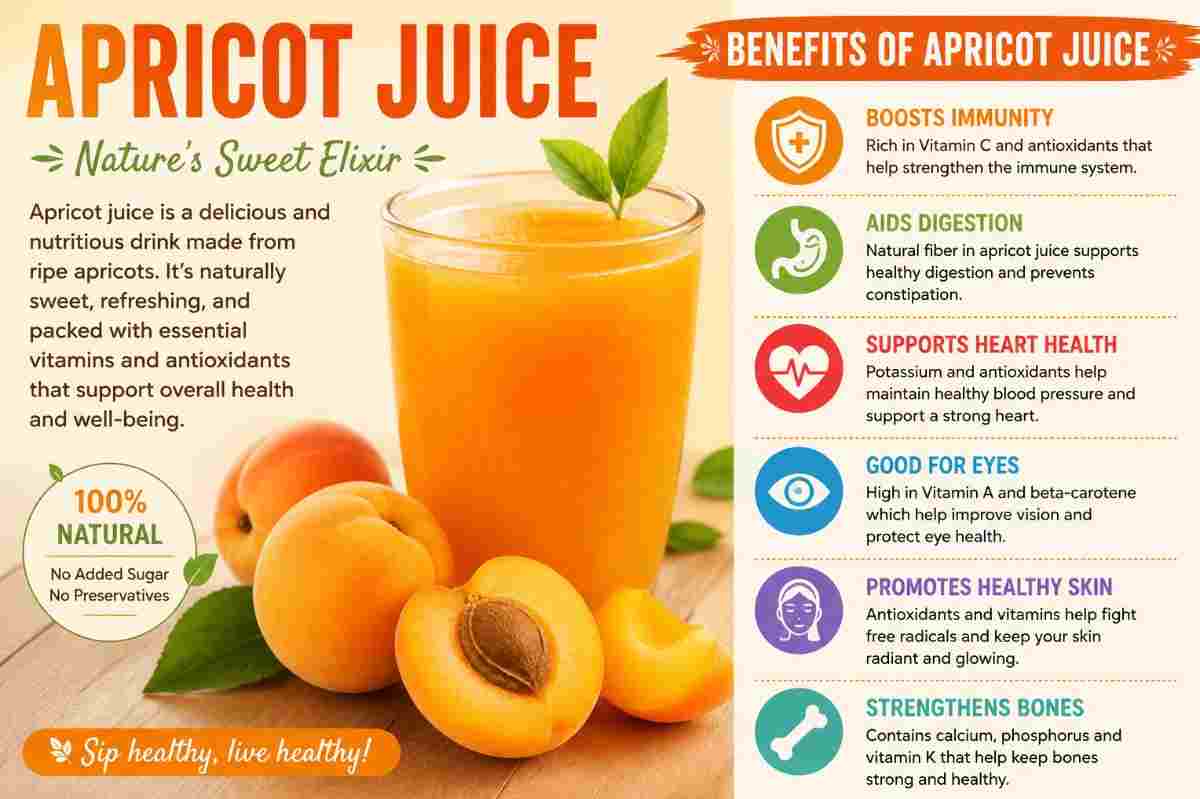
Apricot juice is a naturally sweet, fruity beverage made from ripe apricots. With its golden-orange color, mild tartness, and refreshing flavor, it can be an enjoyable way to add fruit to your diet. Apricots naturally contain carotenoids, potassium, vitamin C, and other plant compounds, although the nutritional profile of the juice depends on how it is prepared and whether the pulp is retained.
One important point is that whole apricots are generally more filling and provide more fiber than juice. Juicing removes or reduces much of the fruit’s fiber, so apricot juice is best viewed as a complement to a balanced diet rather than a replacement for whole fruit.
What Is Apricot Juice?
Apricot juice is a beverage prepared from fresh, ripe apricots by blending, pressing, or processing the fruit with water. Depending on the recipe, it may be strained to create a thinner drink or left partially unstrained to retain some pulp.
Homemade apricot juice can be made without added sugar, while commercial products may contain added sugar, concentrates, preservatives, or other ingredients. Always check the ingredient list and nutrition label when purchasing packaged apricot juice.
Apricots are particularly notable for their carotenoids, including beta-carotene, as well as potassium and various phenolic compounds. Beta-carotene can be converted by the body into vitamin A, an essential nutrient involved in normal vision, immune function, and other physiological processes.
Nutrition Facts of Apricot Juice
The exact nutritional value of apricot juice varies considerably according to the amount of fruit, water, pulp, sweeteners, and processing used. The following is a general estimate for 1 cup (240 mL) of unsweetened homemade apricot juice, rather than a standardized laboratory analysis.
| Nutrient | Approximate Amount per 1 Cup |
|---|---|
| Calories | 90–130 kcal |
| Carbohydrates | 20–30 g |
| Total sugars | 18–25 g |
| Protein | 1–2 g |
| Fat | Less than 1 g |
| Fiber | 0.5–2 g |
| Potassium | 250–450 mg |
| Vitamin C | Variable |
| Vitamin A activity | Variable |
| Sodium | Very low |
| Water | Approximately 200–220 g |
Note: These values can change substantially depending on the recipe and whether the pulp is retained. Whole raw apricots contain about 2 g of fiber per 100 g and approximately 259 mg of potassium per 100 g, while dried apricots are considerably more concentrated in calories, sugars, and potassium.
20 Proven Health Benefits of Apricot Juice
1. Supports Vitamin A Intake: Apricots contain provitamin A carotenoids such as beta-carotene, which the body can convert into vitamin A when needed.
2. Supports Normal Vision: Vitamin A is essential for normal vision, particularly for maintaining healthy visual function.
3. Provides Antioxidant Compounds: Apricots contain carotenoids, phenolics, and flavonoids that have antioxidant activity in laboratory studies.
4. Supports Immune Function: Adequate vitamin A and vitamin C intake contributes to normal immune function, while apricots can provide both nutrients in varying amounts.
5. Contributes to Potassium Intake: Apricot-based beverages can contribute potassium to the diet, a mineral needed for normal nerve transmission, muscle contraction, and other body functions.
6. Helps With Hydration: Because juice contains a substantial amount of water, unsweetened apricot juice can contribute to daily fluid intake.
7. Provides Naturally Occurring Carbohydrates: The natural sugars in apricots provide carbohydrate that the body can use as an energy source.
8. Adds Fruit-Derived Phytochemicals: Apricots provide a variety of plant compounds, including carotenoids and phenolic compounds, that contribute to their nutritional profile.
9. May Support Skin Health: Vitamin A and carotenoids are involved in normal skin maintenance, although drinking apricot juice should not be considered a treatment for skin conditions.
10. Supports Normal Cell Function: Vitamin A has important roles in cell differentiation and normal cellular processes throughout the body.
11. May Complement a Heart-Healthy Diet: Replacing sugary soft drinks with a modest serving of unsweetened fruit juice can be one way to reduce intake of some less nutritious beverages, although whole fruit remains preferable for fiber.
12. Provides a Source of Carotenoids: Research on apricots has identified beta-carotene and several other carotenoids, with concentrations varying among different varieties.
13. Supports a Nutrient-Dense Beverage Choice: Homemade juice prepared from ripe fruit without added sugar can provide nutrients and plant compounds without the additives found in some sweetened beverages.
14. Can Help Increase Fruit Variety: Apricot juice offers another way to include apricot in the diet, especially when fresh fruit is unavailable.
15. May Be Useful After Physical Activity: Its fluid and carbohydrate content can contribute to hydration and energy intake after exercise, although it does not provide enough protein or electrolytes to serve as a complete recovery drink.
16. Supports Potassium-Rich Eating Patterns: Potassium-containing foods are an important part of a balanced eating pattern, and apricots can contribute to overall potassium intake.
17. Provides Small Amounts of Other Micronutrients: Apricots contain minerals such as calcium, magnesium, phosphorus, and iron in varying amounts.
18. Offers a Naturally Sweet Flavor: Ripe apricots can provide sweetness without requiring added table sugar in a homemade recipe.
19. May Be Easier to Consume Than Whole Fruit: For some people, a small serving of unsweetened juice can be a convenient way to include fruit, although it should not routinely replace whole fruit.
20. Fits Into a Balanced Diet: A moderate serving of unsweetened apricot juice can fit into an overall healthy dietary pattern when paired with vegetables, whole fruits, protein-rich foods, whole grains, and other nutrient-dense foods.
10 Side Effects of Apricot Juice
Apricot juice is generally well tolerated in moderate amounts, but drinking large servings or choosing products with added sugar may cause problems for some people.
1. Digestive Discomfort: Drinking a large quantity at once may cause bloating, gas, loose stools, or stomach discomfort in sensitive individuals.
2. Blood Sugar Spikes: Juice contains naturally occurring sugars and generally has less fiber than whole fruit, so large servings may raise blood glucose more quickly.
3. Extra Calories: Regularly drinking large portions, particularly sweetened commercial juice, can add substantial calories to the diet.
4. Tooth Decay Risk: Frequent exposure to sugary or acidic drinks can contribute to dental problems, especially when oral hygiene is poor.
5. Diarrhea in Excess: Large amounts of fruit juice can have a laxative effect in some people because of its carbohydrate and sugar content.
6. Allergic Reactions: People with an apricot or related fruit allergy may experience symptoms after consuming apricot juice.
7. Added Sugar Exposure: Some commercial apricot drinks contain added sugar, making them nutritionally different from unsweetened homemade juice.
8. Reduced Fiber Intake: Replacing whole apricots with juice means missing much of the fruit’s natural fiber.
9. Potassium Concerns: People with certain kidney conditions may need to limit potassium and should discuss fruit juices with their healthcare professional.
10. Medication-Related Concerns: People taking medications that affect potassium or blood glucose should consider their overall dietary intake and ask a healthcare professional if they have concerns.
How to Make Apricot Juice?
Making apricot juice at home is simple and gives you control over the sweetness and ingredients.
Ingredients:
- 4–6 ripe fresh apricots
- 1–1½ cups cold drinking water
- 1–2 teaspoons lemon juice, optional
- Ice, optional
- No added sugar, preferably
Method:
- Wash the apricots thoroughly under running water.
- Cut them in half and remove the pits.
- Place the flesh in a blender.
- Add cold water and blend until smooth.
- Add lemon juice if you prefer a slightly tangy flavor.
- Strain through a fine sieve if you want a thinner juice.
- Keep some pulp if you want more of the fruit’s natural texture and nutrients.
- Serve immediately or refrigerate promptly.
Important: Never blend or crush apricot pits into the juice. Apricot kernels can contain amygdalin, which can release cyanide when metabolized. The fruit flesh is the part normally used for juice.
How to Drink Apricot Juice?
For most healthy adults, a small glass of unsweetened apricot juice is a reasonable serving.
Drink it slowly rather than consuming a large amount quickly. If blood sugar management is a concern, having juice alongside a meal containing protein, healthy fats, or fiber may be preferable to drinking it alone.
For everyday nutrition, alternate juice with whole apricots and other whole fruits because whole fruit generally provides more fiber and greater satiety.
Tips for Consuming Apricot Juice
- Choose ripe, fresh apricots for better natural sweetness and flavor.
- Make homemade juice without added sugar whenever possible.
- Keep some pulp instead of completely straining the drink if you prefer a more nutrient-dense texture.
- Use a moderate serving rather than drinking several glasses.
- Check labels for added sugar when buying packaged apricot juice.
- Look for products labeled as 100% juice if you want to avoid juice drinks containing added sweeteners.
- Pair juice with a balanced meal or snack when appropriate.
- Avoid using damaged, moldy, or spoiled apricots.
- Wash fresh apricots before cutting or blending them.
- Do not use apricot kernels or pits when making juice.
Other Uses of Apricot Juice
Apricot juice can be used for more than simply drinking it.
- Smoothies: Blend apricot juice with yogurt and other fruits for a creamy smoothie.
- Fruit Mocktails: Combine unsweetened apricot juice with sparkling water and fresh fruit for a non-alcoholic drink.
- Desserts: Use it as a liquid ingredient in homemade gelatin desserts, sorbets, or fruit-based desserts.
- Marinades: A small amount can add fruity acidity and sweetness to selected marinades.
- Sauces: Reduced apricot juice can be incorporated into sweet or savory sauces.
- Overnight Oats: A small amount can be used as part of the liquid in overnight oats.
- Salad Dressings: Apricot juice can add natural sweetness to homemade fruit-based dressings.
How Much Apricot Juice Can You Drink in a Day?
There is no specific evidence-based daily dose established specifically for apricot juice.
For a healthy adult, about 4–8 ounces (120–240 mL) of unsweetened apricot juice per day is a practical moderate serving. You do not need to drink it every day to obtain the nutrients found in apricots.
The more important consideration is your overall fruit intake. Whole fruit should generally make up the majority of fruit consumed because juicing reduces the fiber and satiety benefits of the intact fruit.
For children, portions should be age-appropriate. U.S. dietary guidance states that infants under 12 months should not receive 100% fruit juice, and for children 1–3 years old, if juice is offered, the guidance allows up to 4 ounces per day.
People with diabetes, kidney disease, or other conditions requiring dietary restrictions may need individualized advice.
Best Time to Drink Apricot Juice
There is no scientifically established “best” time to drink apricot juice.
- With breakfast: A small serving can be included alongside a balanced breakfast.
- With lunch: Drinking a moderate portion with lunch may be convenient and can help prevent the juice from becoming an additional standalone snack.
- Before exercise: Its carbohydrate content may provide readily available energy, although it is not necessary for every workout.
- After exercise: It can contribute fluids and carbohydrates, but a balanced recovery meal is more important for adequate protein and overall nutrition.
- At night: There is no special health benefit to drinking apricot juice before bed, and people with reflux or blood sugar concerns may prefer not to consume acidic or sugary drinks late at night.
Who Should Drink Apricot Juice?
- Healthy Adults: Adults who enjoy fruit juice can include a moderate serving of unsweetened apricot juice as part of a balanced diet.
- People Seeking More Fruit Variety: Apricot juice can provide another way to enjoy the nutrients and phytochemicals found in apricots.
- People Who Prefer Homemade Drinks: Homemade juice allows you to control the amount of sugar and avoid unnecessary additives.
- Active Individuals: People who exercise may use a small serving as a source of fluids and carbohydrates around physical activity.
- People Who Enjoy Carotenoid-Rich Foods: Apricots provide beta-carotene and other carotenoids that contribute to their nutritional value.
- Adults Looking for a Sweet Beverage Alternative: Unsweetened apricot juice can occasionally replace some sugar-sweetened beverages.
Who Should Avoid Apricot Juice?
- Infants Under 12 Months: Infants should not be given fruit juice according to U.S. dietary guidance.
- People With Apricot Allergy: Anyone with a known apricot allergy should avoid apricot juice unless advised otherwise by an appropriate healthcare professional.
- People With Certain Kidney Conditions: Individuals who need to restrict potassium may need to limit apricot juice depending on their medical condition and overall diet.
- People With Poorly Controlled Blood Sugar: Because juice contains concentrated carbohydrate with less fiber than whole fruit, portion control may be particularly important.
- People With Fructose Sensitivity: Those who experience digestive symptoms after consuming fructose-rich foods may need to limit their intake.
- People With Frequent Acid Reflux: The acidity of fruit juice may aggravate symptoms in some individuals.
- People Following a Sugar-Restricted Diet: Sweetened apricot drinks may not be appropriate when added sugar is being limited.
- People With Certain Medication Restrictions: Anyone taking medicines that significantly affect potassium or blood glucose should ask a healthcare professional about their individual diet.
How to Store Apricot Juice?
- Refrigerate Promptly: Homemade apricot juice should be refrigerated soon after preparation.
- Use a Clean Container: Store it in a clean, airtight glass or food-safe container.
- Drink It Fresh: Homemade juice is best consumed soon after preparation for better flavor and quality.
- Avoid Leaving It at Room Temperature: Do not leave freshly prepared juice sitting out for extended periods.
- Freeze for Longer Storage: If you need to store homemade juice longer, freezing it in an appropriate freezer-safe container can be an option.
- Check Commercial Labels: Follow the storage instructions and use-by dates printed on packaged products.
- Discard Spoiled Juice: Throw away juice that develops an unusual odor, mold, fermentation, gas buildup, or other signs of spoilage.
Precautions and Interactions
Apricot juice can be part of a healthy diet, but it should not be treated as a medicine or detox drink.
- Watch portion sizes: Juice is easier to consume in large quantities than whole fruit, which can make it easy to take in more sugar and calories than intended.
- Check added sugars: Commercial products can vary significantly, so compare nutrition labels before buying.
- Consider potassium: Apricots contain potassium, and people with kidney disease or conditions affecting potassium balance may require individualized dietary guidance.
- Consider blood glucose: People with diabetes should account for the carbohydrate content of juice within their overall meal plan.
- Do not consume apricot pits: Apricot kernels can contain amygdalin and should not be treated as a healthy ingredient for homemade juice.
- Don’t replace whole fruit: Whole apricots generally provide substantially more fiber than juice, making them a valuable part of the diet.
- Be careful with allergies: Stop consuming the drink and seek appropriate medical care if symptoms of an allergic reaction occur.
- Discuss dietary restrictions with a professional: If you have kidney disease, diabetes, a food allergy, or take medications affected by potassium or blood glucose, ask your doctor or registered dietitian about an appropriate serving.
Final Thought
Apricot juice is a flavorful fruit beverage that can provide potassium, carotenoids, and other nutrients and plant compounds naturally found in apricots. Its beta-carotene content is particularly interesting because provitamin A carotenoids can contribute to the body’s vitamin A supply.
However, “more” is not necessarily better. Juice contains less fiber than whole fruit and can provide a concentrated source of naturally occurring sugars. Choosing unsweetened juice, keeping portions moderate, and eating whole apricots regularly is a more balanced approach than relying heavily on juice.
FAQ’s
What is apricot juice good for?
Apricot juice can provide potassium, carotenoids, vitamin C, and other plant compounds while also contributing to daily fluid intake.
Is apricot juice healthy to drink every day?
Unsweetened apricot juice can fit into a healthy diet in moderate amounts, but whole apricots are generally a better everyday choice because they contain more fiber.
Does apricot juice help with digestion?
Apricot juice contains less fiber than whole apricots, so it is not as effective for digestion as eating the whole fruit. Large amounts may actually cause loose stools or digestive discomfort in some people.
Is apricot juice good for constipation?
Whole apricots may be more helpful for constipation because they provide fiber. Apricot juice has much less fiber and should not be relied on as a treatment for constipation.
Does apricot juice help the skin?
Apricots contain beta-carotene and other antioxidants that support normal skin health. However, apricot juice should not be considered a treatment for acne, pigmentation, or other skin conditions.
Is apricot juice good for the eyes?
Apricots contain beta-carotene, which the body can convert into vitamin A. Vitamin A is important for maintaining normal vision.
Can I drink apricot juice at night?
Yes, you can drink a small serving at night if it suits you. However, people with acid reflux or blood sugar concerns may prefer to avoid juice close to bedtime.
Is apricot juice good for weight loss?
Apricot juice is not a weight-loss drink. Because it contains natural sugars and fewer fibers than whole apricots, whole fruit is usually more filling and a better choice when managing calorie intake.
Does apricot juice have vitamin C?
Yes, apricots contain vitamin C, although the amount in juice varies depending on the fruit, preparation method, and processing.
Is apricot juice high in sugar?
Apricot juice naturally contains sugars from the fruit. Commercial varieties may contain additional added sugar, so checking the nutrition label is important.
Can diabetics drink apricot juice?
People with diabetes may be able to include a small portion of unsweetened apricot juice, but juice contains less fiber than whole fruit and can raise blood glucose more quickly. Individual portions should be discussed with a healthcare professional when needed.
Is apricot juice safe during pregnancy?
Unsweetened apricot juice made from properly washed and prepared fruit can generally be included in a balanced pregnancy diet. Pregnant women should avoid unpasteurized juices because of the risk of foodborne illness.
Can children drink apricot juice?
Children over 12 months can have age-appropriate portions of 100% fruit juice, but whole fruit is preferred. Infants under 12 months should not be given fruit juice.
Does apricot juice help with hydration?
Yes. Because apricot juice contains a substantial amount of water, it can contribute to daily fluid intake, although plain water should remain the primary source of hydration.
Can apricot juice cause diarrhea?
Yes. Drinking large amounts may cause diarrhea or loose stools in some people because of its sugar and carbohydrate content.
Is apricot juice good after exercise?
A small serving can provide fluids and carbohydrates after exercise, but it does not provide enough protein to serve as a complete recovery drink.
Can I drink apricot juice on an empty stomach?
Yes, if you tolerate it well. However, people who experience acidity, reflux, or stomach discomfort may prefer to drink it with a meal.
Can I make apricot juice without sugar?
Yes. Ripe apricots are naturally sweet, so you can blend them with water without adding sugar.
Can I drink apricot juice every morning?
You can have a moderate serving in the morning if it fits your diet. For better fiber intake, consider eating a whole apricot alongside or instead of the juice.
Does apricot juice contain potassium?
Yes. Apricots are a source of potassium, although the amount in juice depends on the quantity of fruit used and whether the juice contains pulp.
Can I drink apricot juice during a cold?
Apricot juice can contribute fluids and nutrients, but there is no strong evidence that it treats or cures a cold.
What does apricot juice taste like?
Apricot juice usually has a naturally sweet, mildly tart flavor with a soft fruity aroma. Its taste becomes sweeter when made with fully ripe apricots.
Can apricot juice be made from dried apricots?
Yes, dried apricots can be soaked and blended with water to make a drink, but the resulting beverage can be more concentrated in natural sugars and calories than juice made from fresh apricots.
What Does Apricot Juice Smell Like?
Apricot juice typically has a sweet, fruity, and mildly floral aroma with a soft, fresh scent similar to ripe apricots. Homemade juice may smell more natural and intense, while processed varieties can have a milder or sweeter aroma.
What Is the Difference Between Apricot Nectar and Apricot Juice?
Apricot juice is generally made from apricot fruit or juice concentrate and may be thinner and more fruit-forward, while apricot nectar is usually thicker and contains apricot purée or pulp mixed with water and sometimes added sugar or other ingredients. Always check the product label because definitions and formulations can vary by manufacturer and country.
Sources / References:
About the Author:
Written by: Kirti Solanki (Health Content Researcher)
Kirti Solanki creates research-based health and nutrition content focused on making scientific information clear, practical, and easy to understand.
Disclaimer:
This article is for general educational purposes only and does not replace professional medical advice, diagnosis, or treatment. Individual dietary needs can vary, especially for people with medical conditions or those taking medications.
Also Read: