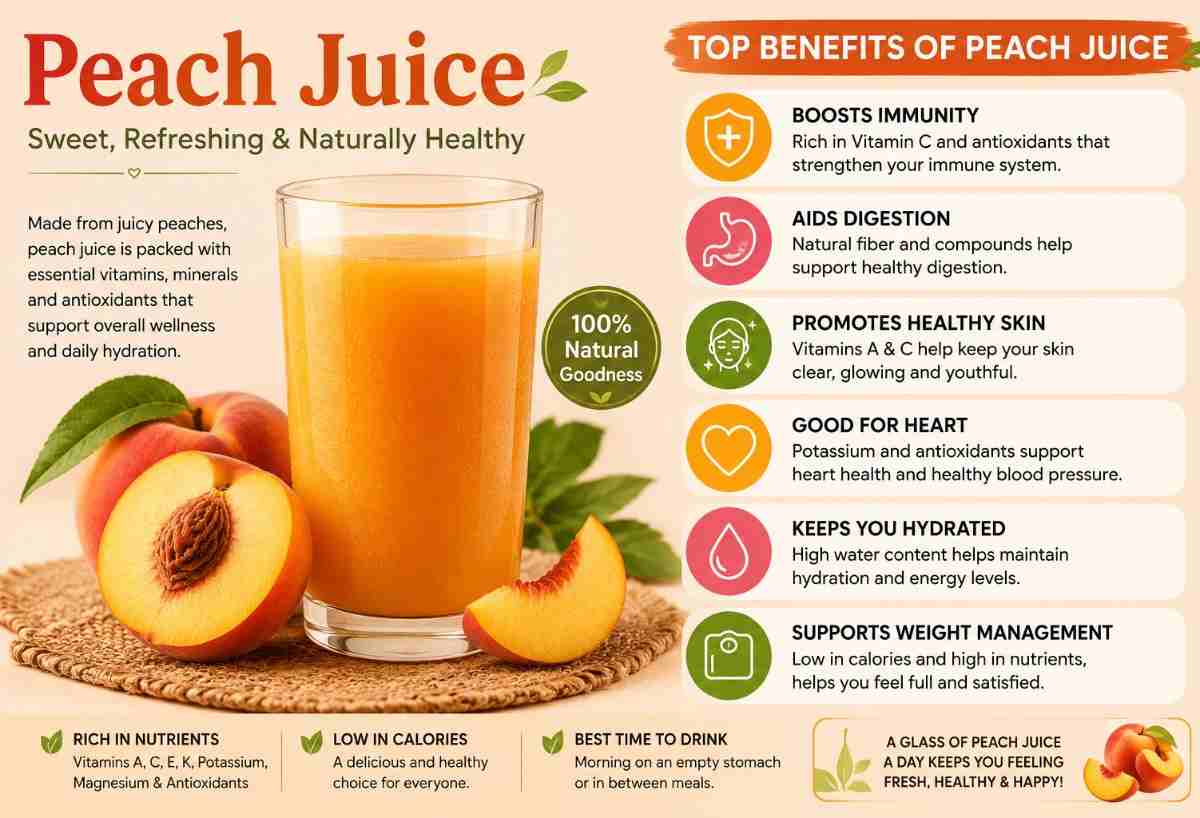
Peach juice is a naturally sweet, refreshing drink made from ripe peaches. With its soft fruity flavor, pleasant aroma, and vibrant color, it can be an enjoyable way to add fruit to your diet. Peaches provide nutrients such as vitamin C, vitamin A, vitamin E, vitamin K, potassium, and antioxidants.
However, there is an important difference between drinking peach juice and eating a whole peach. Juicing can remove much of the fruit’s fiber, while packaged peach drinks may also contain added sugar. For everyday nutrition, whole peaches are generally the better choice, but unsweetened peach juice can still fit into a balanced diet when consumed in reasonable portions.
What Is Peach Juice?
Peach juice is a beverage prepared by extracting or blending the edible flesh of ripe peaches with water. Depending on how it is made, it may be clear, pulpy, thick, or nectar-like.
Homemade peach juice is usually made by blending ripe peaches with water and optionally straining the mixture. Commercial products vary considerably: some are 100% peach juice, while others are peach nectar or fruit drinks containing water, sweeteners, concentrates, or other ingredients.
For the healthiest everyday option, look for 100% peach juice with no added sugar, or prepare it yourself using fresh peaches.
Nutrition Facts of Peach Juice
The exact nutrition of peach juice depends on the peach variety, recipe, amount of water used, whether the pulp is retained, and whether sugar or other ingredients are added. The following is an approximate guide for 1 cup (240 mL) of homemade unsweetened peach juice and should not be treated as a standardized laboratory analysis.
| Nutrient | Approximate Amount per 1 Cup |
|---|---|
| Calories | 90–120 kcal |
| Carbohydrates | 22–28 g |
| Total Sugars | 18–24 g |
| Dietary Fiber | 1–3 g |
| Protein | 1–2 g |
| Fat | Less than 1 g |
| Potassium | 250–400 mg |
| Vitamin C | 8–15 mg |
| Vitamin A | Small amount |
| Vitamin E | Small amount |
| Vitamin K | Small amount |
| Water | Approximately 210–225 g |
20 Proven Health Benefits of Peach Juice
- Provides Vitamin C: Peach juice can provide vitamin C, a nutrient involved in normal immune function, collagen production, wound healing, and antioxidant protection.
- Supports Hydration: Because juice contains a large amount of water, a moderate serving can contribute to daily fluid intake.
- Provides Potassium: Peach juice can contribute potassium, an essential mineral involved in normal nerve function, muscle contraction, and fluid balance.
- Supplies Antioxidants: Peaches contain antioxidant compounds that help protect cells from oxidative stress.
- Supports Immune Function: Vitamin C and other nutrients found in peaches contribute to normal immune-system function.
- May Support Skin Health: Vitamin C contributes to collagen formation, while antioxidant compounds help protect cells from oxidative damage.
- Supports Normal Collagen Production: The vitamin C naturally present in peaches contributes to the body’s normal production of collagen.
- Provides Vitamin A-Related Nutrients: Peaches contain carotenoids and vitamin A-related compounds that contribute to normal vision and other physiological functions.
- May Support Eye Health: Nutrients and carotenoid compounds found in peaches can contribute to maintaining normal eye health as part of an overall nutrient-rich diet.
- Contributes to Normal Muscle Function: Potassium contributes to normal muscle function, making potassium-containing foods and beverages useful components of a balanced diet.
- Supports Normal Nerve Function: Potassium is important for normal nerve signaling and overall nervous-system function.
- Provides Quick Carbohydrate Energy: The naturally occurring carbohydrates in peach juice provide readily available energy.
- Can Complement a Balanced Diet: Unsweetened peach juice can add fruit-derived nutrients and variety to an otherwise balanced eating pattern.
- May Support Digestive Health When Pulp Is Retained: Peach juice containing some blended peach pulp retains more fiber than clear strained juice.
- May Help Increase Fruit Intake: For people who struggle to eat fruit regularly, an unsweetened fruit beverage can be one convenient way to include peach in the diet.
- Contains Plant Compounds: Peaches contain polyphenols and other phytochemicals that contribute to their nutritional value.
- Naturally Low in Fat: Plain peach juice is naturally very low in fat, making it a light beverage option.
- Can Be a Better Choice Than Sugary Soft Drinks: Choosing unsweetened 100% peach juice instead of a sugar-sweetened beverage can help reduce reliance on drinks containing added sugars.
- Refreshing During Hot Weather: Its water and carbohydrate content can make peach juice a refreshing option, although water remains the primary beverage for hydration.
- Offers a Convenient Alternative to Whole Fruit: Peach juice is easy to consume when fresh peaches are unavailable, although whole peaches generally provide more fiber and greater satiety.
10 Side Effects of Peach Juice
Peach juice is generally well tolerated by most people when consumed in moderate amounts. However, drinking large quantities or choosing sweetened products may cause problems.
- May Raise Sugar Intake: Peach juice naturally contains sugar, and sweetened commercial varieties can contain substantially more, making portion control important.
- May Cause Blood Sugar Spikes: Because juice contains less fiber than whole peaches, its carbohydrates may be absorbed more quickly than those from the whole fruit.
- May Cause Digestive Discomfort: Drinking a large amount at once may cause bloating, abdominal discomfort, or loose stools in some people.
- May Worsen Dental Problems: Frequent exposure to sugary beverages can contribute to dental caries, particularly when consumed repeatedly throughout the day.
- May Contribute Excess Calories: Large servings can add considerable calories without providing the same fullness as eating whole peaches.
- May Not Provide Enough Fiber: Strained peach juice can contain considerably less fiber than the whole fruit.
- May Trigger Peach Allergy: People with peach allergy should avoid peach juice because it can trigger allergic symptoms.
- May Contain Added Sugar: Some commercial peach drinks contain added sweeteners, so reading the ingredient and nutrition labels is important.
- May Cause Problems With Certain Diets: People who need to carefully control carbohydrate or sugar intake may need to limit portions.
- May Replace More Nutritious Foods: Drinking too much juice can displace whole fruits, vegetables, protein-rich foods, and other nutrient-dense foods from the diet.
How to Make Peach Juice?
Making peach juice at home is simple and allows you to control the sweetness and ingredients.
Ingredients:
- 2–3 ripe peaches
- 1 cup cold water
- Ice, optional
- A small squeeze of lemon juice, optional
Method:
- Wash the peaches thoroughly.
- Remove the pits and cut the peaches into pieces.
- Add the peach pieces and water to a blender.
- Blend until smooth.
- Keep the pulp for more texture and fiber, or strain it if you prefer a thinner juice.
- Add a small amount of lemon juice if desired.
- Serve immediately over ice.
Avoid adding sugar unless necessary. Very ripe peaches are naturally sweet and often do not need additional sweeteners.
How to Drink Peach Juice?
The simplest approach is to drink a small serving of unsweetened peach juice with or alongside a meal.
You can also dilute it with water if the flavor is too concentrated. Another option is to blend peaches with water rather than fully straining them, which preserves more of the fruit’s natural texture.
Try not to sip juice continuously throughout the day. Frequent exposure to sugary beverages can increase dental concerns, so drinking it with a meal is generally more practical than slowly consuming it over several hours.
Tips for Consuming Peach Juice
- Choose 100% peach juice rather than peach-flavored drinks whenever possible.
- Check the label for added sugars.
- Prefer homemade juice when you want complete control over the ingredients.
- Keep some pulp if you want more fiber.
- Avoid turning peach juice into a daily high-volume beverage.
- Pair juice with a balanced meal instead of using it as a replacement for meals.
- Refrigerate homemade juice promptly.
- Use ripe peaches for better natural sweetness.
- Dilute the juice with water if you find it too sweet.
- Remember that whole peaches generally provide more fiber and greater fullness than juice.
Other Uses of Peach Juice
Peach juice is not limited to drinking. Its natural sweetness and fruity aroma make it useful in several recipes.
- Use it as a base for homemade smoothies.
- Add it to fruit-based mocktails.
- Use it in homemade popsicles.
- Add a small amount to oatmeal or overnight oats.
- Blend it with yogurt for a peach smoothie.
- Use it in fruit salad dressing.
- Add it to homemade chia pudding.
- Use it as a liquid ingredient in peach desserts.
- Add it to sparkling water for a refreshing drink.
- Use it as a flavoring ingredient in homemade sauces and marinades.
How Much Peach Juice Can You Drink in a Day?
For most healthy adults, keeping peach juice to approximately 4–8 ounces (120–240 mL) per day is a reasonable practical range, especially if the juice is 100% juice and unsweetened.
There is no universal requirement to drink peach juice every day. Whole peaches should generally make up a greater share of fruit intake because they provide more fiber and require more chewing.
For children, recommended portions are considerably smaller. The American Academy of Pediatrics recommends avoiding juice before 1 year of age and limiting 100% fruit juice to age-appropriate portions for older children.
Best Time to Drink Peach Juice
There is no scientifically established “best” time of day to drink peach juice.
- With breakfast: A small serving can complement a balanced breakfast.
- With lunch: Drinking juice with a meal may be more practical than sipping it throughout the day.
- After physical activity: It can provide carbohydrates and fluids, although water and a balanced meal or snack may be more appropriate depending on exercise intensity.
- During hot weather: A small serving can be refreshing, but it should not replace adequate water intake.
If you have blood-sugar concerns, drinking juice alongside a meal containing protein, healthy fats, or fiber may be preferable to consuming it alone.
Who Should Drink Peach Juice?
- Healthy Adults: Adults who enjoy peach juice can include a moderate amount of unsweetened juice in an otherwise balanced diet.
- People Looking for Fruit Variety: Peach juice can provide another way to enjoy the flavor and nutrients associated with peaches.
- People Who Prefer Homemade Drinks: Homemade juice allows you to avoid unnecessary sweeteners and control the ingredients.
- People With Low Fruit Intake: A small serving can be convenient for people who have difficulty incorporating fruit into their routine, although whole fruit remains preferable.
- Active Individuals: People with higher energy needs may occasionally use peach juice as a source of carbohydrates alongside a balanced diet.
Who Should Avoid Peach Juice?
- Infants Under 1 Year: Fruit juice is not recommended for infants younger than 1 year.
- People With Peach Allergy: Anyone with a known peach allergy should avoid juice unless their healthcare professional has specifically advised otherwise.
- People Sensitive to Fruit Sugars: Individuals who experience digestive symptoms after consuming peaches or fruit juices may need to limit or avoid juice.
- People Who Need Strict Carbohydrate Control: Those managing blood glucose may need to account for the carbohydrates in peach juice.
- People Drinking Sweetened Peach Beverages: Products with added sugars may not be appropriate for people trying to reduce added-sugar intake.
- People With Certain Dental Concerns: Frequent consumption of sugary or acidic beverages can increase dental concerns, making portion size and drinking frequency important.
How to Store Peach Juice?
- Refrigerate Immediately: Store freshly prepared juice in a clean, covered container in the refrigerator.
- Use Quickly: Homemade juice is best consumed within a short period because it does not contain commercial preservatives.
- Keep It Covered: A tightly sealed container helps protect the juice from odors and contamination.
- Avoid Repeated Temperature Changes: Do not repeatedly leave juice at room temperature and return it to the refrigerator.
- Freeze for Longer Storage: Peach juice can be frozen in suitable freezer-safe containers, leaving room for expansion.
- Check Before Drinking: Discard juice if it develops an unusual smell, appearance, fermentation, mold, or other signs of spoilage.
Precautions and Interactions
Peach juice is a food rather than a medication, but a few precautions are worth remembering.
- Check the label: Commercial peach beverages may contain added sugar, concentrates, preservatives, or other ingredients. Choose products according to your dietary needs.
- Consider portion size: Even 100% fruit juice contains naturally occurring sugars and generally provides less fiber than whole fruit.
- Be careful with allergies: People with peach allergy should avoid juice and seek medical advice if they develop symptoms such as swelling, hives, vomiting, breathing difficulty, or other signs of an allergic reaction.
- Consider blood-sugar management: If you have diabetes or another condition requiring carbohydrate management, include juice within your overall carbohydrate plan rather than treating it as a free beverage.
- Protect dental health: Avoid frequent sipping throughout the day. The American Academy of Pediatrics notes that reducing the frequency of sugary beverage exposure can help lower dental-caries risk.
- Check medications with a professional when necessary: Fruit juices can sometimes interact with medications, although the best-established interactions involve particular juices rather than juice specifically. If you take prescription medicines and consume large amounts of fruit juice regularly, ask your pharmacist or doctor whether any food-drug interaction is relevant to your medication.
Peach Juice vs. Whole Peaches
Although peach juice can be nutritious, whole peaches generally have an advantage.
A whole peach provides the intact fruit structure and substantially more fiber than clear juice. Fiber can contribute to fullness and digestive health. Juice is easier to consume quickly, which also makes it easier to consume more calories and sugar without feeling as full.
For that reason, think of peach juice as a complement to whole fruit rather than a replacement for it.
Final Thoughts
Juice is a refreshing way to enjoy the flavor and some of the nutrients found in peaches. Its vitamin C, potassium, antioxidants, and natural carbohydrates can contribute to a balanced diet, but it should not be viewed as a cure-all or a substitute for whole fruit.
For the best everyday choice, select 100% unsweetened peach juice, keep portions moderate, avoid frequent sipping, and make whole peaches the primary way you enjoy this fruit. When made at home with ripe peaches and little or no added sugar, juice can be a simple and enjoyable addition to a varied diet.
FAQ’s
Is peach juice healthy?
Yes, unsweetened juice can provide vitamin C, potassium, antioxidants, and fluids, but whole peaches are generally healthier because they contain more fiber.
What does peach juice taste like?
Juice usually has a naturally sweet, fruity flavor with a mild tang and a soft floral aroma.
What does peach juice smell like?
Fresh juice typically smells sweet, fruity, floral, and slightly fragrant, similar to a ripe peach.
Is peach juice good for digestion?
Juice may be easy to digest for some people, but clear juice contains less fiber than whole peaches. Blended juice with pulp retains more fiber.
Can I drink peach juice every day?
Yes, a small serving of unsweetened juice can fit into a balanced diet, but it is better to prioritize whole peaches and water.
Is peach juice good for weight loss?
Juice does not directly cause weight loss. Because it contains natural sugars and less fiber than whole peaches, portion control is important.
Does peach juice contain vitamin C?
Yes, peaches naturally contain vitamin C, although the amount varies depending on the peaches and how the juice is prepared.
Can peach juice help with hydration?
Yes, juice contains a significant amount of water and can contribute to fluid intake, although plain water is the best everyday hydration choice.
Is peach juice safe during pregnancy?
Unsweetened, pasteurized juice is generally safe during pregnancy. Homemade juice should be prepared with thoroughly washed fruit and consumed fresh.
Is peach juice good for children?
Children can have age-appropriate amounts of 100% fruit juice after infancy, but whole fruit should generally be preferred. Infants younger than 1 year should not be given fruit juice.
Can diabetics drink peach juice?
People with diabetes may be able to include a small portion of unsweetened juice, but it contains carbohydrates and natural sugars. Individual needs should be discussed with a healthcare professional.
Is peach juice good for skin?
Juice provides nutrients such as vitamin C that support normal collagen production and antioxidant protection, but drinking it is not a treatment for skin conditions.
Can peach juice cause diarrhea?
Drinking large amounts may cause digestive discomfort or loose stools in some people, particularly those who are sensitive to fruit sugars.
Does peach juice have added sugar?
Homemade juice does not need added sugar, but some commercial peach drinks contain added sugars. Always check the ingredient list and nutrition label.
Can I drink peach juice on an empty stomach?
Most people can drink a small amount on an empty stomach, but those who experience acidity, bloating, or digestive discomfort may prefer having it with food.
How long does homemade peach juice last in the refrigerator?
For best quality and food safety, homemade juice should be refrigerated promptly and consumed within a few days; discard it sooner if it develops an unusual smell, appearance, or taste.
Can I make peach juice without a juicer?
Yes. You can blend ripe peaches with water and strain the mixture if you prefer a smoother consistency.
Is peach juice better than eating a peach?
Generally, no. Whole peaches provide more fiber and tend to be more filling, while juice is easier to consume quickly and may contain less fiber.
What is peach juice good for?
Juice is good for providing fluids, vitamin C, potassium, antioxidants, and natural carbohydrates. Unsweetened juice can support hydration and add variety to a healthy diet, although whole peaches provide more fiber.
Sources / References:
Disclaimer:
This article is for general educational purposes only and is not a substitute for professional medical advice, diagnosis, or treatment. People with allergies, diabetes, medical conditions, or medication-related concerns should consult a qualified healthcare professional.
Also Read: