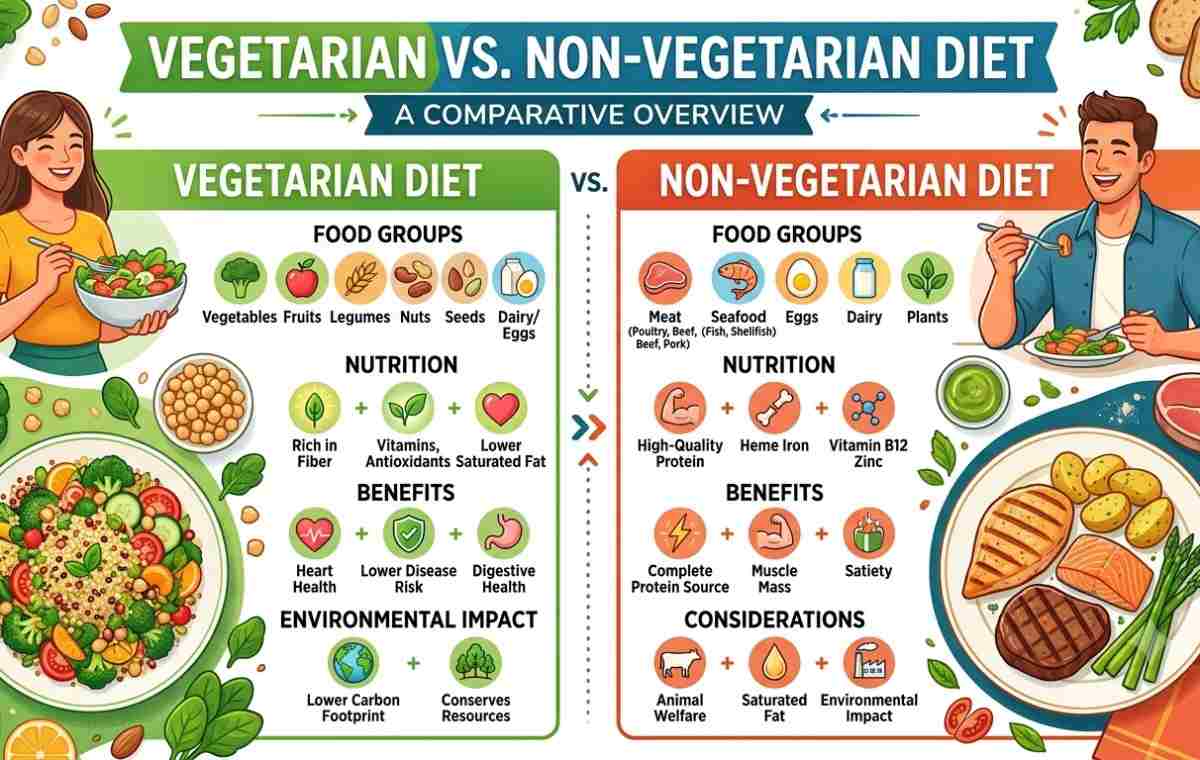
When it comes to choosing between a vegetarian and non-vegetarian diet, there is no single answer that works for everyone. Both eating patterns can provide the nutrients your body needs, but the overall quality of the diet matters much more than the label.
A well-planned vegetarian diet can be rich in vegetables, fruits, whole grains, beans, lentils, nuts, seeds and other nutrient-dense foods. A well-planned non-vegetarian diet can also be healthy when it emphasizes vegetables, whole grains, legumes, fish, eggs or lean meats while limiting processed meats and excessive saturated fat.
Research increasingly suggests that healthy vegetarian dietary patterns may offer cardiovascular benefits, particularly when they replace foods high in saturated fat with fiber-rich plant foods. However, vegetarian diets also require attention to nutrients such as vitamin B12, iron, calcium, iodine, zinc and, depending on the diet, omega-3 fats.
So, which is better: vegetarian or non-vegetarian? The most useful answer is: the healthier pattern is the one that is balanced, nutrient-dense, minimally processed and suitable for your individual needs.
What Is a Vegetarian Diet?
A vegetarian diet avoids meat, poultry and fish. However, different types of vegetarian diets may include different animal-derived foods.
Common types include:
- Lacto-vegetarian: Includes dairy products but excludes eggs, meat, poultry and fish.
- Ovo-vegetarian: Includes eggs but excludes dairy, meat, poultry and fish.
- Lacto-ovo vegetarian: Includes both dairy and eggs but excludes meat, poultry and fish.
- Vegan: Avoids all animal-derived foods, including meat, fish, eggs and dairy.
A vegetarian diet can be nutritionally complete when it includes a variety of plant foods and adequate sources of essential nutrients.
What Is a Non-Vegetarian Diet?
A non-vegetarian diet includes both plant foods and animal foods such as meat, poultry, fish, seafood and eggs. Dairy products may also be included depending on individual eating habits.
A healthy non-vegetarian diet does not mean eating meat at every meal. It can emphasize vegetables, fruits, whole grains, beans, lentils, nuts and seeds while using animal foods as sources of protein and other nutrients.
The quality and preparation of animal foods make a major difference. For example, grilled fish with vegetables is nutritionally very different from frequently eating processed meats, fried meat or highly processed fast food.
Vegetarian vs Non-Vegetarian Diet: Key Differences
| Feature | Vegetarian Diet | Non-Vegetarian Diet |
|---|---|---|
| Meat | Avoided | Included |
| Poultry | Avoided | Included |
| Fish and seafood | Avoided | Included |
| Eggs | May be included | Usually included |
| Dairy | May be included | Usually included |
| Fruits and vegetables | Usually emphasized | Can be emphasized |
| Legumes | Important protein source | Can be included |
| Fiber | Often higher when based on whole plant foods | May be lower depending on food choices |
| Vitamin B12 | May require fortified foods or supplements, especially in vegan diets | Generally easier to obtain from animal foods |
| Iron | Mainly non-heme iron from plants | Provides both heme and non-heme iron |
| Omega-3 fats | Plant sources available; certain forms may require special attention | Fish and seafood provide EPA and DHA |
| Protein | Beans, lentils, soy, dairy, eggs, nuts and seeds | Meat, fish, eggs, dairy plus plant sources |
| Processed food risk | Can still be high in refined or ultra-processed foods | Can also be high in processed meats and fast foods |
Vegetarian vs Non-Vegetarian Diet: Nutritional Comparison
1. Protein
Protein is necessary for muscle maintenance, tissue repair, enzymes, hormones and many other body functions.
Vegetarians can obtain protein from:
- Lentils
- Chickpeas
- Kidney beans
- Black beans
- Soybeans
- Tofu
- Tempeh
- Peanuts
- Nuts
- Seeds
- Milk
- Yogurt
- Cheese
- Eggs, if included
Non-vegetarians have additional protein sources such as fish, chicken, meat and seafood.
The important point is that both diets can provide enough protein when meals are properly planned.
2. Iron
Iron is required for hemoglobin production and oxygen transport.
Plant foods provide non-heme iron, while meat and seafood can provide heme iron, which is generally more readily absorbed.
Vegetarians can obtain iron from lentils, beans, tofu, spinach, seeds, fortified cereals and other plant foods.
Pairing plant sources of iron with vitamin C-rich foods such as citrus fruits, tomatoes, bell peppers or guava can help improve non-heme iron absorption.
People following vegetarian diets, particularly those with higher iron requirements, may need greater attention to iron intake.
3. Vitamin B12
Vitamin B12 is one of the nutrients that deserves particular attention in vegetarian nutrition.
Animal foods naturally provide vitamin B12, while plant foods generally do not provide reliable natural amounts.
People following vegan diets usually need fortified foods or a B12 supplement to meet requirements. Some vegetarians who consume little or no dairy and eggs may also need supplementation.
Research has found lower B12 concentrations among vegetarians compared with omnivores, highlighting the importance of appropriate planning.
4. Calcium
Calcium is important for bones, teeth, muscle function and nerve signaling.
Vegetarian sources can include:
- Milk
- Yogurt
- Cheese
- Calcium-fortified plant milks
- Calcium-set tofu
- Some leafy greens
- Sesame and tahini
Non-vegetarians can obtain calcium from dairy products as well as many plant foods.
A diet containing meat does not automatically provide more calcium.
5. Omega-3 Fatty Acids
Omega-3 fatty acids support cardiovascular and brain health.
Vegetarian sources include:
- Flaxseeds
- Chia seeds
- Walnuts
- Hemp seeds
- Algal oil
Fish such as salmon, sardines and mackerel provide the long-chain omega-3 fatty acids EPA and DHA.
Therefore, people who avoid fish may need to pay particular attention to their omega-3 intake.
Health Benefits of a Vegetarian Diet
A well-planned vegetarian diet can provide several potential health advantages.
1. May Support Heart Health
Vegetarian dietary patterns are often higher in fiber and lower in saturated fat when they emphasize whole plant foods. Recent evidence has associated vegetarian and vegan patterns with lower cardiovascular disease risk compared with non-vegetarian patterns.
2. May Improve Cholesterol Levels
Plant-rich diets can provide soluble fiber and other compounds that may help support healthier blood lipid levels. An umbrella review found vegetarian diets were associated with lower total and LDL cholesterol compared with omnivorous diets.
3. May Increase Fiber Intake
Beans, lentils, vegetables, fruits, whole grains, nuts and seeds can make a vegetarian diet naturally rich in dietary fiber.
4. May Support Healthy Weight Management
Many whole plant foods provide substantial volume and nutrients relative to calories, which may make it easier for some people to manage energy intake.
5. Provides More Plant Compounds
Fruits, vegetables, herbs, spices, legumes and whole grains provide antioxidants and phytochemicals that contribute to a varied diet.
6. May Support Blood Pressure
Healthy plant-based dietary patterns are associated with favorable cardiovascular risk factors, including blood pressure.
7. May Support Metabolic Health
Research has linked healthier plant-based dietary patterns with favorable metabolic outcomes, although results depend heavily on the quality of foods being consumed.
Potential Benefits of a Non-Vegetarian Diet
A balanced non-vegetarian diet can also have nutritional advantages.
1. Convenient Protein Sources
Eggs, fish, poultry and meat can provide concentrated sources of high-quality protein.
2. Provides Vitamin B12
Animal foods can make it easier to obtain vitamin B12 naturally.
3. Heme Iron From Meat
Meat provides heme iron, which is generally more readily absorbed than non-heme iron from plants.
4. Fish Provides EPA and DHA
Fatty fish can provide preformed EPA and DHA omega-3 fatty acids.
5. Provides Several Essential Nutrients
Depending on the food choices, animal products can contribute protein, zinc, iron, vitamin B12, selenium and other nutrients.
6. Can Complement a Plant-Rich Diet
A non-vegetarian diet does not have to be centered around meat. It can combine moderate amounts of animal foods with plenty of vegetables, fruits, legumes and whole grains.
Potential Disadvantages of a Vegetarian Diet
Vegetarian diets are not automatically healthy.
1. Vitamin B12 Deficiency Risk
People who consume little or no animal-derived food need a reliable B12 source.
2. Iron Requires Attention
Plant-based iron is less readily absorbed, so food combinations and overall intake matter.
3. Protein Can Be Low in Poorly Planned Diets
Simply removing meat without replacing it with legumes, soy, dairy, eggs or other protein-rich foods can reduce protein intake.
4. Omega-3 Intake May Need Planning
People who do not eat fish should regularly include plant omega-3 sources and consider whether fortified foods or supplements are appropriate.
5. Ultra-Processed Vegetarian Foods Can Still Be Unhealthy
Vegetarian burgers, refined snacks, sugary drinks, desserts and fried foods can be vegetarian while still being low in nutritional quality.
Potential Disadvantages of a Non-Vegetarian Diet
A non-vegetarian diet can also become unhealthy depending on food choices and portion sizes.
1. Excessive Processed Meat Can Be a Concern
The International Agency for Research on Cancer classifies processed meat as carcinogenic to humans based on sufficient evidence for colorectal cancer, while red meat is classified as probably carcinogenic to humans.
2. Too Much Saturated Fat May Be Unfavorable
Frequent consumption of fatty meats, processed meats and high-fat animal products can increase saturated fat intake.
3. Fiber Intake May Be Lower
A diet centered heavily on meat may contain too little fiber if vegetables, fruits, legumes and whole grains are neglected.
4. Processed Foods Can Dominate
Fried chicken, sausages, bacon, burgers and other highly processed foods should not be confused with a balanced non-vegetarian diet.
5. Portion Size Matters
Large portions of meat combined with refined carbohydrates and sugary or high-calorie foods can make overall calorie intake excessive.
Vegetarian vs Non-Vegetarian Diet for Weight Loss
Neither diet automatically causes weight loss.
Weight management depends on factors such as:
- Total calorie intake
- Food quality
- Protein intake
- Fiber intake
- Physical activity
- Sleep
- Portion sizes
- Individual metabolism
- Overall eating pattern
A vegetarian diet may make weight management easier for some people because whole plant foods can be high in fiber and relatively low in energy density. Research in people with overweight or obesity has also found potential improvements in weight and metabolic outcomes with vegetarian diets, although individual results vary.
A non-vegetarian diet can also support weight loss when it includes appropriate portions of lean protein, vegetables, whole grains and other nutrient-dense foods.
Vegetarian vs Non-Vegetarian: Which Diet Is Better for Heart Health?
A well-planned vegetarian diet may have an advantage for cardiovascular health, particularly when it emphasizes whole plant foods.
A recent umbrella review of systematic reviews found that vegetarian and vegan dietary patterns were associated with lower cardiovascular disease incidence and mortality compared with non-vegetarian patterns. However, much of the evidence was observational, meaning it shows an association rather than proving that vegetarian eating alone caused the benefit.
A non-vegetarian diet can also be heart-friendly when it emphasizes fish, vegetables, legumes, whole grains, nuts and seeds while limiting processed meats and foods high in saturated fat.
Which Diet Is Better for Muscle Building?
Both can support muscle growth.
The most important factors include:
- Adequate total protein
- Sufficient calories
- Resistance training
- Recovery
- Adequate sleep
- Consistent nutrition
Vegetarians can build muscle using foods such as tofu, tempeh, lentils, beans, dairy, eggs and soy products.
Non-vegetarians have additional options such as chicken, fish and lean meat.
The key is not whether the diet contains meat, but whether it supplies enough protein and energy.
Which Diet Is Better for Children?
Children have high nutritional needs because they are growing rapidly.
A vegetarian diet can be suitable for children when carefully planned, but parents need to pay attention to protein, iron, vitamin B12, calcium, vitamin D, zinc and overall energy intake.
A child should not simply follow an adult’s restrictive diet without appropriate nutritional planning.
For children following vegan or highly restrictive vegetarian diets, professional dietary guidance can be particularly useful.
Which Diet Is Better During Pregnancy?
Both vegetarian and non-vegetarian diets can potentially support a healthy pregnancy when nutritionally adequate.
Pregnancy increases requirements for several nutrients, including protein, iron, folate, iodine, choline, vitamin B12 and others.
Vegetarian and vegan pregnancies require particular attention to nutrients that can be difficult to obtain from plant foods alone, especially vitamin B12, iron, iodine and DHA.
Anyone considering a restrictive diet during pregnancy should discuss nutrition and supplementation with a qualified healthcare professional.
Vegetarian vs Non-Vegetarian: Which Is More Sustainable?
The environmental impact of food varies considerably according to the specific foods, production methods and quantities consumed.
In general, diets that replace some animal foods with plant foods can reduce the environmental footprint associated with food production.
However, sustainability is not the only factor when choosing a diet. Nutritional adequacy, affordability, culture, accessibility and personal preferences also matter.
A practical approach for many people is to increase vegetables, legumes, whole grains, nuts and seeds while moderating meat consumption.
What Does a Healthy Vegetarian Plate Look Like?
A simple vegetarian meal can include:
½ plate: Vegetables and salad
¼ plate: Protein such as dal, beans, chickpeas, tofu, paneer or eggs
¼ plate: Whole grains such as brown rice, whole-wheat roti, quinoa or oats
Plus: A fruit, yogurt or another nutrient-rich food as appropriate
This approach provides a mixture of fiber, protein, carbohydrates, fats, vitamins and minerals.
What Does a Healthy Non-Vegetarian Plate Look Like?
A balanced non-vegetarian meal can include:
½ plate: Vegetables and salad
¼ plate: Fish, chicken, eggs or another protein source
¼ plate: Whole grains, potatoes, brown rice or another carbohydrate source
Plus: Fruit, yogurt, nuts or seeds as appropriate
The goal is to make plant foods the foundation of the meal rather than treating meat as the only important component.
Vegetarian vs Non-Vegetarian Diet: Which Is Better?
There is no universal winner.
If the comparison is between a whole-food vegetarian diet and a diet dominated by processed meat, fried foods and refined carbohydrates, the vegetarian diet will generally have a nutritional advantage.
But if the comparison is between a well-planned vegetarian diet and a well-planned non-vegetarian diet rich in vegetables, whole grains, legumes, fish and minimally processed foods, the difference becomes much smaller.
The strongest takeaway from current research is that diet quality matters more than simply choosing vegetarian or non-vegetarian.
A vegetarian diet can be unhealthy if it is based mainly on refined carbohydrates, sugary foods and ultra-processed meat substitutes. Likewise, a non-vegetarian diet can be healthy when it contains plenty of plant foods and moderate amounts of minimally processed animal foods.
Vegetarian vs Non-Vegetarian: How to Choose the Right Diet for You?
Consider these questions before making a major dietary change:
- Can you meet your protein needs?
- Are you getting enough fiber?
- Are you eating a wide variety of foods?
- Can you reliably obtain vitamin B12?
- Are you getting enough iron and calcium?
- Do you enjoy the foods in the diet?
- Is the diet affordable and practical for your lifestyle?
- Can you maintain it long term?
- Does it fit your cultural and family eating habits?
- Do you have any medical or nutritional requirements that need professional guidance?
The best diet is usually one that you can maintain while meeting your nutritional needs.
Simple Tips for a Healthier Diet
Whether you are vegetarian or non-vegetarian, these habits can improve overall diet quality:
- Eat a variety of vegetables every day.
- Include fruits regularly.
- Choose whole grains more often.
- Include beans, lentils or other legumes.
- Add nuts and seeds in appropriate portions.
- Choose minimally processed foods more often.
- Limit sugary drinks and highly refined snacks.
- Reduce excessive fried foods.
- If eating meat, limit processed meat and avoid making it the center of every meal.
- If vegetarian, pay particular attention to vitamin B12, iron, calcium, zinc and omega-3 intake.
- Drink adequate water.
- Match portion sizes to your energy needs.
FAQ’s
Is a vegetarian diet healthier than a non-vegetarian diet?
A well-planned vegetarian diet can be very healthy, but a balanced non-vegetarian diet can also support good health. Overall food quality matters more than the diet label.
Is non-vegetarian food necessary for good health?
No. A properly planned vegetarian diet can provide the nutrients needed for good health, although nutrients such as vitamin B12 may require extra attention.
Can vegetarians get enough protein?
Yes. Lentils, beans, chickpeas, tofu, soy, dairy, eggs, nuts and seeds can provide adequate protein when included regularly.
Is eating meat every day healthy?
It depends on the type and amount. Frequent consumption of processed meats should be limited, while a varied diet with vegetables, legumes and whole grains is generally preferable.
Do vegetarians need vitamin B12?
Vegans need a reliable source of vitamin B12 from fortified foods or supplements. Vegetarians may also need supplementation depending on their intake of eggs, dairy and fortified foods.
Which diet provides more iron?
Non-vegetarian diets provide heme iron from meat, which is readily absorbed. Vegetarian diets provide non-heme iron from foods such as lentils, beans, tofu, seeds and leafy greens.
Can a vegetarian diet build muscle?
Yes. Muscle growth depends mainly on adequate protein, calories, resistance training and recovery. Vegetarian protein sources can support muscle development.
Is a vegetarian diet good for children?
Yes, when properly planned. Children need adequate protein, calories, iron, vitamin B12, calcium, vitamin D and other nutrients for healthy growth.
Can pregnant women follow a vegetarian diet?
Yes, but nutritional planning is important during pregnancy. Particular attention should be given to protein, iron, vitamin B12, iodine, choline, folate and omega-3 fats.
Which diet is better for digestion?
A vegetarian diet based on whole plant foods often provides more fiber, which can support regular bowel movements and digestive health. However, increasing fiber suddenly may cause bloating or gas.
Is vegetarian food always healthy?
No. Vegetarian foods can include sugary drinks, refined grains, fried foods, desserts and ultra-processed products. Vegetarian does not automatically mean nutritious.
Is non-vegetarian food unhealthy?
No. Fish, eggs, poultry and other minimally processed animal foods can provide valuable nutrients. The overall dietary pattern and food choices are what matter.
Which diet is better for longevity?
Research suggests that healthy dietary patterns rich in plant foods are associated with better long-term health outcomes. However, longevity depends on many factors beyond whether someone eats meat.
Can I switch from a non-vegetarian diet to a vegetarian diet?
Yes. You can gradually replace meat with lentils, beans, chickpeas, tofu, paneer, eggs or other suitable protein sources while increasing vegetables and whole grains.
Which diet is more environmentally friendly?
Plant-rich diets generally have a lower environmental impact than diets heavily dependent on animal foods. The environmental impact also varies according to the specific foods and production methods.
Can vegetarians eat eggs?
It depends on the type of vegetarian diet. Lacto-ovo vegetarians eat eggs, while ovo-vegetarians eat eggs but avoid dairy.
What is the healthiest diet overall?
There is no single healthiest diet for everyone. A varied diet containing vegetables, fruits, whole grains, legumes, nuts and seeds, with appropriate protein and limited highly processed foods, is a strong foundation for health.
Final Verdict
Vegetarian vs non-vegetarian is not really a competition.
A nutritious vegetarian diet can be an excellent choice and may provide cardiovascular benefits, particularly when it emphasizes whole plant foods. At the same time, a balanced non-vegetarian diet can provide valuable nutrients and can also be part of a healthy lifestyle.
The bigger concern is not simply whether food comes from plants or animals. It is how much you eat, how often you eat it, how it is prepared, and what the rest of your diet looks like.
For most people, a practical goal is to build meals around vegetables, fruits, whole grains, legumes, nuts and seeds, then include dairy, eggs, fish or meat according to personal preference and nutritional needs.
In other words, the healthiest diet is usually a balanced, varied and minimally processed diet that you can follow consistently.
Sources / References:
About the Author:
Written by: Kirti Solanki (Health Content Researcher)
Kirti Solanki researches health and nutrition topics and focuses on creating clear, reader-friendly content based on credible scientific sources.
Disclaimer:
This article is for general educational purposes only and does not replace personalized medical or dietary advice. People with medical conditions, nutritional deficiencies, pregnancy-related needs or restrictive diets should consult a qualified healthcare professional.
Also Read: