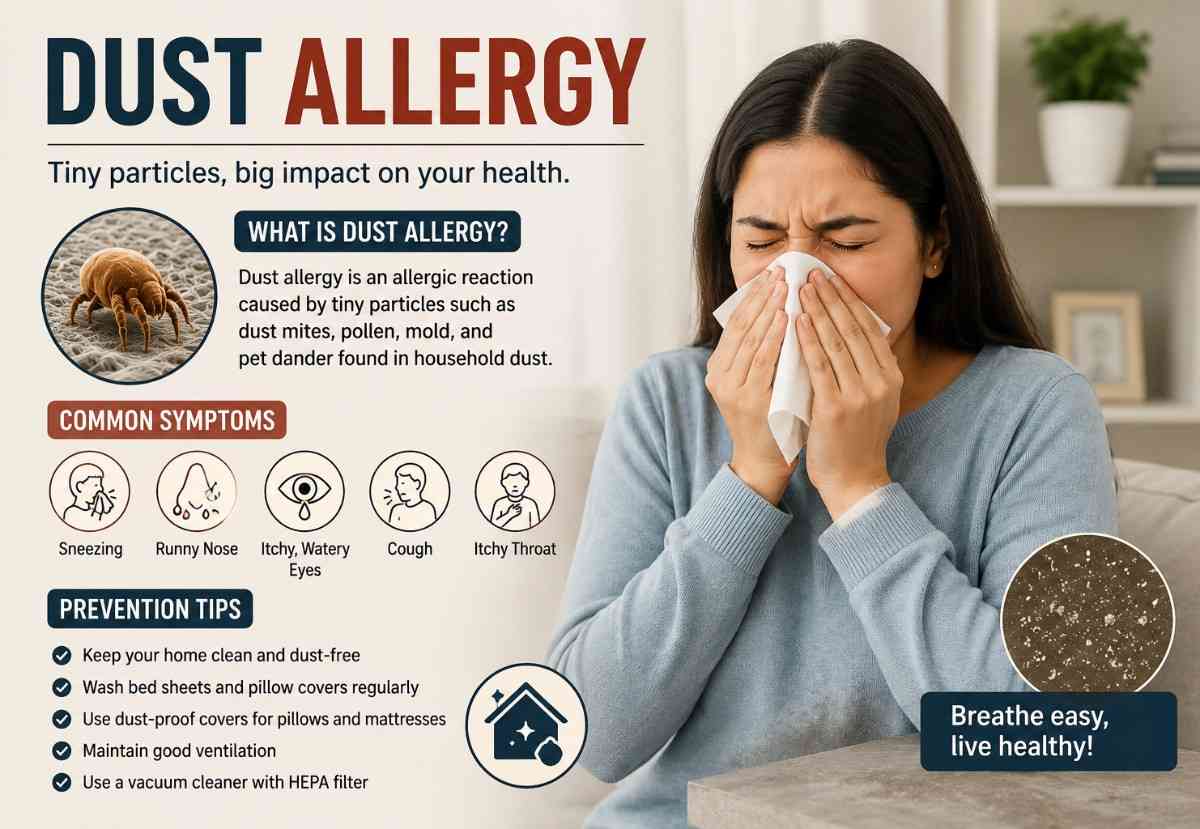
Dust allergy is a common problem that can make everyday life uncomfortable. A dusty room, old bedding, carpet, or even cleaning the house can trigger sneezing, a runny or blocked nose, itchy eyes, coughing, or breathing problems in sensitive people.
One important point is that dust itself is not always the main allergen. Household dust can contain dust mite particles and droppings, pet dander, pollen, mold spores, and other substances that may trigger an allergic reaction. Dust mites are particularly common indoor allergens and can contribute to allergic rhinitis and asthma symptoms.
The good news is that dust allergy can often be managed with a combination of allergen avoidance, appropriate treatment, and simple changes to the home environment.
What Is a Dust Allergy?
Dust allergy is an allergic reaction to substances found in household dust. In many cases, the major trigger is house dust mites, microscopic organisms that commonly live in mattresses, pillows, carpets, upholstered furniture, blankets, and other fabric-covered items.
When someone who is sensitive to these allergens breathes them in, the immune system mistakenly treats them as harmful. This can lead to inflammation and typical allergy symptoms.
Dust-related symptoms that occur throughout the year are often associated with perennial allergic rhinitis, which can be triggered by indoor allergens such as dust mites and pets.
What Causes Dust Allergy?
Several substances in household dust can contribute to allergy symptoms.
- Dust mites: Tiny organisms whose body particles and droppings can trigger allergies.
- Pet dander: Small flakes of skin and other proteins from animals.
- Mold spores: Mold can grow in damp indoor environments and release allergens.
- Pollen: Outdoor pollen can enter the home through windows, doors, clothing, and pets.
- Cockroach particles: Cockroach body parts and droppings can become indoor allergens.
- Other particles: Household dust can contain a mixture of skin cells, fibers, dirt, and biological contaminants.
Dust Allergy Symptoms
Symptoms can vary from mild irritation to more persistent respiratory problems.
1. Frequent Sneezing
Repeated sneezing, especially after entering a dusty room or making the bed, can be a common sign of an indoor allergy.
2. Runny Nose
The nose may produce excess watery mucus after exposure to an allergen.
3. Stuffy Nose
Inflammation inside the nasal passages can make breathing through the nose difficult.
4. Itchy Nose
An itchy or tingling sensation inside the nose may accompany allergic rhinitis.
5. Postnasal Drip
Mucus draining toward the throat can cause throat irritation or frequent throat clearing.
6. Itchy or Watery Eyes
Dust-related allergens may cause itchy, red, watery, or irritated eyes.
7. Coughing
Some people develop coughing when allergens irritate the upper or lower airways.
8. Throat Irritation
Exposure to airborne allergens can leave the throat feeling scratchy or uncomfortable.
9. Wheezing
People with dust mite allergy and asthma may experience wheezing or other asthma symptoms.
10. Difficulty Breathing
Breathing difficulty should not be ignored, particularly when it is sudden, severe, or associated with asthma.
Allergic rhinitis can also contribute to sinus problems, ear problems, asthma symptoms, and disrupted sleep.
Dust Allergy vs. Dust Sensitivity
Not every reaction to dust is an allergy.
An allergy involves an immune response to a specific allergen. However, dust can also contain irritants that cause symptoms without an allergic reaction. Smoke, strong fragrances, pollution, and certain chemicals can produce symptoms that resemble allergies.
This is one reason why persistent symptoms may require professional evaluation rather than assuming that dust is automatically the cause.
Who Is More Likely to Develop Dust Allergy?
Dust allergy can affect both children and adults. The likelihood of symptoms can be greater in people who are already sensitive to indoor allergens or have allergic conditions.
People with asthma may also be particularly affected because dust mite allergens can trigger asthma symptoms in sensitized individuals.
How Is Dust Allergy Diagnosed?
A healthcare professional may start by asking about:
- When symptoms occur
- Where symptoms become worse
- Whether symptoms occur throughout the year
- Exposure to dust, bedding, carpets, pets, or mold
- Personal and family allergy history
- Existing asthma or other respiratory symptoms
If a dust mite allergy is suspected, an allergist may recommend allergy testing, such as a skin-prick test or a blood test for allergen-specific IgE. Testing for dust mite-specific IgE when dust mite allergy is suspected.
Dust Allergy Treatment
Treatment depends on the severity of symptoms and the specific allergen involved.
1. Reduce Allergen Exposure
The first step is often reducing exposure to the substances triggering symptoms.
2. Antihistamines
Antihistamines may help relieve symptoms such as sneezing, itching, and a runny nose. Ask a healthcare professional or pharmacist which option is appropriate for you.
3. Nasal Corticosteroids
For persistent allergic rhinitis, intranasal corticosteroids are an important treatment option and are considered preferred monotherapy in current allergy practice guidance.
4. Other Nasal Treatments
Depending on symptoms, healthcare professionals may recommend additional nasal medications or combination therapy.
5. Allergy Immunotherapy
For some people with confirmed dust mite allergy and persistent symptoms, allergen immunotherapy may be considered. It involves carefully controlled exposure to the relevant allergen under medical supervision.
Immunotherapy may be appropriate when symptoms remain troublesome despite other approaches or when long-term medication is undesirable.
15 Effective Ways to Reduce Dust Allergy at Home
Managing the home environment can make a meaningful difference for people who are sensitive to dust mites and other indoor allergens.
1. Wash Bedding Regularly
Wash sheets, pillowcases, blankets, and other washable bedding regularly. Washing bedding weekly and drying it completely.
2. Use Allergen-Proof Mattress Covers
Encasing mattresses and pillows in allergen-impermeable covers can help reduce exposure to dust mite allergens.
3. Vacuum Carpets Frequently
Carpets can collect dust, allergens, and other particles. Regular vacuuming can help reduce buildup. A vacuum with HEPA filtration can reduce the amount of material escaping back into the air.
4. Clean With a Damp Cloth
Instead of dry dusting, use a damp cloth on hard surfaces. Damp cleaning helps prevent settled dust from becoming airborne again.
5. Control Indoor Humidity
Dust mites thrive in humid environments. Keeping indoor relative humidity around 30% to 50% is generally recommended for indoor air quality, approximately 35% to 50% for reducing dust mite growth.
6. Wash Stuffed Toys
Children’s stuffed toys can collect dust and allergens. Choose washable toys when possible and wash them regularly.
7. Reduce Bedroom Clutter
Clutter can create additional surfaces where dust accumulates. Keeping bedrooms organized makes regular cleaning easier.
8. Clean Upholstered Furniture
Sofas, chairs, cushions, and other fabric-covered furniture can collect allergens. Vacuum them regularly using appropriate filtration.
9. Consider Hard Flooring
Wood, tile, or other hard flooring can be easier to clean than wall-to-wall carpeting.
10. Keep Pets Away From the Bedroom if Necessary
If pet allergens contribute to symptoms, reducing exposure in sleeping areas may help.
11. Replace Air Filters as Recommended
HVAC and portable air-cleaner filters should be maintained according to the manufacturer’s instructions.
12. Improve Ventilation
Good ventilation can help improve indoor air quality, particularly when moisture or other indoor pollutants are present.
13. Fix Moisture Problems
Leaks, condensation, and damp areas can encourage mold growth and contribute to indoor allergens. Address moisture problems promptly.
14. Avoid Dry Sweeping When Possible
Sweeping and other cleaning activities can stir settled particles into the air. People with significant allergies may benefit from having someone else perform these tasks or taking appropriate precautions.
15. Clean Consistently Rather Than Occasionally
A single deep cleaning session is unlikely to solve an ongoing dust problem. A regular cleaning routine is generally more practical for keeping allergen levels under control.
Does an Air Purifier Help With Dust Allergy?
An air purifier can help remove some airborne particles, but it should not be viewed as a complete solution for dust allergy.
Many household allergens settle onto mattresses, carpets, furniture, and other surfaces. Because of this, cleaning and allergen-control measures remain important. Air cleaners may help with some particles, while larger allergens often remain on surfaces unless they become airborne.
If you use an air purifier, choose a properly sized unit and maintain it according to the manufacturer’s instructions.
What Makes Dust Allergy Worse?
Several situations may increase symptoms:
- Sleeping on unwashed bedding
- High indoor humidity
- Heavy carpeting
- Dusty upholstered furniture
- Poor household cleaning
- Damp areas and mold
- Cleaning without adequate ventilation
- Disturbing accumulated dust
- Exposure to pets when pet allergens are involved
- Smoking or exposure to indoor smoke
Importantly, not everyone who reacts around dust is reacting to the same substance.
Dust Allergy in Children
Children can also experience dust mite allergy symptoms. Bedroom environments deserve particular attention because mattresses, pillows, blankets, carpets, and stuffed toys can collect allergens.
Washing bedding regularly, using allergen-proof mattress and pillow covers, reducing dust buildup, and controlling indoor humidity can help reduce exposure.
If a child has repeated coughing, wheezing, breathing difficulty, or nighttime symptoms, parents should discuss these symptoms with a pediatrician or allergy specialist rather than assuming they are simply caused by dust.
When Should You See a Doctor?
Consider speaking with a healthcare professional if:
- Symptoms occur frequently or throughout the year.
- Over-the-counter treatments are not providing adequate relief.
- You have persistent nasal congestion.
- Symptoms interfere with sleep or daily activities.
- You frequently develop coughing or wheezing.
- You suspect asthma.
- You are unsure what is causing your symptoms.
- Symptoms are becoming progressively worse.
Seek urgent medical attention for severe difficulty breathing, significant wheezing, blue or gray lips, fainting, or other signs of a serious breathing problem.
Can You Prevent Dust Allergy Completely?
It is generally unrealistic to eliminate every dust mite or particle from a home. Instead, the goal is to reduce exposure to the allergens that trigger your symptoms.
A combination of measures—regular bedding care, allergen-proof covers, appropriate cleaning, humidity control, and medical treatment when necessary—is more practical than relying on one method alone. AAAAI guidance supports a multifaceted approach to dust mite avoidance.
Common Myths About Dust Allergy
Myth 1: Dust Allergy Means You Are Allergic to Dust
Not necessarily. You may actually be reacting to dust mites, mold, pollen, pet allergens, or another component of household dust.
Myth 2: A Completely Dust-Free Home Is Necessary
Trying to eliminate every particle of dust is unrealistic. Consistent allergen reduction is a more practical goal.
Myth 3: An Air Purifier Can Solve Dust Allergy
An air purifier may reduce certain airborne particles, but allergens can also remain on surfaces such as bedding, carpets, and furniture.
Myth 4: Dust Allergy Only Happens in Winter
Dust mite exposure can occur throughout the year because mites live indoors.
Myth 5: Every Runny Nose Is a Dust Allergy
Runny or blocked noses can have several causes, including viral infections and non-allergic rhinitis. A proper evaluation can help identify the cause.
Simple Daily Dust Allergy Routine
A practical routine can make dust control easier:
- Morning: Open or ventilate the room when appropriate, make sure bedding is dry, and avoid unnecessarily shaking blankets or pillows.
- During the week: Vacuum carpets and furniture regularly and clean hard surfaces with a damp cloth.
- Weekly: Wash bedding and washable fabrics according to their care instructions.
- Monthly: Check mattress and pillow covers, clean difficult-to-reach areas, and inspect for moisture or mold problems.
- Year-round: Monitor indoor humidity and follow your healthcare professional’s allergy or asthma treatment plan.
Final Thoughts
Dust allergy can be frustrating, particularly when symptoms keep returning inside your own home. However, identifying the actual trigger is an important first step. Dust mites are a major indoor allergen, but household dust can contain many other substances that may cause or worsen symptoms.
Regular cleaning, weekly bedding care, allergen-proof covers, humidity control, and appropriate medical treatment can help many people manage their symptoms. If symptoms are persistent, severe, or affecting breathing and sleep, professional allergy evaluation is worthwhile.
FAQ’s
How do I know if I have a dust allergy?
Frequent symptoms around dusty areas may suggest an allergy. An allergist can confirm the cause through allergy testing.
Can dust allergy cause breathing problems?
Yes. Dust mite allergens can trigger coughing, wheezing, and asthma symptoms in sensitive people.
Can dust allergy go away?
Symptoms can be managed and may become less troublesome, but some people continue to have sensitivity to indoor allergens.
Is dust allergy worse at night?
It can be, especially when dust mites in mattresses, pillows, and bedding contribute to symptoms.
Can dust allergy cause a blocked nose?
Yes. Nasal inflammation caused by allergens can lead to congestion and difficulty breathing through the nose.
Is dust allergy common?
Yes. Dust mite allergy is a common type of indoor allergy and can cause symptoms such as sneezing, congestion, itchy eyes, and coughing.
How to cure dust allergy permanently?
There is no guaranteed permanent cure. Symptoms can often be controlled through allergen avoidance, medications, and, for some people, allergen immunotherapy.
How long do dust allergy symptoms last?
Symptoms can continue for as long as you are exposed to the triggering allergen. They may improve after exposure is reduced or treatment is started.
Can you develop asthma from dust allergies?
Dust allergies do not necessarily cause asthma, but dust mite allergens can trigger or worsen asthma symptoms in people who have asthma or are susceptible to it.
How to clean a house with a dust allergy?
Use a damp cloth, vacuum regularly, wash bedding weekly, reduce clutter, and consider a vacuum with HEPA filtration. Avoid stirring up dust as much as possible while cleaning.
What naturally kills dust mites?
Washing bedding in hot water and drying it thoroughly can help reduce dust mites. Keeping indoor humidity low can also make the environment less favorable for their growth.
Which food is best for dust allergies?
No specific food can cure dust allergy. A balanced diet with fruits, vegetables, whole grains, and adequate protein supports overall health, but food should not replace allergy treatment.
Which drink reduces dust allergy?
There is no drink proven to eliminate dust allergy. Staying well hydrated may help keep the throat and nasal passages comfortable, but it does not treat the underlying allergy.
How to clear allergies fast?
Reducing exposure to the trigger and using appropriate allergy medication can provide relief. Antihistamines and nasal corticosteroids may help, depending on the symptoms and individual needs.
Sources / References:
Disclaimer:
This guide is for general educational purposes only and does not replace professional medical advice, diagnosis, or treatment. Consult a qualified healthcare professional for persistent, severe, or breathing-related symptoms.
Also Read: