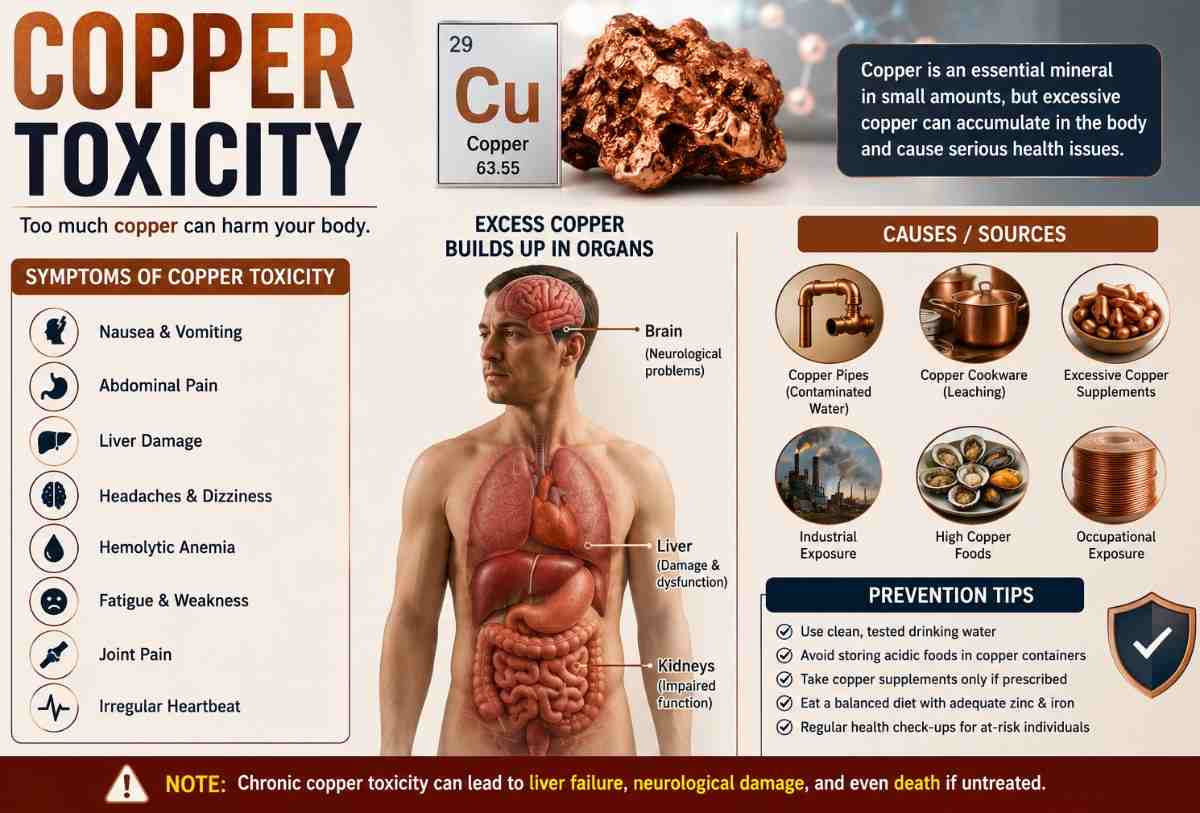
Copper is an essential mineral that the body needs in small amounts for energy production, iron metabolism, connective tissue formation, nervous system function, and other important processes. However, too much copper can become harmful. Copper toxicity, also called copper poisoning or copper overload, occurs when the body is exposed to excessive amounts of copper or cannot properly regulate and eliminate it.
Copper toxicity is uncommon in otherwise healthy people, but the risk can increase with certain genetic conditions, contaminated drinking water, excessive supplementation, or significant exposure to copper-containing substances. Severe exposure can affect the gastrointestinal system, liver, kidneys, and other organs.
This guide explains what copper toxicity is, its symptoms, common causes, risk factors, testing, treatment, prevention, and when to seek medical attention.
What Is Copper Toxicity?
Copper toxicity happens when copper levels in the body become excessive enough to cause harmful effects.
Copper itself is not a harmful substance when consumed in appropriate amounts. In fact, it is an essential trace mineral. The body uses copper as a component of enzymes involved in energy production, iron metabolism, connective tissue formation, and nervous system functions.
The problem occurs when exposure becomes excessive or when the body’s normal mechanisms for handling copper are impaired.
There are two broad situations:
- Acute copper toxicity: A large amount of copper is consumed or inhaled over a short period.
- Chronic copper overload: Excess copper accumulates over a longer period, sometimes because of an underlying condition affecting copper metabolism.
A rare inherited disorder called Wilson disease is an important cause of copper accumulation because the body has difficulty removing excess copper.
How Much Copper Does the Body Need?
The body requires relatively small amounts of copper.
For adults aged 19 years and older, the recommended dietary allowance is 900 micrograms (0.9 mg) per day. During pregnancy, the recommended amount is 1,000 micrograms per day, while breastfeeding adults need about 1,300 micrograms per day.
The adult tolerable upper intake level is 10,000 micrograms (10 mg) per day from food, beverages, and supplements combined.
| Age/Life Stage | Recommended Intake | Upper Limit |
|---|---|---|
| Adults 19+ | 900 mcg/day | 10,000 mcg/day |
| Pregnancy, adults | 1,000 mcg/day | 10,000 mcg/day |
| Breastfeeding, adults | 1,300 mcg/day | 10,000 mcg/day |
| Children 1–3 years | 340 mcg/day | 1,000 mcg/day |
| Children 4–8 years | 440 mcg/day | 3,000 mcg/day |
| Children 9–13 years | 700 mcg/day | 5,000 mcg/day |
| Teens 14–18 years | 890 mcg/day | 8,000 mcg/day |
The upper limit applies to total intake from food, drinks, and supplements. It is not a recommended daily target.
What Causes Copper Toxicity?
Copper toxicity can develop for several different reasons. The cause matters because treatment depends on whether the problem is excessive exposure, supplementation, or impaired copper metabolism.
1. Excessive Copper Supplements
Taking high-dose copper supplements unnecessarily can increase copper intake substantially.
Some multivitamins and mineral supplements contain copper, so taking several products at the same time can unintentionally increase total intake.
2. Contaminated Drinking Water
Copper plumbing can sometimes contribute copper to drinking water, particularly when water is acidic or corrosive. New or recently renovated homes with copper pipes can also have increased copper levels under certain conditions.
3. Wilson Disease
Wilson disease is a rare inherited disorder in which the body cannot properly eliminate excess copper. As copper accumulates, it can damage organs such as the liver and brain.
4. Occupational Exposure
People who work with copper, copper compounds, dust, sprays, or crystals may experience increased exposure through inhalation or accidental ingestion.
5. Copper-Containing Chemicals
Certain pesticides, fungicides, algaecides, and other products can contain copper compounds. Accidentally swallowing these substances can result in serious poisoning.
6. Excessive Intake From Multiple Sources
A person may consume copper from food, supplements, fortified products, and drinking water simultaneously. While normal dietary intake is generally safe, unnecessary supplementation can increase total exposure.
Symptoms of Copper Toxicity
Symptoms depend on the amount of copper involved and whether exposure occurred suddenly or over a longer period.
1. Nausea
Nausea is one of the commonly reported symptoms following excessive copper ingestion.
2. Vomiting
A significant copper exposure can cause vomiting and gastrointestinal irritation.
3. Abdominal Pain
Excess copper may cause abdominal discomfort or pain.
4. Stomach Cramps
Cramping can occur after substantial copper ingestion.
5. Diarrhea
Copper toxicity may cause diarrhea, particularly after acute exposure.
6. Metallic Taste
Exposure to excessive copper, especially through drinking water, may sometimes be associated with an unpleasant metallic taste.
7. Headache
Inhalation of copper dusts, sprays, or crystals can cause headaches in some exposed individuals.
8. Dizziness
Copper exposure through inhalation may cause dizziness.
9. Throat or Nose Irritation
Breathing copper dust, sprays, or crystals can irritate the nose and throat.
10. Liver Damage
Long-term excessive copper exposure can cause liver injury, particularly in susceptible individuals.
11. Kidney Damage
Severe or prolonged copper toxicity can affect kidney function.
12. Neurological Problems
Copper accumulation associated with disorders such as Wilson disease can affect the nervous system and brain.
Is Copper Toxicity Dangerous?
It can be.
A small amount of copper is necessary for normal health, but a sufficiently high exposure can cause significant illness. Acute ingestion of large amounts may cause severe gastrointestinal symptoms, while prolonged excessive exposure can contribute to liver and kidney damage.
The seriousness depends on the amount, duration, route of exposure, and individual susceptibility.
Someone with normal copper regulation may tolerate copper exposure differently from someone with Wilson disease or another condition affecting copper metabolism.
Who Is at Higher Risk?
Certain people may have a greater risk of copper accumulation or toxicity.
People With Wilson Disease
This is one of the most important risk factors because copper elimination is impaired.
People Taking Copper Supplements
Unnecessary high-dose supplementation can increase exposure.
People With Significant Occupational Exposure
Workers who handle copper dust, sprays, crystals, or industrial materials may have increased exposure.
People Using Copper-Containing Chemicals
Accidental ingestion or improper handling of copper-containing chemicals can cause poisoning.
People With Potentially Contaminated Water
Homes with copper plumbing and corrosive water may have higher copper concentrations in drinking water.
Can You Get Copper Toxicity From Food?
For most healthy people, getting too much copper from a normal, varied diet is unlikely.
Copper naturally occurs in foods such as shellfish, nuts, seeds, whole grains, chocolate, and certain organ meats. The body normally regulates copper absorption and elimination.
The concern is more significant when high copper intake comes from supplements, contaminated water, or unusual exposures.
Regular consumption of certain shellfish, including oysters and clams, can substantially contribute to dietary copper intake, although this does not automatically mean the food is unsafe.
Can Copper Toxicity Come From Copper Water Bottles?
Simply drinking from a properly manufactured copper bottle does not automatically cause copper toxicity.
However, excessive copper exposure is possible if copper leaches into a beverage in significant amounts. Factors such as acidity and the amount of time liquid remains in contact with copper can influence exposure.
It is therefore important to use copper vessels according to the manufacturer’s instructions and avoid using them to store acidic beverages for prolonged periods.
If drinking water has a metallic or bitter taste, unusual odor, or blue-green discoloration, excessive copper may be a possibility and the water should be evaluated.
How Is Copper Toxicity Diagnosed?
Copper toxicity should not be diagnosed solely from symptoms.
A healthcare professional may consider:
- Medical history
- Possible sources of copper exposure
- Dietary supplements
- Drinking-water exposure
- Occupational exposure
- Family history
- Physical examination
- Blood tests
- Urine copper testing
- Liver-related testing
- Additional testing when Wilson disease is suspected
Copper can be measured in blood, urine, hair, or nails, although the appropriate test depends on the clinical situation. These tests should be interpreted by a healthcare professional because elevated measurements do not necessarily predict whether a person will develop health problems.
What Tests May Be Used?
Depending on the suspected cause, a doctor may order tests such as:
| Test | Why It May Be Used |
|---|---|
| Blood copper | Helps evaluate copper status |
| Ceruloplasmin | May help investigate copper metabolism |
| 24-hour urine copper | Can help assess copper excretion |
| Liver function tests | Evaluates possible liver injury |
| Genetic testing | May be considered when Wilson disease is suspected |
| Eye examination | May be used when Wilson disease is suspected |
| Liver-related investigations | May be needed when significant copper accumulation is suspected |
Not everyone with suspected copper exposure needs every test. Testing should be selected based on symptoms and medical history.
Treatment for Copper Toxicity
Treatment depends on the underlying cause and severity.
1. Stop the Source of Excess Exposure
If a supplement or environmental exposure is responsible, a healthcare professional may recommend stopping or reducing the source.
Do not independently stop medically prescribed copper treatment without discussing it with your healthcare provider.
2. Treat Acute Poisoning Promptly
A large accidental ingestion of copper or a copper-containing chemical requires urgent medical evaluation. Do not attempt to treat serious poisoning at home.
3. Treat the Underlying Disorder
People with Wilson disease may require long-term medical treatment designed to reduce copper accumulation and prevent organ damage.
4. Manage Organ Damage
Severe toxicity may require hospital-based treatment and monitoring of the liver, kidneys, gastrointestinal system, and other affected organs.
What Should You Do After Suspected Copper Exposure?
If someone has swallowed a copper-containing chemical, supplement, or unknown substance in a potentially harmful amount, seek urgent medical advice.
Do not induce vomiting unless a medical professional or poison-control service specifically instructs you to do so.
If symptoms such as repeated vomiting, severe abdominal pain, confusion, weakness, difficulty breathing, or loss of consciousness occur after a suspected poisoning, emergency medical care is appropriate.
How to Prevent Copper Toxicity?
Prevention is usually straightforward for most people.
1. Check Supplement Labels
Look at the amount of copper in multivitamins, mineral supplements, and individual copper products.
2. Avoid Unnecessary High-Dose Supplements
More copper is not automatically better. Copper supplements should generally be used when there is a specific reason for supplementation.
3. Test Concerning Drinking Water
If you have copper plumbing and notice unusual taste, odor, or discoloration, consider having your water tested.
4. Store Copper Chemicals Safely
Copper-containing powders, crystals, pesticides, and other chemicals should be stored securely away from children and pets.
5. Follow Workplace Safety Rules
People working around copper dust, sprays, or industrial materials should use appropriate protective equipment and follow workplace exposure procedures.
Copper Toxicity vs. Copper Deficiency
Copper toxicity and copper deficiency are opposite problems, and both can affect health.
| Copper Toxicity | Copper Deficiency |
|---|---|
| Too much copper | Too little copper |
| May cause nausea and vomiting | May cause fatigue and other problems |
| Can cause abdominal pain and diarrhea | Can affect connective tissue and bones |
| Severe exposure may damage the liver and kidneys | May affect blood and nervous-system function |
| Can occur from excessive exposure or impaired copper regulation | Can occur from inadequate intake or certain medical conditions |
Because both conditions can produce nonspecific symptoms, laboratory evaluation may be necessary rather than relying on symptoms alone.
Can Copper Toxicity Be Reversed?
In many cases, reducing the source of excessive exposure and receiving appropriate medical treatment can improve copper-related health problems.
However, the outcome depends on the cause and the extent of organ damage.
People with conditions such as Wilson disease may require ongoing treatment to control copper accumulation rather than simply eliminating one environmental exposure.
Early evaluation is particularly important when there are signs of significant liver injury, neurological problems, or known high-level exposure.
When Should You See a Doctor?
Talk with a healthcare professional if you:
- Take a high-dose copper supplement.
- Have symptoms after suspected copper exposure.
- Have persistent unexplained gastrointestinal symptoms.
- Suspect your drinking water contains excessive copper.
- Work regularly with copper-containing chemicals.
- Have a family history of Wilson disease.
- Have been told that your copper levels are abnormal.
Seek emergency medical care after a suspected significant poisoning, especially when severe vomiting, intense abdominal pain, confusion, difficulty breathing, seizures, loss of consciousness, or other serious symptoms occur.
FAQ’s
How much copper is poisonous?
For adults, 10 mg (10,000 mcg) per day is the upper limit. Larger exposures may cause poisoning.
How does copper cause toxicity?
Excess copper can overwhelm the body’s ability to regulate it, potentially damaging the liver, kidneys, and digestive system.
What foods are extremely high in copper?
Oysters, liver, nuts, seeds, cocoa, dark chocolate, and some whole grains are high in copper.
What foods should I avoid with high copper?
People with high copper levels may need to limit liver, shellfish, nuts, seeds, cocoa, and copper supplements.
Can too much copper damage the liver?
Yes. Excess copper can accumulate in the liver and cause liver injury, especially in people with Wilson disease.
Can copper toxicity cause nausea?
Yes. Nausea and vomiting are common symptoms after significant copper exposure.
Can copper toxicity be treated?
Yes. Treatment depends on the cause and may involve removing the exposure, medical monitoring, or specific treatment for conditions such as Wilson disease.
Can copper toxicity come from drinking water?
Yes. Copper can leach from plumbing into drinking water, particularly when the water is corrosive or acidic.
Can copper toxicity come from supplements?
Yes. Taking excessive amounts of copper supplements can increase copper exposure and potentially cause toxicity.
Is copper toxicity the same as copper deficiency?
No. Copper toxicity means excessive copper, while copper deficiency means the body does not have enough copper.
How much copper is safe per day?
For adults, the recommended daily amount is about 900 micrograms, while the adult upper limit is 10,000 micrograms (10 mg) per day from all sources.
Is copper toxicity common?
No. Copper toxicity is relatively uncommon in healthy individuals, although excessive exposure can still cause illness.
Can copper toxicity cause kidney problems?
Severe copper exposure can affect the kidneys and may contribute to kidney damage.
Should I stop eating foods that contain copper?
Usually not. Copper is an essential nutrient, and most people should obtain appropriate amounts from a balanced diet rather than unnecessarily eliminating copper-containing foods.
Is copper toxicity the same as Wilson disease?
No. Wilson disease is a genetic disorder that causes abnormal copper accumulation. Copper toxicity is a broader term for harmful effects caused by excessive copper exposure or accumulation.
Final Thought
Copper toxicity occurs when excessive copper exposure or impaired copper regulation causes harmful effects in the body. While copper is essential for normal health, too much can cause nausea, vomiting, abdominal pain, diarrhea, and, in severe or prolonged cases, liver and kidney damage.
Healthy people generally obtain adequate copper through food, so unnecessary high-dose supplementation should be avoided. If significant exposure is suspected, especially after ingesting a copper-containing chemical or large amount of a supplement, prompt medical evaluation is important.
Sources / References:
Disclaimer:
This article is for educational purposes only and does not replace professional medical advice, diagnosis, or treatment. Suspected copper poisoning or significant exposure requires prompt medical evaluation.
Also Read: