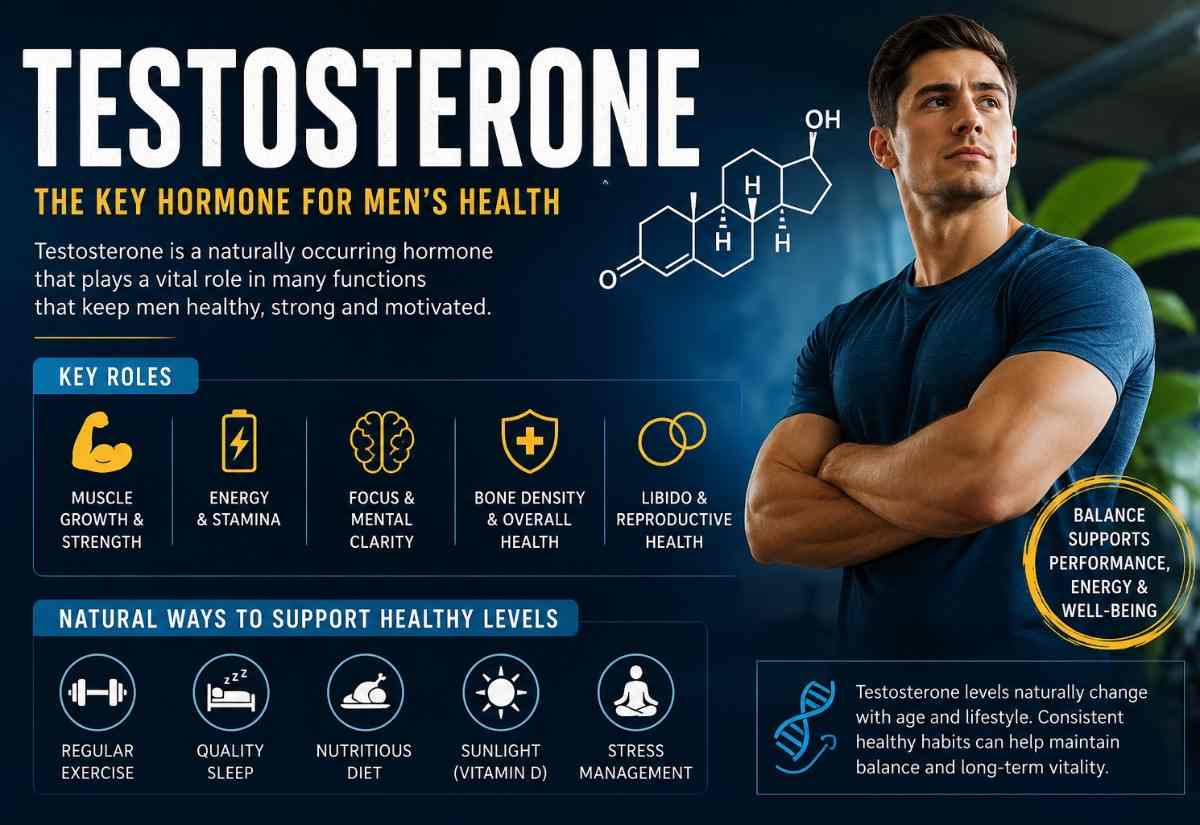
Testosterone is a naturally occurring hormone that plays important roles in sexual development, reproductive health, muscle and bone maintenance, red blood cell production, and overall physical function. Although testosterone is commonly described as a “male hormone,” both men and women produce it, although typically in different amounts.
Testosterone is particularly important during puberty and adulthood, but its effects extend far beyond sexual health. Changes in testosterone levels can sometimes be associated with changes in energy, body composition, mood, fertility, and bone health.
This guide explains what testosterone does, how the body produces it, what can influence testosterone levels, when testing may be appropriate, and what is known about testosterone therapy.
What Is Testosterone?
Testosterone is a steroid hormone belonging to a group of hormones called androgens. In males, most testosterone is produced by the testicles. In females, smaller amounts are produced primarily by the ovaries and adrenal glands.
The brain and pituitary gland help regulate testosterone production. The hypothalamus releases signals that influence the pituitary gland, which then produces hormones that stimulate the testes or ovaries.
Testosterone circulates in the blood in different forms. Much of it is attached to proteins such as sex hormone-binding globulin (SHBG) and albumin, while a smaller amount remains unbound as free testosterone.
What Does Testosterone Do?
Testosterone has many functions throughout the body.
1. Supports Sexual Development
During puberty, testosterone contributes to the development of male reproductive organs and secondary sexual characteristics.
2. Helps Maintain Muscle Mass
Testosterone contributes to the development and maintenance of skeletal muscle. However, muscle strength and size also depend on physical activity, nutrition, genetics, sleep, and other hormones.
3. Supports Bone Health
Testosterone contributes to maintaining bone strength. In males, some testosterone is also converted into estrogen, which plays an important role in bone health.
4. Influences Sex Drive
Testosterone is involved in sexual desire in both men and women. However, libido is influenced by many factors, including physical health, medications, stress, sleep, relationships, and psychological well-being.
5. Supports Sperm Production
Testosterone is essential for normal male reproductive function and contributes to sperm production.
6. Contributes to Red Blood Cell Production
Testosterone can influence the production of red blood cells. This is one reason hormone disorders can sometimes be associated with changes in blood counts.
7. Influences Body Hair
Testosterone and related hormones contribute to the development and distribution of facial, pubic, and body hair, particularly during puberty.
8. Contributes to Changes During Puberty
Increasing testosterone during male puberty contributes to voice deepening, increased muscle development, growth of body hair, and maturation of the reproductive system.
Testosterone in Men and Women
Testosterone is important in both sexes, but the typical concentrations are substantially different.
In adult men, testosterone has major roles in reproductive function, sexual characteristics, muscle, bone, and red blood cell production.
Women produce much smaller amounts. Even at lower concentrations, testosterone contributes to sexual function, bone health, muscle function, and other physiological processes.
Because normal levels differ according to sex, age, laboratory method, and other factors, testosterone results should always be interpreted using the appropriate laboratory reference range.
What Are Normal Testosterone Levels?
There is no single testosterone number that is considered normal for every person.
Levels can vary according to:
- Age
- Sex
- Time of day
- Laboratory testing method
- Overall health
- Medications
- Body composition
- Certain medical conditions
For example, MedlinePlus lists different reference ranges for males and females and notes that laboratory ranges can vary.
Testosterone is generally higher in the morning and tends to decrease later in the day. This daily variation is one reason healthcare professionals commonly use morning blood samples when evaluating possible testosterone deficiency.
The Endocrine Society recommends diagnosing male hypogonadism only when compatible symptoms and consistently low testosterone concentrations are present, rather than relying on a single low result.
Normal Testosterone Levels Chart
There is no single testosterone range that applies to everyone. Reference ranges vary by age, sex, laboratory method, and testing conditions. The following chart uses ranges reported by MedlinePlus for total testosterone.
| Age / Sex | Total Testosterone Range | Approx. nmol/L |
|---|---|---|
| Male, 17–50 years | 249–836 ng/dL | 8.6–29.0 nmol/L |
| Male, over 50 years | 193–740 ng/dL | 6.7–25.7 nmol/L |
| Female, 17–50 years | 8.4–48.1 ng/dL | 0.3–1.7 nmol/L |
| Female, over 50 years | 2.9–40.1 ng/dL | 0.1–1.4 nmol/L |
MedlinePlus notes that laboratory reference ranges can differ, so a person’s result should be interpreted using the range provided by the laboratory that performed the test.
Testosterone Reference Range for Younger Adult Men
A large harmonization study supported by the Endocrine Society found a standardized reference range of approximately 264–916 ng/dL (9.2–31.8 nmol/L) for healthy, non-obese men aged 19–39 years.
Important Note About Testing
Testosterone is usually measured with a morning blood test, commonly between 7 a.m. and 10 a.m., because levels are generally higher earlier in the day. If a result is unexpectedly low, a second morning measurement may be needed for confirmation.
What Is Low Testosterone?
Low testosterone, sometimes called testosterone deficiency or hypogonadism, occurs when testosterone production is insufficient and is accompanied by relevant signs or symptoms.
Low testosterone is not simply defined by feeling tired or having a particular blood-test number. Healthcare professionals consider symptoms, repeated laboratory measurements, medical history, medications, and possible underlying causes.
Possible Symptoms of Low Testosterone
Symptoms may include:
- Reduced sexual desire
- Erectile difficulties
- Reduced spontaneous erections
- Infertility or reduced sperm production
- Reduced muscle mass
- Reduced energy
- Changes in mood
- Difficulty concentrating
- Reduced body hair
- Breast enlargement or tenderness
- Decreased bone density
- Anemia in some cases
The symptoms can vary considerably from one person to another.
Importantly, many of these symptoms have causes unrelated to testosterone. Poor sleep, stress, depression, certain medications, chronic illness, obesity, and other health conditions can produce similar symptoms.
What Causes Low Testosterone?
Low testosterone can have many possible causes.
1. Testicular Conditions
Because the testicles produce most testosterone in males, injury, infection, certain medical treatments, or other testicular problems can interfere with testosterone production.
2. Pituitary or Hypothalamic Disorders
The brain and pituitary gland regulate testosterone production. Problems affecting these areas can reduce the signals needed for normal hormone production.
3. Obesity
Excess body weight can be associated with lower testosterone concentrations in some men. In some situations, addressing obesity and related metabolic health issues may improve testosterone levels without testosterone therapy.
4. Chronic Illness
Certain long-term health conditions can affect testosterone production or hormone regulation.
5. Certain Medications
Some medications, including certain opioid pain medicines and corticosteroids, can interfere with testosterone production.
6. Sleep Problems
Sleep disorders can be associated with lower testosterone levels. Poor sleep may also contribute to symptoms such as fatigue and reduced concentration.
7. Excessive Training or Inadequate Nutrition
Very intense exercise combined with inadequate recovery or poor nutrition can temporarily affect hormone levels.
8. Aging
Testosterone levels generally decline gradually with age. However, aging alone does not mean that every older man has testosterone deficiency requiring treatment.
Can Testosterone Be Too High?
Yes. Testosterone concentrations can also be higher than expected.
In males, unusually high levels may be associated with anabolic steroid or testosterone use and, less commonly, certain medical conditions.
In females, elevated androgen levels can be associated with conditions such as polycystic ovary syndrome (PCOS), adrenal disorders, or certain ovarian conditions. Possible symptoms can include increased facial or body hair, acne, scalp hair loss, voice changes, and irregular menstrual periods.
A high testosterone result should therefore be evaluated in context rather than interpreted independently.
Testosterone Testing
A testosterone test measures the amount of testosterone in a blood sample.
The most common test measures total testosterone, which includes testosterone attached to proteins as well as the unbound portion.
Other tests can measure free testosterone, which refers to testosterone that is not attached to proteins. Depending on the situation, healthcare professionals may also consider other laboratory measurements.
MedlinePlus notes that testosterone testing may be used to investigate symptoms of abnormal testosterone production or to monitor people receiving hormone therapy.
When Is Testosterone Usually Tested?
Because testosterone levels are generally higher in the morning, blood testing is commonly performed between approximately 7 a.m. and 10 a.m.
A single result may not provide enough information. The Endocrine Society recommends confirming suspected testosterone deficiency with repeated morning measurements when appropriate.
Does One Low Testosterone Test Mean You Have Low Testosterone?
Not necessarily.
Testosterone levels can fluctuate. Illness, inadequate nutrition, excessive exercise, sleep problems, medications, and the timing of the blood test can affect results.
For this reason, a diagnosis should not be based solely on an isolated laboratory value. The Endocrine Society recommends considering both consistent laboratory findings and compatible symptoms.
Healthy Ways to Support Normal Testosterone
There is no guaranteed food, drink, herb, or supplement that will safely increase testosterone in everyone.
Instead, general healthy habits can support normal hormone function and overall health.
1. Get Regular Physical Activity
Resistance training and other forms of exercise support muscle health, cardiovascular fitness, and healthy body composition. Exercise should be combined with adequate recovery.
2. Maintain a Healthy Weight
For people carrying excess body weight, gradual weight management may support metabolic and hormonal health. It is better to focus on sustainable lifestyle changes rather than extreme diets.
3. Prioritize Sleep
Consistent, sufficient sleep supports many biological processes, including hormone regulation. Addressing persistent sleep problems can be an important part of overall health.
4. Eat a Balanced Diet
Adequate calories, protein, healthy fats, vitamins, minerals, fruits, vegetables, and whole grains help support normal physiological function.
Extremely restrictive diets may not provide adequate nutrition and should generally be avoided unless medically indicated.
5. Manage Chronic Health Conditions
Conditions such as obesity, diabetes, and other chronic illnesses can affect hormone health. Appropriate medical management may therefore be more useful than taking an unverified “testosterone booster.”
6. Avoid Anabolic Steroid Misuse
Anabolic steroids and non-prescribed testosterone can interfere with the body’s natural hormone production. They may also cause unwanted effects involving fertility, blood counts, cardiovascular health, skin, and other body systems.
Do Testosterone Boosters Work?
Products marketed as “testosterone boosters” can contain a wide variety of ingredients, and evidence for many of these products is limited or inconsistent.
A supplement being marketed for testosterone does not automatically mean that it has been shown to safely treat testosterone deficiency.
People who have symptoms of possible hormone deficiency should not use supplements as a substitute for appropriate medical evaluation.
The Endocrine Society specifically states that testosterone should not be used simply to improve athletic performance, physical appearance, or strength in people without diagnosed testosterone deficiency.
What Is Testosterone Replacement Therapy?
Testosterone replacement therapy (TRT) is prescription treatment used for appropriately diagnosed testosterone deficiency.
Depending on the product and clinical situation, testosterone may be available in forms such as:
- Gels
- Injections
- Patches
- Certain oral formulations
- Other prescription preparations
The specific treatment depends on the individual’s diagnosis, health status, preferences, and medical assessment.
Testosterone therapy is not intended to be a general anti-aging treatment or a shortcut for improving physical performance.
Potential Benefits of Medically Appropriate Testosterone Therapy
For men who have confirmed testosterone deficiency, appropriately prescribed therapy may improve certain symptoms and physiological outcomes.
Potential benefits can include improvements in:
- Sexual symptoms
- Testosterone-dependent physical characteristics
- Muscle mass
- Bone health
- Some forms of anemia
The response varies between individuals, and treatment should be monitored by a qualified healthcare professional.
Potential Risks and Side Effects of Testosterone Therapy
Testosterone therapy is not risk-free.
Possible adverse effects include:
- Acne
- Increased red blood cell count
- Reduced sperm production
- Breast enlargement or tenderness
- Changes in urination related to prostate enlargement
- Fluid retention
- Potential worsening of sleep apnea in some people
Testosterone therapy can significantly reduce sperm production, which is especially important for men who are trying to have children.
People considering treatment should discuss their individual risks and benefits with a healthcare professional.
Testosterone and Fertility
One important point that is sometimes overlooked is that testosterone therapy can reduce sperm production.
External testosterone can signal the brain to reduce the hormonal stimulation that normally supports sperm production in the testes.
Therefore, someone who is planning to have children should discuss fertility goals with a healthcare professional before starting testosterone therapy.
Testosterone and Aging
Testosterone levels generally decline gradually as people age.
However, normal aging is not automatically the same as testosterone deficiency. A person can experience fatigue, changes in body composition, reduced sexual desire, or other symptoms for many different reasons.
Current Endocrine Society guidance emphasizes accurate diagnosis rather than automatically labeling these changes as an age-related hormone disorder.
Testosterone and Exercise
Exercise is often discussed in relation to testosterone.
Resistance exercise can produce temporary changes in hormone concentrations, but testosterone levels should not be interpreted simply by looking at short-term changes after a workout.
Long-term health benefits of exercise extend far beyond testosterone. Regular physical activity can support cardiovascular health, muscle strength, bone health, metabolic health, and healthy body composition.
Therefore, exercise is best viewed as part of an overall healthy lifestyle rather than a guaranteed method of raising testosterone.
Testosterone and Sleep
Sleep and hormone regulation are closely connected.
Insufficient or disrupted sleep can affect several hormones and may be associated with lower testosterone concentrations.
If someone experiences persistent snoring, interrupted breathing during sleep, excessive daytime sleepiness, or consistently poor-quality sleep, discussing these symptoms with a healthcare professional may be worthwhile.
Improving sleep can benefit overall health regardless of whether testosterone levels are abnormal.
When Should You Talk to a Doctor?
Consider speaking with a healthcare professional if you have persistent symptoms that could be related to abnormal testosterone levels, such as:
- Persistent reduction in sexual desire
- Erectile difficulties
- Unexplained infertility
- Significant changes in muscle mass
- Persistent fatigue
- Unexplained changes in body hair
- Breast enlargement or tenderness
- Symptoms associated with unusually high testosterone
- Concerns about puberty or reproductive development
A healthcare professional can determine whether testosterone testing is appropriate and whether additional tests are needed.
What Happens After an Abnormal Testosterone Result?
An abnormal result does not automatically mean that testosterone therapy is necessary.
A healthcare professional may:
- Review symptoms and medical history.
- Repeat testosterone testing when appropriate.
- Review medications and supplements.
- Evaluate possible underlying conditions.
- Consider other hormone tests.
- Determine whether the problem involves the testes, pituitary gland, hypothalamus, or another factor.
- Discuss appropriate treatment options.
The goal is to identify the underlying reason for the abnormal result rather than simply treating a laboratory number.
Testosterone: Key Takeaways
Testosterone is an important hormone in both men and women. It contributes to sexual development, reproductive function, muscle and bone health, red blood cell production, and other physiological processes.
Low or high testosterone can have multiple causes, and symptoms alone cannot reliably establish a diagnosis. Testosterone levels also change throughout the day and can be influenced by illness, medications, sleep, nutrition, exercise, and other factors.
For men being evaluated for testosterone deficiency, clinical guidance emphasizes compatible symptoms together with consistently low laboratory measurements rather than relying on a single test.
The safest approach is to focus on overall health, avoid unregulated hormone products, and seek professional evaluation when persistent symptoms occur.
FAQ’s
Can testosterone levels increase naturally?
Healthy habits such as regular exercise, adequate sleep, balanced nutrition, and maintaining a healthy weight can support normal hormone function.
Does exercise increase testosterone?
Exercise can cause temporary changes in testosterone, while regular physical activity provides broader benefits for muscle, metabolic, and overall health.
Can women have testosterone?
Yes. Women naturally produce testosterone in smaller amounts, where it contributes to sexual health, bone health, and muscle function.
Does testosterone affect fertility?
Yes. Testosterone is involved in male reproductive function, but testosterone replacement therapy can reduce sperm production and affect fertility.
Is testosterone replacement therapy safe?
It can be appropriate for people with confirmed testosterone deficiency, but it has potential risks and should be used under qualified medical supervision.
Can testosterone decrease with age?
Testosterone generally declines gradually with age, but aging alone does not necessarily mean a person has testosterone deficiency.
Should I take testosterone boosters?
Unregulated testosterone-boosting supplements may not be proven effective or safe. Persistent symptoms should be evaluated by a healthcare professional rather than self-treating.
Can low testosterone cause tiredness?
Low testosterone can be associated with fatigue, but tiredness has many possible causes, including poor sleep, stress, medications, and other health conditions.
Can testosterone improve muscle growth?
Testosterone contributes to muscle development and maintenance, but muscle growth also depends on resistance training, nutrition, recovery, genetics, and overall health.
Is testosterone only found in men?
No. Both men and women produce testosterone, although men generally have substantially higher concentrations.
Can testosterone levels change during the day?
Yes. Testosterone is generally higher in the morning and lower later in the day.
Can food increase testosterone?
No single food has been established as a guaranteed testosterone booster. A balanced diet supports overall nutritional and hormonal health.
Can women have low testosterone?
Women naturally have lower testosterone levels than men, but testosterone still has physiological roles. Abnormally low or high levels should be interpreted according to the individual’s circumstances.
Can testosterone therapy affect fertility?
Yes. Testosterone therapy can reduce sperm production and may negatively affect fertility.
Should everyone test their testosterone?
Routine testing is not generally recommended for every asymptomatic person. Testing is usually considered when symptoms or clinical circumstances suggest that hormone evaluation may be appropriate.
Sources / References:
- Endocrine Society
- MedlinePlus
- NIDDK
- WHO – World Health Organization
- NIH – National Institutes of Health
- Mayo Clinic
- Cleveland Clinic
- NHS (National Health Service)
Disclaimer:
This article is for general educational purposes only and is not a substitute for professional medical advice, diagnosis, or treatment. If you have symptoms of abnormal testosterone levels or are considering hormone therapy, consult a qualified healthcare professional.
Also Read: