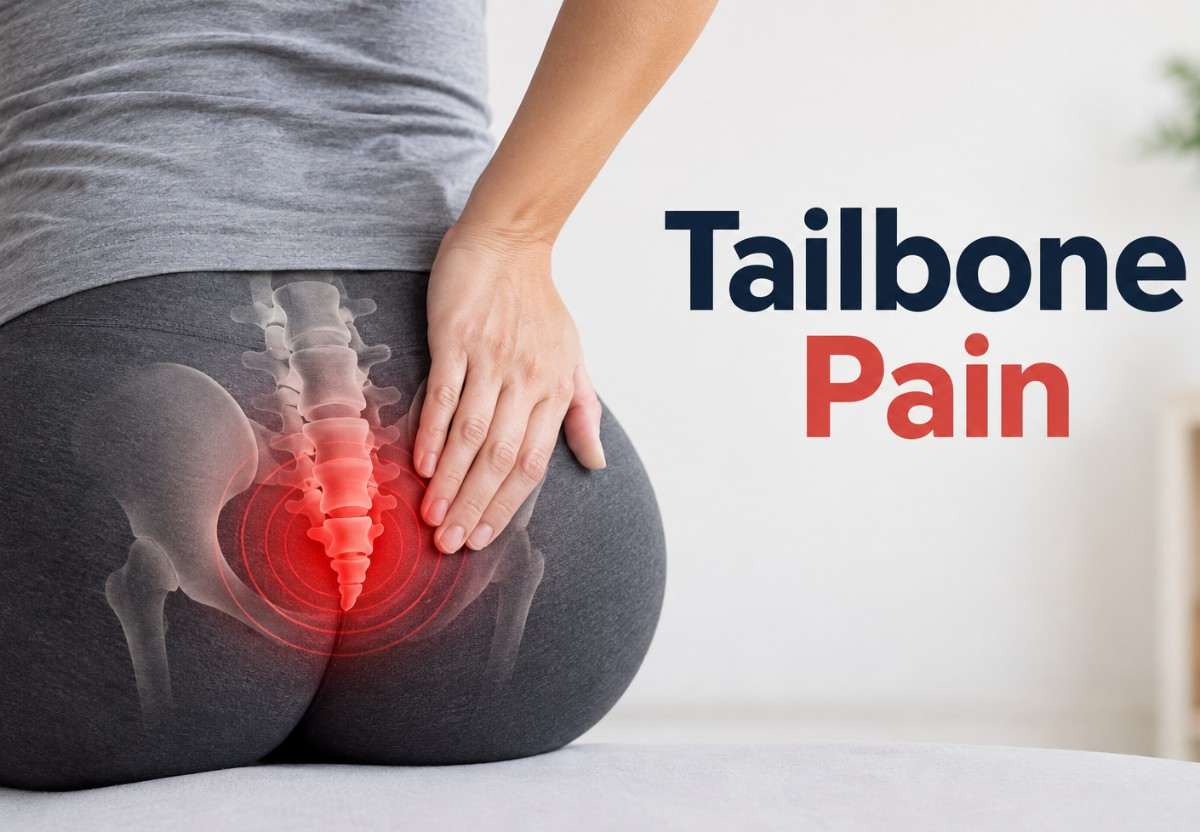
Tailbone pain can be surprisingly uncomfortable. Even a simple activity such as sitting at a desk, driving, getting up from a chair, or leaning backward can become painful when the coccyx is irritated.
The medical term for tailbone pain is coccydynia. It can develop after a fall or injury, but prolonged sitting, repetitive pressure, pregnancy and childbirth, posture problems, and changes in the joints around the coccyx can also contribute. In many cases, symptoms improve with conservative care, although persistent or severe pain should be evaluated by a healthcare professional.
This guide explains the common causes of tailbone pain, symptoms to watch for, home remedies, medical treatment, exercises, and when it is important to seek medical care.
What Is Tailbone Pain?
The tailbone, or coccyx, is the small bone at the bottom of the spine. It is usually made up of three to five fused vertebrae and helps provide support and stability while sitting.
When the tissues, joints, ligaments, or bone around the coccyx become irritated or injured, pain can develop. This condition is commonly called coccydynia.
Tailbone pain may be mild and temporary, or it can become persistent enough to interfere with sitting, sleeping, working, exercising, and everyday activities.
What Does Tailbone Pain Feel Like?
Tailbone pain can vary from person to person. Common symptoms include:
- Aching pain: The area may feel sore, bruised, or uncomfortable.
- Sharp pain: Some people experience sudden or stabbing pain with movement.
- Tenderness: The tailbone may feel particularly sensitive when touched or pressed.
- Pain while sitting: Sitting, especially on a hard surface, can increase discomfort.
- Pain when standing up: Moving from sitting to standing may trigger pain.
- Pain when bending: Leaning forward or changing posture may make symptoms worse.
- Pain during bowel movements: Passing stool may increase pressure around the coccyx.
- Pain during prolonged sitting: Long periods at a desk or while driving may aggravate symptoms.
- Sleep difficulties: Finding a comfortable sleeping position may become difficult.
These symptoms are typical of coccydynia, although similar discomfort can sometimes come from nearby muscles, joints, nerves, or other conditions.
Common Causes of Tailbone Pain
Tailbone pain can have several possible causes.
1. Falls and Direct Injuries
Falling backward onto a hard surface is one of the most common causes of tailbone injury. A fall can bruise the surrounding tissues or, less commonly, cause a fracture or dislocation.
2. Prolonged Sitting
Sitting for long periods can put repeated pressure on the coccyx. Hard chairs and poorly designed seats can make this worse.
3. Poor Sitting Posture
Slouching or leaning backward while sitting may increase pressure on the tailbone and contribute to discomfort.
4. Cycling and Repetitive Activities
Activities involving repeated pressure or movement around the pelvis, including cycling and rowing, can irritate the tissues around the coccyx.
5. Pregnancy
Pregnancy can affect the muscles, ligaments, and joints around the pelvis. As the body prepares for childbirth, changes around the coccyx can sometimes contribute to pain.
6. Childbirth
The coccyx may experience significant pressure during vaginal delivery. This can strain surrounding tissues and occasionally injure the tailbone.
7. Weight Changes
Being overweight may increase pressure on the coccyx, while being significantly underweight may provide less natural cushioning around the tailbone.
8. Joint Problems
Changes in the flexibility or movement of the joint connecting the coccyx with the sacrum can contribute to pain.
9. Muscle or Ligament Strain
The muscles and ligaments attached around the coccyx can become irritated or strained, producing pain that feels like it is coming directly from the tailbone.
10. Unknown Causes
Sometimes no obvious injury or cause can be identified. This does not necessarily mean that the pain is imaginary or insignificant; an examination may help identify contributing factors.
Tailbone Pain Without an Injury
You do not necessarily need to fall or injure yourself to develop tailbone pain.
Prolonged sitting, cycling, posture problems, pregnancy, childbirth, repetitive pressure, and changes in body weight can all contribute.
In rare situations, pain around the coccyx can be associated with infection, a cyst, or a tumor. Persistent unexplained pain therefore deserves medical evaluation, particularly when accompanied by other concerning symptoms.
How Is Tailbone Pain Diagnosed?
A healthcare professional will usually begin by asking about:
- When the pain started
- Whether you recently fell or had an injury
- How long you sit each day
- Whether pregnancy or childbirth may be involved
- What activities make the pain worse
- Whether you have bowel or bladder symptoms
- Whether the pain spreads to other areas
A physical examination can help identify tenderness, swelling, lumps, or other abnormalities.
Imaging is not always necessary. However, depending on the symptoms and suspected cause, a healthcare professional may consider an X-ray, CT scan, or MRI.
How to Relieve Tailbone Pain at Home?
Mild tailbone pain often improves with simple measures.
1. Use a Coccyx Cushion
A specially designed coccyx cushion can reduce direct pressure on the tailbone while sitting.
2. Avoid Long Periods of Sitting
Stand up, walk around, or change position regularly rather than remaining seated for hours.
3. Improve Your Sitting Position
Sit with your lower back supported and avoid excessive slouching.
4. Apply Ice
An ice pack wrapped in a towel can be applied to the painful area for short periods to help reduce discomfort, particularly after an injury.
5. Try Heat
Heat may help relax surrounding muscles and ease discomfort for some people.
6. Sleep on Your Side
Side sleeping can reduce direct pressure on the coccyx.
7. Keep Bowel Movements Soft
Constipation can make bowel movements more uncomfortable when the tailbone is already painful. Adequate fluids and dietary fiber can help prevent straining.
8. Modify Painful Activities
Temporarily reduce activities that clearly increase your symptoms, such as prolonged cycling or sitting on hard surfaces.
Exercises for Tailbone Pain Relief
Gentle movement may help reduce stiffness and improve mobility around the lower back, hips, and pelvis. Exercises should be comfortable and should not cause sharp or worsening tailbone pain.
1. Pelvic Tilts
Lie on your back with your knees bent and feet flat. Gently tighten your abdominal muscles and flatten your lower back toward the floor. Hold for 3–5 seconds, then relax. Repeat 8–10 times.
2. Cat-Cow Stretch
Start on your hands and knees. Slowly round your back upward, then gently lower your abdomen while lifting your chest. Move slowly through a comfortable range. Repeat 8–10 times.
3. Child’s Pose
Kneel and slowly lower your hips toward your heels while reaching your arms forward. Keep the stretch gentle and avoid putting uncomfortable pressure on the tailbone. Hold for 15–30 seconds.
4. Knee-to-Chest Stretch
Lie on your back and gently bring one knee toward your chest. Hold for 15–20 seconds before switching sides. Repeat 2–3 times per side.
5. Piriformis Stretch
Lie on your back with both knees bent. Place one ankle over the opposite thigh and gently draw the supporting leg toward you. Hold for 15–30 seconds.
6. Hip Flexor Stretch
Kneel with one foot positioned forward. Gently shift your hips forward while keeping your back comfortable. Hold for 15–30 seconds on each side.
7. Glute Bridge
Lie on your back with knees bent and feet flat. Tighten your abdominal and glute muscles and gently lift your hips. Hold briefly, then slowly lower. Start with 8–10 repetitions.
8. Gentle Walking
Walking can help you stay active without putting prolonged pressure on the coccyx. Start with short, comfortable walks and gradually increase the duration if they do not aggravate your symptoms.
Exercise Tips:
- Start slowly and increase activity gradually.
- Avoid exercises that directly compress the tailbone.
- Take regular breaks from sitting.
- Use a coccyx cushion when sitting for longer periods.
- Stop an exercise if it causes significant or increasing pain.
- Consider physical therapy if pain continues or limits normal activities.
Important: If tailbone pain followed a significant fall or injury, or you have numbness, weakness, fever, or bowel or bladder problems, seek medical evaluation rather than relying on exercises alone.
Medical Treatment for Tailbone Pain
If home treatment does not provide sufficient relief, a healthcare professional may recommend additional treatment.
1. Physical Therapy
A physical therapist may use targeted exercises, posture training, and hands-on techniques to address muscles and tissues around the coccyx.
2. Corticosteroid and Local Anesthetic Injections
For persistent pain, injections containing a corticosteroid and local anesthetic may be considered to reduce inflammation and discomfort.
3. Nerve Blocks
In selected cases, a healthcare professional may use an injection to temporarily block pain signals from nerves around the coccyx.
4. Other Treatments
Depending on the diagnosis, treatment may include specialized physical therapy, massage, acupuncture, or TENS.
5. Surgery
Surgery to remove part or all of the coccyx, called a coccygectomy, is rarely needed. It is generally considered only when persistent symptoms do not respond to other treatments.
How Long Does Tailbone Pain Last?
Recovery depends on the cause and severity.
A simple bruise may improve over several weeks, while a fracture can take longer to heal. MedlinePlus notes that bruised tailbone injuries may take around four weeks, while fractures can take approximately 8 to 12 weeks.
Persistent coccydynia may last longer and may require assessment and treatment.
If your pain continues for several weeks despite home care, or interferes with normal activities, speak with a healthcare professional.
When Should You See a Doctor for Tailbone Pain?
Seek medical advice if:
- Tailbone pain does not improve after several weeks.
- Pain is interfering with everyday activities.
- Pain is becoming progressively worse.
- You develop significant swelling or a lump.
- You have a fever along with tailbone pain.
- Pain occurs without an obvious explanation and persists.
- Pain spreads into the lower back, hips, or legs.
- You experience numbness, tingling, or weakness.
- You have difficulty controlling your bladder or bowel movements.
Severe pain following a significant injury, inability to move, or symptoms suggesting a spinal cord injury require urgent medical assessment.
Can Tailbone Pain Be Prevented?
Not every case can be prevented, especially pain caused by accidental falls or childbirth. However, several habits may reduce your risk:
- Avoid sitting continuously for long periods.
- Use appropriate cushioning when sitting for extended periods.
- Maintain good sitting posture.
- Take regular movement breaks.
- Be careful on slippery surfaces.
- Use appropriate equipment when cycling or participating in sports.
- Keep walkways clear to reduce the risk of falls.
Tailbone Pain During Pregnancy
Tailbone discomfort can occur during pregnancy because the pelvis and surrounding ligaments undergo physical changes. Increasing pressure around the pelvis and changes in posture can also affect the coccyx.
Pregnant people should discuss persistent or severe tailbone pain with their healthcare professional, especially if it is interfering with movement or daily activities.
Treatment should be pregnancy-appropriate, particularly when considering medications or exercises.
Tailbone Pain After Childbirth
Some people experience tailbone pain after giving birth. The pressure involved during delivery can strain the tissues around the coccyx.
Postpartum tailbone pain may gradually improve, but persistent symptoms should not simply be ignored. A healthcare professional or physical therapist can assess whether pelvic floor dysfunction, coccyx mobility, muscle tension, or an injury may be contributing.
What Should You Avoid If You Have Tailbone Pain?
Try to avoid:
- Sitting on hard surfaces for long periods
- Remaining in one position for hours
- Activities that repeatedly aggravate the pain
- Ignoring severe or persistent symptoms
- Forcing stretches that cause sharp pain
- Taking pain medicines above the recommended dose
The goal is not complete inactivity. Instead, modify activities while gradually returning to comfortable movement as symptoms improve.
FAQ’s
Is tailbone pain serious?
Most cases are not caused by a serious condition, but persistent, unexplained, severe, or worsening pain should be assessed by a healthcare professional.
Does walking help tailbone pain?
Gentle walking may help you stay active while reducing the amount of time spent sitting. However, stop or modify activity if it significantly increases your pain.
Should I use ice or heat for tailbone pain?
Both may help depending on the cause and timing. Ice is commonly used after an injury, while heat may help relax surrounding muscles.
How do I get rid of tailbone pain quickly?
Using a coccyx cushion, avoiding prolonged sitting, applying ice or heat, and taking appropriate pain relief may help reduce discomfort.
Why does my tailbone hurt when I sit?
Sitting puts pressure on the coccyx. Hard surfaces, poor posture, prolonged sitting, or a previous injury can make the pain worse.
Can tailbone pain go away on its own?
Yes. Mild tailbone pain often improves with rest, pressure reduction, and conservative home care.
How long does tailbone pain take to heal?
A bruised tailbone may improve within several weeks, while a fracture can take around 8–12 weeks to heal.
Can sitting too long cause tailbone pain?
Yes. Prolonged sitting can place continuous pressure on the coccyx and contribute to pain.
Can constipation cause tailbone pain?
Constipation can worsen tailbone discomfort because bowel movements may put additional pressure on the coccyx.
Can pregnancy cause tailbone pain?
Yes. Changes in the pelvis, posture, ligaments, and pressure around the coccyx during pregnancy can contribute to tailbone pain.
How can I massage my tailbone to relieve pain?
Avoid pressing directly on the tailbone. Instead, gently massage the muscles around the buttocks and lower back. Stop if massage increases pain.
What could be mistaken for tailbone pain?
Pain from the lower back, sacroiliac joint, pelvic floor muscles, hemorrhoids, pilonidal cysts, or nearby nerves can sometimes feel like tailbone pain.
Should I be worried if my tailbone hurts?
Usually, tailbone pain is not serious and improves with conservative care. However, persistent, severe, worsening, or unexplained pain should be checked by a healthcare professional.
Can tailbone pain be cancerous?
Cancer is a rare cause of tailbone pain. Persistent unexplained pain, especially with a lump, unexplained weight loss, or other concerning symptoms, should be medically evaluated.
What kind of doctor treats tailbone pain?
A primary care doctor can initially evaluate tailbone pain and refer you to a specialist such as an orthopedic doctor, physiatrist, pain specialist, or physical therapist when needed.
What does a tailbone tumor feel like?
A tumor in or near the tailbone may cause persistent pain or tenderness and sometimes a noticeable lump or swelling. These symptoms are uncommon and require medical evaluation rather than self-diagnosis.
Can anxiety cause tailbone pain?
Anxiety does not usually directly injure the tailbone, but stress can increase muscle tension and make existing pain feel worse. Persistent pain should still be evaluated for physical causes.
Why do I feel pressure around my tailbone?
Pressure can result from prolonged sitting, posture problems, coccyx irritation, muscle tension, constipation, or inflammation around the area.
What is the best position to sleep in if I have tailbone pain?
Sleeping on your side can reduce direct pressure on the tailbone. Placing a pillow between your knees may also help keep your hips and spine comfortable.
Final Thought
Tailbone pain, or coccydynia, is commonly associated with falls, prolonged sitting, repetitive pressure, pregnancy, childbirth, and posture-related strain. Most uncomplicated cases can improve with pressure reduction, appropriate cushions, activity modification, and other conservative measures. Persistent or severe pain deserves professional evaluation to determine the underlying cause and appropriate treatment.
Sources / References
Disclaimer:
This guide is for general educational purposes only and does not replace professional medical advice, diagnosis, or treatment. Seek medical care for severe, persistent, or worsening symptoms.
Also Read: