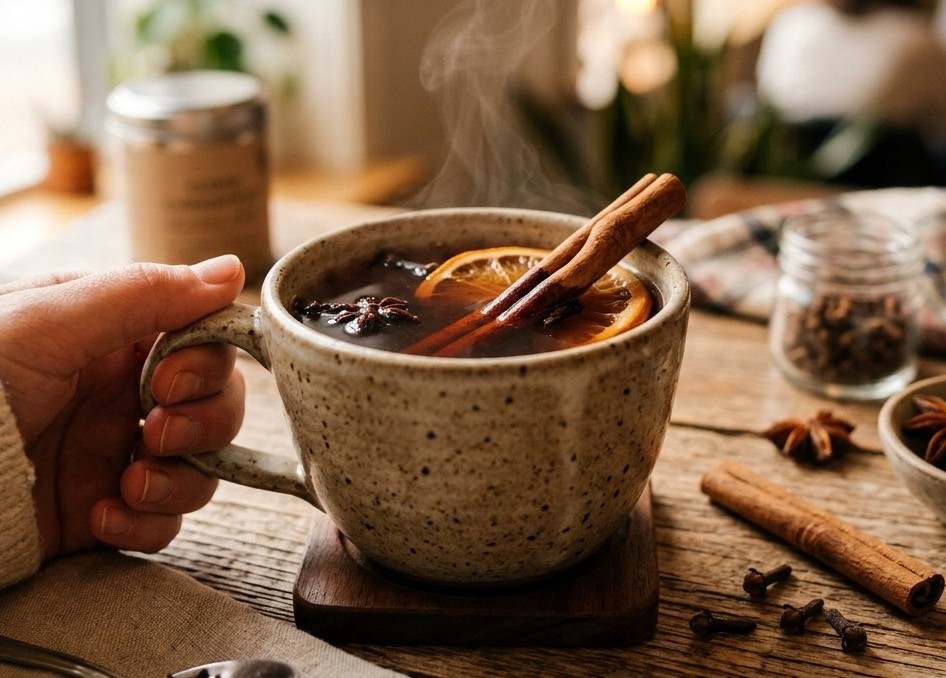
Clove cinnamon tea is a warm, aromatic herbal drink made by steeping cloves and cinnamon in hot water. The combination has a naturally sweet, spicy flavor and is commonly enjoyed after meals, during colder weather, or as a caffeine-free alternative to regular tea.
Both ingredients contain plant compounds that have been studied for antioxidant, anti-inflammatory, antimicrobial, and metabolic effects. Clove is particularly rich in eugenol, while cinnamon contains several polyphenols and aromatic compounds. However, it is important to understand that much of the scientific research has examined individual spices, extracts, or isolated compounds rather than a cup of clove cinnamon tea itself. Therefore, the potential benefits should be viewed as supportive rather than as proven treatments for medical conditions.
What Is Clove Cinnamon Tea?
Clove cinnamon tea is an infusion prepared using whole cloves and a piece of cinnamon bark or a small amount of cinnamon powder.
Cloves are the dried flower buds of Syzygium aromaticum and contain eugenol as one of their major bioactive compounds. Eugenol has been studied for antioxidant, anti-inflammatory, antimicrobial, and analgesic properties.
Cinnamon comes from the bark of Cinnamomum species. Two commonly discussed types are Ceylon cinnamon (Cinnamomum verum) and cassia cinnamon (Cinnamomum aromaticum). Their chemical composition differs, particularly in their coumarin content.
When combined in tea, these spices produce a warming beverage with a strong aroma and naturally intense flavor.
Nutritional Facts of Clove Cinnamon Tea
The exact nutritional values depend on the amount of spices used and whether the tea contains sugar, honey, milk, or other ingredients. Because very little of the whole spice is consumed when making an infusion, a plain cup generally provides only small amounts of calories and nutrients.
| Nutrient | Approximate amount per 1 cup of plain tea |
|---|---|
| Calories | Very low |
| Carbohydrates | Very low |
| Protein | Negligible |
| Fat | Negligible |
| Fiber | Very low |
| Sugar | 0 g if unsweetened |
| Caffeine | 0 mg |
| Sodium | Very low |
| Antioxidant compounds | Present |
| Eugenol | Present from cloves |
| Polyphenols | Present from cloves and cinnamon |
| Coumarin | Variable, higher in cassia cinnamon |
Note: These are general characteristics rather than laboratory-tested nutrition values for one standardized recipe. Adding honey, sugar, milk, or other ingredients changes the nutritional profile.
20 Health Benefits of Clove Cinnamon Tea
1. Provides Antioxidant Compounds: Clove contains eugenol and other phytochemicals with antioxidant activity, while cinnamon also supplies polyphenolic compounds that can help neutralize oxidative molecules in laboratory studies.
2. May Support the Body’s Antioxidant Defense: The plant compounds found in cloves and cinnamon have demonstrated antioxidant properties that may contribute to the body’s overall defense against oxidative stress.
3. May Have Anti-Inflammatory Properties: Eugenol has been investigated for its ability to influence inflammatory pathways, although most evidence comes from experimental research rather than clove tea trials.
4. May Support Oral Health: Eugenol has antimicrobial activity against several microorganisms associated with the oral cavity, which helps explain the traditional use of clove in dental preparations.
5. May Help Freshen Breath: The strong aromatic compounds in cloves and cinnamon can provide a naturally spicy flavor that may temporarily make the breath feel fresher.
6. May Support Digestive Comfort: Clove and cinnamon have a long history of culinary and traditional use for digestive complaints, although strong clinical evidence for clove cinnamon tea specifically is limited.
7. May Provide a Warming Beverage After Meals: The aromatic spices make this tea a naturally warming, caffeine-free option that many people may find pleasant after eating.
8. May Support Healthy Blood Sugar Management: Cinnamon has been studied for possible effects on fasting blood glucose and insulin resistance, but research findings remain inconsistent and cinnamon should not replace diabetes treatment.
9. May Support Healthy Lipid Levels: Some cinnamon supplementation studies have reported reductions in triglycerides and certain cholesterol measures, although results vary between studies and formulations.
10. May Support Cardiovascular Health: Cinnamon’s polyphenols and eugenol’s biological activity have prompted research into cardiovascular effects, but drinking this tea has not been established as a treatment for heart disease.
11. May Have Antimicrobial Activity: Eugenol has demonstrated antibacterial and antifungal activity in laboratory research against a variety of microorganisms.
12. May Support a Healthy Inflammatory Response: The antioxidant and anti-inflammatory activities investigated for eugenol may help explain why clove is being studied in relation to inflammatory processes.
13. May Add Flavor Without Caffeine: Clove cinnamon tea can provide a rich, naturally sweet and spicy flavor without the caffeine found in black tea, green tea, or coffee.
14. May Be Useful as a Lower-Sugar Beverage: When prepared without added sugar or syrup, the tea can be an alternative to sweetened beverages while still providing a strong flavor.
15. May Complement a Balanced Diet: The polyphenols and other phytochemicals naturally present in spices can contribute to dietary plant-compound diversity when consumed as part of an overall balanced diet.
16. May Have Mild Analgesic Potential: Eugenol has documented analgesic and local anesthetic properties in scientific literature, particularly in dental applications, although drinking the tea should not be considered a treatment for significant pain.
17. May Support Digestive Wellness Through Its Aromatic Spices: Traditionally used culinary spices such as clove and cinnamon may make a warming drink that some people find soothing after meals, although clinical evidence for this specific tea remains limited.
18. May Provide Plant-Based Bioactive Compounds: A cup prepared with cloves and cinnamon delivers small amounts of various naturally occurring phytochemicals, including eugenol and cinnamon polyphenols.
19. May Be a Useful Caffeine-Free Evening Drink: Because plain clove cinnamon tea contains no naturally occurring caffeine, it can be used as an alternative to caffeinated beverages later in the day.
20. May Encourage Healthier Beverage Choices: Replacing heavily sweetened drinks with an unsweetened spice infusion can reduce added-sugar intake, depending on what beverage it replaces.
10 Side Effects of Clove Cinnamon Tea
Moderate amounts used as a culinary beverage are generally different from concentrated essential oils or high-dose supplements. However, some people may experience unwanted effects.
1. Stomach Irritation: Strong or concentrated tea may cause stomach discomfort, nausea, heartburn, or digestive irritation in sensitive individuals.
2. Acid Reflux: Spicy ingredients may aggravate heartburn or reflux symptoms in some people.
3. Mouth Irritation: Highly concentrated clove preparations may irritate the mouth or throat because of their strong aromatic compounds.
4. Allergic Reactions: Cinnamon or clove can cause allergic reactions in susceptible individuals, although this is uncommon.
5. Low Blood Sugar: Cinnamon may influence blood glucose, so consuming concentrated amounts alongside glucose-lowering medicines could potentially contribute to low blood sugar.
6. Liver Concerns With Excess Cassia Cinnamon: Cassia cinnamon can contain significant amounts of coumarin, and prolonged high intake may be concerning for people who are sensitive to its effects on the liver.
7. Bleeding Concerns: Large amounts of certain herbal products may interact with medicines that affect blood clotting, so people taking anticoagulants or antiplatelet medicines should seek professional advice before regular concentrated use.
8. Headache or Discomfort: Some sensitive individuals may experience headache or general discomfort after consuming strongly spiced beverages.
9. Skin or Mucosal Sensitivity: Eugenol and cinnamon compounds can cause irritation in susceptible individuals, particularly in concentrated preparations.
10. Excessive Intake May Increase Risk: Drinking very strong tea repeatedly is not necessarily better and can increase exposure to concentrated spice compounds, particularly when large amounts of cassia cinnamon are used.
How to Make Clove Cinnamon Tea?
Ingredients:
- 1 cup water
- 2 to 3 whole cloves
- 1 small piece of cinnamon stick, preferably Ceylon cinnamon
- Optional: a small amount of honey or lemon
Method:
- Add 1 cup of water to a small saucepan.
- Add the cloves and cinnamon stick.
- Bring the water to a gentle boil.
- Reduce the heat and simmer for about 5 to 10 minutes.
- Turn off the heat and allow the tea to steep for another 2 to 3 minutes.
- Strain the tea into a cup.
- Add a small amount of honey or lemon if desired.
- Drink it warm.
For everyday use, a mild infusion is preferable to an extremely concentrated preparation.
Other Uses of Clove Cinnamon Tea
Although clove cinnamon tea is primarily consumed as a beverage, it can also be incorporated into different food and drink preparations.
- Warm Beverage: Drink it plain as a caffeine-free herbal infusion.
- After-Meal Drink: Enjoy a mild cup after meals if you tolerate spicy beverages well.
- Flavoring Base: Use cooled tea as a flavoring liquid in certain homemade recipes.
- Winter Beverage: Combine it with ginger or orange peel for a warming seasonal drink.
- Mocktail Base: Chill the strained tea and combine it with sparkling water and citrus.
- Oatmeal Flavoring: A small amount of cooled tea can be incorporated into cooked oatmeal for additional spice flavor.
- Smoothies: A cooled, mild infusion can occasionally be used as part of a smoothie liquid.
- Desserts: The infusion can provide cinnamon-clove flavor to certain homemade desserts.
Do not use concentrated clove essential oil or cinnamon essential oil as a substitute for the tea. Essential oils are much more concentrated than culinary spices.
How Much Clove Cinnamon Tea Can You Drink a Day?
There is no scientifically established standard daily dose specifically for clove cinnamon tea.
For most healthy adults, a reasonable approach is to start with 1 cup per day made with a small amount of whole spices. If well tolerated, some people may choose to drink up to 1–2 cups a day, but stronger or larger amounts are not necessarily more beneficial.
The type of cinnamon matters. Cassia cinnamon can contain considerably more coumarin than Ceylon cinnamon, and prolonged high exposure can be a concern, particularly for people with liver disease.
People taking medications or using concentrated herbal products should ask a healthcare professional about an appropriate amount.
Tips for Consuming Clove Cinnamon Tea
- Choose Whole Spices: Whole cloves and cinnamon sticks make it easier to control the amount used.
- Prefer Ceylon Cinnamon for Regular Use: Ceylon cinnamon generally contains much less coumarin than cassia cinnamon.
- Keep the Tea Mild: A stronger tea is not automatically healthier.
- Avoid Excess Sugar: If you want a low-sugar beverage, drink it plain or use only a small amount of sweetener.
- Do Not Add Essential Oils: Essential oils are highly concentrated and should not be casually substituted for culinary spices.
- Start Slowly: If you have never consumed this combination before, start with a small, mild serving.
- Pay Attention to Your Body: Stop drinking it if you develop significant stomach irritation, rash, swelling, or other unusual symptoms.
- Use Fresh Spices: Fresh, properly stored spices generally provide better flavor.
- Do Not Treat Disease With Tea: Use the beverage as part of a healthy lifestyle rather than as a replacement for prescribed treatment.
- Check Your Medicines: Ask a healthcare professional before regularly consuming concentrated herbal beverages if you take prescription medicines.
Best Time to Drink Clove Cinnamon Tea
There is no scientifically proven “best time” to drink clove cinnamon tea.
For many people, after breakfast or after lunch may be convenient because the warm beverage can be enjoyed as part of a meal routine. If you experience heartburn or stomach irritation, avoid drinking a strong preparation on an empty stomach.
An evening cup can also be suitable because plain clove cinnamon tea is naturally caffeine-free. However, there is no strong evidence that drinking it at night provides greater health benefits.
Who Should Drink Clove Cinnamon Tea?
Clove cinnamon tea may be suitable for healthy adults who enjoy the flavor and tolerate the ingredients well.
It can be particularly useful as:
- A caffeine-free beverage
- A warming alternative to sweetened drinks
- A flavorful after-meal drink
- A way to include small amounts of culinary spices in the diet
It should be viewed as a food or beverage rather than a medical treatment.
Who Should Not Drink Clove Cinnamon Tea?
Certain people should use extra caution or seek medical advice before drinking it regularly.
This includes:
- People with known allergies to clove or cinnamon
- People with liver disease, particularly if using cassia cinnamon regularly
- People taking blood-thinning or antiplatelet medicines
- People taking diabetes medicines
- People with frequent acid reflux or significant stomach sensitivity
- Pregnant or breastfeeding individuals considering concentrated or medicinal amounts
- Children who may be given unusually concentrated preparations
- People preparing to undergo surgery and using concentrated herbal products
Cinnamon in normal food amounts is generally considered different from high-dose supplementation, but NCCIH notes that safety during pregnancy and breastfeeding is less clear when larger amounts are used.
Precautions and Interactions
1. Diabetes Medicines
Cinnamon has been studied for possible effects on blood glucose. Because of this, people taking glucose-lowering medicines should avoid assuming that more cinnamon tea is better and should discuss regular concentrated use with their healthcare provider.
2. Blood-Thinning Medicines
People taking anticoagulants or antiplatelet medicines should ask their healthcare provider before regularly consuming concentrated spice preparations.
3. Liver Disease
Cassia cinnamon contains variable amounts of coumarin, which may be problematic for susceptible individuals with liver disease when exposure is high or prolonged. Ceylon cinnamon contains only trace amounts compared with cassia.
4. Pregnancy and Breastfeeding
Culinary amounts of cinnamon are different from concentrated medicinal doses. NCCIH reports that larger amounts during pregnancy and breastfeeding have not been adequately established as safe, so concentrated preparations should be discussed with a healthcare professional.
5. Before Surgery
Tell your healthcare professional about regular use of herbal products before surgery because supplements and concentrated botanicals can have medication-related or bleeding-related considerations.
6. Essential Oils
Do not assume that clove or cinnamon essential oil is equivalent to drinking tea. Essential oils contain concentrated quantities of active compounds and have different safety considerations.
7. Product Quality
Buy spices from reputable sources and store them properly. Herbal products and supplements can vary in composition and quality, and products may not always match the preparations used in research.
Clove Cinnamon Tea: What Does the Research Really Say?
Clove and cinnamon are interesting culinary spices because they contain biologically active compounds. Eugenol, particularly abundant in clove oil, has been extensively studied for antioxidant, anti-inflammatory, antimicrobial, and analgesic properties.
Cinnamon has also been investigated for metabolic effects, including blood glucose and lipid measures. However, the evidence is inconsistent, and studies differ in cinnamon species, preparation, dose, and duration. NCCIH therefore states that research does not clearly support cinnamon for any particular health condition.
This distinction is important. A cup of clove cinnamon tea is not equivalent to a standardized extract used in a research study. The amount of active compounds extracted into water can vary considerably depending on the type and quantity of spices, steeping time, and preparation method.
For this reason, clove cinnamon tea is best considered a flavorful beverage that can complement a balanced diet rather than a treatment for diabetes, infections, inflammation, pain, weight loss, or other medical conditions.
FAQ’s
What is Clove Cinnamon Tea good for?
Clove Cinnamon Tea is a caffeine-free beverage that provides plant compounds such as eugenol and polyphenols and may support antioxidant and overall wellness as part of a balanced diet.
Can you drink Clove Cinnamon Tea on an empty stomach?
Some people can tolerate it, but its strong spices may cause stomach irritation or heartburn, so drinking it after food may be more comfortable for sensitive individuals.
Does Clove Cinnamon Tea help with weight loss?
There is not enough evidence to show that Clove Cinnamon Tea directly causes weight loss, although an unsweetened cup can be a low-calorie alternative to sugary beverages.
Does Clove Cinnamon Tea help with bloating?
Clove and cinnamon have traditional digestive uses, but there is limited clinical evidence that Clove Cinnamon Tea specifically reduces bloating.
Does Clove Cinnamon Tea help with a sore throat?
Its warm temperature may feel soothing, but Clove Cinnamon Tea should not be considered a treatment for infections or persistent throat pain.
Can Clove Cinnamon Tea help with cough?
A warm beverage may temporarily soothe throat irritation, but there is insufficient evidence that Clove Cinnamon Tea treats the underlying cause of a cough.
Is Clove Cinnamon Tea good for digestion?
Clove and cinnamon have traditionally been used in digestive preparations, but strong clinical evidence for the digestive benefits of this specific tea is limited.
Can you drink Clove Cinnamon Tea before bed?
Yes, plain Clove Cinnamon Tea is naturally caffeine-free, but people who experience reflux or stomach irritation may prefer to avoid it close to bedtime.
Is Clove Cinnamon Tea safe during pregnancy?
Pregnant women should avoid concentrated or medicinal amounts unless advised by a healthcare professional because safety data for high amounts are limited.
Is Clove Cinnamon Tea safe while breastfeeding?
There is limited safety information about medicinal amounts during breastfeeding, so regular concentrated consumption should be discussed with a healthcare professional.
Can children drink Clove Cinnamon Tea?
Children should not routinely consume concentrated Clove Cinnamon Tea without advice from a pediatric healthcare professional.
Can people with diabetes drink Clove Cinnamon Tea?
People with diabetes should be cautious with concentrated cinnamon preparations because cinnamon may affect blood glucose and could interact with glucose-lowering treatment.
Does Clove Cinnamon Tea contain caffeine?
No, Clove Cinnamon Tea made only with cloves, cinnamon, and water is naturally caffeine-free.
Does Clove Cinnamon Tea help lower cholesterol?
Some cinnamon studies have reported effects on lipid levels, but evidence is inconsistent and it has not been established as a treatment for high cholesterol.
Can Clove Cinnamon Tea improve immunity?
The spices contain antioxidant and antimicrobial compounds, but there is insufficient evidence to claim that the tea directly boosts or strengthens the immune system.
What does Clove Cinnamon Tea taste like?
Clove Cinnamon Tea has a warm, spicy, slightly sweet, woody flavor with the strong aromatic taste of cloves.
What does Clove Cinnamon Tea smell like?
It has a strong, warm and spicy aroma with noticeable clove and cinnamon notes.
Can Clove Cinnamon Tea be taken at night?
Yes, it can be consumed at night because it contains no caffeine, provided it does not trigger heartburn or stomach discomfort.
Does Clove Cinnamon Tea detox the body?
There is no good scientific evidence that Clove Cinnamon Tea detoxifies the body; the liver and kidneys naturally perform the body’s major detoxification functions.
Can Clove Cinnamon Tea help with menstrual cramps?
Clove and cinnamon have been investigated for pain and menstrual-related effects, but evidence is not strong enough to establish this tea as a treatment for menstrual cramps.
Can Clove Cinnamon Tea help with toothache?
Clove contains eugenol, which has dental applications, but drinking Clove Cinnamon Tea should not be used to treat toothache or replace dental care.
Can I drink clove cinnamon tea every day?
Healthy adults may tolerate a mild cup daily, but there is no established medical requirement to drink it every day, and prolonged high intake of cassia cinnamon should be avoided because of its coumarin content.
Can clove cinnamon tea replace medicine?
No. It should not replace prescribed medicines or professional treatment for diabetes, infections, pain, liver conditions, or other medical problems.
Sources / References:
About the Author:
Written by: Kirti Solanki (Health Content Researcher)
Kirti Solanki researches health and wellness topics and develops reader-friendly, evidence-informed content using reputable scientific and medical sources.
Disclaimer:
This guide is for general educational purposes only and does not replace professional medical advice, diagnosis, or treatment. People who are pregnant, breastfeeding, taking medication, or managing a medical condition should consult a qualified healthcare professional before regularly consuming concentrated herbal preparations.
Also Read: