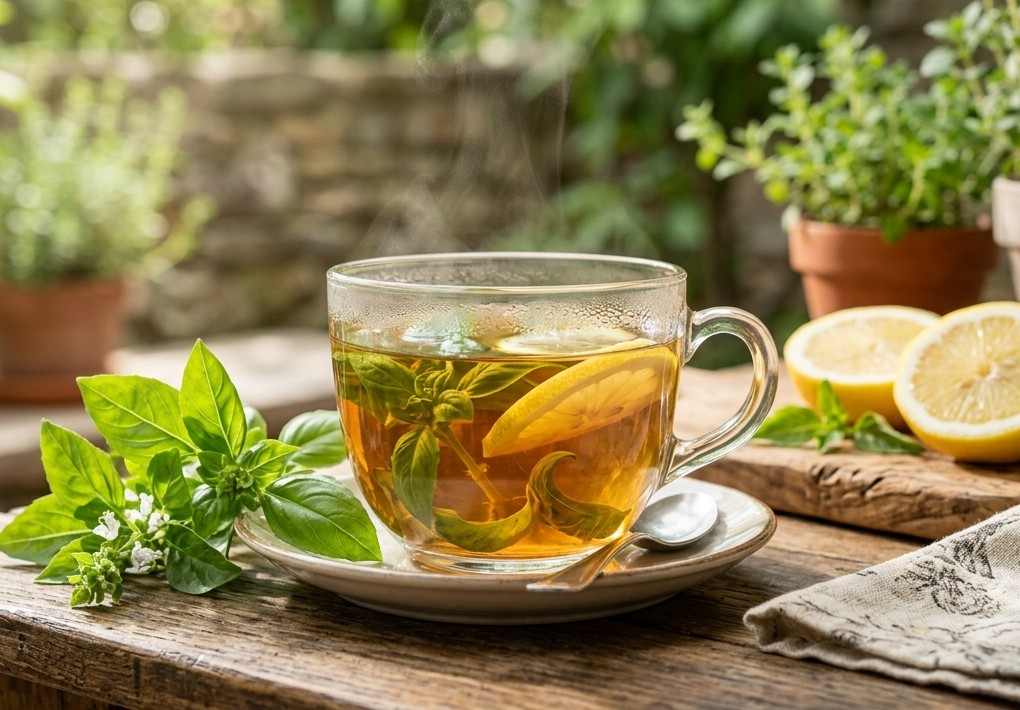
Lemon basil tea is a refreshing herbal drink made by steeping fresh basil leaves in hot water and adding lemon juice. It combines the aromatic plant compounds found in basil with the bright, acidic flavor of lemon. Basil contains polyphenols and other bioactive compounds that have demonstrated antioxidant and anti-inflammatory activity in laboratory and experimental research. However, most research has examined basil extracts or isolated compounds rather than lemon basil tea itself, so its potential benefits should not be treated as proven treatments for disease.
For most healthy adults, an unsweetened cup can be a simple way to increase fluid intake while adding flavor without caffeine. The nutritional value depends on how much basil and lemon are used and whether sugar or honey is added.
What Is Lemon Basil Tea?
Lemon basil tea is a caffeine-free herbal infusion prepared using fresh or dried basil leaves, hot water, and lemon juice. Unlike traditional caffeinated teas made from Camellia sinensis, it does not naturally contain caffeine.
There are several varieties of basil, including sweet basil (Ocimum basilicum) and holy basil or tulsi (Ocimum tenuiflorum). They are not identical herbs and have different chemical profiles. This article primarily refers to lemon basil tea made with culinary basil, such as sweet basil.
Basil contains plant compounds including rosmarinic acid, flavonoids and other polyphenols that have been investigated for antioxidant and anti-inflammatory properties.
Lemon contributes vitamin C and citric acid, although the actual amount in a cup of tea can vary considerably depending on how much lemon juice is added.
Nutritional Facts of Lemon Basil Tea
The following values are approximate for 1 cup (240 mL) of unsweetened lemon basil tea prepared with a small handful of fresh basil and about 1 tablespoon of lemon juice. Tea preparation extracts only some nutrients from the leaves, so these values should not be considered laboratory-tested values.
| Nutrient | Approximate Amount per Cup |
|---|---|
| Calories | 2–5 kcal |
| Carbohydrates | Less than 2 g |
| Protein | Less than 0.5 g |
| Fat | 0 g |
| Fiber | 0 g or negligible |
| Vitamin C | Small amount |
| Vitamin K | Small amount |
| Folate | Small amount |
| Potassium | Small amount |
| Polyphenols | Present, amount varies |
| Caffeine | 0 mg* |
*Assuming no caffeinated tea leaves are added.
Fresh basil itself contains vitamin K, vitamin A, vitamin C, folate and several minerals, but the amount transferred into an infusion is much lower than the amount obtained by eating the leaves.
20 Proven Benefits of Lemon Basil Tea
- Provides Antioxidant Compounds: Basil contains polyphenols and other compounds that have demonstrated antioxidant activity in experimental research, which may help counter oxidative stress.
- May Support Normal Inflammatory Balance: Compounds found in Ocimum basilicum have shown anti-inflammatory activity in laboratory and experimental studies, although this does not establish that the tea treats inflammatory diseases.
- Supports Hydration: Because the main ingredient is water, unsweetened lemon basil tea contributes to daily fluid intake.
- Provides a Caffeine-Free Beverage: Lemon basil tea can be useful for people who want a flavorful hot drink without the caffeine naturally present in black, green, or white tea.
- May Support Digestive Comfort: Basil has traditionally been used for digestive purposes, although strong human evidence for lemon basil tea specifically is limited.
- Adds Flavor Without Much Sugar: Unsweetened lemon basil tea provides a naturally aromatic alternative to sugar-sweetened beverages.
- Provides Small Amounts of Vitamin C: Lemon juice contributes vitamin C, an essential nutrient involved in normal immune function, collagen formation, and antioxidant protection.
- May Help Replace Sugary Drinks: Choosing unsweetened herbal tea instead of sweetened beverages can reduce overall added-sugar intake.
- Contains Plant Polyphenols: Basil provides phenolic compounds such as rosmarinic acid and other polyphenols that are being studied for their biological activity.
- May Support General Wellness: Including herbs, fruits, and unsweetened beverages in a varied diet can contribute to an overall healthy eating pattern.
- May Be Refreshing During Warm Weather: Lemon and basil provide a naturally fresh flavor that can make plain water more appealing.
- Can Be a Low-Calorie Drink: When prepared without sugar, syrup, or honey, lemon basil tea contains very few calories.
- May Support Antioxidant Defense: Experimental studies suggest basil extracts can influence antioxidant systems and reduce markers of oxidative stress, although these findings cannot be directly translated into a therapeutic effect from tea.
- May Complement a Heart-Healthy Diet: Basil contains plant compounds being investigated for cardiovascular and lipid-related effects, but evidence from basil tea in humans remains insufficient to make treatment claims.
- May Help With Beverage Variety: Replacing repetitive sugary or highly caffeinated beverages with herbal infusions can make a balanced drinking routine easier to maintain.
- May Support a Relaxing Routine: A warm, caffeine-free drink can be incorporated into a relaxing evening routine, although this should not be confused with a clinically proven sleep treatment.
- May Provide Mild Digestive Aromatics: Basil’s aromatic compounds may contribute to the traditional use of basil preparations for digestive comfort, although clinical evidence remains limited.
- May Help Increase Water Intake: People who dislike plain water may find lemon basil tea easier to drink because of its citrus and herbal flavor.
- May Provide Additional Plant Variety: Using culinary herbs such as basil adds a small amount of naturally occurring plant compounds to the diet.
- May Be Suitable as an Everyday Unsweetened Drink: For most healthy adults, a moderate amount of homemade lemon basil tea can fit into a balanced diet, provided there are no individual contraindications.
10 Side Effects of Lemon Basil Tea
Lemon basil tea is generally a mild beverage when prepared with ordinary culinary amounts of basil, but some people may experience problems.
- Stomach Discomfort: Drinking a concentrated preparation or consuming a large amount may cause nausea, stomach discomfort, or digestive upset in sensitive individuals.
- Acid Reflux: Lemon juice is acidic and may worsen heartburn or reflux symptoms in people who are sensitive to acidic beverages.
- Tooth Enamel Erosion: Frequent exposure to acidic lemon drinks may contribute to dental enamel erosion over time, particularly when consumed repeatedly throughout the day.
- Allergic Reactions: People allergic to basil or related plants may experience itching, rash, swelling, or other allergic symptoms.
- Blood Sugar Concerns With Tulsi: If the tea is prepared with holy basil rather than culinary basil, additional caution may be appropriate because holy basil has been studied for possible blood-glucose-lowering effects.
- Possible Medication Interactions: Herbal products can interact with medicines, and the evidence varies substantially between herbs and preparations.
- Possible Bleeding Concerns With Holy Basil: Holy basil may affect blood clotting, particularly in concentrated preparations, so people taking anticoagulant or antiplatelet medicines should seek professional advice.
- Sensitivity to Strong Preparations: Using excessive amounts of basil or concentrated extracts may produce stronger effects and potentially more side effects than ordinary culinary tea.
- Breastfeeding Safety Is Uncertain for Medicinal Doses: Safety information is limited for medicinal or concentrated holy basil preparations during breastfeeding.
- Pregnancy-Related Concerns With Holy Basil: If holy basil or concentrated herbal preparations are used, pregnancy safety should be discussed with a healthcare professional because adequate human safety data are lacking.
How to Make Lemon Basil Tea?
Ingredients:
- 1 cup water
- 6–10 fresh basil leaves
- 1–2 teaspoons fresh lemon juice
- Optional: 1 teaspoon honey
Method:
- Bring the water to a gentle boil.
- Add the fresh basil leaves to a cup or teapot.
- Pour the hot water over the basil.
- Cover and steep for about 5–10 minutes.
- Strain the leaves.
- Allow the tea to cool slightly.
- Add fresh lemon juice.
- Add a small amount of honey only if desired.
- Serve warm or chill it and serve over ice.
For a lower-calorie drink, leave out the honey or other sweeteners.
Other Uses of Lemon Basil Tea
Besides drinking it as a warm herbal beverage, lemon basil tea can be used in several simple ways:
- Iced Herbal Drink: Chill the tea and serve it with ice for a refreshing beverage.
- Mocktail Base: Combine chilled lemon basil tea with sparkling water and fresh lemon slices.
- Flavorful Water Alternative: Use it as an alternative to plain water when you want more flavor.
- Fruit Infusion: Add strawberries, blueberries, cucumber, or orange slices after the tea has cooled.
- Smoothie Liquid: A cooled, unsweetened version can be used as part of the liquid base in a smoothie.
- Cooking Ingredient: Small amounts can be incorporated into certain sauces or light dressings for a subtle herbal-citrus flavor.
How Much Lemon Basil Tea Can You Drink a Day?
For most healthy adults, 1–2 cups of ordinary homemade lemon basil tea per day is a reasonable moderate amount.
There is no well-established clinical dosage specifically for lemon basil tea. The appropriate amount depends on the type and quantity of basil used, the strength of the infusion, and individual health circumstances.
If you are using holy basil/tulsi rather than culinary basil, especially as a concentrated tea consumed regularly, it is better to discuss long-term use with a healthcare professional because safety and dosing evidence are limited. Research on holy basil has generally involved specific preparations rather than ordinary lemon basil tea.
Tips for Consuming Lemon Basil Tea
- Use fresh, clean basil leaves whenever possible.
- Wash fresh basil thoroughly before making tea.
- Use freshly squeezed lemon juice for the best flavor.
- Avoid adding large amounts of sugar.
- If you have acid reflux, use less lemon or skip it.
- Do not rely on lemon basil tea to treat a medical condition.
- Avoid highly concentrated basil extracts unless recommended by a qualified professional.
- If you take prescription medicines, check for potential herb-drug interactions.
- Drink it as part of an overall balanced diet rather than as a detox treatment.
- If the tea causes persistent digestive symptoms or an allergic reaction, stop drinking it and seek medical advice.
Best Time to Drink Lemon Basil Tea
There is no scientifically established “best time” to drink lemon basil tea.
- Morning: It can be a refreshing caffeine-free alternative to tea or coffee.
- After Meals: Some people may enjoy it as a light, flavorful drink after eating, although it should not be considered a proven digestive treatment.
- Afternoon: It can provide a flavorful alternative to sugary beverages.
- Evening: Because ordinary basil-lemon tea is caffeine-free, it can be suitable for people who prefer to avoid caffeine later in the day.
If lemon triggers heartburn, avoid drinking lemon basil tea close to bedtime.
Who Should Drink Lemon Basil Tea?
Lemon basil tea may be suitable for healthy adults who:
- Want a caffeine-free beverage.
- Prefer unsweetened or low-calorie drinks.
- Enjoy herbal and citrus flavors.
- Want another option for increasing fluid intake.
- Are looking for an alternative to sugary beverages.
- Can tolerate basil and lemon without digestive or allergic symptoms.
It should be viewed as a beverage rather than a replacement for medical treatment.
Who Should Avoid Lemon Basil Tea?
Some people should use caution or seek professional advice before consuming it regularly, particularly:
- People with a known basil allergy.
- People whose acid reflux is aggravated by lemon.
- People taking medications that may interact with herbal products.
- People taking blood-thinning or antiplatelet medicines if the tea contains holy basil/tulsi.
- People taking blood-glucose-lowering medicines if the tea contains holy basil/tulsi.
- Pregnant or breastfeeding people considering concentrated holy basil preparations.
- People preparing for surgery who regularly consume concentrated herbal preparations.
- People with chronic medical conditions who want to consume medicinal-strength herbal preparations.
Precautions and Interactions
One important distinction is whether your recipe uses sweet/culinary basil (Ocimum basilicum) or holy basil/tulsi (Ocimum tenuiflorum). The safety evidence and traditional uses are not interchangeable.
Ordinary culinary amounts of basil in food or a mild tea are different from concentrated extracts, capsules, essential oils, or medicinal preparations. Much of the research on basil’s biological effects has involved extracts, isolated compounds, laboratory models, or animals rather than homemade tea.
If using holy basil regularly, particular caution is warranted with diabetes medications, blood-thinning or antiplatelet medicines, and certain sedatives, because possible interactions have been reported or proposed. Human evidence for several of these interactions remains limited.
People who are pregnant, trying to conceive, breastfeeding, preparing for surgery, or managing a chronic condition should consult a doctor or pharmacist before using concentrated herbal preparations. Herbal supplements and medicinal preparations can have different strengths and risks from culinary teas.
Final Thoughts
Lemon basil tea is a simple, aromatic and naturally caffeine-free beverage that combines the fresh flavor of lemon with basil’s characteristic herbal notes. Basil contains polyphenols and other compounds with antioxidant and anti-inflammatory activity demonstrated in experimental research, but there is not enough clinical evidence to describe lemon basil tea itself as a treatment for specific diseases.
For most healthy adults, an unsweetened cup or two can be incorporated into a balanced drinking routine. The key is moderation, using ordinary culinary ingredients rather than concentrated extracts, and considering individual medical conditions and medications.
FAQ’s
What does lemon basil tea taste like?
Lemon basil tea has a light, refreshing citrus flavor from lemon combined with the sweet, aromatic and slightly peppery taste of basil.
What does lemon basil tea smell like?
It usually has a fresh herbal aroma with noticeable citrus notes from the lemon and a mildly sweet fragrance from basil.
Is lemon basil tea caffeine-free?
Yes, homemade lemon basil tea is naturally caffeine-free when made only with basil, lemon and water.
Can I drink lemon basil tea every day?
Most healthy adults can generally enjoy 1–2 cups of mild, unsweetened lemon basil tea daily, provided it does not cause digestive or allergic symptoms.
Is lemon basil tea good for digestion?
Basil has traditionally been used to support digestion, but there is limited human evidence specifically showing that lemon basil tea improves digestive problems.
Can lemon basil tea help with weight loss?
Lemon basil tea is very low in calories when consumed without sugar, so it may be a useful alternative to high-calorie beverages, but it does not directly burn body fat.
Is lemon basil tea good before bed?
Because it is naturally caffeine-free, it can be consumed in the evening, but lemon may trigger heartburn or acid reflux in some people.
Can pregnant women drink lemon basil tea?
Pregnant women should consult their healthcare professional before regularly consuming herbal preparations, particularly if the tea contains holy basil or concentrated amounts of basil.
Can children drink lemon basil tea?
Small amounts of a mild tea may be acceptable for some children, but parents should consider the child’s age, allergies, and medical conditions and ask a pediatrician when unsure.
Can lemon basil tea help with stress?
The warm, caffeine-free drink may be relaxing as part of a routine, but there is not enough clinical evidence to conclude that lemon basil tea treats stress or anxiety.
Is lemon basil tea good for immunity?
Lemon provides vitamin C, while basil contains various plant compounds, but lemon basil tea should not be considered an immune-boosting treatment or substitute for a balanced diet.
Can lemon basil tea cause acidity?
Yes. Lemon is acidic and may trigger heartburn, acid reflux, or stomach discomfort in sensitive individuals.
Can I drink lemon basil tea on an empty stomach?
Some people can drink it comfortably on an empty stomach, but those prone to acidity or reflux may find that the lemon causes discomfort.
Is lemon basil tea better with honey?
Honey can make the tea sweeter and more pleasant, but it also adds calories and sugars. Unsweetened lemon basil tea is the lower-sugar option.
Can lemon basil tea be served cold?
Yes. Prepare the tea normally, allow it to cool, refrigerate it, and serve it over ice for a refreshing iced herbal drink.
How should Lemon Basil Tea be stored?
Freshly prepared Lemon Basil Tea should be cooled and stored in a clean, covered container in the refrigerator and ideally consumed within 24–48 hours for the best quality and flavor.
What is Lemon Basil Tea good for?
Lemon Basil Tea is mainly good as a caffeine-free, low-calorie and refreshing beverage that provides fluids and small amounts of nutrients and plant compounds from lemon and basil. It may complement a healthy diet but should not be used to treat medical conditions.
Sources / References:
Disclaimer:
This guide is for general educational purposes only and does not replace professional medical advice. If you are pregnant, breastfeeding, taking medication, or managing a medical condition, consult a qualified healthcare professional before using herbal preparations regularly.
Also Read:
1 thought on “Lemon Basil Tea: 20 Benefits, Side Effects & How to Make It”