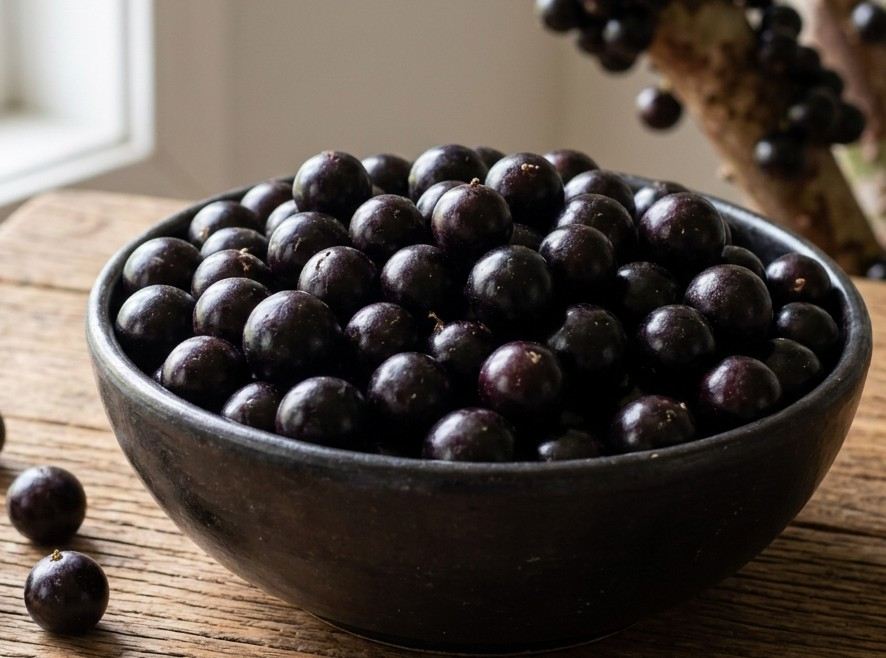
Jabuticaba is a unique Brazilian fruit that looks almost like a grape but grows directly on the trunk and branches of its tree. Its deep purple-black skin gives it a striking appearance and provides anthocyanins and other polyphenols that have attracted scientific interest.
The fruit is naturally sweet and juicy, while its skin has a more astringent taste. Jabuticaba can be eaten fresh or used to prepare juices, jams, jellies, wines, liqueurs, vinegar, and other products. Research suggests that the fruit, particularly its dark-colored peel, contains several bioactive compounds, although many of the proposed health effects still require more human research.
What Is Jabuticaba?
Jabuticaba is the fruit of trees in the Plinia genus, especially Plinia cauliflora, a plant native to Brazil and other parts of South America. It is sometimes spelled jaboticaba.
Unlike most fruits, jabuticaba develops directly from the trunk and larger branches of the tree, a botanical characteristic known as cauliflory. The round fruits generally have a dark purple to nearly black peel and soft, pale, slightly sweet pulp containing seeds.
The peel is particularly interesting from a nutritional and research perspective because it contains anthocyanins, flavonoids, tannins, and other phenolic compounds. Studies have identified compounds such as cyanidin-3-glucoside and ellagic acid in jabuticaba peel.
Fresh jabuticaba is also relatively low in calories and provides carbohydrates, fiber, vitamin C, potassium, magnesium, manganese, and other micronutrients. Brazilian food-composition data report about 60 calories and 2.3 g of fiber per 100 g of raw Jaboticaba.
Nutrition Facts of Jabuticaba
The following values are based on Brazilian food-composition data for raw jabuticaba and represent approximately 100 g of the edible fruit. Nutrient levels can vary depending on variety, ripeness, growing conditions, and preparation.
| Nutrient | Amount per 100 g |
|---|---|
| Calories | 60 kcal |
| Water | 83.6 g |
| Carbohydrates | 15.3 g |
| Dietary Fiber | 2.3 g |
| Protein | 0.61 g |
| Total Fat | 0.13 g |
| Calcium | 8.35 mg |
| Iron | 0.10 mg |
| Magnesium | 17.8 mg |
| Phosphorus | 14.6 mg |
| Potassium | 129 mg |
| Manganese | 0.30 mg |
| Zinc | 0.28 mg |
| Copper | 0.07 mg |
| Vitamin C | 16.2 mg |
| Thiamine (Vitamin B1) | 0.06 mg |
| Cholesterol | 0 mg |
20 Proven Health Benefits of Jabuticaba
- Provides Antioxidants: Jabuticaba contains anthocyanins, flavonoids, tannins, and other phenolic compounds that can contribute antioxidant activity.
- Supports Vitamin C Intake: Fresh Jaboticaba provides vitamin C, which contributes to normal immune function and collagen formation.
- May Support Heart Health: Its potassium and polyphenol content can complement an overall heart-healthy eating pattern, although direct cardiovascular benefits from jabuticaba itself require more human research.
- Supports Digestive Health: The fruit provides dietary fiber, which can help support normal bowel function and digestive health.
- May Support Healthy Inflammation Balance: Jaboticaba polyphenols have demonstrated anti-inflammatory activity in experimental research, but clinical evidence in humans remains limited.
- May Help Protect Cells From Oxidative Stress: Anthocyanins and other phenolics can neutralize or interact with reactive compounds in laboratory antioxidant assays.
- Supports Healthy Blood Vessels: Polyphenol-rich fruits may contribute to vascular health as part of a balanced diet, although jabuticaba-specific human evidence is still developing.
- May Support Metabolic Health: Experimental studies have investigated jabuticaba compounds for potential effects on glucose and lipid metabolism, but more clinical trials are needed before making therapeutic claims.
- Provides Potassium: Jabuticaba supplies potassium, a mineral involved in fluid balance, nerve signaling, and normal muscle function.
- Provides Magnesium: Its magnesium content contributes to normal muscle, nerve, and energy metabolism.
- Supports Normal Collagen Production: Vitamin C from Jaboticaba is needed for normal collagen formation, which is important for skin, blood vessels, cartilage, and bones.
- May Support Skin Health: Vitamin C and antioxidant polyphenols make jabuticaba an interesting fruit for a diet focused on skin-supportive nutrients.
- May Support Immune Function: Its vitamin C content contributes to normal immune-system function rather than acting as an immune treatment.
- May Support Healthy Aging: Polyphenol-rich fruits can contribute antioxidants to the diet, while research continues to investigate their role in healthy aging.
- May Support Gut Microbiota: Fruit fiber and polyphenols can interact with gut microorganisms, although the specific effects of Jaboticaba require further human research.
- May Support Liver Health: Jabuticaba extracts have been investigated for potential protective effects in experimental models, but this should not be interpreted as a treatment for liver disease.
- May Support Healthy Cholesterol Levels: Laboratory and preclinical research has explored lipid-related effects of Jaboticaba compounds, but evidence is not strong enough to recommend it as a cholesterol-lowering treatment.
- Provides Manganese: Jabuticaba contains manganese, a mineral involved in normal metabolism and antioxidant enzyme function.
- May Provide Cardiometabolic Benefits: Its combination of fiber, potassium, vitamin C, and polyphenols makes it a useful addition to a nutrient-dense eating pattern.
- Adds Variety to a Healthy Diet: Eating less-common fruits such as jabuticaba can increase dietary variety and introduce different plant compounds into the diet.
10 Side Effects of Jabuticaba
Jabuticaba is generally eaten as a fruit, but large amounts or concentrated products may not suit everyone.
- Digestive Discomfort: Eating a large quantity at once may cause bloating, gas, or stomach discomfort because of its fiber and natural carbohydrates.
- Loose Stools: A sudden increase in fruit or fiber intake can sometimes result in loose stools.
- Constipation From Inadequate Fluids: Eating more fiber without drinking enough fluids may contribute to constipation in some people.
- Allergic Reaction: People with a fruit allergy could potentially experience itching, swelling, hives, or other allergic symptoms after eating Jaboticaba.
- Blood Sugar Considerations: Whole jabuticaba contains natural carbohydrates, so people monitoring blood glucose should account for the portion they eat.
- Peel Astringency: The peel contains tannins and can produce a dry or puckering sensation in the mouth.
- Concentrated Extract Effects: Jaboticaba extracts and peel supplements are more concentrated than fresh fruit and should not automatically be treated as equivalent to normal food portions.
- Food Intolerance: Some people may experience individual digestive intolerance even when the fruit is generally well tolerated.
- Spoilage Risk: Fresh Jaboticaba is highly perishable, so spoiled or fermented fruit can cause gastrointestinal illness.
- Seed-Related Choking Risk: Whole fruits should be eaten carefully, particularly by young children, because of their seeds and small round shape.
How to Eat Jabuticaba?
Jabuticaba is usually eaten fresh. Wash the fruit thoroughly and eat the juicy pulp, with or without the peel depending on your preference.
The peel is edible and contains many of the fruit’s polyphenols, but it can taste more bitter or astringent than the pulp. Some people simply bite the fruit, suck out the pulp, and discard the seeds.
You can also:
- Add fresh Jaboticaba to fruit salads.
- Blend it into smoothies.
- Make unsweetened jabuticaba juice.
- Cook it into jams or jellies.
- Use it in sauces and desserts.
- Freeze the fruit for later use.
Jabuticaba is also traditionally used to produce wine, liqueur, vinegar, juice, jam, and jelly.
Tips for Consuming Jabuticaba
- Choose fruits that have smooth, intact, dark purple-to-black skin without mold or excessive bruising.
- Wash fresh fruit under clean running water before eating.
- Start with a modest portion if you have never eaten Jaboticaba before.
- Eat the fruit whole when you want to obtain both the pulp and edible peel.
- Remove or carefully manage the seeds according to your preferred way of eating it.
- Prefer whole fruit over heavily sweetened jabuticaba beverages.
- If making juice, avoid adding large amounts of sugar.
- Consume fresh Jaboticaba relatively soon because the fruit is highly perishable.
- Do not eat fruit that has an unusual smell, visible mold, or obvious spoilage.
Other Uses of Jabuticaba
- Jabuticaba Juice: The fruit can be pressed or blended to make naturally flavored juice and beverages.
- Jabuticaba Jam: Its pulp can be cooked with sugar to make jams and preserves.
- Jabuticaba Jelly: The fruit is commonly used in jelly preparations.
- Jabuticaba Wine: Fermented Jaboticaba is traditionally used to produce fruit wine.
- Jabuticaba Liqueur: The fruit can be used to make alcoholic liqueurs.
- Jabuticaba Vinegar: Fermented fruit can be processed into vinegar.
- Food Ingredients: Jaboticaba peel has been investigated as a source of phenolic compounds and anthocyanins for food applications.
- Natural Color: The dark peel contains anthocyanins that can contribute natural red-purple pigmentation.
- Functional Food Research: Researchers are investigating Jaboticaba peel extracts as sources of bioactive compounds for functional-food development.
- Cosmetic Research: Jaboticaba-derived polyphenols are being investigated for potential antioxidant applications in personal-care formulations.
How Much Jabuticaba Can You Eat in a Day?
There is no officially established therapeutic daily dose of fresh jabuticaba.
For most healthy adults, around 100–150 g of fresh jabuticaba can be a reasonable fruit serving as part of an overall balanced diet. Brazilian food-composition data list 100 g as approximately 60 calories and 2.3 g of fiber.
Your appropriate portion may be smaller or larger depending on your total diet, calorie needs, digestive tolerance, and blood-glucose goals.
Best Time to Eat Jabuticaba
There is no scientifically established best time to eat jabuticaba.
You can enjoy it as a morning snack, afternoon snack, dessert, or alongside a meal. Eating it with other nutrient-rich foods may help create a more balanced meal or snack.
If you experience digestive discomfort when eating fruit on an empty stomach, try having a smaller portion with or after a meal.
Who Should Eat Jabuticaba?
- Healthy Adults: Most healthy adults can include fresh Jaboticaba as part of a varied diet.
- People Seeking More Fruit Variety: Jabuticaba can add a different source of fiber, vitamin C, minerals, and plant polyphenols to the diet.
- People Interested in Polyphenol-Rich Foods: Its dark peel contains anthocyanins and other phenolic compounds that make it particularly interesting as a whole fruit.
- People Looking for Fiber-Rich Fruits: Its approximately 2.3 g of fiber per 100 g can contribute to daily fiber intake.
- People Wanting Vitamin C Sources: Jaboticaba provides vitamin C and can contribute to overall vitamin C intake.
- People Following a Balanced Diet: Fresh Jaboticaba can fit into a balanced eating pattern without requiring special preparation.
Who Should Not Eat Jabuticaba?
- People With a Known Fruit Allergy: Anyone who has previously experienced an allergic reaction to jabuticaba should avoid it unless medically evaluated.
- People With Significant Digestive Intolerance: Those who consistently develop symptoms after eating the fruit may need to limit or avoid it.
- People With Acute Gastrointestinal Upset: If you currently have significant diarrhea or stomach irritation, large servings of fruit may worsen symptoms.
- People Following a Medically Restricted Diet: Individuals with specific dietary restrictions should check whether jabuticaba fits their prescribed diet.
- People Monitoring Blood Glucose: Jaboticaba can be included in many diabetes-friendly diets, but portions and total carbohydrate intake should be considered.
- Young Children: Whole round fruits and seeds should be prepared appropriately to reduce choking risk.
How to Store Jabuticaba?
- Refrigerate Fresh Fruit: Keep fresh Jaboticaba refrigerated to slow deterioration.
- Use Quickly: Fresh jabuticaba is highly perishable, so avoid storing it for unnecessarily long periods.
- Keep It Dry: Excess moisture can encourage spoilage and mold.
- Use a Clean Container: Store washed and inspected fruit in a clean food-safe container.
- Avoid Damaged Fruit: Remove visibly spoiled berries so they do not accelerate deterioration of the rest.
- Freeze for Longer Storage: Jabuticaba can be frozen when you need to preserve it beyond its short fresh-storage period.
- Store Prepared Products Properly: Refrigerate homemade juice, jam, or other perishable preparations according to food-safety practices.
Precautions and Interactions
- Food Rather Than Medicine: Fresh Jaboticaba should be viewed as a nutritious fruit rather than a treatment for a medical condition.
- Supplement Caution: Concentrated Jaboticaba peel extracts can provide substantially different amounts of polyphenols than the whole fruit and should be used cautiously.
- Diabetes Medications: People taking glucose-lowering medication should discuss concentrated Jaboticaba supplements with their healthcare professional because research is investigating possible metabolic effects.
- Kidney Disease: People with kidney disease may need individualized guidance regarding fruit portions because jabuticaba provides potassium.
- Allergy Precaution: Stop eating the fruit and seek appropriate medical care if symptoms such as facial swelling, breathing difficulty, or widespread hives occur.
- Pregnancy: Fresh Jaboticaba can generally be considered a food, but concentrated extracts and supplements should be discussed with a healthcare professional during pregnancy.
- Breastfeeding: Normal food portions are different from concentrated supplements, so breastfeeding individuals should seek professional advice before using jabuticaba extracts.
- Children: Give age-appropriate portions and prepare the fruit safely to reduce choking risk.
- Avoid Spoiled Fruit: Do not consume Jaboticaba with visible mold, unusual fermentation, or an unpleasant odor.
- Research Limitations: Many reported antioxidant, anti-inflammatory, metabolic, and protective effects come from laboratory, animal, or extract studies rather than large human clinical trials.
Final Thoughts
Jabuticaba is a distinctive Brazilian fruit with a useful nutritional profile and an especially interesting dark peel. Fresh fruit provides carbohydrates, fiber, vitamin C, potassium, magnesium, and manganese, while the peel contains anthocyanins and other polyphenols that have demonstrated antioxidant activity in laboratory research.
The most practical way to enjoy Jaboticaba is as a whole fresh fruit in moderate portions. Although research into jabuticaba’s bioactive compounds is promising, concentrated extracts should not be confused with the effects of eating the whole fruit, and more human research is needed to establish specific health claims.
FAQ’s
Is Jabuticaba Safe to Eat?
Yes, ripe Jaboticaba is generally safe to eat as a fresh fruit when properly washed, although some people may experience digestive discomfort or allergic reactions.
Is Jabuticaba a Rare Fruit?
Jaboticaba is considered an uncommon or exotic fruit outside its native South America because it has a short shelf life and is not widely cultivated commercially in many countries.
Where Can I Buy Jabuticaba?
Fresh Jaboticaba is most commonly available in Brazil and may be difficult to find fresh elsewhere, but frozen fruit, preserves, juice, plants, and seeds may be available through specialty fruit sellers or nurseries.
How Fast Do Jabuticaba Trees Grow?
Jaboticaba trees are generally slow-growing, and some varieties can take several years to produce their first significant crop, although the exact time depends on the species, climate, growing conditions, and whether the tree is grown from seed or grafted.
What does Jabuticaba taste like?
Jaboticaba has a sweet, juicy pulp with a mildly tangy flavor, while the skin can taste slightly bitter or astringent.
What is Jabuticaba good for?
Jaboticaba provides fiber, vitamin C, potassium, and antioxidant polyphenols that can contribute to a balanced and nutritious diet.
Can you eat Jabuticaba skin?
Yes, Jaboticaba skin is edible and contains anthocyanins and other polyphenolic compounds, although it has a more astringent taste than the pulp.
Is Jabuticaba high in antioxidants?
Jaboticaba, particularly its dark-colored peel, contains anthocyanins and other phenolic compounds with antioxidant activity.
Is Jabuticaba good for digestion?
Jaboticaba contains dietary fiber, which can support normal digestion and bowel regularity when consumed as part of a balanced diet.
Is Jabuticaba good for weight loss?
Jaboticaba can fit into a weight-management diet because it is relatively low in calories and provides fiber, but no fruit by itself causes weight loss.
Can diabetics eat Jabuticaba?
People with diabetes may be able to include moderate portions of whole Jaboticaba in their diet, but carbohydrate intake and individual blood-glucose responses should be considered.
Is Jabuticaba good for the skin?
Jaboticaba provides vitamin C and antioxidant compounds that can contribute to overall skin health as part of a nutrient-rich diet.
Can you eat Jabuticaba every day?
Healthy adults can generally include Jaboticaba regularly as part of a varied diet, provided the portion fits their overall nutritional needs.
Is Jabuticaba safe during pregnancy?
Fresh Jaboticaba can generally be consumed as a fruit during pregnancy, but concentrated extracts or supplements should be discussed with a healthcare professional.
Can children eat Jabuticaba?
Children can eat Jaboticaba in age-appropriate portions, but the fruit should be prepared carefully because of its small size and seeds.
Does Jabuticaba contain vitamin C?
Yes, raw Jaboticaba provides vitamin C and can contribute to daily vitamin C intake.
Does Jabuticaba have seeds?
Yes, Jaboticaba contains seeds inside its soft, juicy pulp, and the number and size can vary among fruits.
Can Jabuticaba be eaten raw?
Yes, fresh Jaboticaba can be washed and eaten raw, either with the edible skin or with the skin removed according to personal preference.
How long does fresh Jabuticaba last?
Fresh Jaboticaba is highly perishable and is best refrigerated and consumed relatively quickly after harvesting or purchasing.
Can Jabuticaba be frozen?
Yes, Jaboticaba can be frozen to extend its storage life and can later be used in smoothies, sauces, desserts, and other preparations.
What is Jabuticaba called in India?
Jabuticaba is generally known by its original name, Jabuticaba, in India because it is not a common traditional Indian fruit.
Is Jabuticaba the same as a grape?
No, Jaboticaba and grapes are different fruits, although their round shape and dark color can make them look somewhat similar.
Sources / References
Disclaimer
This guide is for educational purposes only and does not replace professional medical advice, diagnosis, or treatment. Consult a qualified healthcare professional before using concentrated jabuticaba supplements or extracts, especially if you have a medical condition or take medication.
Also Read: