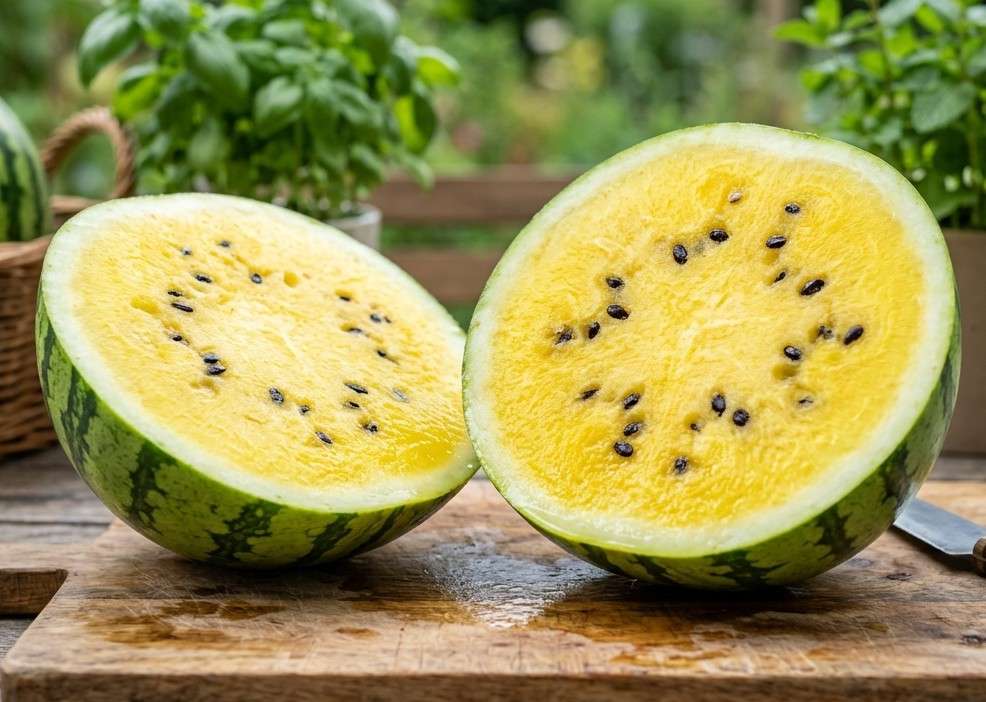
Yellow watermelon is a colorful variety of watermelon with bright yellow flesh instead of the familiar red or pink flesh. It belongs to the same species, Citrullus lanatus, and has a juicy, refreshing texture similar to traditional watermelon. Depending on the variety, its flavor can range from mildly sweet to noticeably honey-like.
The yellow color comes from a different combination of carotenoid pigments. Unlike red watermelon, which is particularly rich in lycopene, yellow-fleshed varieties contain different carotenoids, including beta-carotene, alpha-carotene, lutein, and other xanthophylls. Research suggests that yellow watermelon generally has similar amounts of water, calories, carbohydrates, sugars, protein, fat, and fiber to red watermelon, although its carotenoid and vitamin composition can differ. Yellow watermelon can be a refreshing addition to a balanced diet, particularly when eaten as fresh fruit rather than as a sugary juice or dessert.
What Is Yellow Watermelon?
Yellow watermelon is a naturally occurring and cultivated variety of watermelon that has yellow-colored flesh. Its botanical name is Citrullus lanatus, the same species as many red-fleshed watermelons.
Its unusual color is mainly related to its carotenoid profile. Studies of yellow-fleshed varieties have identified compounds such as beta-carotene, alpha-carotene, lutein, xanthophylls, and small or trace amounts of lycopene. The exact nutritional composition varies according to cultivar, growing conditions, ripeness, and storage.
Yellow watermelon is naturally high in water and relatively low in calories. It also provides carbohydrates, natural sugars, potassium, vitamin C, and the amino acid L-citrulline. Watermelon in general is one of the better dietary sources of L-citrulline.
Nutrition Facts of Yellow Watermelon
| Nutrient | Approximate Amount per 100 g |
|---|---|
| Calories | 30 kcal |
| Water | 91.4 g |
| Carbohydrates | 7.55 g |
| Natural sugars | 6.20 g |
| Dietary fiber | 0.40 g |
| Protein | 0.61 g |
| Total fat | 0.15 g |
| Potassium | About 112 mg |
| Calcium | About 7 mg |
| Magnesium | About 10 mg |
| Phosphorus | About 11 mg |
| Sodium | About 1 mg |
| Vitamin C | About 8–9 mg |
| L-citrulline | Present; amount varies by cultivar |
| Carotenoids | Vary considerably by yellow-fleshed variety |
20 Proven Health Benefits of Yellow Watermelon
- Supports Hydration: Yellow watermelon contains more than 90% water by weight, making it a refreshing food that can contribute to daily fluid intake.
- Provides Vitamin C: Its vitamin C content contributes to normal immune function, collagen formation, and antioxidant protection.
- Provides Carotenoids: Yellow-fleshed varieties contain carotenoids such as beta-carotene, alpha-carotene, and lutein that contribute antioxidant activity.
- Supports Antioxidant Defense: Carotenoids and other plant compounds can help protect cells from oxidative stress.
- May Support Heart Health: Watermelon contains L-citrulline and other bioactive compounds that have been investigated for cardiovascular effects.
- Supports Healthy Blood Vessels: L-citrulline can contribute to the production of L-arginine and nitric oxide, molecules involved in blood-vessel function.
- May Support Healthy Blood Pressure: Clinical research on watermelon and L-citrulline has reported potential blood-pressure benefits, although more research is needed to establish dietary recommendations.
- Supports Normal Muscle Function: Its water and potassium content can contribute to normal muscle and nerve function.
- Helps Replenish Fluids After Activity: The combination of water and electrolytes makes watermelon a useful hydrating fruit after physical activity.
- May Support Exercise Recovery: Watermelon provides L-citrulline, which has been studied for possible effects on exercise and vascular function.
- Supports Digestive Health: Its water and small amount of dietary fiber can contribute to regular digestion.
- Can Fit Into Weight-Management Diets: With about 30 calories per 100 g, fresh watermelon can add volume and sweetness without a high calorie load.
- Supports Immune Health: Vitamin C and other plant compounds contribute to normal immune-system function.
- Supports Skin Health: Adequate vitamin C helps the body produce collagen, an important structural protein for skin.
- Supports Eye-Related Nutrition: Carotenoids such as lutein and beta-carotene are involved in nutritional pathways relevant to eye health.
- Provides Potassium: Potassium contributes to normal nerve transmission, muscle function, and maintenance of normal blood pressure.
- Provides a Source of L-Citrulline: Watermelon is notable for its L-citrulline content, although the amount varies between cultivars and plant parts.
- May Help Increase Fruit Intake: Its naturally sweet flavor and high water content can make it an easy way to include more fruit in the diet.
- Provides Plant Phytochemicals: Watermelon contains numerous naturally occurring phytochemicals, including carotenoids and phenolic compounds.
- Supports Overall Healthy Eating: When eaten fresh, yellow watermelon can provide hydration, micronutrients, and plant compounds as part of a varied diet.
10 Side Effects of Yellow Watermelon
Yellow watermelon is generally well tolerated by most healthy people when eaten in moderate portions. However, eating large quantities may cause digestive or blood-sugar-related concerns in some people.
- Bloating: Eating a large serving may cause bloating or abdominal fullness in sensitive individuals.
- Loose Stools: Its high water content and natural carbohydrates may contribute to loose stools when consumed in excessive amounts.
- Gas: Some people may experience gas or digestive discomfort after eating large quantities of watermelon.
- Blood Sugar Increase: Watermelon contains natural sugars, so large portions can raise blood glucose, particularly in people with diabetes.
- Digestive Sensitivity: People sensitive to certain fermentable carbohydrates may experience digestive symptoms after eating watermelon.
- Allergic Reaction: Although uncommon, watermelon can cause allergic symptoms in susceptible individuals.
- Oral Allergy Symptoms: Some people with pollen-related allergies may experience itching or tingling in the mouth after eating certain raw fruits.
- Excessive Fluid Intake: Eating very large quantities can add a substantial amount of fluid to the diet.
- Kidney-Diet Concerns: People who have been instructed to restrict potassium or fluids should consider their individualized dietary plan before eating large portions.
- Calorie and Sugar Accumulation: Although watermelon is relatively low in calories, repeatedly consuming very large portions can add significant carbohydrate and sugar intake.
How to Eat Yellow Watermelon?
Yellow watermelon can be eaten in many simple ways:
- Wash the outside of the watermelon before cutting it.
- Cut it into halves or quarters using a clean knife.
- Remove the rind and seeds if necessary.
- Cut the flesh into cubes, wedges, or balls.
- Eat it chilled as a fresh snack.
- Add cubes to fruit salads.
- Blend it into a smoothie without adding excessive sugar.
- Use it in fresh fruit salsa.
- Add it to salads with cucumber, mint, or feta.
- Freeze small pieces for a naturally sweet frozen snack.
For the best nutritional profile, eating the whole fresh fruit is generally preferable to turning it into a heavily sweetened beverage.
Tips for Consuming Yellow Watermelon
- Choose a watermelon that feels heavy for its size because this can indicate good water content.
- Look for a firm fruit without major bruises, cracks, or soft areas.
- Chill the fruit before serving for a refreshing texture.
- Wash the exterior before cutting even though the rind is not eaten.
- Start with a moderate serving if you have a sensitive digestive system.
- Pair watermelon with foods containing protein or healthy fats when you want a more balanced snack.
- Avoid adding large amounts of sugar, syrup, or sweetened toppings.
- Eat freshly cut watermelon promptly and refrigerate leftovers.
Other Uses of Yellow Watermelon
- Fruit Salads: Yellow watermelon adds sweetness, moisture, and an attractive color to mixed-fruit salads.
- Smoothies: Its juicy flesh can provide natural sweetness and fluid to homemade smoothies.
- Fresh Salsa: Diced yellow watermelon can be combined with cucumber, herbs, lime, and other fresh ingredients.
- Frozen Snacks: Small cubes can be frozen and eaten as a refreshing summer snack.
- Infused Water: A few pieces can be added to chilled water for a naturally flavored drink.
- Desserts: Yellow watermelon can be incorporated into fruit pops, chilled desserts, or fruit bowls.
- Salads: Its sweet flavor can complement savory ingredients such as leafy greens, cucumber, cheese, and herbs.
- Juice: The flesh can be blended or juiced, although whole fruit provides more fiber than strained juice.
- Garnishing: Small melon balls can be used to decorate fruit platters and chilled dishes.
- Culinary Experiments: Its distinctive color makes it useful for creating visually different fruit-based recipes.
How Much Yellow Watermelon Can You Eat in a Day?
There is no universally established medical dosage for yellow watermelon. For most healthy adults, approximately 1–2 cups of cut yellow watermelon per day can be a reasonable fruit serving, depending on the rest of the diet.
A 1-cup serving is roughly 150 g and provides about 45 calories using standard watermelon nutrition values. People with diabetes, digestive sensitivities, kidney disease, or fluid restrictions may need individualized portions.
Best Time to Eat Yellow Watermelon
There is no scientifically established best time to eat yellow watermelon.
It can be eaten in the morning, as a daytime snack, before or after exercise, or with a meal. During hot weather or after physical activity, its high water content can make it particularly refreshing.
If eating watermelon late at night causes frequent urination, bloating, or digestive discomfort, simply move it to an earlier part of the day.
Who Should Eat Yellow Watermelon?
- Healthy Adults: Fresh yellow watermelon can be included as part of a balanced diet for hydration and fruit intake.
- Active Individuals: Its water and carbohydrate content can make it a refreshing food around physical activity.
- People Seeking Low-Calorie Fruit: Its relatively low calorie density can make it suitable for many calorie-conscious eating patterns.
- People Who Enjoy Variety: Yellow watermelon offers a different color, flavor, and carotenoid profile from traditional red watermelon.
- People Increasing Fruit Intake: Its naturally sweet taste can make fruit consumption more enjoyable.
- People Wanting Hydrating Foods: Its high water content makes it useful as part of a fluid-rich diet.
- Older Adults: It can provide fluids and nutrients, although people with kidney or fluid restrictions should follow their healthcare professional’s dietary advice.
- Children: Children can generally eat appropriately prepared watermelon as part of a balanced diet once developmentally ready for the food.
Who Should Not Eat Yellow Watermelon?
- People With a Watermelon Allergy: Anyone with a known watermelon allergy should avoid yellow watermelon unless advised otherwise by an allergy professional.
- People With Significant Digestive Sensitivity: Those who consistently develop symptoms after eating watermelon may need to limit or avoid it.
- People With Diabetes: Yellow watermelon does not necessarily need to be avoided, but portions should be considered within the person’s carbohydrate plan.
- People With Potassium Restrictions: Individuals prescribed a potassium-restricted diet should discuss appropriate portions with their healthcare professional.
- People With Fluid Restrictions: Those with medically prescribed fluid restrictions should account for watermelon as part of total fluid intake.
- People With Severe Food Allergies: Anyone who develops swelling, breathing difficulty, widespread hives, or other serious symptoms after eating it should seek urgent medical attention.
- People With Individual Food Intolerances: Anyone who repeatedly experiences digestive symptoms after watermelon should consider avoiding it until the cause is evaluated.
How to Store Yellow Watermelon?
- Whole Watermelon: Store an uncut watermelon in a cool, clean location or refrigerate it if preferred.
- Cut Watermelon: Refrigerate cut pieces promptly in a clean, covered container.
- Airtight Container: Use a sealed container to reduce exposure to odors and contamination.
- Keep It Chilled: Refrigeration helps maintain the fruit’s quality after cutting.
- Avoid Leaving It Out: Do not leave cut watermelon at room temperature for prolonged periods.
- Use Clean Utensils: Always use clean knives and containers when preparing and storing the fruit.
- Check for Spoilage: Discard watermelon that develops an unusual smell, slimy texture, mold, or other obvious signs of spoilage.
- Avoid Cross-Contamination: Keep cut watermelon separate from raw meat, seafood, and other foods that could contaminate it.
Precautions and Interactions
- Moderate Portions: Eating reasonable portions is preferable to consuming very large amounts at once.
- Diabetes: People with diabetes should account for watermelon carbohydrates and sugars within their overall meal plan.
- Kidney Disease: People with kidney disease should follow individualized potassium and fluid recommendations from their healthcare team.
- Blood Pressure Medication: Watermelon contains L-citrulline and potassium, but it should not be used as a substitute for prescribed blood-pressure treatment.
- Fluid Restrictions: People with medically prescribed fluid limits should count watermelon toward their daily fluid intake.
- Allergy Awareness: Stop eating the fruit and seek medical advice if allergic symptoms occur.
- Food Hygiene: Wash the outside of the watermelon before cutting to reduce the chance of transferring surface contamination to the flesh.
- Medication Changes: Do not change prescription medication because of claims about watermelon or L-citrulline.
- Pregnancy: Yellow watermelon can generally be included as a fruit during pregnancy when properly washed and prepared, but individual dietary restrictions should be followed.
- Individual Tolerance: Reduce the serving or avoid the fruit if it repeatedly causes bloating, diarrhea, or other digestive symptoms.
Yellow Watermelon vs Red Watermelon
| Feature | Yellow Watermelon | Red Watermelon |
|---|---|---|
| Flesh color | Yellow | Red or pink |
| Main pigments | Beta-carotene, alpha-carotene, lutein and other carotenoids | Mainly lycopene |
| Water content | High | High |
| Calories | Relatively low | Relatively low |
| Natural sugars | Present | Present |
| L-citrulline | Present | Present |
| Flavor | Often mild, sweet, or honey-like | Usually sweet and classic watermelon-like |
| Research | Less extensively studied | More extensively studied |
The major nutritional distinction is the carotenoid profile rather than a dramatic difference in calories or macronutrients. Recent research notes that yellow and red watermelon have broadly similar macronutrient characteristics, while their carotenoid and vitamin profiles can differ.
FAQ’s
Can I eat Yellow Watermelon every day?
Yes, most healthy people can eat yellow watermelon every day in moderate portions as part of a balanced diet.
What is Yellow Watermelon good for?
Yellow watermelon is good for hydration and provides nutrients such as vitamin C, potassium, L-citrulline, and carotenoids.
What does Yellow Watermelon taste like?
Yellow watermelon is usually sweet, juicy, and refreshing, with some varieties having a honey-like or tropical flavor.
Is yellow watermelon healthier than red watermelon?
Neither is universally healthier; both provide similar hydration and basic nutrients, while their carotenoid profiles differ.
Is yellow watermelon more expensive?
Yellow watermelon can be more expensive than common red watermelon because it is less widely grown and may have lower availability, although prices vary by location and season.
Is the yellow watermelon rare?
Yellow watermelon is less common than traditional red-fleshed watermelon, but it is commercially cultivated and is not considered universally rare.
Which watermelon is original, yellow or red?
Watermelon has a complex domestication history, and both yellow- and red-fleshed forms occur within Citrullus lanatus; red flesh became especially common in modern cultivated watermelons.
Is eating yellow watermelon good for you?
Yes, yellow watermelon can be a healthy fruit choice because it provides water, vitamin C, potassium, L-citrulline, and various plant compounds.
Which watermelon is the sweetest, yellow or orange?
Sweetness depends more on the specific variety, ripeness, and growing conditions than on flesh color, so a yellow watermelon can be sweeter than an orange one or vice versa.
Is yellow watermelon high in sugar?
Yellow watermelon contains natural sugars but is mostly water and is relatively low in calories; portion size is still important for people monitoring carbohydrate intake.
Which is the best variety of watermelon?
There is no single best variety for everyone; the preferred watermelon depends on factors such as sweetness, texture, seed preference, size, availability, and intended use.
What is yellow watermelon called?
Yellow watermelon is commonly called Yellow Fleshed Watermelon, Yellow Crimson, or Tastigold and belongs to the same species, Citrullus lanatus, as red watermelon.
Is yellow watermelon natural?
Yes, yellow flesh can occur naturally because of the watermelon’s genetics and its different carotenoid composition.
Does yellow watermelon taste different?
Yellow watermelon is often described as sweet and juicy, with some varieties having a honey-like flavor compared with traditional red watermelon.
Is yellow watermelon high in sugar?
Yellow watermelon contains natural sugars, but it is also very high in water and relatively low in calories when eaten as a whole fruit.
Is yellow watermelon good for the kidneys?
For healthy people, yellow fleshed watermelon can be part of a balanced diet, but people with kidney disease or potassium and fluid restrictions should follow their healthcare professional’s dietary advice.
Can you eat yellow watermelon seeds?
Some watermelon varieties have edible seeds, but many commercial yellow watermelons are seedless or contain small immature seeds; check the particular variety before eating the seeds.
Is yellow watermelon good for the skin?
Yellow fleshed watermelon provides vitamin C and carotenoids, nutrients that support normal skin structure and antioxidant defenses.
Is yellow watermelon good for the heart?
Yellow fleshed watermelon provides potassium and L-citrulline, while watermelon research has investigated potential effects on vascular and cardiovascular health.
Can I eat yellow watermelon at night?
Yes, you can eat yellow fleshed watermelon at night, although people who experience bloating or frequent urination after eating it may prefer to have it earlier in the day.
Can pregnant women eat yellow watermelon?
Yellow watermelon can generally be eaten during pregnancy when it is properly washed, cut, stored, and consumed as part of a balanced diet.
Can babies eat yellow watermelon?
Babies can be introduced to appropriately prepared watermelon when they are developmentally ready for complementary foods, with the texture prepared according to their feeding stage.
Is yellow watermelon good for weight loss?
Yellow watermelon can fit into a weight-management diet because it is high in water and relatively low in calories, but weight loss depends on the overall diet and lifestyle.
Can yellow watermelon cause diarrhea?
Eating a large amount may cause loose stools or digestive discomfort in some people, particularly those with sensitive digestion.
Can yellow watermelon cause bloating?
Yes, some people may experience bloating or gas after eating watermelon, especially when consuming a large portion.
Does yellow watermelon have lycopene?
Yellow watermelon may contain lycopene, but many yellow-fleshed varieties generally contain much less lycopene than red-fleshed watermelon.
Does yellow watermelon contain beta-carotene?
Yes, beta-carotene has been identified in yellow-fleshed watermelon, although its concentration varies between varieties.
How long does yellow watermelon last in the refrigerator?
Once cut, yellow fleshed watermelon should be kept refrigerated in a clean, covered container and consumed promptly while it remains fresh and shows no signs of spoilage.
Can yellow watermelon be frozen?
Yes, yellow fleshed watermelon can be cut into small pieces and frozen for smoothies, frozen snacks, or other recipes, although freezing can change its texture.
Can yellow watermelon be juiced?
Yes, yellow fleshed watermelon can be blended or juiced, but eating the whole fruit generally provides more fiber than strained juice.
Does yellow watermelon help with hydration?
Yes, its very high water content makes it a convenient hydrating fruit and can contribute to overall daily fluid intake.
Is yellow watermelon suitable for people with diabetes?
People with diabetes may be able to include yellow fleshed watermelon in moderate portions, but the carbohydrate and natural sugar content should be considered within their individual meal plan.
Sources / References
Disclaimer
This guide is for general educational purposes only and is not a substitute for professional medical advice, diagnosis, or treatment. People with medical conditions, allergies, or dietary restrictions should consult a qualified healthcare professional before making significant dietary changes.
Also Read:
1 thought on “Yellow Watermelon: Nutrition, 20 Benefits & Side Effects”