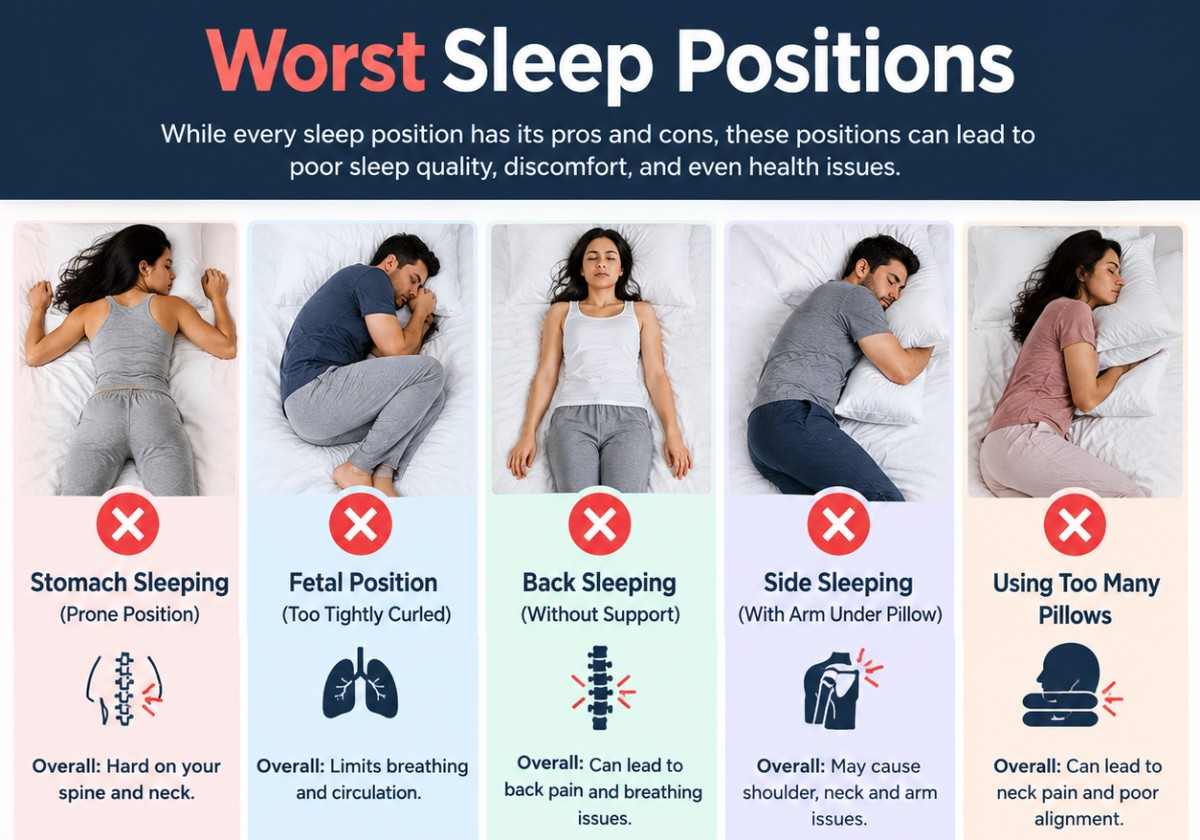
Sleep is essential for your body to recover, repair tissues, and prepare for the next day. However, the way you sleep can sometimes affect how you feel when you wake up. If you regularly experience neck stiffness, back pain, shoulder discomfort, or heartburn in the morning, your sleeping position may be contributing to the problem.
Some sleep positions can place unnecessary pressure on your spine, twist your neck, or worsen existing health conditions. For example, sleeping on your stomach may strain your neck and lower back, while sleeping flat on your back can worsen snoring and obstructive sleep apnea in some people.
In this article, we explore seven sleeping positions that may cause discomfort, explain why they can be problematic, and share practical tips to improve your sleep posture.
7 Worst Sleeping Positions That May Affect Your Health
1. Sleeping on Your Stomach
Sleeping on your stomach is often considered one of the least supportive positions for your spine. Although some people find it comfortable, it can place extra pressure on the neck, shoulders, and lower back.
When you lie face down, you generally need to turn your head to one side to breathe. Keeping your neck rotated for several hours may cause stiffness and discomfort. Meanwhile, your abdomen and hips may sink into the mattress, increasing the arch in your lower back.
Possible problems include:
- Neck stiffness and pain.
- Lower back discomfort.
- Shoulder tension.
- Increased pressure on the spine.
How to improve it: Try gradually transitioning to side sleeping. If you cannot sleep comfortably in another position, use a thin pillow under your head and consider placing a small pillow beneath your pelvis to reduce lower-back arching.
2. Sleeping Flat on Your Back When You Have Sleep Apnea
Sleeping on your back is not necessarily unhealthy. In fact, it can help some people maintain a comfortable spinal position. However, it may be a poor choice for people who snore heavily or have obstructive sleep apnea.
When you lie flat on your back, gravity can cause the tongue and soft tissues in your throat to move backward, narrowing the airway. This may increase snoring and breathing interruptions during sleep.
Possible problems include:
- Louder or more frequent snoring.
- Worsening symptoms of positional sleep apnea.
- Repeated interruptions to restful sleep.
- Daytime tiredness when sleep quality is affected.
How to improve it: If you have position-dependent snoring or sleep apnea, side sleeping may help keep your airway more open. However, it is not a replacement for prescribed sleep apnea treatment. Speak with a healthcare professional if you experience repeated breathing pauses, choking during sleep, or excessive daytime sleepiness.
3. Sleeping on Your Stomach With Your Head Turned to One Side
This is a variation of stomach sleeping that deserves special attention. Your body faces the mattress while your head remains turned left or right for an extended period.
Although this position may feel natural when falling asleep, maintaining the same neck rotation for hours can strain the muscles and joints around your cervical spine.
The problem may become more noticeable if you already have neck pain, spend long hours working at a computer, or use a pillow that pushes your head into an awkward angle.
Possible problems include:
- Morning neck stiffness.
- Pain around the shoulders.
- Headaches associated with muscle tension.
- Discomfort when turning your head.
How to improve it: Consider sleeping on your side with your head supported by a pillow that keeps your neck aligned with your spine. Avoid using a pillow that is so high or low that your head tilts sharply.
4. Sleeping in a Tightly Curled Fetal Position
The fetal position involves sleeping on your side with your knees drawn toward your chest. A gently curled position can be comfortable and may help some people with back discomfort.
The problem arises when you curl up too tightly, bringing your knees close to your chest and rounding your back for long periods. This may increase stiffness in the hips and back and make it harder to maintain a relaxed posture.
Possible problems include:
- Hip or back stiffness.
- Restricted movement after waking.
- Discomfort from prolonged bending.
- Shoulder pressure if your upper body is tightly curled.
How to improve it: Keep your knees slightly bent rather than pulling them tightly toward your chest. Place a pillow between your knees to support your hips and help keep your spine in a more neutral position.
5. Sleeping on Your Side With Your Spine Twisted
Side sleeping is often a comfortable choice, but poor alignment can make it less supportive. This may happen when your upper leg crosses far over your body, your hips rotate, or your shoulders and pelvis face different directions.
When your spine remains twisted for long periods, you may experience muscle tension or wake up feeling stiff.
Possible problems include:
- Lower back discomfort.
- Hip tension.
- Shoulder or neck pain.
- Morning stiffness.
How to improve it: Keep your shoulders, hips, and knees reasonably aligned. A pillow between your knees can help prevent your upper leg from pulling your pelvis into a twisted position. Choose a head pillow that fills the space between your shoulder and head without pushing your neck upward.
6. Sleeping on Your Right Side When You Have Acid Reflux
Side sleeping is not generally a bad habit, but the side you choose may matter if you experience frequent heartburn or acid reflux.
For many people with gastroesophageal reflux disease (GERD), sleeping on the right side can make reflux symptoms worse. The position of the stomach and the connection between the stomach and esophagus may make it easier for stomach contents to flow upward.
This does not mean that right-side sleeping is harmful to everyone. Its effects depend on your individual health and symptoms.
Possible problems include:
- Heartburn during the night.
- An acidic taste in the mouth.
- Regurgitation after lying down.
- Sleep interruptions caused by reflux discomfort.
How to improve it: If nighttime reflux is a problem, try sleeping on your left side. Raising the head of your bed with a suitable wedge or bed elevation may also help. Avoid lying down immediately after eating, and seek medical advice if symptoms are frequent or persistent.
7. Sleeping Flat on Your Back During Late Pregnancy
Sleeping positions require extra attention during pregnancy, particularly in the later months. As pregnancy progresses, lying flat on the back for extended periods may allow the weight of the uterus to compress major blood vessels, potentially reducing blood flow.
For this reason, pregnant people are generally advised to settle to sleep on their side during later pregnancy.
Possible problems include:
- Dizziness or lightheadedness in some people.
- Discomfort or breathlessness.
- Potential reduction in blood flow when major blood vessels are compressed.
How to improve it: From 28 weeks of pregnancy, guidance recommends going to sleep on your side, whether the left or right side. Use pillows between your knees or beneath your abdomen for support. If you wake up on your back, do not panic; simply turn onto your side and return to sleep.
Follow your maternity care professional’s advice for your individual circumstances.
Which Sleeping Position Is the Worst?
Sleeping on your stomach is often considered one of the least supportive positions for people with neck or lower-back pain because it can strain the spine and requires the neck to remain turned.
However, the worst position depends on the person and the health condition involved.
| Sleeping position | Main concern | Who may need to reconsider it? |
|---|---|---|
| On the stomach | Neck and lower-back strain | People with neck or back pain |
| Flat on the back | Snoring or airway obstruction | People with positional sleep apnea |
| Tightly curled fetal position | Prolonged hip and back flexion | People who wake up stiff or uncomfortable |
| Twisted side position | Spinal and pelvic rotation | People with back or hip discomfort |
| Right-side sleeping | May worsen acid reflux | People with frequent nighttime heartburn |
| Flat on the back in late pregnancy | Possible blood vessel compression | Pregnant people from 28 weeks onward |
Remember that these are potential concerns, not guaranteed outcomes. A position that causes discomfort for one person may be perfectly comfortable for another.
How to Choose a Healthier Sleeping Position
A comfortable sleeping position should support your natural spinal alignment, minimize pressure on sensitive areas, and allow you to breathe comfortably.
Here are some practical ways to improve your sleep posture:
- Try side sleeping: This may help people who snore or have positional sleep apnea, and it can be comfortable for many people with back pain.
- Choose the right pillow: Your pillow should support your head and neck without forcing them into an awkward angle.
- Use a pillow between your knees: This can help keep your hips aligned when sleeping on your side.
- Support your knees when back sleeping: A pillow under your knees may reduce tension in your lower back.
- Avoid forcing a new position: Make gradual changes and prioritize comfort rather than trying to maintain a rigid posture all night.
- Choose a supportive mattress: A mattress that keeps your body comfortably supported can help reduce pressure points.
- Pay attention to morning symptoms: Repeated neck stiffness, back pain, numbness, or poor sleep may indicate that your position or bedding needs adjustment.
When Should You See a Doctor?
Occasional morning stiffness is common and may improve with simple changes to your sleeping position. However, persistent symptoms should not automatically be blamed on your posture.
Consider speaking with a healthcare professional if you experience ongoing neck or back pain, repeated nighttime heartburn, loud snoring with breathing pauses, or excessive daytime sleepiness.
Seek urgent medical care if back pain is accompanied by new loss of bladder or bowel control, numbness around the groin, or significant new leg weakness.
A healthcare professional can help determine whether your symptoms are related to sleep posture or another condition that requires treatment.
Conclusion
The worst sleep positions are those that repeatedly worsen your pain, interfere with breathing, aggravate acid reflux, or create problems related to a medical condition. Stomach sleeping can strain the neck and lower back, back sleeping may worsen sleep apnea in some people, and a twisted side position can contribute to discomfort.
The goal is not to find one perfect position that works for everyone. Instead, choose a position that supports your spine, allows comfortable breathing, and helps you wake up feeling rested. Small changes to your pillow, mattress, and body alignment may make a meaningful difference in your sleep quality.
FAQ’s
Is sleeping on your stomach bad for your back?
Yes, stomach sleeping may increase the arch in your lower back and force your neck to remain turned to one side. This can contribute to back discomfort and morning neck stiffness.
Can bad sleeping positions cause neck pain?
Yes, sleeping with your neck twisted, bent, or poorly supported may contribute to muscle tension and stiffness. Choosing a suitable pillow that keeps your neck aligned with your spine can help.
Is sleeping on your right side bad for acid reflux?
Sleeping on your right side may worsen acid reflux in some people. Sleeping on your left side may help reduce nighttime heartburn, particularly for people with gastroesophageal reflux disease (GERD).
Is sleeping on your back bad for sleep apnea?
Sleeping on your back can worsen obstructive sleep apnea in some people because gravity may allow the tongue and soft tissues to narrow the airway. Side sleeping may help, but it does not replace prescribed treatment.
Can sleeping in the wrong position cause shoulder pain?
Yes, sleeping directly on a painful shoulder or keeping your arm in an awkward position may increase discomfort. Try changing sides and supporting your arm with a pillow if needed.
Is sleeping in a fetal position bad for your health?
Not necessarily. A gently curled fetal position can be comfortable, but curling too tightly may contribute to hip or back stiffness. Keeping your knees slightly bent can help you maintain a more relaxed posture.
Can sleeping positions affect breathing?
Yes, sleeping flat on your back may worsen snoring or obstructive sleep apnea in some people. Side sleeping may help keep the airway more open, but persistent breathing problems during sleep require medical evaluation.
Should you change your sleeping position if you wake up with back pain?
If you regularly wake up with back pain, try adjusting your sleeping position, pillow, or mattress. If the pain persists, worsens, or occurs with numbness or weakness, consult a healthcare professional.
Is it bad to change sleeping positions during the night?
No. Changing positions during sleep is normal and helps relieve pressure on different parts of your body. You do not need to remain in one position all night to sleep well.
Is sleeping on your back better than sleeping on your side?
Neither position is best for everyone. Back sleeping may support the spine for some people, while side sleeping may be more suitable for people with snoring, positional sleep apnea, or acid reflux. Your symptoms and medical needs should guide your choice.
Is it dangerous to wake up sleeping on your back during pregnancy?
If you wake up on your back, do not panic. From 28 weeks onward, the recommendation is to go to sleep on your side. If you wake up on your back, simply turn onto your side again.
Sources and References:
Disclaimer:
This guide is for educational purposes only and is not a substitute for professional medical advice, diagnosis, or treatment. Consult a qualified healthcare professional about persistent symptoms or concerns related to your sleeping position.
Also Read: