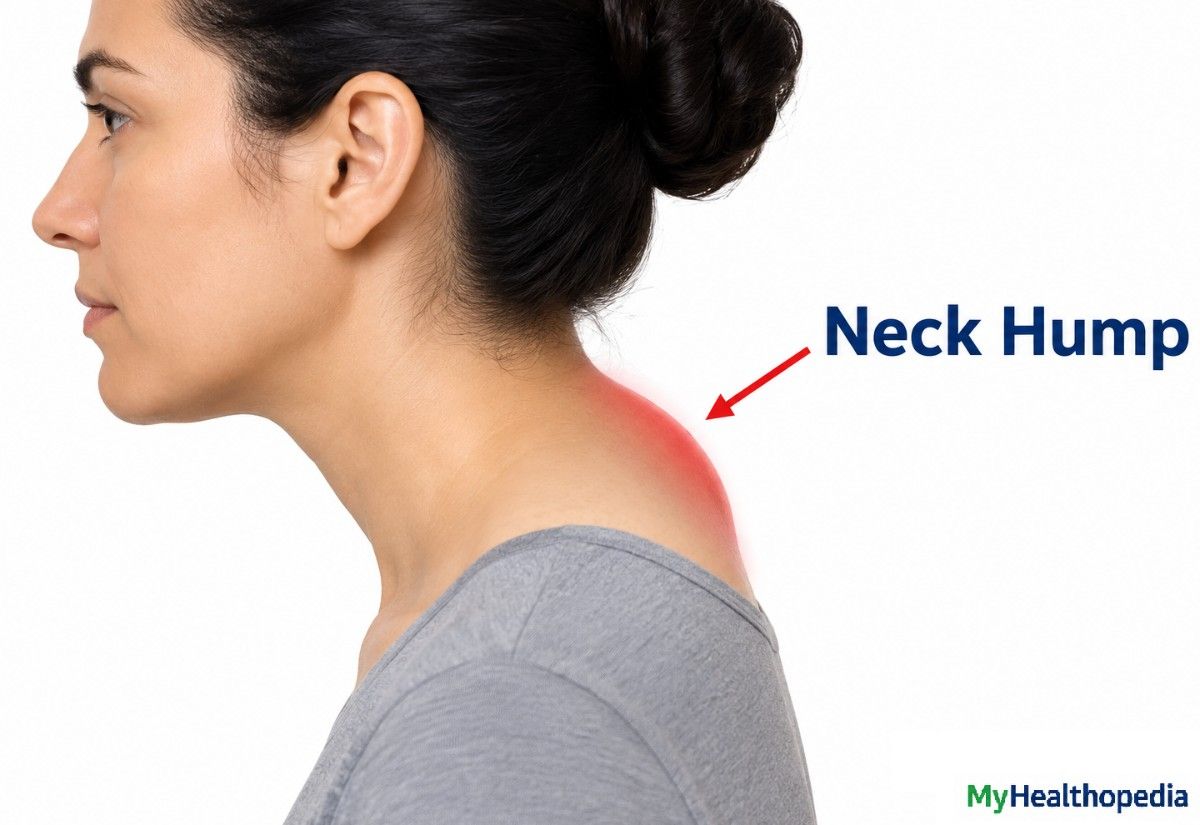
A noticeable bump at the base of your neck can be concerning, especially when it becomes more visible over time. Commonly called a neck hump, this rounded area may develop because of changes in posture, the spine, or the way fat is distributed around the upper back and neck.
Some people notice a neck hump after spending long hours working at a computer or looking down at a phone. Others develop it because of age-related spinal changes, osteoporosis, certain medications, or medical conditions that affect body fat distribution.
In this guide, you will learn what a neck hump is, what causes it, which symptoms to watch for, whether exercises can help, and when to seek medical advice.
What Is a Neck Hump?
A neck hump is a visible bump or rounded area where the neck meets the upper back. It may appear directly over the upper spine or spread across the surrounding soft tissue.
The term is often used to describe two different issues:
- Postural hump: A rounded upper back associated with forward-head posture and increased curvature of the upper spine.
- Fat pad hump: A buildup of fatty tissue at the base of the neck, sometimes called a dorsocervical fat pad.
A neck hump may also be related to kyphosis, which is an excessive forward curvature of the upper back. In some cases, vertebral compression fractures or other spinal conditions contribute to the change in shape.
Although these conditions can look similar, they do not have the same causes or treatments. Identifying the underlying reason is the first step toward managing the problem effectively.
What Does a Neck Hump Look Like?
A neck hump may appear as a small raised area, a soft pad of tissue, or a more pronounced curve at the junction between the neck and upper back.
Its appearance can vary depending on the cause:
- A postural change may become more noticeable when the head moves forward and the shoulders round.
- A fat pad may feel soft and remain visible even when you straighten your posture.
- A spinal curvature may create a firm, rounded contour that does not disappear when you stand upright.
These observations can provide clues, but appearance alone cannot confirm the diagnosis.
What Causes a Neck Hump?
Several factors can contribute to a neck hump. Understanding the possible causes can help you choose the right next step.
- Poor Posture: Looking down at phones or computers may contribute to a rounded upper back.
- Fat Accumulation: Fat buildup at the back of the neck can create a visible hump.
- Osteoporosis: Weakened bones may cause spinal fractures and a rounded back.
- Age-Related Changes: Aging can affect spinal alignment and increase upper-back curvature.
- Thoracic Kyphosis: Excessive curvature of the upper spine can cause a noticeable hump.
- Long-Term Corticosteroid Use: Certain medications may affect fat distribution and weaken bones.
- Hormonal Disorders: Conditions such as Cushing syndrome can cause fat accumulation around the neck.
- Muscle Weakness: Weak upper-back muscles may contribute to rounded shoulders and poor posture.
- Genetic or Structural Factors: Inherited traits or spinal conditions may affect the shape of the upper back.
- Vertebral Compression Fractures: Spinal fractures can change alignment and create a prominent hump.
Symptoms That May Occur With a Neck Hump
A neck hump does not always cause symptoms. Some people notice only a change in appearance, while others experience discomfort related to the underlying condition.
Possible symptoms include:
- A visible bump at the base of the neck.
- Rounded shoulders or a forward-head position.
- Neck stiffness or reduced mobility.
- Upper-back discomfort or muscle fatigue.
- Difficulty maintaining an upright posture.
- Tenderness if the surrounding muscles or tissues are irritated.
Symptoms such as numbness, tingling, weakness in the arms or legs, difficulty walking, or problems with bladder or bowel control require prompt medical assessment. Sudden or severe neurological symptoms warrant emergency care.
How to Get Rid of a Neck Hump?
Whether a neck hump can be reduced depends on its cause. A postural component may improve with targeted exercises and ergonomic changes, while a fat pad or structural spinal deformity may need a different approach.
Here are practical steps that may help.
1. Improve Your Posture
Try to keep your head aligned comfortably over your shoulders rather than projecting forward. Relax your shoulders and avoid forcing your neck into an exaggerated upright position.
Make small adjustments throughout the day instead of trying to maintain one rigid posture for hours.
2. Adjust Your Workstation
Position your monitor near eye level, keep your keyboard and mouse within easy reach, and use a chair that supports a comfortable upright position.
If you frequently look down at your phone, bring it closer to eye level when practical. These changes can reduce sustained neck strain.
3. Take Regular Movement Breaks
Sitting in one position for extended periods can increase muscle fatigue and discomfort. Stand up, walk briefly, or change positions regularly.
Short, frequent movement breaks are often easier to maintain than relying on one long exercise session.
4. Strengthen the Upper Back
Exercises that strengthen the muscles around the shoulder blades may help improve upper-back endurance and posture.
Examples include gentle resistance-band rows and shoulder-blade squeezes. Begin with comfortable resistance and avoid movements that cause pain.
5. Stretch Tight Muscles Gently
Gentle chest stretches may help if tight chest muscles contribute to rounded shoulders. Move slowly and avoid forcing your neck or upper back into painful positions.
Stretching may improve flexibility, but it will not remove a fatty deposit or reverse a vertebral compression fracture.
6. Maintain a Healthy Weight When Appropriate
If excess body fat contributes to the appearance of the neck hump, gradual weight management may help reduce overall fat. However, fat distribution differs between individuals, and weight loss cannot guarantee that a dorsocervical fat pad will disappear.
A neck hump can occur in people of different body sizes, so weight should not be assumed to be the cause.
7. Address Underlying Medical Conditions
If a medication, hormonal condition, osteoporosis, or spinal disorder is contributing to the hump, treating that issue may be more important than focusing on posture alone.
A healthcare professional can assess whether further testing, medication adjustments, physical therapy, or other treatments are appropriate.
Treatments for Neck Hump
Medical treatment depends on the diagnosis rather than the appearance of the bump alone.
1. Physical Therapy
A physical therapist may recommend posture training, strengthening exercises, mobility work, and strategies to reduce discomfort. Treatment is tailored to the person’s mobility, strength, symptoms, and spinal health.
2. Treatment for Osteoporosis
If osteoporosis or vertebral fractures contribute to a rounded upper back, treatment may include bone-health assessment, appropriate medication, nutrition support, and fall-prevention measures.
3. Medication Review
When a fat pad or other changes are associated with medication use, a clinician may review the treatment plan and consider alternatives when medically appropriate. Never discontinue a prescribed medication on your own.
4. Treatment of Hormonal Conditions
If a hormonal disorder is responsible for abnormal fat distribution, treatment focuses on the underlying condition. Testing and management should be supervised by an appropriately qualified healthcare professional.
5. Surgery
Surgery is not a routine treatment for a simple postural hump. In selected cases of severe spinal deformity, certain masses, or other specific conditions, a specialist may discuss surgical options. The potential benefits and risks depend on the diagnosis.
Can a Neck Hump Go Away Naturally?
A neck hump caused partly by flexible posture may become less noticeable when posture, mobility, and muscle strength improve. However, improvement varies, and exercises cannot guarantee that the hump will disappear.
A fatty deposit may persist despite posture correction. A hump related to vertebral compression fractures or established spinal deformity may also remain even after appropriate treatment.
If the bump is new, growing, painful, unusually firm, or unexplained, arrange a medical evaluation rather than relying solely on home exercises.
How Long Does It Take to Reduce a Neck Hump?
There is no fixed timeline because the cause and severity vary.
Posture-related discomfort and movement patterns may improve over several weeks with consistent, appropriate exercises and ergonomic changes. More pronounced structural changes may require longer-term management and may not fully reverse.
Avoid programs that promise to remove a neck hump in a few days. Progress is better judged by comfort, mobility, posture, and the medical cause than by a guaranteed deadline.
When Should You See a Doctor?
Make an appointment with a healthcare professional if your neck hump is new, increasing in size, painful, or not explained by an obvious change in posture.
Seek prompt medical assessment if it occurs with unexplained weight changes, easy bruising, muscle weakness, long-term corticosteroid use, or symptoms that may suggest osteoporosis or a hormonal condition.
Seek emergency care for sudden severe pain after an injury, new or rapidly worsening limb weakness, difficulty walking, or new loss of bladder or bowel control.
A clinician may examine your posture, spine, and surrounding tissues, review medications and medical history, and order imaging or laboratory tests if indicated.
How to Prevent a Neck Hump?
Not every neck hump is preventable, but some habits may help support neck and spinal health.
- Maintain Good Posture: Keep your head aligned with your shoulders while sitting and standing.
- Adjust Your Workstation: Position your computer screen at eye level to reduce neck strain.
- Take Regular Breaks: Stand, stretch, and move around after long periods of sitting.
- Strengthen Upper-Back Muscles: Practice appropriate exercises to support your shoulders and posture.
- Stretch Regularly: Perform gentle chest and shoulder stretches to improve flexibility.
- Use Your Phone Properly: Hold your phone closer to eye level instead of constantly looking down.
- Maintain Bone Health: Get adequate calcium and vitamin D to support strong bones.
- Stay Physically Active: Regular physical activity helps maintain muscle strength and mobility.
- Review Medications: Discuss the long-term use of corticosteroids with your doctor if you have concerns.
- Seek Early Medical Advice: Get a new or growing neck hump checked to identify and address its underlying cause.
Neck Hump vs. Dowager’s Hump: What Is the Difference?
The terms are sometimes used interchangeably, but they do not always describe the same condition.
A neck hump is a general term for a visible bump at the base of the neck. A dowager’s hump commonly refers to pronounced rounding of the upper back, often associated with increased thoracic kyphosis and, in some people, osteoporosis-related vertebral fractures.
A dorsocervical fat pad is different because it involves fat accumulation rather than spinal curvature alone. A person can also have more than one contributing factor.
A proper assessment helps distinguish between these possibilities and prevents the wrong treatment from being used.
FAQ’s
Can poor posture cause a neck hump?
Poor posture can contribute to a rounded upper back and make the base of the neck appear more prominent.
Do neck exercises prevent a neck hump?
Appropriate neck and upper-back exercises may improve posture and muscle strength, but they cannot prevent every cause of a neck hump.
Can using a mobile phone cause a neck hump?
Frequently looking down at a phone may contribute to neck strain and postural changes over time.
Does sleeping position affect a neck hump?
An uncomfortable sleeping position may cause neck stiffness, but it is not generally the sole cause of a persistent neck hump.
Can weight management help prevent a neck hump?
Maintaining a healthy weight may help when excess body fat contributes to fat accumulation around the neck.
Can a neck hump develop with age?
Yes. Age-related spinal changes and osteoporosis can contribute to increased upper-back curvature.
Can a neck hump be prevented completely?
Not always, because some causes involve genetics, hormonal conditions, medication effects, or spinal changes.
Can exercises fix a neck hump?
Exercises may improve posture, muscle strength, and mobility when a postural component is present. They generally cannot remove a fat pad or reverse a structural spinal deformity on their own.
Is a neck hump a sign of osteoporosis?
It can be associated with osteoporosis when weakened vertebrae develop compression fractures and increase upper-back curvature. However, many neck humps have other causes, and a medical assessment is needed to determine whether osteoporosis is involved.
Can weight loss remove a neck hump?
Weight loss may reduce the appearance of a hump when excess body fat is a contributing factor. It may not remove a localized fat pad, and it will not correct a structural spinal deformity.
Is a neck hump dangerous?
A neck hump is not always dangerous, but its cause matters. A rapidly growing lump, significant pain, neurological symptoms, or a hump associated with unexplained physical changes should be medically assessed.
Does a neck hump mean I have high cortisol?
No. A dorsocervical fat pad can occur for several reasons. Cushing syndrome is one possible cause, particularly when other characteristic symptoms are present, but a neck hump alone cannot establish a cortisol disorder.
Which doctor should I see for a neck hump?
You can start with a primary care clinician, who can assess the bump and arrange further testing or referrals if needed. Depending on the findings, care may involve a physical therapist, endocrinologist, orthopedist, or spine specialist.
What Does a Neck Hump Indicate?
A neck hump may indicate poor posture, fat accumulation at the base of the neck, increased spinal curvature, osteoporosis, or an underlying medical condition.
Is a Neck Hump Fat or Bone?
A neck hump may be caused by fatty tissue, spinal curvature, or changes in the vertebrae. A medical examination can help identify the cause.
Can Sleeping Without a Pillow Reduce a Neck Hump?
No, sleeping without a pillow has not been proven to reduce a neck hump. A pillow that supports your neck comfortably is generally a better choice.
What Is the Best Sleep Position for a Neck Hump?
Sleeping on your back or side with a supportive pillow that keeps your neck aligned with your spine may help improve comfort and reduce strain.
Are Neck Humps Genetic?
Some spinal conditions and body-fat distribution patterns may have genetic influences. However, many neck humps develop because of other factors, including posture and age-related changes.
Can I Massage Out My Neck Hump?
Massage may temporarily relieve muscle tension, but it cannot remove a fat pad or correct a structural spinal deformity.
Is It Too Late to Fix a Neck Hump?
It is not necessarily too late to improve posture, mobility, and discomfort. However, results depend on the cause, and established spinal changes may not be fully reversible.
Final Thoughts
A neck hump can develop for several reasons, including posture-related changes, fatty tissue accumulation, spinal curvature, osteoporosis, and certain medical conditions. Although posture exercises and ergonomic adjustments may help some people, they are not a universal solution.
The most effective approach is to identify the cause first and choose treatment accordingly. If your neck hump is new, growing, painful, or accompanied by other symptoms, seek medical advice rather than relying on exercises alone.
Disclaimer:
This guide is for educational purposes only and does not replace professional medical advice, diagnosis, or treatment. Consult a qualified healthcare professional about a new or persistent neck hump or before starting exercises if you have a spinal condition.
Sources / References:
- Cleveland Clinic – Kyphosis
- Mayo Clinic
- MedlinePlus – Osteoporosis
- National Institute of Arthritis and Musculoskeletal and Skin Diseases
- NHS – Kyphosis
Also Read: