Getting a good night’s sleep is about more than the number of hours you spend in bed. The way you sleep can also affect your neck, back, shoulders, breathing, and overall comfort. If you often wake up with back pain, a stiff neck, or a feeling of tiredness despite sleeping for several hours, your sleeping position may be worth considering.
The good news is that there is no single sleeping position that works best for everyone. Side sleeping, back sleeping, and even stomach sleeping have different advantages and disadvantages. Your age, health conditions, pregnancy status, and personal comfort can all influence which position is most suitable for you.
In this guide, we will explore the best sleeping positions, their potential benefits, positions you may want to avoid, and simple ways to make your sleep more comfortable.
What Is the Best Sleeping Position?
For most adults, side sleeping is a good all-around choice, particularly for people who snore or experience acid reflux. Back sleeping may help maintain a neutral spinal position when supported by a suitable pillow and mattress. However, it can worsen snoring and obstructive sleep apnea in some people.
The healthiest sleeping position depends on your individual needs.
- Best for general comfort: Side sleeping with proper pillow support.
- Best for some types of back pain: Back sleeping with a pillow under the knees, or side sleeping with a pillow between the knees.
- Best for snoring: Side sleeping rather than sleeping flat on your back.
- Best for acid reflux: Sleeping on your left side with the upper body elevated.
- Best during pregnancy: Side sleeping, particularly as pregnancy progresses.
- Best for babies: Sleeping on the back for every sleep.
These recommendations are starting points, not guarantees. If a particular position causes pain, numbness, breathing difficulties, or frequent awakenings, it may need to be adjusted.
7 Best Sleeping Positions and Their Benefits
1. Side Sleeping
Best for many adults, snoring, and certain reflux symptoms
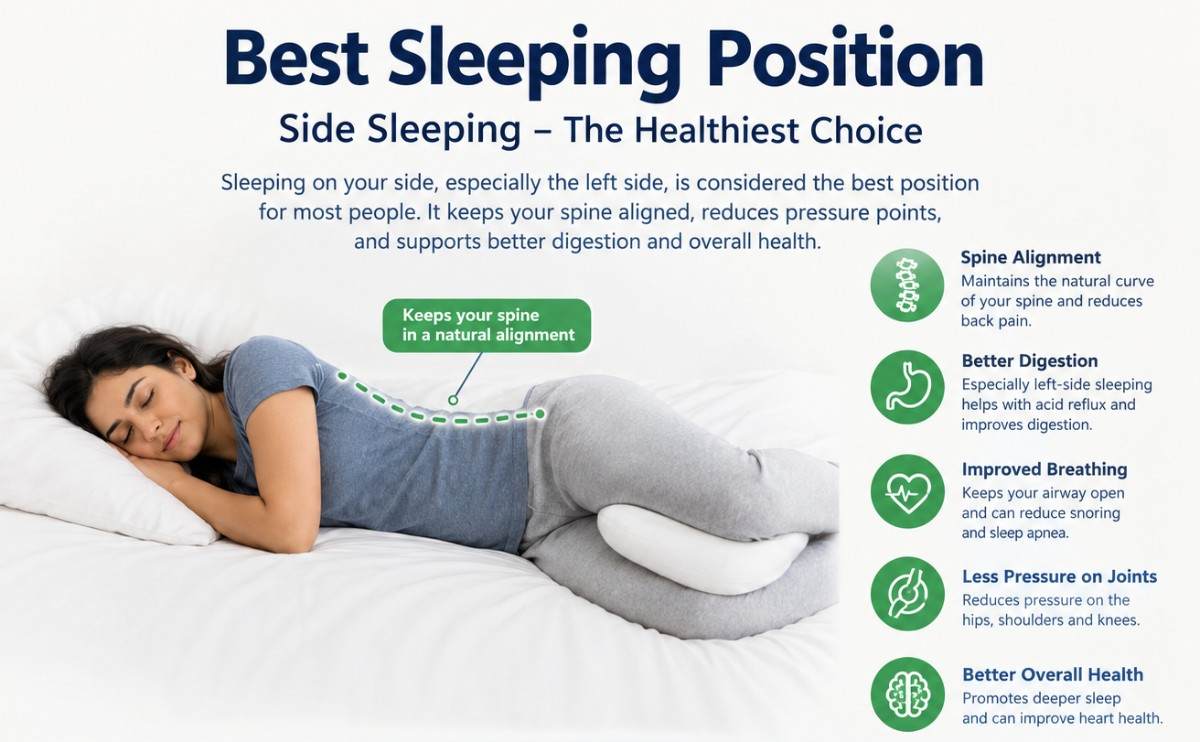
Side sleeping is one of the most common sleeping positions and can be a comfortable option for many people. It allows the spine to remain relatively neutral when the head, neck, hips, and knees are properly supported.
Benefits of Side Sleeping
- May reduce snoring: Sleeping on your side can help prevent the tongue and surrounding soft tissues from narrowing the airway as much as they may when you sleep on your back.
- May help with acid reflux: Left-side sleeping can reduce nighttime reflux symptoms for some people.
- Can support spinal alignment: A suitable pillow and mattress can help keep the neck and back in a comfortable position.
- May be comfortable during pregnancy: Side sleeping is generally recommended as pregnancy advances.
- Can reduce pressure on the lower back: Keeping the knees slightly bent and placing a pillow between them may improve comfort for some people.
Possible Disadvantages
Side sleeping can place pressure on the shoulders, hips, and arms, especially on a firm mattress. Some people may also experience neck discomfort if their pillow is too high or too low.
How to Sleep on Your Side Correctly
Choose a pillow that fills the space between your head and the mattress without tilting your neck. Keep your knees slightly bent and place a pillow between them if it helps your hips and lower back feel more comfortable. Avoid curling into an excessively tight fetal position if it makes breathing or movement uncomfortable.
2. Back Sleeping
Best for people who find neutral spinal support comfortable
Back sleeping means lying flat on your back with your face pointing toward the ceiling. When properly supported, this position can distribute body weight relatively evenly and reduce pressure on certain joints.
Benefits of Back Sleeping
- Supports a neutral spine: A suitable pillow can help keep the neck aligned with the rest of the spine.
- Distributes body weight: Pressure is spread across a larger area rather than concentrated on one shoulder or hip.
- May ease some back discomfort: Placing a pillow beneath the knees can reduce strain on the lower back for certain people.
- Avoids direct pressure on the shoulders: This can be useful for people who find side sleeping uncomfortable.
Possible Disadvantages
Back sleeping can worsen snoring and obstructive sleep apnea because gravity may allow the tongue and other soft tissues to narrow the airway. It may also aggravate acid reflux in some people, particularly when lying completely flat.
How to Sleep on Your Back Correctly
Use a pillow that supports the natural curve of your neck without pushing your head too far forward. If your lower back feels uncomfortable, try placing a pillow under your knees. If you experience reflux, raising the upper body with a suitable wedge may be more helpful than adding several ordinary pillows.
Important: Back sleeping is not recommended for adults who experience position-related breathing problems unless a healthcare professional advises otherwise.
3. Left-Side Sleeping
Best for people experiencing nighttime acid reflux
Left-side sleeping is a variation of side sleeping that may be particularly helpful for people who experience heartburn or acid reflux at night.
Benefits of Sleeping on the Left Side
- May reduce acid reflux: This position can make it harder for stomach contents to flow back into the esophagus.
- May improve nighttime comfort: People who experience heartburn after lying down may find this position more comfortable.
- Can support comfortable spinal alignment: A pillow between the knees can help keep the hips and spine aligned.
- Suitable during pregnancy: Side sleeping is generally recommended as pregnancy advances, and either side is usually acceptable.
Who Should Consider It?
People with frequent nighttime heartburn may benefit from trying their left side. However, sleeping position alone may not control persistent reflux. Avoid lying down for at least three hours after eating if you experience nighttime symptoms.
4. Right-Side Sleeping
Right-side sleeping can be just as comfortable as left-side sleeping for many healthy adults. If you naturally sleep on your right side and wake up feeling rested, there may be no reason to change.
Benefits of Sleeping on the Right Side
- Comfortable for many people: It allows side sleepers to rest without putting direct pressure on their backs.
- May help reduce snoring: Side sleeping can help keep the airway more open than lying flat on the back.
- Can reduce pressure on certain joints: With the right mattress and pillow, this position may feel comfortable for people who dislike back sleeping.
Possible Disadvantages
Right-side sleeping may worsen acid reflux in some people. If you experience frequent nighttime heartburn, try left-side sleeping instead. People with particular medical conditions may also receive specific advice about which side to sleep on.
5. Stomach Sleeping
Usually less suitable for people with neck or back pain
Stomach sleeping involves lying face down, with your head turned to one side so you can breathe. Although some people find this position comfortable, it can make it harder to maintain a neutral spinal position.
Benefits of Stomach Sleeping
- May reduce snoring for some people: Sleeping on the stomach can help keep the airway open in certain circumstances.
- May feel familiar and comfortable: People who have slept this way for years may find it difficult to change positions.
Possible Disadvantages
- Neck strain: Your head usually remains turned to one side for an extended period.
- Lower-back discomfort: The position may increase the arch in your lower back.
- Shoulder pressure: Depending on your arm position and mattress, your shoulders may feel uncomfortable.
How to Make Stomach Sleeping More Comfortable
If you cannot comfortably sleep in another position, try using a thin pillow or no head pillow if comfortable, and place a thin pillow beneath your pelvis or lower abdomen to reduce the arch in your lower back. These adjustments may help, although changing to side sleeping is often worth trying if you regularly wake up with pain.
6. Fetal Position
The fetal position is a type of side sleeping in which you curl your knees toward your chest. It is a popular position because it can feel cozy and secure.
Benefits of the Fetal Position
- Provides a sense of comfort: Many people naturally curl up when they want to relax.
- May ease certain types of discomfort: A gently bent position may feel comfortable for some people with lower-back discomfort.
- Works well with supportive pillows: A pillow between the knees can help keep the hips aligned.
Possible Disadvantages
Curling too tightly can make breathing feel restricted or cause stiffness in the hips and knees. Try keeping your back relatively straight and bending your knees only as much as feels comfortable.
7. Elevated Sleeping Position
An elevated sleeping position means raising your upper body slightly rather than lying completely flat. This can be achieved with a properly designed wedge pillow or an adjustable bed.
Benefits of Elevated Sleeping
- May ease acid reflux: Raising the upper body can help reduce nighttime reflux symptoms.
- May improve comfort during nasal congestion: Some people find it easier to breathe when their upper body is slightly elevated.
- May help with certain breathing-related symptoms: The benefit depends on the underlying condition and should not replace medical treatment.
How to Sleep in an Elevated Position
Use a wedge pillow or an adjustable bed that supports your upper body at a gentle incline. Stacking several pillows under only your head may bend your neck and provide less effective support.
If you regularly wake up gasping for air, have significant breathing difficulties when lying flat, or need to sleep upright to breathe, consult a healthcare professional rather than relying on pillows alone.
Best Sleeping Positions for Different Health Conditions
Your ideal position may change depending on what you are experiencing. The following table provides a practical starting point.
| Health concern | Position to consider | Helpful tip |
|---|---|---|
| Lower-back pain | Side or back | Put a pillow between your knees or beneath them. |
| Neck pain | Side or back | Choose a pillow that keeps your neck aligned. |
| Acid reflux | Left side or elevated upper body | Avoid lying down soon after meals. |
| Snoring | Side sleeping | Seek evaluation if snoring is loud or accompanied by gasping. |
| Obstructive sleep apnea | Side sleeping may help | Follow your clinician’s treatment plan. |
| Pregnancy | Side sleeping as pregnancy advances | Use pillows between the knees and beneath the abdomen for support. |
| Shoulder discomfort | Back sleeping or the unaffected side | Avoid putting prolonged pressure on the painful shoulder. |
| Hip discomfort | Back or the more comfortable side | Use pillows to reduce pressure and maintain alignment. |
These suggestions are not universal treatments. Persistent pain, sleep apnea, reflux, and other health conditions may require individual assessment.
How to Choose the Right Sleeping Position for You
Finding a comfortable sleeping position does not need to be complicated. Start with the position that allows you to breathe comfortably and wake up without significant pain or stiffness.
1. Pay Attention to Morning Symptoms
Notice whether you wake up with neck stiffness, shoulder pain, lower-back discomfort, heartburn, or headaches. These symptoms may help you identify whether your sleeping position or pillow needs adjustment.
2. Choose the Right Pillow
Your pillow should support your head and neck without pushing your chin toward your chest or allowing your head to drop toward the mattress. Side sleepers generally need a higher pillow than back sleepers, depending on shoulder width and mattress firmness.
3. Check Your Mattress
A mattress should support your body without causing uncomfortable pressure or allowing your hips to sink excessively. There is no single mattress firmness that works for everyone, so comfort and support matter more than simply choosing the hardest mattress.
4. Use Pillows for Extra Support
A small pillow between your knees while side sleeping or beneath your knees while back sleeping may improve comfort. Make small adjustments rather than adding multiple pillows at once.
5. Give Your Body Time to Adjust
If you want to change your usual sleeping position, try it gradually. You may need several nights to become comfortable with a new pillow arrangement or posture.
6. Focus on Sleep Quality, Too
A comfortable sleeping position cannot compensate for insufficient sleep, an irregular sleep schedule, or an untreated sleep disorder. Most adults generally need at least seven hours of sleep each night, although individual needs vary.
When Should You See a Doctor?
Occasional stiffness after sleeping in an awkward position is common. However, repeated symptoms may indicate a problem that needs medical attention.
Speak with a healthcare professional if you experience:
- Persistent neck, back, hip, or shoulder pain that interferes with daily activities.
- Loud, frequent snoring accompanied by choking, gasping, or pauses in breathing.
- Ongoing acid reflux that disrupts sleep or does not improve with simple measures.
- Frequent nighttime awakenings or excessive daytime sleepiness.
- Repeated numbness, tingling, or weakness that does not resolve after changing position.
Seek urgent medical attention for severe breathing difficulty, new or significant weakness, or back pain accompanied by loss of bladder or bowel control.
FAQ’s
What is the healthiest sleeping position?
Side sleeping is a healthy option for many adults, especially those who snore or experience acid reflux. However, the best position depends on your comfort and health needs.
Which side is best for sleeping?
The left side may be better for people with acid reflux, while either side can work well for most healthy adults. Choose the side that allows you to sleep comfortably.
Is sleeping on your left side better than your right?
Left-side sleeping may help reduce nighttime acid reflux. However, both sides are generally suitable for healthy adults, and personal comfort also matters.
Is sleeping on your back good for your spine?
Back sleeping can help maintain a neutral spinal position when your pillow and mattress provide proper support. Placing a pillow beneath your knees may also improve lower-back comfort.
Is sleeping on your stomach harmful?
Stomach sleeping is not harmful to everyone, but it may strain the neck and lower back because the head is usually turned to one side. People who wake up with pain may benefit from trying side sleeping.
What is the best sleeping position for back pain?
Side sleeping with a pillow between the knees or back sleeping with a pillow beneath the knees may help relieve certain types of back pain. The most suitable position depends on the cause of your discomfort.
Which sleeping position is best for neck pain?
Side or back sleeping with a supportive pillow may help keep the neck aligned with the spine. Avoid pillows that push your head too far forward or allow it to tilt excessively.
What is the best sleeping position for acid reflux?
Sleeping on your left side and elevating your upper body with a suitable wedge pillow may help reduce nighttime acid reflux. Avoid lying down for at least three hours after eating.
Which sleeping position helps reduce snoring?
Side sleeping may reduce snoring by helping keep the airway open. Frequent loud snoring, gasping, or pauses in breathing may indicate sleep apnea and should be evaluated by a healthcare professional.
What is the best sleeping position during pregnancy?
Side sleeping is generally recommended as pregnancy advances, particularly during the later stages. Both sides are usually acceptable, and pillows can help support the abdomen, hips, and knees.
Is side sleeping better than back sleeping?
Side sleeping may be better for people who snore or experience acid reflux. Back sleeping can be comfortable for people who need even pressure distribution, but it may worsen sleep apnea in some individuals.
Can sleeping position affect breathing?
Yes. Sleeping flat on your back can worsen snoring and obstructive sleep apnea in some people. Side sleeping may help, but it does not replace medical treatment for breathing-related sleep disorders.
Which sleeping position is best for digestion?
Left-side sleeping may help reduce acid reflux, a condition in which stomach contents flow back into the esophagus. However, sleeping position does not prevent all digestive problems.
What is the best sleeping position for shoulder pain?
Back sleeping or sleeping on the unaffected side may reduce direct pressure on a painful shoulder. A supportive pillow can help keep your arm in a comfortable position.
Can the wrong sleeping position cause body pain?
Yes. An awkward position, inadequate pillow support, or prolonged pressure on certain joints may contribute to morning stiffness, neck pain, or back discomfort. Persistent pain may have other underlying causes.
Should you use a pillow between your knees while sleeping?
A pillow between your knees may help keep your hips and spine aligned when sleeping on your side. It can improve comfort for some people with hip or lower-back discomfort.
Does sleeping position affect sleep quality?
Yes. An uncomfortable position may cause pain, pressure, or repeated awakenings. However, sleep quality also depends on sleep duration, stress, your environment, and underlying health conditions.
What is the best sleeping position for older adults?
The best position depends on an older adult’s mobility, joint health, breathing, and comfort. Side or back sleeping with suitable support may work well, but individual medical conditions should guide the choice.
Can changing your sleeping position improve back pain?
Changing your sleeping position may help if your usual posture places strain on your back. Try side sleeping with a pillow between your knees or back sleeping with a pillow beneath your knees. Seek medical advice if pain persists.
How can you train yourself to sleep on your side?
Start by lying on your side with a comfortable pillow and a pillow between your knees. A body pillow can provide extra support and help you maintain the position. Allow yourself time to adjust rather than forcing an uncomfortable posture.
Should you change your sleeping position every night?
No. You do not need to change positions on a fixed schedule. However, shifting naturally during the night can help relieve pressure, and trying another position may help if you experience discomfort.
Can the wrong sleeping position make you tired?
An uncomfortable position may cause pain or repeated awakenings, which can affect sleep quality. However, ongoing tiredness can also result from insufficient sleep, stress, medication effects, or an underlying health condition.
Conclusion
The best sleeping position is the one that helps you sleep comfortably, supports your spine, and does not worsen an existing health condition. Side sleeping is a useful starting point for many adults, especially those with snoring or acid reflux. Back sleeping may suit people who need more even pressure distribution, while stomach sleeping may be less comfortable for those with neck or back pain.
Instead of forcing yourself into a supposedly perfect position, pay attention to how your body feels when you wake up. A supportive pillow, a comfortable mattress, and consistent sleep habits can make a meaningful difference. If pain, breathing problems, or disrupted sleep continue, seek advice from a qualified healthcare professional.
Sources / References:
Disclaimer:
This article is for educational purposes only and does not replace professional medical advice, diagnosis, or treatment. Consult a qualified healthcare professional for persistent symptoms or personalized guidance.
Also Read: