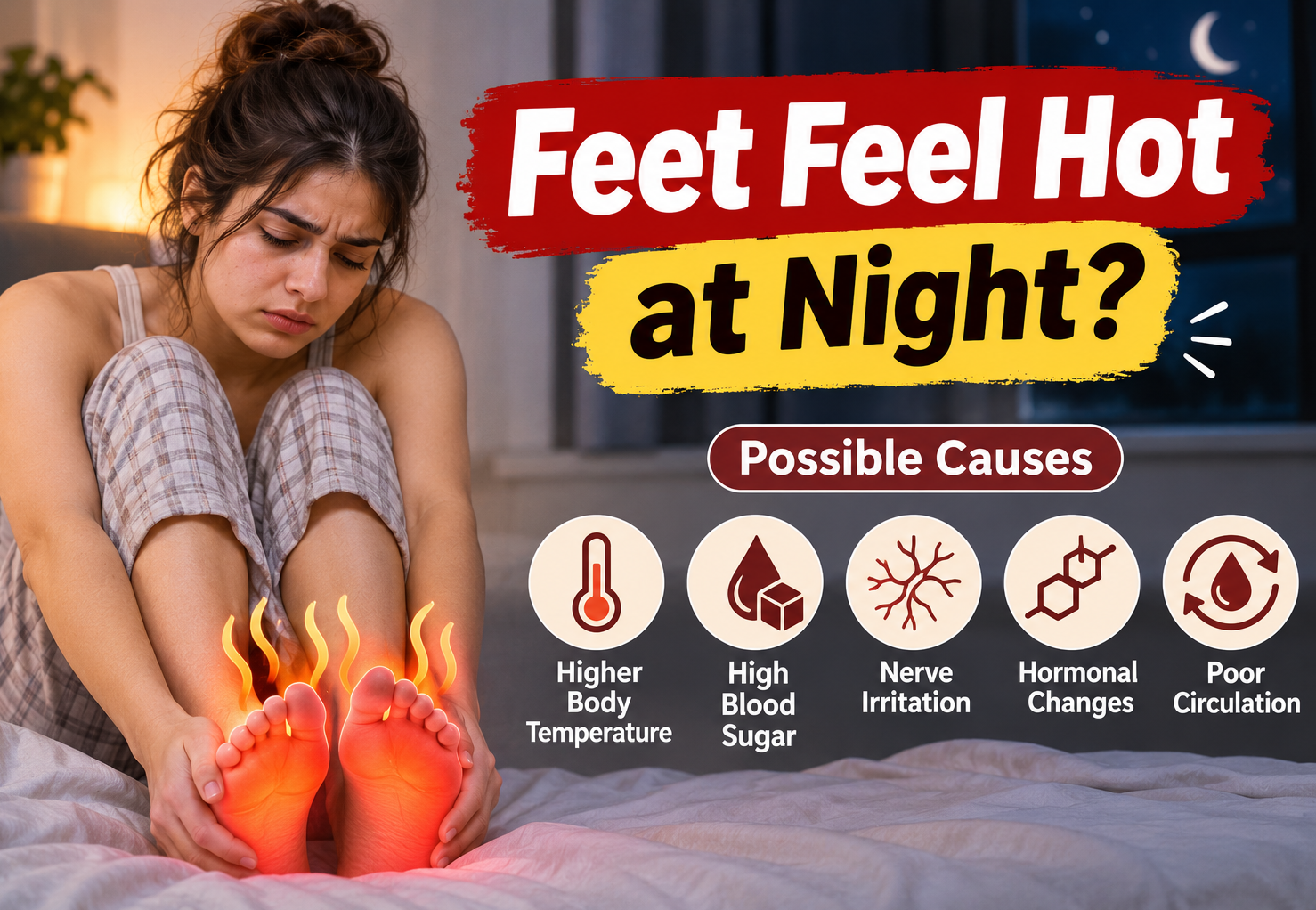
Have you ever gone to bed feeling tired, only to notice that your feet suddenly feel hot, warm, or burning? You may feel an uncomfortable sensation on the soles of your feet, around your toes, or throughout your feet, even when the rest of your body feels perfectly normal.
Hot feet at night can be frustrating, especially when the sensation makes it difficult to fall asleep. Sometimes, it happens because of something simple, such as warm bedding, tight footwear, or tired feet after a long day. However, frequent burning or unusual warmth in the feet can sometimes indicate an underlying health problem.
The medical term burning feet is often used to describe sensations of heat, tingling, prickling, or burning. These symptoms may become more noticeable at night and can range from mild discomfort to intense pain.
So, why do your feet feel hot at night? Let’s explore 10 possible causes, common symptoms, practical ways to find relief, and signs that mean you should speak with a healthcare professional.
Why Do My Feet Feel Hot at Night?
Feet can feel hot at night because of nerve irritation, poor blood glucose control, vitamin deficiencies, certain medications, infections, or other conditions affecting the nerves and skin.
In some cases, the sensation is not caused by an actual increase in skin temperature. Instead, irritated or damaged nerves send unusual signals to the brain, making your feet feel as though they are burning.
If the problem happens occasionally, it may be related to everyday activities. However, persistent, worsening, or unexplained burning sensations deserve medical attention.
10 Possible Reasons Your Feet Feel Hot at Night
1. Peripheral Neuropathy
Peripheral neuropathy is one of the common medical causes of burning feet. It occurs when nerves outside the brain and spinal cord become damaged or stop functioning properly.
When these nerves are affected, they may send incorrect signals to the brain. As a result, you might experience burning, tingling, numbness, or an electric-shock-like sensation in your feet.
The discomfort may become particularly noticeable when you lie down at night because there are fewer daytime distractions.
Other symptoms may include:
- Burning or tingling in the toes and soles.
- Numbness or reduced sensation in the feet.
- Increased sensitivity to touch.
- Difficulty maintaining balance.
- Sharp or shooting pain.
2. Diabetes and High Blood Sugar
Diabetes is an important condition associated with burning feet. Over time, consistently high blood glucose levels can damage the nerves, leading to a condition called diabetic peripheral neuropathy.
People with diabetes may initially notice tingling, burning, or numbness in their toes. As nerve damage progresses, symptoms can spread toward the ankles and legs.
Nighttime discomfort can make it difficult to sleep comfortably.
If you have diabetes and regularly experience hot or burning feet, speak with your healthcare provider. Checking blood glucose levels and examining your feet are important parts of managing the condition.
3. Vitamin B12 Deficiency
Vitamin B12 plays an essential role in maintaining healthy nerves and producing red blood cells. When the body does not get enough vitamin B12, nerve function can be affected.
A deficiency may cause unusual sensations in the feet, including burning, tingling, pins and needles, and numbness.
People who follow restrictive diets, have certain digestive conditions, or experience problems absorbing nutrients may be at increased risk.
Other possible symptoms include:
- Unusual tiredness and weakness.
- Dizziness or lightheadedness.
- Pale skin.
- Memory or concentration difficulties.
- Balance problems.
A healthcare professional can recommend a blood test to check vitamin B12 levels. Treatment depends on the cause and severity of the deficiency.
4. Vitamin B6 Imbalance
Vitamin B6 is necessary for normal nerve function. However, taking excessive amounts of vitamin B6 through supplements over time can cause nerve damage.
This may lead to burning, tingling, numbness, or unusual sensations in the hands and feet.
Some people unknowingly consume too much vitamin B6 by combining multivitamins, B-complex supplements, and other nutritional products.
If you regularly take supplements and experience burning feet, review your intake with a healthcare professional rather than increasing your vitamin dosage yourself.
5. Poorly Fitting Shoes and Foot Pressure
Sometimes, the reason your feet feel hot at night is related to what you wear during the day.
Shoes that are too tight, narrow, or poorly cushioned can place pressure on the feet. Prolonged walking or standing may also contribute to discomfort and irritation.
After removing your shoes and going to bed, you may notice burning, warmth, soreness, or tenderness.
What may help:
- Wear comfortable, breathable footwear.
- Avoid shoes that squeeze your toes.
- Choose socks that allow your feet to breathe.
- Take short breaks if you stand for long periods.
- Give your feet time to rest after demanding activities.
6. Fungal Foot Infection (Athlete’s Foot)
Athlete’s foot is a common fungal infection that affects the skin, particularly between the toes and on the soles.
Although itching is its most recognizable symptom, some people also experience burning, stinging, irritation, and discomfort.
The symptoms may feel more noticeable at night, particularly when your feet are warm inside socks or under blankets.
Common signs include:
- Itchy skin between the toes.
- Redness and peeling.
- Cracked or flaky skin.
- Burning or stinging sensations.
- Small blisters in some cases.
Keeping your feet clean and dry, changing socks regularly, and using an appropriate antifungal treatment can help manage the infection.
7. Hypothyroidism (Underactive Thyroid)
The thyroid gland produces hormones that help regulate metabolism and several important body functions.
Hypothyroidism occurs when the thyroid gland does not produce enough thyroid hormones. In some people, it may contribute to nerve-related problems, including peripheral neuropathy.
Although burning feet are not a typical standalone symptom of hypothyroidism, unexplained foot discomfort accompanied by other thyroid symptoms may deserve investigation.
Other symptoms can include fatigue, constipation, dry skin, unexplained weight gain, and sensitivity to cold.
A healthcare professional may recommend thyroid function tests if hypothyroidism is suspected.
8. Alcohol-Related Nerve Damage
Regular heavy alcohol consumption can affect nerve health and contribute to a condition called alcoholic neuropathy.
Alcohol may damage nerves directly and can also contribute to nutritional deficiencies, particularly deficiencies involving B vitamins.
People affected by alcohol-related neuropathy may experience burning, tingling, numbness, or weakness in their feet and legs.
Reducing or stopping alcohol consumption with appropriate medical support, addressing nutritional deficiencies, and managing other health problems may help prevent further nerve damage.
9. Erythromelalgia
Erythromelalgia is an uncommon condition that causes episodes of intense burning pain, warmth, and redness, usually in the feet or hands.
Unlike nerve-related burning sensations that may occur without visible changes, erythromelalgia often involves an actual increase in skin temperature and noticeable redness.
Symptoms may become worse with:
- Warm temperatures.
- Physical activity.
- Wearing tight shoes or socks.
- Standing for extended periods.
- Keeping the feet under warm blankets.
Some people find relief by moving to a cooler environment. However, avoid applying ice directly to the skin or soaking your feet in ice water, as this can cause skin damage.
10. Chronic Kidney Disease
The kidneys help remove waste products and excess fluid from the body. When kidney function becomes significantly reduced, waste products can accumulate in the bloodstream.
Advanced kidney disease may affect nerve function and contribute to peripheral neuropathy.
Some people may experience burning, tingling, numbness, or discomfort in their feet.
Other possible symptoms of kidney disease include swelling around the ankles, changes in urination, fatigue, nausea, and high blood pressure.
Burning feet alone do not mean you have kidney disease. However, persistent symptoms accompanied by these warning signs should be evaluated by a healthcare professional.
Why Do Feet Feel Hotder at Night Than During the Day?
There are several reasons why burning sensations may become more noticeable at bedtime.
- Fewer distractions: During the day, you are busy with work and daily activities. At night, you may become more aware of unusual sensations.
- Nerve sensitivity: Neuropathy-related symptoms can become more noticeable at night, particularly when the feet are resting.
- Warm bedding: Thick blankets, socks, and warm bedroom temperatures can make your feet feel uncomfortable.
- Daily foot strain: Walking, exercising, or standing for several hours may leave your feet tired and irritated.
It is important to distinguish ordinary warmth from a burning sensation. If your feet feel hot internally but are not actually warm when touched, nerve-related problems may be involved.
How to Stop Your Feet From Feeling Hot at Night?
If your feet feel uncomfortably warm or mildly burning at bedtime, a few simple measures may help provide temporary relief.
1. Keep Your Feet Cool
Keep your bedroom at a comfortable temperature and avoid excessive bedding around your feet. You can also use a fan to improve air circulation.
2. Soak Your Feet in Cool Water
A short soak in cool, not icy, water may help soothe temporary warmth and discomfort. Avoid prolonged soaking, particularly if you have diabetes, reduced sensation, or open wounds.
3. Wear Breathable Socks
Choose lightweight cotton or moisture-wicking socks that allow air circulation. Avoid tight socks that leave marks around your ankles.
4. Elevate Your Feet
If your feet feel tired or mildly swollen after standing for long periods, try resting them on a pillow for a short time.
5. Avoid Tight Footwear
Wear comfortable shoes with enough room for your toes. Tight footwear can increase pressure and irritation.
6. Check Your Feet Before Bed
Look for redness, peeling, cracks, blisters, swelling, or wounds. This is particularly important if you have diabetes or reduced sensation.
7. Review Your Vitamin Supplements
Excessive vitamin B6 intake can cause nerve-related symptoms. Check the ingredients of your supplements and discuss your intake with a healthcare professional.
8. Limit Alcohol Consumption
Heavy alcohol consumption can contribute to nerve damage and nutritional deficiencies. Reducing alcohol intake may help protect nerve health.
Important: These measures may provide temporary comfort, but they do not treat every underlying cause of burning feet. Persistent symptoms need proper medical evaluation.
When Should You See a Doctor?
Occasional foot warmth may not be a serious concern. However, frequent or unexplained burning sensations should not be ignored.
Consult a healthcare professional if you experience:
- Burning sensations that continue for several days or weeks.
- Increasing pain or discomfort at night.
- Tingling or numbness in your toes.
- Burning sensations spreading toward your ankles or legs.
- Difficulty walking or maintaining balance.
- Repeated swelling, redness, or skin changes.
- A wound or blister that does not heal.
Seek urgent medical attention
Get prompt medical attention if burning begins suddenly and severely, particularly after possible toxin exposure, or if you have a foot wound with signs of infection. If you have diabetes, an infected foot wound needs urgent assessment.
How Do Doctors Diagnose the Cause of Hot Feet?
There is no single test that identifies every cause of burning feet. Your doctor may recommend different examinations depending on your symptoms and medical history.
Common diagnostic approaches include:
| Test or examination | What it checks |
|---|---|
| Blood glucose or HbA1c test | Diabetes or high blood sugar |
| Vitamin B12 blood test | Vitamin B12 deficiency |
| Thyroid function test | Thyroid hormone levels |
| Kidney function test | How well your kidneys work |
| Physical foot examination | Skin infections, wounds, swelling, and other changes |
| Nerve conduction study | How well electrical signals travel through nerves |
| Electromyography (EMG) | Electrical activity in muscles and related nerve function |
Your doctor may also review your medications, supplement use, alcohol consumption, and footwear habits to identify possible triggers.
FAQ’s
Can diabetes cause hot feet at night?
Yes. High blood sugar over time can damage peripheral nerves, causing burning, tingling, numbness, and discomfort in the feet, particularly at night.
Which vitamin deficiency causes burning feet?
Vitamin B12 deficiency is a recognized cause of nerve-related burning sensations in the feet. Excessive vitamin B6 intake can also damage nerves.
Why do the soles of my feet feel hot when I sleep?
The soles may feel hot because of nerve irritation, diabetes-related neuropathy, vitamin deficiencies, or increased sensitivity to warmth from blankets and bedding.
Can poor circulation cause burning feet?
Circulation problems can affect foot temperature and cause discomfort. However, burning sensations are often associated with nerve problems rather than poor circulation alone.
How can I cool down burning feet at night?
Try keeping your bedroom cool, using lightweight bedding, wearing breathable socks, and briefly soaking your feet in cool water. Avoid direct ice application.
Can dehydration cause burning feet?
Dehydration is not a well-established direct cause of burning feet. Persistent burning sensations may be related to nerve damage, nutritional deficiencies, or other health conditions.
Are burning feet a sign of nerve damage?
Burning feet can be a sign of nerve damage, particularly peripheral neuropathy. Other symptoms may include tingling, numbness, increased sensitivity, and shooting pain.
Can stress cause hot or burning feet?
Stress may increase sensitivity to uncomfortable sensations, but persistent burning feet should be evaluated for possible nerve, metabolic, or other physical causes.
Why do my feet burn under blankets?
Thick blankets can trap heat and make your feet feel uncomfortable. However, if the burning continues even without blankets, nerve-related conditions may be responsible.
Is burning feet syndrome the same as peripheral neuropathy?
No. Burning feet syndrome describes a group of symptoms involving burning or painful feet, while peripheral neuropathy refers to damage or dysfunction of peripheral nerves. Neuropathy can be one cause of burning feet.
Can kidney problems cause burning feet?
Advanced kidney disease can affect nerve function and cause peripheral neuropathy, which may lead to burning, tingling, or numbness in the feet.
Can walking too much cause hot feet at night?
Yes. Prolonged walking or standing can cause temporary foot fatigue, pressure, and irritation. Comfortable footwear and adequate rest may help relieve these symptoms.
Should I put ice on burning feet?
No. Avoid applying ice directly to your feet or using ice-water soaks. This can damage the skin, particularly if you have reduced sensation. Cool water may provide temporary comfort.
How to treat burning feet?
Treatment depends on the cause. Managing diabetes, correcting vitamin deficiencies, and treating nerve problems may help.
What is the fastest way to relieve burning feet?
Rest your feet, remove tight footwear, and apply a cool, damp cloth for temporary relief.
Why are my feet hot at night in summer?
Warm temperatures, sweating, thick bedding, and poor ventilation can make your feet feel hotter.
Why do the bottoms of my feet burn after walking?
Prolonged walking, foot pressure, unsuitable shoes, or nerve irritation may cause burning soles.
What blood test is done for burning feet?
Doctors may recommend blood glucose, vitamin B12, thyroid, kidney function, and CBC tests.
Is burning feet serious?
Sometimes. Persistent burning may indicate nerve damage, diabetes, or vitamin deficiencies.
What foods should I avoid with burning feet?
Limit excessive alcohol, sugary drinks, and highly processed foods, especially if you have diabetes.
What are some home remedies for burning feet?
Try cool water soaks, breathable socks, comfortable shoes, and adequate foot rest.
Sources / References:
Disclaimer:
This article is for informational purposes only and does not replace professional medical advice, diagnosis, or treatment. Consult a qualified healthcare professional for persistent burning sensations or unexplained foot discomfort.
Also Read: