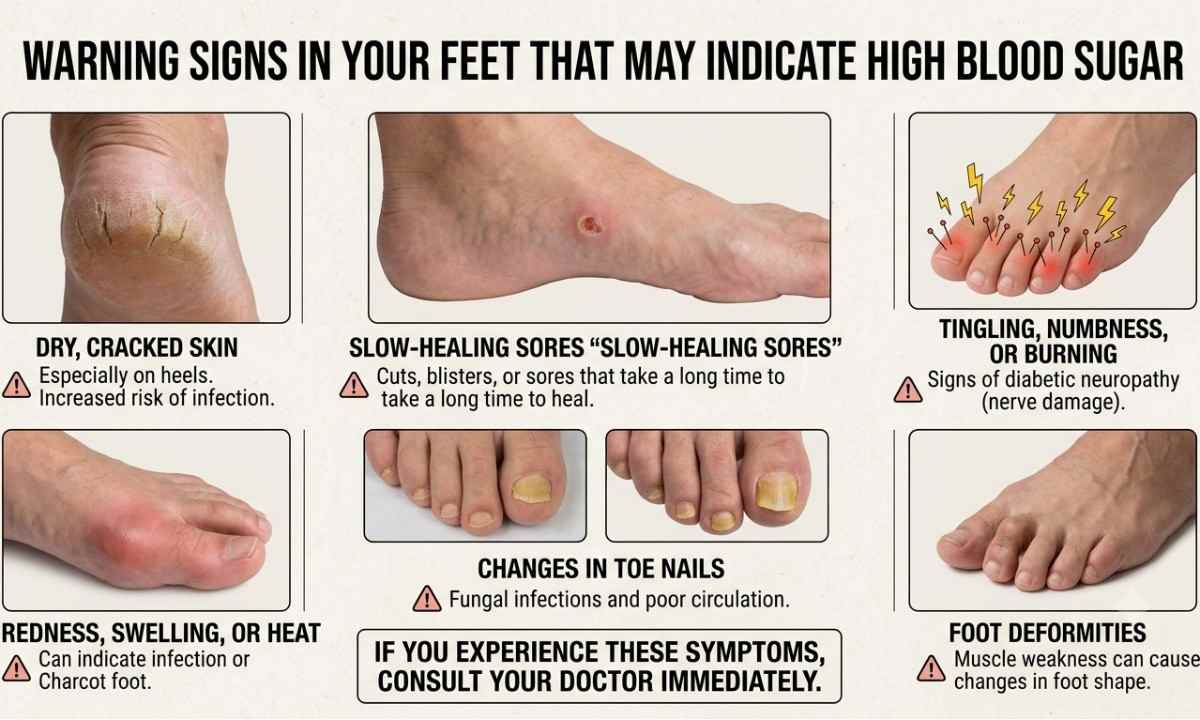
Your feet can sometimes provide early clues that your blood sugar has been running too high, especially when elevated glucose begins affecting the nerves and blood vessels. Burning, tingling, numbness, unusually dry skin, slow-healing cuts, or recurring foot infections should not be ignored.
High blood sugar itself does not always cause an obvious change in the feet. Instead, persistent elevated blood glucose can contribute to complications such as diabetic peripheral neuropathy and reduced blood circulation, which may gradually affect how your feet feel, look, and heal. This is why paying attention to changes in your feet can be an important part of diabetes awareness and foot care.
What Does High Blood Sugar Have to Do With Your Feet?
When blood glucose remains high over time, it can damage nerves and the small blood vessels that supply them. The nerves in the feet and legs are particularly vulnerable, which can lead to a condition called diabetic peripheral neuropathy.
High blood sugar can also contribute to poor circulation. Together, nerve damage and reduced blood flow can make it easier for small injuries to go unnoticed and harder for wounds to heal properly.
Some people experience obvious symptoms, while others may have nerve damage without realizing it.
Important: Foot symptoms alone cannot confirm high blood sugar or diabetes. A blood glucose test and medical evaluation are needed for diagnosis.
12 Feet Warning Signs That May Indicate High Blood Sugar
1. Burning Sensation in Your Feet
A persistent burning feeling in the feet, particularly at night, can be a sign of nerve irritation or damage.
Diabetic peripheral neuropathy may cause burning, shooting, or uncomfortable sensations in the feet and legs.
Burning feet do not automatically mean you have high blood sugar, but persistent or unexplained burning deserves medical attention.
2. Tingling or Pins-and-Needles
Do your feet frequently feel as though they are “falling asleep” even when you have not been sitting awkwardly?
Repeated tingling or pins-and-needles sensations can occur when nerves are affected. It is one of the commonly reported symptoms of peripheral neuropathy.
3. Numbness in Your Toes or Feet
Numbness can be particularly important because it may reduce your ability to notice injuries.
You could develop a blister, cut, or pressure injury without feeling much pain. This is one reason people with diabetes are encouraged to inspect their feet every day.
4. Foot Pain Without an Obvious Injury
Unexplained foot pain, especially burning, shooting, or nighttime pain, can sometimes be associated with diabetic neuropathy.
Some people may experience increased sensitivity where even light touch feels uncomfortable.
5. You Stop Feeling Pain or Temperature Normally
High blood sugar-related nerve damage can interfere with the ability to sense pain, heat, and cold.
This can be dangerous because you may not realize that bath water is too hot, that a heating pad is burning your skin, or that a sharp object has injured your foot.
6. Cuts and Blisters Take a Long Time to Heal
A small cut should generally receive attention rather than being ignored, particularly if you have diabetes or suspect your blood sugar may be elevated.
Diabetes can increase the risk of foot ulcers and infections, while reduced circulation can make healing more difficult.
7. A Foot Sore or Ulcer Appears
An open sore, especially one that does not heal normally, is an important warning sign.
Diabetic foot ulcers can develop after repeated pressure, friction, blisters, or unnoticed injuries. Some ulcers may cause little or no pain because of nerve damage.
Do not wait for a foot ulcer to become painful before seeking medical care.
8. Unusually Dry or Cracked Skin
Dry, cracked skin on the feet can occur for many reasons, so it is not specific to high blood sugar.
However, the CDC lists dry, cracked feet among the foot symptoms that people with diabetes should discuss with a healthcare professional. Cracks can also provide an opening through which bacteria can enter.
9. Swelling, Redness, or Warmth
A swollen, red, or unusually warm area of the foot may indicate inflammation, injury, or infection.
In people with diabetes, redness, warmth, and swelling can also occur with serious conditions such as Charcot foot. Charcot foot can eventually cause changes in the shape of the foot.
Sudden or significant swelling, redness, or warmth should be evaluated promptly.
10. Changes in the Shape of Your Feet
A noticeable change in the shape of your toes or feet should not be dismissed.
Long-standing nerve damage can contribute to changes in the bones and tissues of the foot. In some people with diabetes, this can lead to Charcot foot, which may cause the foot to develop an unusual shape.
11. Repeated Fungal or Toenail Infections
Thickened or yellow toenails and fungal infections between the toes can occur for several reasons.
The CDC lists thickened yellow toenails and fungal infections such as athlete’s foot among foot problems that people with diabetes should have evaluated.
A recurring infection does not prove that your blood sugar is high, but it is worth discussing with a healthcare professional.
12. Hair Loss on Your Toes or Feet
Unexpected loss of hair on your toes, feet, or lower legs may sometimes be associated with reduced circulation.
The CDC includes loss of hair on the toes, feet, and lower legs among symptoms that warrant medical evaluation in people with diabetes.
This sign is not specific to diabetes, however, and can have other causes.
Why High Blood Sugar Can Cause Foot Problems
There are two major mechanisms to understand: nerve damage and reduced blood flow.
Nerve Damage
Persistently elevated blood glucose can damage nerves and the small blood vessels that nourish them. When nerves in the feet become damaged, you may experience burning, tingling, pain, numbness, or weakness.
The problem can become more serious when sensation decreases because an injury may go unnoticed.
Poor Blood Flow
Diabetes can also contribute to circulation problems. Reduced blood flow can make it harder for wounds and infections to heal.
This combination of reduced sensation and impaired healing is one reason seemingly minor foot problems can sometimes become serious.
Can Foot Problems Be the First Sign of Diabetes?
They can be a reason to seek evaluation, but foot symptoms alone cannot diagnose diabetes.
Some people may develop nerve-related symptoms before realizing they have diabetes, while others may have high blood sugar without noticeable foot symptoms.
If you have unexplained numbness, tingling, burning, slow-healing wounds, or repeated foot infections, talk with a healthcare professional. Blood glucose testing can determine whether diabetes or prediabetes may be present.
How to Check Your Feet at Home
If you have diabetes or are at increased risk of diabetes-related foot problems, make foot inspection part of your routine.
Check:
- The tops and bottoms of your feet
- Between your toes
- Around your toenails
- Your heels
- Areas where shoes rub
- Any existing calluses or pressure points
Look for cuts, blisters, redness, swelling, cracks, sores, changes in color, or signs of infection. NIDDK recommends checking the feet every day, including between the toes.
If you cannot easily see the bottoms of your feet, use a mirror or ask someone you trust to help.
Simple Ways to Protect Your Feet
Good foot care can help prevent minor problems from becoming more serious.
1. Keep Your Feet Clean and Dry
Wash your feet regularly and dry them carefully, especially between the toes.
2. Moisturize Dry Skin
A moisturizer can help prevent excessive dryness and cracking. Avoid applying moisturizer between the toes because excess moisture there can encourage fungal problems.
3. Wear Comfortable Shoes
Choose shoes that fit properly and do not create pressure or rubbing.
4. Avoid Walking Barefoot
Walking barefoot increases the chance of stepping on sharp or hot objects without noticing the injury.
5. Trim Toenails Carefully
Trim toenails straight across and avoid cutting too deeply into the corners.
6. Manage Blood Sugar
Keeping blood glucose within your healthcare professional’s recommended range is an important part of reducing the risk of diabetes complications. Managing blood pressure and cholesterol is also important.
When Should You See a Doctor?
Do not ignore a new or worsening foot problem if you have diabetes or suspect you may have high blood sugar.
Contact a healthcare professional promptly if you develop:
- A foot ulcer or open sore
- A wound that is not healing
- Increasing redness or swelling
- Pus or other signs of infection
- Significant warmth in one area of the foot
- New numbness or loss of sensation
- Persistent burning or tingling
- A sudden change in foot shape
- Significant discoloration
- Severe or unexplained foot pain
The CDC specifically advises people with diabetes to seek medical attention for symptoms such as tingling, burning or pain, loss of sensation, changes in foot color or temperature, dry cracked skin, infections, blisters, ulcers, and ingrown toenails.
Can You Prevent High Blood Sugar-Related Foot Problems?
You cannot eliminate every risk, but you can significantly reduce the chance of serious complications through consistent diabetes management and foot care.
Important steps include:
- Monitor your blood glucose as recommended.
- Take prescribed diabetes medicines correctly.
- Check your feet every day.
- Attend recommended diabetes and foot examinations.
- Wear properly fitting footwear.
- Treat cuts and blisters promptly.
- Avoid walking barefoot.
- Do not ignore numbness or changes in sensation.
- Avoid smoking.
- Follow your healthcare professional’s recommendations for managing blood pressure and cholesterol.
Final Thought
Your feet can sometimes reveal complications associated with high blood sugar, particularly when diabetes affects the nerves and circulation. Burning, tingling, numbness, unexplained pain, dry cracked skin, slow-healing wounds, swelling, recurring infections, or changes in foot shape should not be ignored.
However, these symptoms do not automatically mean your blood sugar is high. Many other conditions can cause similar changes, so proper medical evaluation and blood glucose testing are important.
If you have diabetes, checking your feet every day is a simple habit that can help you spot problems early. Early attention to cuts, blisters, sores, and other changes can reduce the risk of serious complications.
FAQ’s
What are the first signs of high blood sugar in the feet?
Common warning signs include tingling, burning, numbness, unusual foot pain, dry cracked skin, slow-healing cuts, and recurring infections.
Can burning feet be a sign of diabetes?
Yes, persistent burning in the feet can occur with diabetic nerve damage, although other conditions can also cause burning feet.
Does high blood sugar cause numb feet?
High blood sugar over time can damage peripheral nerves and may cause numbness or reduced sensation in the feet.
Can tingling toes mean high blood sugar?
Tingling toes can be associated with diabetic peripheral neuropathy, but it can also have several other causes.
Why do diabetic foot wounds heal slowly?
Diabetes can affect circulation and immune function, while nerve damage may allow injuries to go unnoticed, contributing to slower healing.
What does diabetic foot pain feel like?
Diabetic nerve pain may feel like burning, tingling, pins-and-needles, shooting pain, or increased sensitivity to touch.
Can dry feet be a sign of diabetes?
Dry feet alone do not indicate diabetes, but diabetes-related nerve problems can contribute to dry, cracked skin and other foot complications.
Can high blood sugar cause swollen feet?
Diabetes can be associated with foot swelling, but swelling has many possible causes and should be evaluated when it is persistent or sudden.
What color do feet turn with diabetes?
Diabetes-related circulation problems may sometimes cause changes in foot color, including unusually pale, bluish, or reddish skin, but color changes require medical evaluation.
Sources / References:
Disclaimer:
This guide is for educational purposes only and does not replace professional medical advice, diagnosis, or treatment. If you have concerning foot symptoms, diabetes, or suspected high blood sugar, consult a qualified healthcare professional.
Also Read: