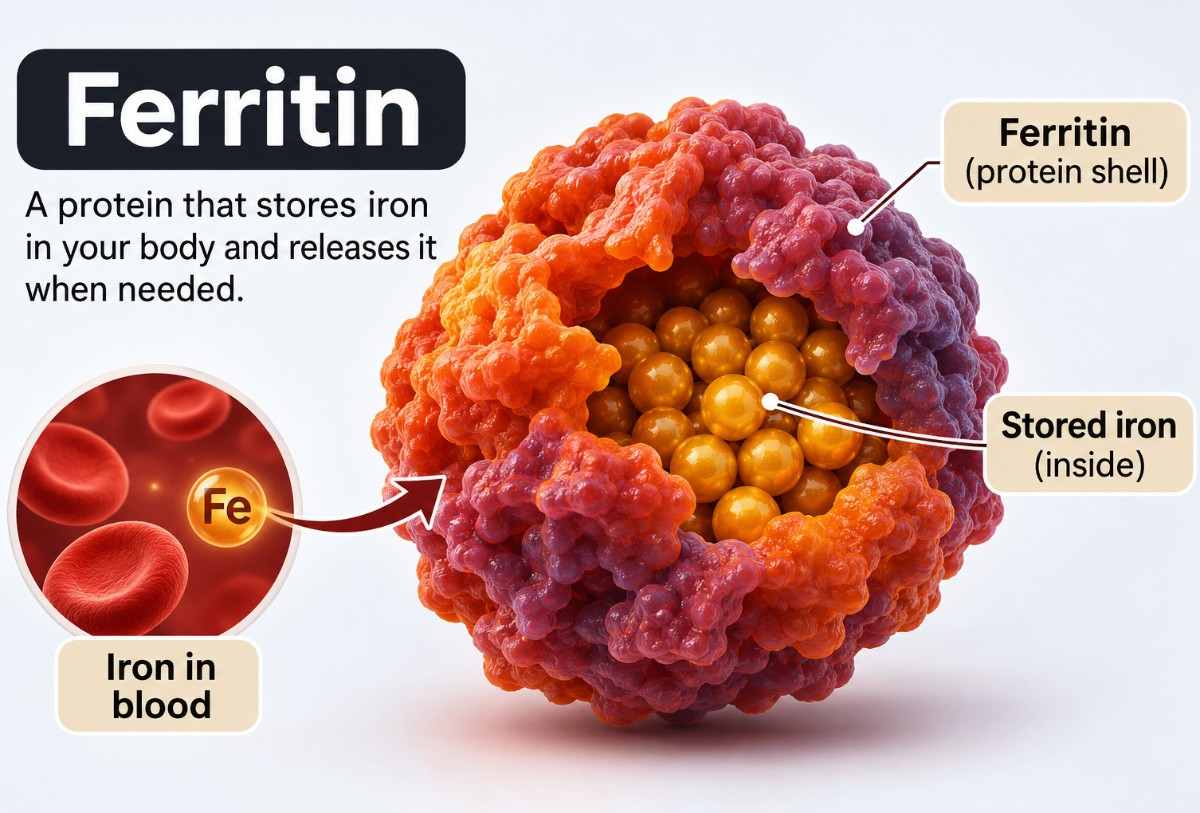
Ferritin is an important protein that helps your body store iron and release it whenever needed. Iron plays a major role in producing healthy red blood cells, carrying oxygen throughout the body, and supporting energy levels. When ferritin levels become too low or too high, they may indicate an underlying health issue that needs attention.
Many people associate iron deficiency with anemia, but ferritin levels can become low even before anemia develops. Similarly, elevated ferritin does not always mean that the body has too much iron. Inflammation, infections, and certain liver conditions can also increase ferritin levels.
Understanding ferritin can help you recognize possible warning signs, understand your blood test results, and take appropriate steps to maintain healthy iron stores.
What Is Ferritin?
Ferritin is a protein found mainly inside cells that stores iron and releases it when the body needs it. Most of the body’s ferritin is stored in the liver, spleen, bone marrow, and other tissues.
A small amount of ferritin circulates in the bloodstream. Measuring this amount through a blood test provides useful information about the body’s stored iron.
Iron is essential for producing hemoglobin, a protein in red blood cells responsible for carrying oxygen from the lungs to different parts of the body. It also supports muscle function, energy production, and normal immune system activity.
In simple terms, ferritin acts like an iron storage system. When ferritin levels are low, the body’s iron reserves may be running low. When levels are high, it may indicate iron overload or another condition affecting the body.
What Is a Ferritin Blood Test?
A ferritin blood test measures the amount of ferritin circulating in your blood. It helps healthcare professionals evaluate how much iron your body has stored.
Doctors commonly recommend this test when someone experiences symptoms associated with iron deficiency or iron overload.
A ferritin test may be recommended to:
- Check for iron deficiency before or after anemia develops.
- Investigate persistent tiredness, weakness, or unexplained fatigue.
- Evaluate possible iron deficiency anemia.
- Investigate unusually high iron levels.
- Monitor people receiving treatment for iron deficiency.
- Evaluate possible iron overload conditions, including hemochromatosis.
- Investigate certain liver diseases and inflammatory conditions.
The test is often performed alongside a complete blood count (CBC) and other iron studies to provide a clearer picture of overall iron status.
What Are Normal Ferritin Levels?
Normal ferritin levels vary depending on age, sex, health conditions, laboratory methods, and other individual factors.
Ferritin is commonly measured in nanograms per milliliter (ng/mL) or micrograms per liter (µg/L). These two units have the same numerical value.
The following ranges are illustrative and should not replace the reference range printed on your laboratory report.
| Group | Illustrative ferritin range |
|---|---|
| Adult women | 13–150 ng/mL |
| Adult men | 30–400 ng/mL |
Children, pregnant individuals, and people with certain medical conditions may have different reference ranges.
Important: A ferritin result should not be interpreted on its own. A healthcare professional considers symptoms, medical history, hemoglobin, transferrin saturation, and other relevant test results.
What Does Low Ferritin Mean?
Low ferritin generally indicates that your body has insufficient stored iron. It can be an early sign of iron deficiency, sometimes appearing before hemoglobin levels become abnormal.
When iron stores decrease, the body gradually has less iron available to produce hemoglobin and healthy red blood cells.
Low ferritin may develop because of inadequate dietary iron, blood loss, increased iron requirements, or problems absorbing iron.
Symptoms of Low Ferritin
Some people with low ferritin experience no noticeable symptoms initially. However, as iron stores become depleted, the following signs may appear:
- Constant Fatigue: Feeling unusually tired or exhausted even after getting enough sleep.
- Weakness: Experiencing reduced physical strength or difficulty completing everyday activities.
- Dizziness: Feeling lightheaded, particularly when standing up quickly.
- Shortness of Breath: Becoming breathless during routine physical activities.
- Pale Skin: Noticing that the skin or inner eyelids appear paler than usual.
- Hair Loss: Experiencing increased hair shedding or thinning in some cases.
- Brittle Nails: Developing weak, fragile nails that break easily.
- Headaches: Experiencing frequent headaches associated with iron deficiency.
- Cold Hands and Feet: Feeling unusually cold in the hands and feet.
- Restless Legs: Experiencing uncomfortable sensations and an urge to move the legs, particularly at night.
- Difficulty Concentrating: Having trouble maintaining focus or remembering information.
- Craving Ice: Developing an unusual desire to chew ice, a condition known as pagophagia.
These symptoms are not specific to low ferritin. Other nutritional deficiencies and medical conditions can cause similar problems.
What Causes Low Ferritin Levels?
Several factors can contribute to depleted iron stores.
- Insufficient Dietary Iron: Not eating enough iron-rich foods can gradually reduce the body’s iron reserves.
- Heavy Menstrual Bleeding: Excessive blood loss during menstruation is a common cause of iron deficiency.
- Pregnancy: The body’s iron requirements increase during pregnancy to support the developing baby and changes in maternal blood volume.
- Frequent Blood Donation: Regular blood donation can reduce iron stores, particularly when donations occur frequently.
- Digestive Disorders: Conditions such as celiac disease and inflammatory bowel disease can interfere with iron absorption.
- Internal Bleeding: Blood loss from the digestive tract, including ulcers or other gastrointestinal conditions, can contribute to iron deficiency.
- Low-Iron Diet: Following a diet that consistently lacks iron-rich foods may increase the risk of deficiency.
- Increased Growth Requirements: Children and teenagers may need additional iron during periods of rapid growth.
What Does High Ferritin Mean?
High ferritin means that the amount of ferritin in your bloodstream is above the laboratory’s reference range.
Although ferritin reflects iron storage, elevated levels do not automatically indicate excessive iron in the body.
Ferritin is also an acute-phase protein, meaning its levels can increase when the body experiences inflammation or infection.
High ferritin may be associated with:
- Iron overload.
- Liver disease.
- Chronic inflammation.
- Certain infections.
- Metabolic conditions.
- Autoimmune disorders.
- Some types of cancer.
- Frequent blood transfusions.
- Excessive alcohol consumption.
Additional blood tests are often needed to determine why ferritin is elevated.
Symptoms of High Ferritin
High ferritin itself may not cause noticeable symptoms. Symptoms, when present, are usually related to the underlying condition.
Possible symptoms include:
- Persistent Fatigue: Experiencing ongoing tiredness or reduced energy.
- Joint Pain: Developing discomfort or stiffness in certain joints.
- Abdominal Pain: Experiencing unexplained discomfort in the stomach area.
- Skin Discoloration: Developing darker or bronze-colored skin in some cases of iron overload.
- Unexplained Weakness: Feeling physically weak despite adequate rest.
- Reduced Sex Drive: Experiencing decreased sexual desire in some people with iron overload.
- Unexplained Weight Changes: Noticing changes in body weight associated with an underlying illness.
These symptoms require medical evaluation rather than assuming that high ferritin is the cause.
What Causes High Ferritin Levels?
Elevated ferritin can occur for several reasons, including conditions that do not involve excess iron.
- Hemochromatosis: An inherited condition that causes the body to absorb and store excessive amounts of iron.
- Liver Disease: Liver inflammation, fatty liver disease, and alcohol-related liver damage can increase ferritin.
- Infections: Certain infections can temporarily increase ferritin as part of the body’s inflammatory response.
- Autoimmune Conditions: Disorders associated with chronic inflammation may contribute to elevated ferritin.
- Obesity and Metabolic Conditions: Metabolic dysfunction and fatty liver disease are associated with higher ferritin levels in some individuals.
- Frequent Blood Transfusions: Repeated transfusions can lead to iron accumulation in the body.
- Certain Cancers: Some cancers and blood disorders may cause elevated ferritin.
Low Ferritin vs. High Ferritin
Understanding the difference between low and high ferritin can help you interpret your blood test results.
| Feature | Low Ferritin | High Ferritin |
|---|---|---|
| Meaning | Reduced iron stores | Elevated ferritin in blood |
| Common causes | Blood loss, low iron intake, poor absorption | Inflammation, liver disease, iron overload |
| Possible symptoms | Fatigue, dizziness, hair shedding | Fatigue, joint pain, abdominal discomfort |
| Iron stores | Usually depleted | May be increased or normal |
| Associated conditions | Iron deficiency | Hemochromatosis, liver disease |
| Evaluation | CBC and iron studies | Ferritin, transferrin saturation, and other tests |
How to Increase Ferritin Levels Naturally
If your ferritin is low because of iron deficiency, improving dietary iron intake can help support healthy iron stores. However, the underlying cause should also be identified.
Here are some practical ways to support iron intake.
1. Eat Iron-Rich Foods
Include foods that naturally contain iron in your daily meals.
Examples include:
- Red meat.
- Chicken and turkey.
- Fish and seafood.
- Lentils.
- Chickpeas.
- Kidney beans.
- Spinach.
- Pumpkin seeds.
- Fortified breakfast cereals.
- Tofu.
Animal-based foods generally contain heme iron, which is more easily absorbed than non-heme iron found in plant foods.
2. Combine Iron Foods With Vitamin C
Vitamin C helps improve the absorption of non-heme iron from plant-based foods.
Try combining iron-rich meals with:
- Oranges.
- Guava.
- Strawberries.
- Kiwi.
- Bell peppers.
- Tomatoes.
- Broccoli.
- Lemon juice.
For example, adding lemon juice to a lentil or chickpea salad can help improve iron absorption.
3. Avoid Drinking Tea or Coffee With Iron-Rich Meals
Tea and coffee contain compounds called polyphenols that can reduce iron absorption when consumed with meals.
If you have iron deficiency, consider drinking them between meals rather than immediately before or after eating.
4. Include Iron-Fortified Foods
Some breakfast cereals, breads, and other packaged foods are fortified with iron.
Check food labels to identify products that provide additional dietary iron.
5. Identify the Underlying Cause
Eating more iron-rich foods may not be enough if you have heavy menstrual bleeding, gastrointestinal blood loss, or an absorption problem.
Treating the underlying cause is important for restoring and maintaining healthy iron stores.
Medical Treatment for Low Ferritin
When dietary changes are insufficient, healthcare professionals may recommend iron supplementation.
Common treatment approaches include:
- Oral Iron Supplements: Iron tablets or liquids may be prescribed to replenish depleted iron stores.
- Intravenous Iron: IV iron may be recommended when oral supplements are not tolerated, ineffective, or unsuitable.
- Treatment of Blood Loss: Heavy menstrual bleeding or gastrointestinal bleeding may require specific medical treatment.
- Management of Absorption Problems: Digestive conditions affecting iron absorption may need appropriate treatment.
The type, dose, and duration of treatment depend on the severity of deficiency and its underlying cause.
Do not start high-dose iron supplements without medical advice. Excessive iron intake can be harmful.
How to Reduce High Ferritin Levels
Treatment for high ferritin depends on what is causing the elevation.
If ferritin is elevated because of inflammation or infection, treating the underlying condition may help bring levels down.
If iron overload is confirmed, healthcare professionals may recommend specific treatments.
These may include:
- Therapeutic Phlebotomy: Regular removal of a controlled amount of blood to reduce excess iron.
- Treatment of Liver Disease: Managing the underlying liver condition and associated risk factors.
- Managing Inflammation: Treating infections or inflammatory conditions when appropriate.
- Reducing Unnecessary Iron Intake: Avoiding unnecessary iron supplements or iron-containing multivitamins.
- Iron Chelation Therapy: Certain medications can help remove excess iron in people who cannot undergo regular blood removal.
Never attempt to lower ferritin through blood donation, dietary restriction, or medication without professional guidance.
Foods That Help Maintain Healthy Iron Levels
A balanced diet can help maintain adequate iron intake.
| Food | Iron-related benefit |
|---|---|
| Lentils | Provide plant-based iron |
| Spinach | Contains non-heme iron |
| Chickpeas | Supply iron and dietary fiber |
| Pumpkin Seeds | Provide iron and other minerals |
| Red Meat | Contains easily absorbed heme iron |
| Sardines | Supply heme iron |
| Tofu | Provides plant-based iron |
| Fortified Cereals | Can provide additional dietary iron |
| Kidney Beans | Contain non-heme iron |
| Sesame Seeds | Provide plant-based iron |
Remember that eating iron-rich foods supports iron intake but does not guarantee that ferritin levels will return to normal. The results depend on absorption, ongoing iron losses, and individual health conditions.
Who Is at Higher Risk of Low Ferritin?
Certain groups are more likely to develop iron deficiency and depleted ferritin levels.
- Women With Heavy Periods: Regular menstrual blood loss can gradually reduce iron stores.
- Pregnant Women: Pregnancy increases the body’s demand for iron.
- Vegetarians and Vegans: People following plant-based diets need to pay attention to iron intake and absorption.
- Frequent Blood Donors: Repeated blood donation can reduce stored iron.
- Children and Teenagers: Rapid growth increases iron requirements.
- People With Digestive Conditions: Certain gastrointestinal disorders can interfere with iron absorption.
- Endurance Athletes: High training demands and other factors can increase the risk of iron deficiency in some athletes.
People in these groups may benefit from medical evaluation when symptoms or other risk factors are present.
When Should You Get a Ferritin Test?
You may need a ferritin blood test if you experience persistent fatigue, unexplained weakness, dizziness, unusual hair shedding, or other symptoms associated with iron deficiency.
A doctor may also recommend testing if:
- Your CBC shows low hemoglobin.
- You have heavy menstrual bleeding.
- You are pregnant or planning pregnancy.
- You have a history of iron deficiency.
- You have a condition that affects nutrient absorption.
- Other blood tests suggest possible iron overload.
- You have unexplained liver abnormalities.
Testing can help identify changes in iron stores before more serious complications develop.
How Is a Ferritin Blood Test Performed?
A ferritin test is a simple blood test that usually takes only a few minutes.
The process generally involves:
- A healthcare professional cleans the skin around a vein, usually in your arm.
- A small needle is inserted into the vein.
- A blood sample is collected in a suitable tube.
- The sample is sent to a laboratory for analysis.
- Your results are reviewed by a healthcare professional.
Some laboratories or healthcare providers may request fasting before testing, particularly when other iron studies are being performed. Follow the preparation instructions provided by your doctor or laboratory.
FAQ’s
Can low ferritin cause hair loss?
Yes. Low ferritin and iron deficiency may contribute to increased hair shedding in some people. However, hair loss can also result from hormonal changes, genetics, and other nutritional deficiencies.
Does low ferritin mean anemia?
No. Ferritin can become low before hemoglobin levels decrease. This means someone can have iron deficiency without developing iron-deficiency anemia.
Is high ferritin dangerous?
High ferritin is not always dangerous, but persistently elevated levels may indicate an underlying health condition. Further testing can help identify the cause.
How long does it take to increase ferritin levels?
Increasing ferritin can take several weeks to months, depending on the severity of iron deficiency, treatment, iron absorption, and ongoing blood loss.
Can ferritin be low with normal hemoglobin?
Yes. Ferritin may decrease before hemoglobin becomes abnormal. This is why ferritin testing can help detect iron deficiency early.
What is the difference between ferritin and iron?
Ferritin is a protein that stores iron inside cells, whereas serum iron measures the amount of iron circulating in the blood.
Can stress affect ferritin levels?
Stress itself is not usually a direct cause of low ferritin. However, illnesses and inflammatory conditions associated with elevated inflammation can increase ferritin levels.
When should you get a ferritin test?
Consider a ferritin test if you experience persistent fatigue, unexplained weakness, dizziness, hair shedding, heavy menstrual bleeding, or symptoms suggesting iron deficiency or iron overload.
What is a good ferritin level?
A good ferritin level depends on age, sex, health status, and laboratory reference ranges. Your doctor should interpret your result alongside other iron tests.
Can ferritin levels increase naturally?
Ferritin may improve when iron deficiency is corrected through appropriate dietary changes and medical treatment. The underlying cause must also be addressed.
What happens if ferritin is low?
Low ferritin means your body’s iron stores are depleted. It can cause fatigue, weakness, dizziness, hair shedding, brittle nails, and may eventually lead to iron-deficiency anemia.
What is an unsafe ferritin level?
There is no single ferritin level that is considered unsafe for everyone. Levels above approximately 300 ng/mL in men and 200 ng/mL in women may be considered elevated in some laboratories. Levels above 1,000 ng/mL generally require further medical investigation.
What is the normal ferritin level by age?
Ferritin reference ranges vary with age, sex, and laboratory methods. Children generally have different ranges from adults. Your laboratory’s age-specific reference range should be used when interpreting results.
Does vitamin D affect ferritin?
Vitamin D may influence iron metabolism and inflammation, but evidence about its direct effect on ferritin levels is mixed. Vitamin D supplementation is not an established treatment for low or high ferritin.
What is the treatment for high ferritin?
Treatment depends on the underlying cause. Doctors may recommend treating inflammation, managing liver disease, reducing unnecessary iron supplementation, or therapeutic phlebotomy when iron overload is confirmed.
What food should you avoid if ferritin is high?
If you have confirmed iron overload, your doctor may recommend limiting iron supplements, iron-fortified foods, excessive red meat, and alcohol. Dietary changes should depend on the underlying cause of elevated ferritin.
Should I worry about high ferritin?
High ferritin does not always indicate a serious condition. Infections, inflammation, fatty liver disease, and alcohol use can increase ferritin. However, persistently elevated levels should be evaluated by a healthcare professional.
Can you recover from high ferritin levels?
Yes. Ferritin levels can return to normal when the underlying cause is treated. People with iron overload may need ongoing treatment and monitoring to prevent complications.
Which cancers cause high ferritin?
Some blood cancers, including leukemia and Hodgkin lymphoma, and certain solid tumors can be associated with elevated ferritin. However, high ferritin alone cannot diagnose cancer.
What kind of liver disease causes high ferritin?
Fatty liver disease, alcohol-related liver disease, hepatitis, and cirrhosis can increase ferritin. Liver inflammation and damage can release ferritin into the bloodstream.
Is ferritin a tumor marker?
No. Ferritin is not a specific tumor marker used to diagnose cancer. Although some cancers can increase ferritin levels, the test is primarily used to assess iron stores and investigate iron-related conditions.
Sources / References:
Disclaimer:
This article is for educational and informational purposes only and should not replace professional medical advice, diagnosis, or treatment. Consult a qualified healthcare professional before starting iron supplements or making changes to your treatment.
Also Read: