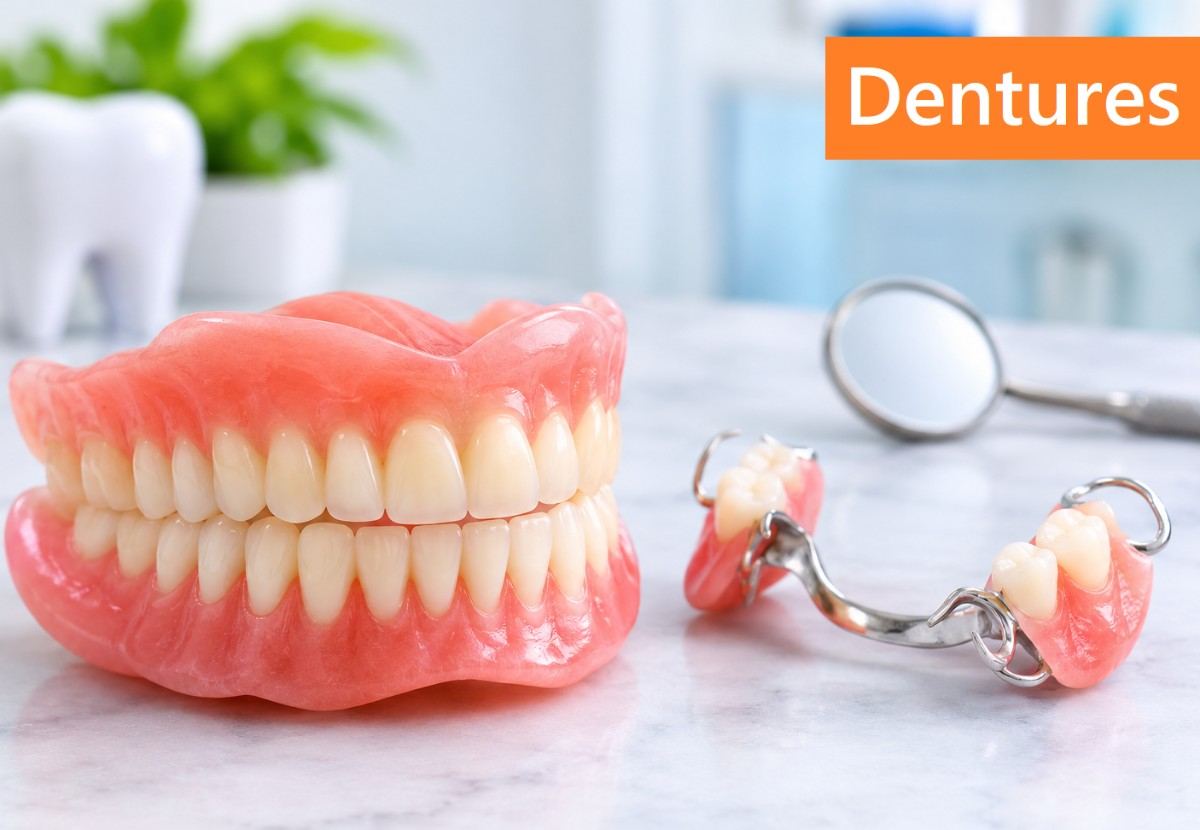
Dentures (also known as false teeth) are removable dental appliances designed to replace missing teeth and restore the appearance and function of your smile. They can make everyday activities such as eating, speaking, and smiling more comfortable while helping support facial appearance.
Losing teeth can affect more than just your smile. It may change the way you chew food, pronounce certain words, and feel about your appearance. Fortunately, modern dentures are designed to look more natural, fit comfortably, and help people regain confidence in their daily lives.
In this guide, you will learn what dentures are, the different types available, their benefits, disadvantages, costs, how to care for them, and what to expect when getting your first set.
What Are Dentures?
Dentures are custom-made removable dental appliances that replace missing teeth and surrounding tissues. They are usually made from materials such as acrylic resin, metal, or a combination of these materials.
A dentist creates dentures to fit the shape of your mouth and match your natural-looking teeth as closely as possible.
Dentures can replace a few missing teeth or an entire set of upper or lower teeth. Depending on how many natural teeth remain, your dentist may recommend complete dentures, partial dentures, or implant-supported dentures.
Unlike dental implants, traditional dentures can be removed for cleaning and maintenance.
Why Do People Need Dentures?
People may need dentures when they lose several or all of their natural teeth. Tooth loss can happen for different reasons, including:
- Severe Tooth Decay: Extensive cavities can damage teeth beyond repair.
- Gum Disease: Advanced periodontal disease can damage the tissues and bone that support teeth.
- Dental Injuries: Accidents, falls, or sports injuries can result in tooth loss.
- Aging: The risk of tooth loss may increase with age due to accumulated dental problems, although tooth loss is not an inevitable part of aging.
- Tooth Extraction: Some teeth may need to be removed because of infection, damage, or other dental conditions.
- Poor Oral Hygiene: Inadequate brushing and dental care can contribute to decay and gum disease.
Dentures help replace missing teeth and restore important everyday functions.
Types of Dentures
There are several types of dentures, and each is designed for different dental needs. Your dentist will recommend an option based on the number of missing teeth, jawbone condition, oral health, and personal preferences.
1. Complete Dentures (Full Dentures)
Complete dentures replace all the natural teeth in the upper jaw, lower jaw, or both. They rest on the gums and are designed for people who have lost all their teeth in one or both arches.
They are custom-made to fit the mouth and help restore chewing, speaking, and facial appearance.
Best for: People who have lost all their teeth in the upper or lower jaw.
2. Partial Dentures
Partial dentures replace one or several missing teeth when some natural teeth are still present. They usually consist of artificial teeth attached to an acrylic or metal framework.
Some partial dentures use clasps that attach to existing teeth to help keep the appliance in place.
Best for: People who still have healthy natural teeth but need to replace missing ones.
3. Immediate Dentures
Immediate dentures are prepared before natural teeth are extracted and placed in the mouth immediately after the extraction procedure.
They allow patients to avoid spending time without teeth while their gums heal. However, the shape of the gums and jaw changes during healing, so immediate dentures often require adjustments, relining, or replacement.
Best for: People who need teeth replacement immediately after dental extractions.
4. Implant-Supported Dentures
Implant-supported dentures are attached to dental implants placed in the jawbone. These implants provide additional support and help keep the dentures more stable than conventional removable dentures.
Some implant-supported dentures can be removed by the patient, while fixed versions can only be removed by a dental professional.
Best for: People looking for improved denture stability who are suitable candidates for dental implants.
5. Overdentures
Overdentures are designed to fit over and receive support from remaining natural tooth roots or dental implants. They can help improve stability and may help preserve some remaining tooth structure when appropriate.
Best for: People who have suitable remaining tooth roots or dental implants that can support an overdenture.
6. Flexible Dentures
Flexible dentures are removable partial dentures made from flexible materials, often thermoplastic resin. They are designed to adapt to the shape of the mouth and may feel less rigid than traditional acrylic dentures.
They can be an option for certain patients, although they are not suitable for every dental situation.
Best for: Selected patients who need a removable partial denture and are suitable for flexible materials.
Materials Used to Make Dentures
Dentures are made using different materials depending on the type, design, durability, appearance, and patient’s dental needs.
| Denture material | Main characteristics |
|---|---|
| Acrylic resin | Lightweight, commonly used for full dentures |
| Cobalt-chromium metal | Strong, durable, commonly used in partial denture frameworks |
| Flexible thermoplastic resin | More flexible and often used for selected partial dentures |
| Porcelain | Can be used for artificial denture teeth |
| Composite resin | Used for certain artificial teeth and dental restorations |
Your dentist will help determine which material is appropriate based on your oral health and treatment requirements.
Benefits of Dentures
Dentures offer several benefits for people who have lost natural teeth. Their main purpose is to restore oral function and improve everyday quality of life.
- Restore Your Smile: Dentures replace missing teeth and help create a more complete, natural-looking smile.
- Improve Chewing Ability: They make it easier to chew many foods compared with having no teeth.
- Support Clear Speech: Replacing missing teeth can improve the pronunciation of certain words and sounds.
- Improve Facial Appearance: Dentures can help support the lips and cheeks, reducing the sunken appearance associated with extensive tooth loss.
- Increase Self-Confidence: A restored smile may help people feel more comfortable in social situations.
- Replace Multiple Missing Teeth: They can replace several teeth or an entire set, depending on the design.
- Offer Removable Treatment: Traditional dentures can be taken out for cleaning and maintenance.
- Provide Customized Fit: Dentures are designed according to the measurements and shape of an individual’s mouth.
- Improve Eating Comfort: Properly fitted dentures can make eating a wider variety of foods easier.
- Provide Different Treatment Options: Patients can choose from full, partial, immediate, and implant-supported options.
- Restore Dental Function: They help replace some of the functions performed by natural teeth.
- Support Lip Appearance: Well-designed dentures can provide support to the lips and surrounding facial tissues.
- Offer Non-Surgical Options: Conventional dentures generally do not require implant surgery.
- Replace Extracted Teeth: Immediate dentures can provide replacement teeth directly after extractions.
- Improve Everyday Comfort: Properly fitted dentures can make daily activities involving eating and speaking more manageable.
- Allow Personalized Tooth Selection: Denture teeth can be selected to complement facial features and appearance.
- Help Maintain a Complete Smile: They fill visible gaps caused by missing teeth.
- Offer Different Price Options: Various materials and designs provide options for different treatment budgets.
- Provide Long-Term Tooth Replacement: With appropriate care, dentures can serve as a tooth-replacement option for several years.
- Improve Quality of Life: Restoring missing teeth may make eating, speaking, and social interactions more comfortable.
Risks and Side Effects of Dentures
Although dentures can improve oral function, they may also cause some temporary or ongoing problems, particularly when they are new or do not fit properly.
Here are 10 possible disadvantages and side effects:
- Initial Discomfort: New dentures may cause mild discomfort while the mouth adjusts to the appliance.
- Gum Irritation: Poorly fitting dentures can rub against the gums and cause irritation or sore spots.
- Difficulty Speaking: Some people initially experience changes in pronunciation or speech clarity.
- Eating Difficulties: Chewing may feel uncomfortable until the wearer learns to use dentures properly.
- Increased Saliva Production: New dentures may temporarily stimulate excess saliva production.
- Loose Dentures: Changes in the gums and jawbone can cause dentures to become loose over time.
- Mouth Infections: Poor denture hygiene may increase the risk of fungal infections and denture-related stomatitis.
- Food Trapping: Food particles may become trapped underneath dentures, causing discomfort and irritation.
- Taste and Temperature Changes: Dentures, particularly upper denture, may affect how some people experience food and temperature.
- Jawbone Changes: Following tooth loss, the jawbone can gradually shrink because it no longer receives normal stimulation from natural tooth roots.
If your dentures cause persistent pain, bleeding, mouth ulcers, swelling, or difficulty eating, consult your dentist instead of trying to adjust them yourself.
How Much Do Dentures Cost?
The cost of dentures depends on the type of appliance, materials, dental clinic, location, and additional procedures required.
For example, a basic acrylic denture may cost less than a custom-made metal partial denture or implant-supported denture.
The following factors can influence the overall cost:
- Type of Dentures: Full, partial, immediate, and implant-supported denture have different costs.
- Materials Used: Acrylic, metal, and flexible materials can affect the price.
- Number of Teeth Replaced: Replacing an entire set may require a different treatment plan from replacing a few teeth.
- Dental Extractions: Removing damaged or infected teeth may add to the total expense.
- Dental Implants: Implant placement and related procedures can significantly increase treatment costs.
- Dentist’s Experience: Professional fees vary depending on the dentist and clinic.
- Follow-Up Appointments: Adjustments, repairs, and relining may involve additional charges.
Before starting treatment, ask your dentist for a complete estimate that includes consultations, impressions, denture fabrication, fitting, adjustments, and any additional procedures.
How Are Dentures Made and Fitted?
Getting dentures usually involves several dental appointments. The exact process depends on whether you need full, partial, immediate, or implant-supported denture.
Step 1: Initial Dental Examination
Your dentist examines your teeth, gums, jawbone, and overall oral health to determine whether dentures are suitable.
Step 2: Dental Impressions or Scanning
The dentist takes impressions or digital scans of your mouth to create a model for your custom denture.
Step 3: Denture Design
Your dentist and dental laboratory determine the appropriate size, shape, color, and arrangement of the artificial teeth.
Step 4: Trial Fitting
A trial denture may be placed in your mouth to check its appearance, bite, comfort, and fit. Adjustments can be made before the final appliance is produced.
Step 5: Final Denture Placement
Once the dentures are ready, your dentist places them in your mouth and checks their fit and function.
Step 6: Follow-Up Adjustments
You may need additional appointments to correct pressure points, improve comfort, and ensure the denture fit properly.
The entire process can take several weeks, although immediate denture may be provided sooner. Implant-supported dentures may require a longer treatment period because the implants need time to heal and integrate with the jawbone.
How to Get Used to Wearing Dentures
Getting used to dentures takes time and patience. At first, they may feel bulky or strange, but most people gradually become more comfortable with regular practice.
Here are some helpful tips:
- Start With Soft Foods: Eat foods such as mashed potatoes, yogurt, scrambled eggs, and soft vegetables.
- Cut Food Into Small Pieces: Smaller portions make chewing easier during the adjustment period.
- Chew Slowly: Take your time and try to chew on both sides of your mouth.
- Practice Speaking: Read aloud or practice everyday conversations to improve pronunciation.
- Drink Enough Water: Staying hydrated can help manage dry mouth.
- Follow Your Dentist’s Instructions: Wear your denture according to the schedule recommended by your dental professional.
- Attend Follow-Up Appointments: Regular adjustments can improve comfort and stability.
- Avoid Adjusting Them Yourself: Do not bend, trim, or repair denture at home.
If your dentures remain painful or repeatedly slip out of place, contact your dentist for an examination.
How to Clean and Care for Dentures
Proper denture care is essential for maintaining oral hygiene, preventing unpleasant odors, and extending the life of your appliance.
Follow these denture-care tips:
- Remove Dentures for Cleaning: Take out removable denture before cleaning them.
- Rinse After Meals: Rinse them with water to remove loose food particles.
- Brush Daily: Use a soft-bristled denture brush and a non-abrasive denture cleanser.
- Avoid Regular Toothpaste: Many toothpastes are too abrasive and can scratch denture surfaces.
- Clean Your Mouth: Brush your gums, tongue, cheeks, and the roof of your mouth gently.
- Soak When Not Wearing: Store denture according to your dentist’s instructions and the manufacturer’s guidance. Many conventional denture need to remain moist to prevent drying and warping.
- Avoid Hot Water: Hot or boiling water can change the shape of dentures.
- Handle Carefully: Clean them over a sink filled with water or a folded towel to reduce the risk of breakage if dropped.
- Use Denture Cleaners Correctly: Follow product instructions and never use a denture-cleaning solution inside your mouth.
- Schedule Regular Dental Visits: Have your dentist check the fit, condition, and health of your mouth.
Important: Do not sleep with removable denture unless your dentist specifically recommends it. Most people should remove them overnight to allow their oral tissues to rest.
How Long Do Dentures Last?
Dentures can last several years, but their lifespan depends on the materials, quality, daily care, and changes in the mouth.
Over time, the gums and jawbone may change shape after tooth loss. This can make previously comfortable dentures feel loose or unstable.
Some denture may need adjustments, relining, repairs, or replacement to maintain a proper fit.
Regular dental examinations are important even if you no longer have natural teeth. Your dentist can identify problems and determine whether your denture still meet your needs.
Who Is a Good Candidate for Dentures?
Dentures may be suitable for adults who have lost one or more teeth and want to restore their ability to chew, speak, and smile.
You may be a candidate if you:
- Have lost most or all of your natural teeth.
- Have several missing teeth that affect chewing.
- Have difficulty speaking because of missing teeth.
- Want a removable alternative to dental implants.
- Need replacement teeth after dental extractions.
- Have healthy remaining teeth that can support a partial denture.
Your dentist will evaluate your gums, jawbone, remaining teeth, and general oral health before recommending treatment.
Who Should Avoid or Take Extra Care With Dentures?
Dentures are suitable for many people, but certain oral health problems may require treatment before fitting.
- People With Untreated Gum Disease: Active gum infections should be evaluated and treated before denture fitting.
- People With Severe Mouth Infections: Existing infections may need medical or dental treatment first.
- People With Persistent Mouth Ulcers: The underlying cause should be investigated before wearing dentures.
- People With Poor Oral Hygiene: Proper cleaning habits are important for preventing infections and irritation.
- People With Severe Jawbone Changes: Special denture designs or implant-supported options may be necessary.
- People With Frequent Denture-Related Irritation: They may need adjustments or an alternative treatment.
Having one of these conditions does not automatically mean you cannot wear denture. A dental professional can recommend an appropriate treatment plan.
When Should You Replace or Adjust Your Dentures?
Dentures should be checked regularly because your mouth changes over time. Wearing damaged or poorly fitting denture can cause unnecessary discomfort.
Consider visiting your dentist if:
- Your denture frequently slip while eating or speaking.
- You experience repeated gum irritation or mouth sores.
- Your denture develop cracks or broken teeth.
- You notice changes in your bite.
- You need increasing amounts of denture adhesive to keep them in place.
- You experience difficulty chewing with previously comfortable denture.
Never attempt to repair broken denture using household glue or other adhesives. Professional repairs help maintain their fit and safety.
FAQ’s
What are dentures made of?
Dentures are commonly made from acrylic resin, metal frameworks, flexible thermoplastic materials, or combinations of these materials.
Are dentures painful?
New denture may cause temporary soreness or discomfort while your mouth adjusts. Persistent pain usually requires a dental examination and possible adjustments.
Can you sleep with dentures?
Most people should remove their removable dentures before sleeping to allow their gums and oral tissues to rest, unless their dentist recommends otherwise.
How long does it take to get used to dentures?
It may take several weeks to become comfortable with new denture. Speaking and eating generally become easier with practice.
Can you eat normally with dentures?
Yes, most people can eat many foods with properly fitted dentures. However, you may need to start with soft foods and gradually introduce harder foods.
Are dentures better than dental implants?
Neither option is universally better. Dentures are generally less invasive and removable, while dental implants offer a fixed replacement option for suitable candidates.
Can dentures look like natural teeth?
Yes. Modern denture can be customized according to tooth color, shape, size, and facial appearance to create a natural-looking smile.
Do dentures need to be replaced?
Yes. Denture may need replacement when they become worn, damaged, or poorly fitted. Your dentist can determine when replacement is necessary.
Can you wear dentures if you have gum disease?
You may be able to wear denture after gum disease has been properly evaluated and treated. Your dentist will determine the appropriate timing.
How do you keep dentures from falling out?
Properly fitted dentures, professional adjustments, and dentist-recommended denture adhesives can help improve stability. Repeated slipping should be evaluated by a dentist.
Can dentures change your face shape?
Denture can help support the lips and cheeks, improving facial appearance after tooth loss. However, they cannot completely prevent natural jawbone changes.
Can you wear dentures if you have no teeth?
Yes, complete dentures are specifically designed for people who have lost all their natural teeth in the upper jaw, lower jaw, or both.
What foods should you avoid with dentures?
Avoid or limit very sticky, hard, and tough foods, such as chewing gum, hard candies, and tough meats, especially while adjusting to new denture.
Do dentures cause bad breath?
Denture can contribute to bad breath if food particles, plaque, and bacteria accumulate on them. Daily cleaning and proper oral hygiene help prevent this problem.
Can dentures become loose over time?
Yes, denture can become loose as the gums and jawbone gradually change shape. A dentist may recommend adjustments, relining, or replacement.
What happens if you don’t wear your dentures?
Not wearing denture may affect chewing, speech, and facial support. However, removing removable denture overnight is generally recommended.
Are dentures suitable for older adults?
Yes, dentures are commonly used by older adults to replace missing teeth and improve everyday oral function. Age alone does not determine suitability.
Can you get dentures immediately after tooth extraction?
Yes, immediate denture can be prepared before tooth extraction and placed immediately afterward. Adjustments may be needed as the gums heal.
Do dentures need special toothpaste?
Yes, denture should be cleaned with a non-abrasive denture cleanser rather than regular toothpaste, which may scratch their surfaces.
Can dentures help you speak clearly?
Yes, denture can improve speech by replacing missing teeth that help form certain sounds. Some people need practice to adjust to speaking with them.
How much do 4 dentures cost?
The cost depends on the denture type, materials, and dental clinic.
What is the biggest complaint about dentures?
Common complaints include discomfort, slipping, gum irritation, and difficulty chewing.
What is better than dentures?
Dental implants and implant-supported bridges are popular alternatives.
What foods should you avoid with dentures?
Avoid very sticky, hard, and tough foods that may damage or loosen denture.
How many years do dentures last?
Denture typically last several years but may need adjustments or replacement.
What are the newest types of dentures?
Modern options include 3D-printed, digitally designed, milled, and implant-supported denture.
Disclaimer:
This article is for educational purposes only and should not replace professional dental advice, diagnosis, or treatment. Consult a qualified dentist for personalized recommendations.
Sources / References:
Also Read: