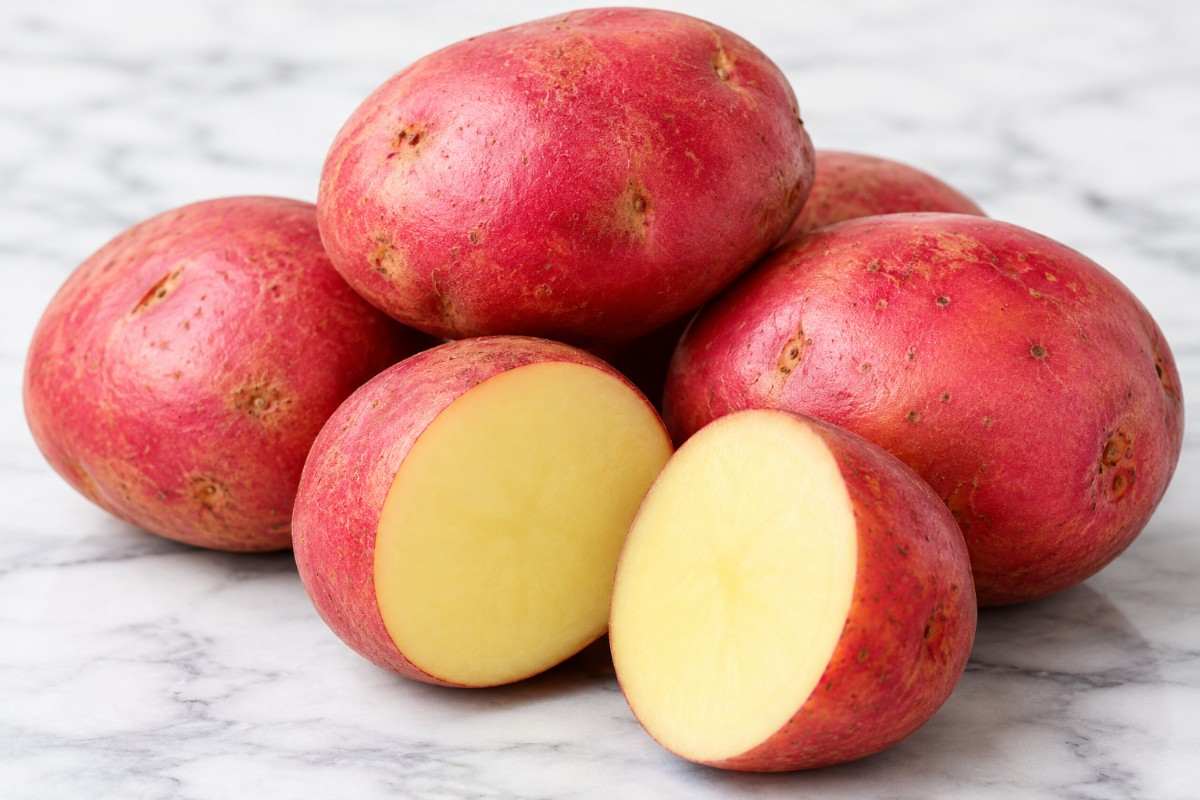
Red potatoes are a popular choice for everyday meals because they are tasty, easy to cook, and packed with useful nutrients. Their smooth red skin, creamy texture, and mild flavor make them suitable for roasting, boiling, baking, and salads.
They are a good source of carbohydrates, potassium, vitamin C, and vitamin B6. Red potatoes also provide dietary fiber, especially when you eat them with their skin.
Whether you enjoy them as a breakfast side dish or add them to your favorite dinner recipe, red potatoes can be a nutritious part of a balanced diet.
Let’s explore their nutrition facts, health benefits, possible side effects, and different ways to enjoy them.
What Are Red Potatoes?
Red potatoes are a variety of potato with smooth, thin red skin and white or creamy-colored flesh. They belong to the nightshade family and are scientifically known as Solanum tuberosum.
You may have seen them in grocery stores under names such as red bliss potatoes or simply red potatoes. They are popular because they have a naturally mild flavor and a moist, creamy texture.
One thing people often like about red potatoes is that you usually don’t need to peel them. Their skin is thin enough to eat, and leaving it on adds fiber and beneficial plant compounds to your meal.
Red potatoes also hold their shape after cooking. That’s why they work particularly well in potato salads, roasted vegetable dishes, soups, and stews.
Common characteristics of red potatoes:
- Appearance: Smooth red or reddish-pink skin with creamy flesh.
- Taste: Mild, slightly sweet, and earthy.
- Texture: Soft and creamy while holding their shape after cooking.
- Skin: Thin, edible skin that contains fiber.
- Nutrition: Provides potassium, vitamin C, vitamin B6, and carbohydrates.
- Uses: Commonly used in salads, soups, roasted dishes, and mashed potatoes.
Nutrition Facts of Red Potatoes
Red potatoes provide carbohydrates for energy along with several vitamins and minerals. Eating them with the skin adds dietary fiber and beneficial plant compounds.
Approximate nutrition values per 100 grams of raw red potatoes with skin:
| Nutrient | Amount |
|---|---|
| Calories | 70 kcal |
| Carbohydrates | 15.9 g |
| Protein | 1.89 g |
| Total Fat | 0.14 g |
| Dietary Fiber | 1.7 g |
| Sugar | 1.29 g |
| Potassium | 455 mg |
| Vitamin C | 8.6 mg |
| Vitamin B6 | 0.17 mg |
| Magnesium | 22 mg |
| Phosphorus | 61 mg |
| Calcium | 10 mg |
| Iron | 0.73 mg |
| Zinc | 0.33 mg |
| Folate | 18 mcg |
| Sodium | 18 mg |
Source: USDA FoodData Central. Values are approximate and may vary depending on potato variety and growing conditions.
20 Proven Health Benefits of Red Potatoes
Red potatoes contain nutrients that support different functions in your body. Here are 20 potential health benefits.
1. Supports Heart Health: Red potatoes provide potassium, which supports normal heart function and healthy blood pressure.
2. Helps Maintain Blood Pressure: Potassium helps balance sodium levels and supports healthy blood pressure regulation.
3. Supports Digestion: Their skin provides fiber, which helps maintain regular bowel movements.
4. Provides Antioxidants: Red potato skin contains plant compounds that help protect cells against oxidative stress.
5. Supports Immune Health: Vitamin C helps your immune system function properly and protects cells from damage.
6. Supports Muscle Function: Potassium helps muscles contract and function normally.
7. Provides Energy: Their carbohydrates supply energy for everyday activities and exercise.
8. Supports Bone Health: Magnesium and phosphorus contribute to maintaining healthy bones.
9. Supports Brain Function: Vitamin B6 helps produce neurotransmitters that support communication between nerve cells.
10. Supports Red Blood Cell Formation: Vitamin B6 contributes to hemoglobin production, which helps transport oxygen.
11. May Help With Weight Management: Boiled red potatoes can be filling and fit into a balanced weight-management diet.
12. Supports Nerve Function: Potassium and vitamin B6 contribute to normal nervous system function.
13. Maintains Fluid Balance: Potassium helps regulate fluid levels inside your cells.
14. Supports Collagen Production: Vitamin C helps your body produce collagen for healthy skin, bones, and blood vessels.
15. Supports Wound Healing: Vitamin C contributes to tissue repair and normal wound healing.
16. Provides Essential Minerals: Red potatoes supply magnesium, iron, potassium, and phosphorus for everyday body functions.
17. Supports Healthy Skin: Vitamin C helps maintain collagen and protects cells against oxidative damage.
18. Supports Metabolism: Vitamin B6 helps your body process carbohydrates, fats, and proteins.
19. May Support Gut Health: Cooked and cooled potatoes contain resistant starch that can support beneficial gut bacteria.
20. Improves Dietary Variety: Red potatoes are easy to combine with vegetables and protein-rich foods for balanced meals.
10 Side Effects of Red Potatoes
Red potatoes are generally safe to eat, but eating excessive amounts or consuming improperly stored potatoes may cause problems.
1. May Increase Blood Sugar: Their starch content can raise blood glucose, especially when eaten in large portions.
2. May Cause Bloating: Eating too many potatoes may cause gas or stomach discomfort in some people.
3. May Contribute to Weight Gain: Frequent consumption of fried potatoes or calorie-heavy toppings can increase calorie intake.
4. May Be a Concern for Kidney Patients: Their potassium content may be unsuitable for people who need to restrict potassium.
5. May Trigger Allergies: Some people may experience itching, hives, or digestive symptoms due to potato allergies.
6. May Cause Nausea: Green or heavily sprouted potatoes may contain high levels of natural toxins.
7. May Cause Diarrhea: Eating potatoes with elevated glycoalkaloid levels can cause digestive symptoms, including diarrhea.
8. Can Add Extra Calories: Deep-frying red potatoes increases their fat and calorie content.
9. May Affect Diabetes Management: Large portions can make blood sugar control more difficult.
10. May Cause Gas: Resistant starch in cooked and cooled potatoes may cause bloating in sensitive individuals.
Important: Avoid green, bitter, rotten, or severely sprouted potatoes. Cooking does not reliably remove elevated levels of potato toxins.
How to Eat Red Potatoes?
Red potatoes are easy to prepare and work well in everyday meals. Here are some simple ways to enjoy them:
- Boiled Red Potatoes: Boil until tender and season with olive oil, parsley, and black pepper.
- Roasted Red Potatoes: Cut into wedges, add garlic and herbs, and roast until golden.
- Red Potato Salad: Mix boiled potatoes with cucumber, onion, and a light dressing.
- Mashed Red Potatoes: Mash cooked potatoes with a little milk or olive oil.
- Red Potato Soup: Add diced potatoes to homemade vegetable soup.
- Breakfast Potatoes: Cook them with onions and bell peppers for a filling breakfast.
- Grilled Red Potatoes: Slice and grill with your favorite seasonings.
- Steamed Red Potatoes: Steam small potatoes and serve with lemon juice and herbs.
Tips for Consuming Red Potatoes
A few simple habits can help you enjoy red potatoes as part of a healthy diet.
- Keep the Skin On: The skin provides additional fiber and plant compounds.
- Choose Fresh Potatoes: Buy firm potatoes without mold or excessive sprouts.
- Avoid Deep Frying: Choose boiling, steaming, or roasting more often.
- Control Portions: Enjoy a moderate serving with other foods.
- Use Fresh Herbs: Add garlic, rosemary, parsley, or black pepper for flavor.
- Pair With Protein: Serve potatoes with eggs, chicken, fish, beans, or tofu.
- Add Vegetables: Combine them with broccoli, spinach, carrots, or cabbage.
- Limit Heavy Toppings: Avoid excessive butter, cream, and cheese.
- Wash Before Cooking: Clean the skin under running water.
- Eat a Varied Diet: Include other vegetables, whole grains, and legumes.
How to Cook Red Potatoes?
Red potatoes are easy to cook at home. Their firm texture makes them suitable for several cooking methods.
1. How to Boil Red Potatoes
- Wash the potatoes thoroughly.
- Leave small potatoes whole or cut larger ones into pieces.
- Place them in a saucepan and cover with cold water.
- Add a little salt if desired.
- Bring to a boil and simmer until fork-tender.
- Drain and season with herbs.
Cooking time: 15–25 minutes.
2. How to Roast Red Potatoes
- Preheat your oven to 425°F (220°C).
- Wash and cut potatoes into wedges.
- Toss with a little olive oil.
- Add garlic, rosemary, and black pepper.
- Spread on a baking sheet.
- Roast until golden and tender.
Cooking time: 25–35 minutes.
3. How to Make Mashed Red Potatoes
- Wash and cut potatoes into smaller pieces.
- Boil until soft.
- Drain the water.
- Mash using a potato masher.
- Add warm milk or olive oil.
- Season with garlic and black pepper.
Cooking time: 15–20 minutes for boiling.
4. How to Make Red Potato Salad
- Wash and cut potatoes into bite-sized pieces.
- Boil until tender but firm.
- Drain and let them cool.
- Add cucumber, onion, celery, and parsley.
- Mix with plain yogurt or a light dressing.
- Refrigerate before serving.
Cooking time: 15–20 minutes for boiling, plus cooling.
Other Uses of Red Potatoes
Red potatoes can be used in many homemade recipes beyond ordinary side dishes.
- Vegetable Soup: Add diced potatoes to make soups more filling.
- Potato Casseroles: Use sliced potatoes in layered vegetable casseroles.
- Homemade Potato Wedges: Bake seasoned wedges for a simple snack.
- Breakfast Hash: Combine potatoes with onions, peppers, and eggs.
- Cold Potato Salads: Use cooked potatoes in chilled salads.
- Stuffed Potatoes: Fill cooked potatoes with beans, vegetables, or cheese.
- Vegetable Skewers: Add partially cooked small potatoes to grilled vegetable skewers.
- Potato Patties: Combine mashed potatoes with vegetables and seasonings.
- Shepherd’s Pie: Use mashed red potatoes as a topping.
- Meal Preparation: Divide cooked potatoes into meal-preparation containers with vegetables and protein.
How Much Red Potatoes Can You Eat in a Day?
There is no fixed daily recommendation specifically for red potatoes. Your ideal portion depends on your activity level, nutritional needs, and health conditions.
For many healthy adults, around 100–150 grams of cooked red potatoes can be a reasonable starting serving.
- For General Health: Enjoy 100–150 grams as part of a balanced meal.
- For Active Individuals: Larger portions may suit higher energy requirements.
- For Weight Management: Choose boiled or roasted potatoes with limited added fat.
- For People With Diabetes: Monitor portions and total carbohydrate intake.
- For People With Kidney Problems: Follow medical advice about potassium intake.
Best Time to Eat Red Potatoes
You can enjoy red potatoes at any time of the day. There is no scientifically established best time to eat them.
- At Breakfast: Serve with eggs and vegetables for a filling morning meal.
- At Lunch: Add them to salads or serve alongside protein.
- Before Exercise: Their carbohydrates can provide energy for physical activity.
- After Exercise: Pair them with protein to replenish energy.
- At Dinner: Enjoy a moderate serving with vegetables and a protein source.
Who Should Eat Red Potatoes?
Red potatoes can fit into many eating patterns and provide useful nutrients.
- Active Individuals: Their carbohydrates help meet daily energy requirements.
- People Needing More Fiber: Eating the skin adds dietary fiber to meals.
- Vegetarians: They provide potassium, vitamin C, and vitamin B6.
- Older Adults: Their soft cooked texture makes them easy to enjoy.
- People Interested in Heart Health: Their potassium supports normal blood pressure.
- People Following Gluten-Free Diets: Plain red potatoes are naturally gluten-free.
- People Looking for Filling Meals: Boiled potatoes can help make meals satisfying.
- Busy Individuals: They are easy to cook and prepare in batches.
- People Following Plant-Based Diets: They pair well with beans, lentils, and tofu.
- People Who Enjoy Home Cooking: They work well in many simple homemade recipes.
Who Should Not Eat Red Potatoes?
Most people can safely eat red potatoes, but some may need to limit or avoid them.
- People With Potato Allergies: Avoid red potatoes if you have a confirmed allergy.
- People With Chronic Kidney Disease: Potassium restrictions may require smaller portions.
- People With Poorly Controlled Diabetes: Large servings may raise blood glucose.
- People With Digestive Sensitivities: Reduce portions if potatoes cause bloating or discomfort.
- People With Food Intolerances: Discuss repeated digestive symptoms with a healthcare professional.
- People Following Strict Low-Carb Diets: Their starch content may not fit your carbohydrate limits.
- People With High Blood Potassium: You may need to limit potassium-rich foods.
- People Taking Certain Medications: Some medicines can increase potassium levels.
- People With Suspected Nightshade Sensitivity: Seek medical advice if potatoes repeatedly trigger symptoms.
- People Handling Spoiled Potatoes: Never eat green, bitter, rotten, or heavily sprouted potatoes.
How to Store Red Potatoes?
Proper storage helps red potatoes stay fresh and reduces spoilage.
- Choose Firm Potatoes: Avoid potatoes with mold, soft spots, or deep cuts.
- Keep Them Cool: Store raw potatoes in a cool, dry place.
- Avoid Sunlight: Keep them in a dark location to prevent greening.
- Use a Breathable Container: Store in a paper bag or ventilated basket.
- Do Not Wash Before Storage: Wash them shortly before cooking.
- Keep Them Dry: Avoid damp storage conditions.
- Keep Away From Heat: Do not store near ovens or stoves.
- Check Regularly: Remove rotten or moldy potatoes.
- Avoid Airtight Bags: Trapped moisture can encourage spoilage.
- Refrigerate Cooked Potatoes: Store leftovers in a covered container within two hours and use within 3–4 days.
Precautions and Interactions
Keep these precautions in mind when buying, preparing, and eating red potatoes.
- Check for Green Skin: Green discoloration may indicate increased glycoalkaloid levels.
- Avoid Bitter Potatoes: An unusually bitter taste can signal elevated natural toxins.
- Be Careful With Sprouts: Discard heavily sprouted or shriveled potatoes.
- Wash Thoroughly: Remove dirt under clean running water.
- Cook Before Eating: Cook potatoes before consuming them.
- Monitor Potassium Intake: People with kidney conditions may need dietary restrictions.
- Watch Blood Sugar: Consider carbohydrate portions if you have diabetes.
- Check Medication Interactions: Potassium-sparing diuretics may affect potassium levels.
- Maintain Vitamin K Consistency: People taking warfarin should keep vitamin K intake consistent.
- Store Leftovers Safely: Refrigerate cooked potatoes promptly.
- Limit Excess Salt: Too much added salt can increase sodium intake.
- Choose Healthier Cooking Methods: Prefer boiling, steaming, or roasting over deep-frying.
FAQ’s
Are red potatoes healthier than white potatoes?
Both varieties provide useful nutrients. Their nutritional differences depend on the variety and cooking method.
Can you eat red potato skin?
Yes. The skin is edible and provides fiber and beneficial plant compounds.
Are red potatoes good for weight loss?
Yes, they can fit into a weight-management diet when prepared with minimal added fat.
Are red potatoes good for diabetics?
People with diabetes can eat them in controlled portions while monitoring carbohydrate intake.
Are red potatoes gluten-free?
Yes. Plain red potatoes are naturally gluten-free.
Can you eat red potatoes every day?
Yes, provided they fit your nutritional needs and you maintain a varied diet.
Are red potatoes good for your heart?
Their potassium content supports normal blood pressure regulation.
Can you freeze red potatoes?
Yes. Cooked red potatoes can be frozen, although their texture may change after thawing.
Are red potatoes better boiled or baked?
Both are nutritious choices when prepared with moderate amounts of oil and salt.
What is the difference between red potatoes and normal potatoes?
Red potatoes have thin red skin, a firm texture, and a slightly sweet, earthy taste. Regular potatoes, such as russet potatoes, usually have thicker brown skin and a fluffier texture when cooked.
Are red potatoes healthier?
Red potatoes are a healthy choice because they provide potassium, vitamin C, fiber, and antioxidants. They are not necessarily healthier than all other potato varieties, as each type offers different nutritional benefits.
Are red potatoes safe for pregnant women?
Yes, red potatoes are generally safe during pregnancy when properly washed and fully cooked. They provide nutrients such as potassium and vitamin C. Avoid eating raw or spoiled potatoes.
Are red potatoes safe for children?
Yes, red potatoes can be included in children’s diets. They provide carbohydrates, potassium, and vitamin C. Cook them until soft and cut them into small, age-appropriate pieces to reduce choking risks.
What are red potatoes good for?
Red potatoes support energy production, muscle function, digestion, and overall health. They contain potassium, vitamin C, fiber, and antioxidants, especially when you eat the skin.
What do red potatoes taste like?
Red potatoes have a mild, slightly sweet, and earthy flavor. Their creamy, firm texture makes them suitable for roasting, boiling, salads, soups, and side dishes.
Sources / References:
Disclaimer:
This article is for educational purposes only and does not replace professional medical advice. Consult a healthcare professional for personalized dietary recommendations.
Also Read: