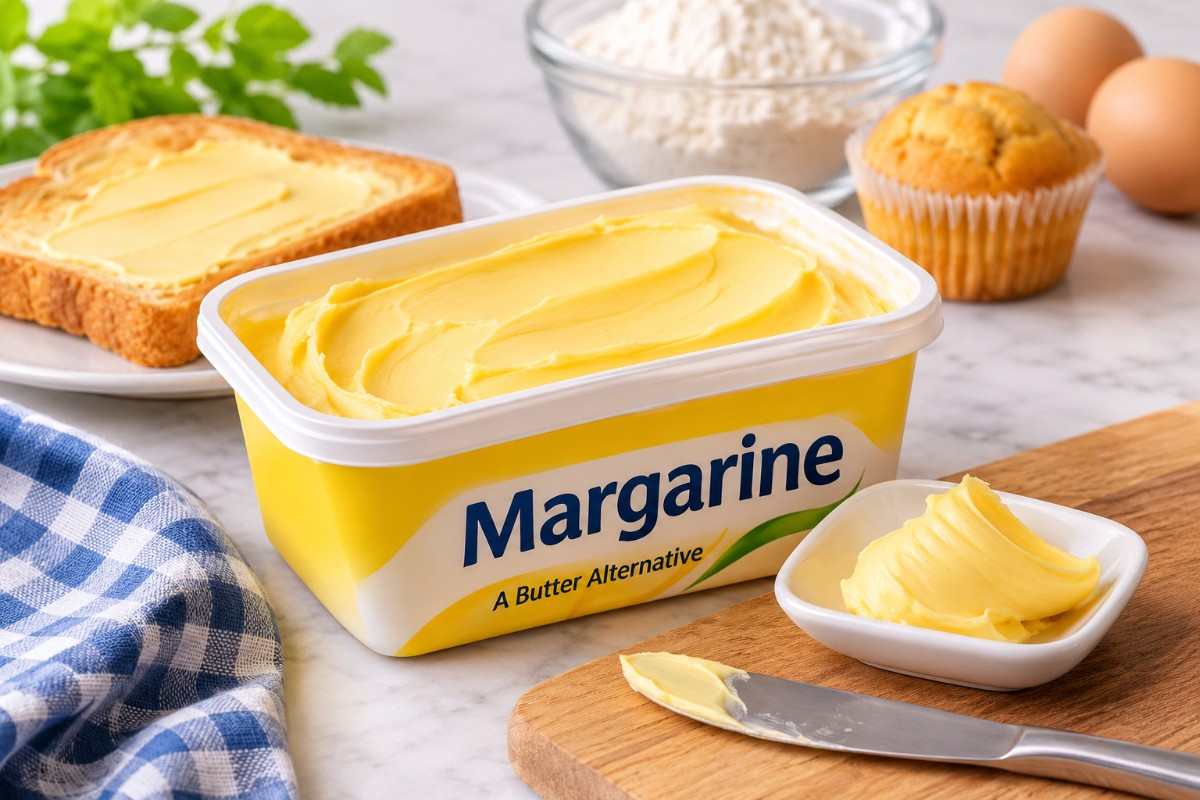
Margarine is a popular butter alternative used in cooking, baking, and spreading on bread. It is made mainly from vegetable oils and is available in different varieties, including soft tub margarine, stick margarine, and reduced-fat spreads.
Many people choose margarine because it can contain less saturated fat than butter. However, its nutritional value depends on the ingredients, the type of oil used, and whether it contains partially hydrogenated oils.
If you are trying to make healthier food choices, understanding the difference between margarine and butter can help you choose the right option for your daily diet.
What Is Margarine?
Margarine is a butter-like spread made primarily from vegetable oils. It is commonly used on bread, toast, vegetables, and in baking. Common oils used in margarine include soybean oil, canola oil, sunflower oil, and palm oil.
Manufacturers combine these oils with water and other ingredients to create a spreadable product. Some varieties also contain salt, emulsifiers, flavorings, and added vitamins. You can find margarine in different forms, such as soft tub spreads, hard sticks, and liquid varieties. Some products also contain added vitamins, salt, or flavorings.
Margarine is often chosen as a butter alternative because many varieties contain more unsaturated fat and less saturated fat than butter. However, the nutritional value depends on the ingredients used.
How Is Margarine Made?
Margarine is generally produced through the following steps:
- Vegetable oils are selected and blended.
- Water and other ingredients are added to create an emulsion.
- The mixture is processed to achieve the desired texture.
- It is cooled and crystallized to make the spread firm.
- Vitamins, flavorings, or salt may be added depending on the product.
Modern margarine manufacturers can use different methods to make oils more solid. Some products use blends of liquid and fully hydrogenated oils, while others use different fat-processing techniques.
Partially hydrogenated oils were previously common in margarine, but they became a major concern because they contain artificial trans fats. The U.S. FDA has taken action to remove partially hydrogenated oils from the food supply.
Types of Margarine
- Soft Tub Margarine: Easy to spread and often lower in saturated fat.
- Stick Margarine: Firm margarine commonly used for baking.
- Liquid Margarine: A pourable option for cooking and recipes.
- Light Margarine: Contains less fat and fewer calories than regular varieties.
- Plant Sterol Margarine: Contains added plant sterols that may help lower LDL cholesterol.
Nutritional Profile of Margarine
The nutrition facts vary by brand and type. Here is an approximate guide for 1 tablespoon (14 grams) of regular margarine.
| Nutrient | Approximate amount |
|---|---|
| Calories | 70–100 kcal |
| Total fat | 8–11 g |
| Saturated fat | 1–3 g |
| Monounsaturated fat | 2–4 g |
| Polyunsaturated fat | 2–5 g |
| Carbohydrates | 0–1 g |
| Protein | 0–0.5 g |
| Sodium | 50–150 mg |
| Cholesterol | Usually 0 mg |
These are general estimates, not the nutrition facts for a specific brand. Check your product’s label for exact values.
Margarine is mainly a source of fat. Some varieties also contain added vitamins A and D. Always check the product label for exact nutrition information.
20 Potential Health Benefits of Margarine
Margarine may offer some nutritional benefits when you choose a variety made with unsaturated vegetable oils and eat it in moderate amounts.
- May Support Heart Health: Unsaturated fats can be a healthier choice than saturated fats.
- May Help Lower LDL Cholesterol: Replacing saturated fat with unsaturated fat can improve cholesterol levels.
- Provides Unsaturated Fats: These fats support several normal body functions.
- May Reduce Saturated Fat Intake: Soft oleo often contains less saturated fat than butter.
- Contains No Dietary Cholesterol: Plant-based oleo generally contains no cholesterol.
- May Provide Vitamin A: Fortified varieties can support normal vision and immunity.
- May Provide Vitamin D: Some products help support bone health through added vitamin D.
- Contains Vitamin E: Vegetable oils provide vitamin E, which protects cells.
- Helps Absorb Vitamins: Dietary fat helps your body absorb vitamins A, D, E, and K.
- Adds Flavor to Meals: A small amount can make simple foods more enjoyable.
- Can Suit Vegan Diets: Dairy-free margarine provides a plant-based alternative to butter.
- Fits into Balanced Meals: Moderate portions can be part of a balanced diet.
- Offers a Butter Alternative: Switching spreads may help reduce saturated fat intake.
- Provides Essential Fatty Acids: Some varieties contain fats your body needs from food.
- Supports Cell Function: Essential fats help maintain healthy cell membranes.
- Useful for Baking: Margarine adds softness and moisture to baked foods.
- May Help Lower LDL Cholesterol: Plant sterol-enriched spreads can help reduce LDL cholesterol.
- Offers Different Oil Choices: You can choose spreads made with different vegetable oils.
- Makes Vegetables More Enjoyable: A little oleo can improve the taste of cooked vegetables.
- Convenient for Cooking: Margarine works well in sandwiches, baking, and everyday recipes.
10 Possible Side Effects of Margarine
Margarine is generally safe for most people, but some varieties may have disadvantages.
- May Cause Weight Gain: Eating too much can add extra calories to your diet.
- May Contain Saturated Fat: Some varieties use palm or coconut oil.
- May Contain Trans Fat: Check the ingredients for partially hydrogenated oils.
- May Add Extra Sodium: Salted oleo can increase your daily salt intake.
- May Cause Digestive Discomfort: Large amounts of fat may cause bloating or nausea.
- May Trigger Allergies: Some products contain soy, milk, or other allergens.
- May Contain Added Ingredients: Certain varieties include flavorings or preservatives.
- Easy to Overuse: Thick spreads can add more calories than expected.
- May Affect Baking Results: Light oleo may not work well in every recipe.
- Not Always Ideal for Cooking: Liquid vegetable oils may be a better everyday choice.
Avoid products containing partially hydrogenated oils because industrial trans fats can increase the risk of heart disease. American Heart Association+1
How to Use Margarine
Margarine is easy to include in everyday meals.
- On Toast: Spread a thin layer on whole-grain toast.
- In Vegetables: Add a small amount to cooked vegetables.
- For Baking: Use it in cakes, muffins, and cookies when suitable.
- In Sandwiches: Spread it lightly on bread or wraps.
- With Mashed Potatoes: Add a little for a smooth texture.
- For Cooking Eggs: Use a small amount to grease the pan.
How Much Margarine Should You Eat Per Day?
There is no official daily serving size for margarine.
A small amount, such as 1 teaspoon to 1 tablespoon, can fit into a balanced diet. Your ideal portion depends on your calorie needs and overall fat intake.
If you are watching your weight or cholesterol, measure your portion and choose a spread with less saturated fat.
How to Choose Healthy Margarine
When buying margarine, keep these simple tips in mind:
- Choose soft tub or liquid varieties.
- Look for vegetable oils listed near the beginning of the ingredients.
- Pick a product with lower saturated fat.
- Choose unsalted oleo if you need to limit sodium.
- Avoid partially hydrogenated oils.
- Compare calories and fat per serving.
- Check for milk ingredients if you follow a vegan diet.
How to Store Margarine
- Keep margarine refrigerated according to the package instructions.
- Store it in a covered container.
- Use a clean knife or spoon.
- Avoid leaving it out for long periods.
- Follow the best-before date.
- Discard it if the smell, color, or texture changes unusually.
How to Make Margarine at Home?
You can make a simple homemade margarine-style spread using vegetable oil, a little water, and a few basic ingredients. It has a creamy texture and works well on toast, sandwiches, and cooked vegetables.
Homemade margarine is technically a vegetable oil spread, rather than commercial margarine, which may use specific processing methods to create its texture.
Ingredients:
- ½ cup sunflower oil or canola oil
- ½ cup refined coconut oil
- 3 tablespoons cold water
- 1 teaspoon sunflower lecithin (helps keep the mixture together)
- ¼ teaspoon salt
- A tiny pinch of turmeric for color, optional
Instructions:
- Melt the coconut oil: Warm it gently until just melted. Let it cool slightly.
- Mix the water: Add cold water, lecithin, and salt to a blender.
- Add the oils: Slowly pour in the sunflower oil and melted coconut oil while blending.
- Blend until creamy: Continue blending until the mixture looks smooth and pale.
- Chill the spread: Transfer it to a clean, covered container and refrigerate for 2–3 hours until firm.
Tips for Better Homemade Margarine:
- Use refined coconut oil for a mild taste.
- Add oil slowly while blending to help create a smooth texture.
- If the spread becomes too hard, let it sit at room temperature for a few minutes before using.
- If it separates, blend it again while chilled slightly.
How to Store Homemade Margarine:
Because this recipe contains water and has no commercial preservatives, keep it refrigerated and use a clean spoon.
Use within 3–4 days for a cautious homemade storage period. Discard it if you notice an unusual smell, mold, or other signs of spoilage. Do not leave it at room temperature for long periods.
Note: Homemade margarine-style spread may have a different texture from store-bought margarine. It is best for spreading and simple cooking, rather than recipes that require the exact properties of commercial oleo.
Who Should Eat Margarine?
Margarine may be suitable for:
- People who want a butter alternative.
- People following a plant-based diet, if the product is dairy-free.
- People trying to reduce saturated fat intake.
- People who prefer vegetable oil-based spreads.
Who Should Limit or Avoid Margarine?
You may need to limit certain varieties if:
- You have an allergy to one of its ingredients.
- You need to reduce sodium intake.
- You are following a calorie-controlled diet.
- You have been advised to limit specific fats.
- The product contains partially hydrogenated oils.
People with high cholesterol or heart disease should choose spreads carefully and follow their healthcare professional’s dietary advice.
FAQ’s
What is margarine made of?
Margarine is mainly made from vegetable oils, water, and sometimes salt, vitamins, and flavorings.
Is margarine healthier than butter?
Soft margarine made with unsaturated oils is often a healthier choice for heart health than butter.
Is margarine good for cholesterol?
Oleo made with unsaturated fats may help lower LDL cholesterol when it replaces saturated fat.
Does margarine contain dairy?
Some varieties contain milk ingredients, while others are dairy-free.
Is margarine vegan?
Dairy-free margarine made entirely from plant-based ingredients can be vegan.
Does margarine contain trans fat?
Some products may contain trans fat. Check the label and avoid partially hydrogenated oils.
Can margarine be used for baking?
Yes, oleo can be used in cakes, cookies, muffins, and other baked foods.
Can you eat margarine every day?
You can eat small amounts as part of a balanced diet. Choose varieties with less saturated fat.
Is margarine good for weight loss?
Margarine is not a weight-loss food, but small portions can fit into a calorie-controlled diet.
What is the difference between margarine and butter?
Margarine is mainly made from vegetable oils, while butter is made from milk or cream.
Which type of margarine is healthiest?
Soft tub oleo made with unsaturated vegetable oils and low in saturated fat is generally a better choice.
What does margarine smell like?
Margarine usually has a mild, buttery or slightly oily smell. Some varieties may have a light vegetable oil scent.
Is margarine safe for pregnant women?
Yes, margarine is generally safe during pregnancy when eaten in moderation. Choose products without partially hydrogenated oils and check the ingredients.
Is margarine safe for children?
Yes, oleo can be safe for children in small amounts. Choose a variety with lower saturated fat and avoid excessive portions.
What is margarine good for?
Margarine is used for spreading on bread, baking cakes and cookies, cooking vegetables, and adding flavor to meals.
What is a substitute for margarine?
Olive oil, canola oil, butter, avocado, and unsweetened applesauce can replace margarine, depending on the recipe.
What is margarine also known as?
Margarine is also known as a oleomargarine, oleo, butter substitute, vegetable oil spread, or plant-based butter alternative.
Sources / References:
Disclaimer:
This article is for educational purposes only and does not replace professional medical or dietary advice. Consult a qualified healthcare professional for personalized nutrition recommendations.
Also Read: