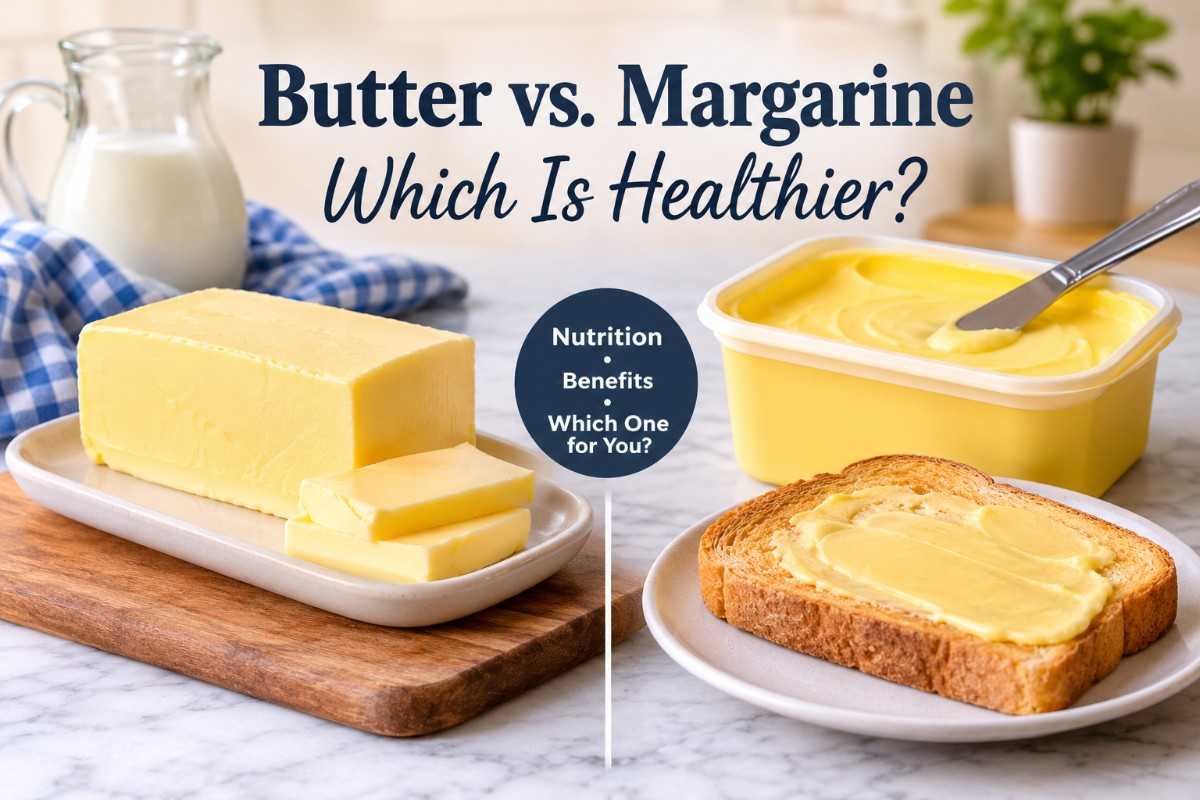
If you have ever stood in the grocery store wondering whether to buy butter or margarine, you are not alone. Both look similar, both spread easily on toast, and both are used in countless recipes. So, is one actually better for you?
The answer depends on what you are looking for.
Butter has a rich, creamy taste that many people love. Margarine is usually made from vegetable oils and may contain less saturated fat than butter. This difference matters when you are thinking about your heart health.
But there is something worth knowing: not all margarines are the same. A soft margarine made with healthier vegetable oils can be a good choice, while some hard margarines contain more saturated fat.
Let’s look at how butter and margarine differ, what they contain, and which one makes more sense for your everyday diet.
What Is Butter?
Butter is a dairy product made by churning cream until the fat separates from the liquid. It has a creamy texture and a distinctive flavor that makes it popular in cooking and baking.
You probably use butter in more ways than you realize. A little on toast, a spoonful in mashed potatoes, or a small amount melted over vegetables can add plenty of flavor.
Butter also contains naturally occurring vitamin A and small amounts of other fat-soluble vitamins.
The main thing to remember is that butter contains a considerable amount of saturated fat. Eating too much saturated fat can raise LDL cholesterol, which is associated with a higher risk of heart disease.
What Is Margarine?
Margarine is generally made from vegetable oils such as soybean, sunflower, canola, or other plant oils. Manufacturers combine these oils with water and other ingredients to create a spread that resembles butter.
You can find margarine in several forms, including soft tub spreads, hard sticks, and liquid varieties.
Some margarines are designed for spreading on bread, while others are made specifically for baking.
Margarine made with unsaturated vegetable oils often contains less saturated fat than butter. This can make it a better option for people who want to reduce their saturated fat intake.
However, the ingredients matter. Always check the nutrition label instead of assuming every margarine is healthy.
Butter vs. Margarine: Nutrition Facts
Butter and margarine provide calories mainly from fat. Their exact nutritional values depend on the product and serving size.
Here is an approximate comparison for one tablespoon of regular butter and a typical full-fat margarine.
| Nutrient | Butter | Margarine |
|---|---|---|
| Calories | About 100 | About 70–100 |
| Total fat | About 11.5 g | About 8–11 g |
| Saturated fat | About 7 g | Varies by brand |
| Cholesterol | About 30 mg | Usually 0 mg |
| Carbohydrates | 0 g | Usually 0 g |
| Protein | Trace | Trace |
These values are estimates. Light margarine may contain fewer calories, while some products have a similar calorie content to butter.
The biggest nutritional difference is usually the type of fat. Butter contains more saturated fat, while many soft margarines contain more unsaturated fat.
10 Differences Between Butter and Margarine
1. They Come From Different Sources
Butter comes from dairy cream, while margarine is generally made from vegetable oils. Butter is an animal-based product, and most margarines are plant-based.
2. Butter Contains More Saturated Fat
Butter naturally contains a high amount of saturated fat. Many soft margarines contain less, especially those made with liquid vegetable oils.
3. Margarine Usually Contains No Cholesterol
Butter contains cholesterol because it comes from an animal source. Most vegetable-oil margarines contain no dietary cholesterol.
4. Their Calories Can Be Similar
It is easy to assume margarine always has fewer calories, but that is not true. Regular margarine and butter can provide similar calories per tablespoon.
Light margarine usually contains fewer calories because it has less fat.
5. Butter Has a Richer Taste
Butter has a creamy flavor that works particularly well in cookies, cakes, pastries, and sauces. Margarine usually has a milder taste, although some products are made to taste like butter.
6. Margarine Is Often Easier to Spread
Soft tub margarine is usually easier to spread straight from the refrigerator. Butter tends to become firm when chilled and needs a little time to soften.
7. They Can Produce Different Baking Results
Butter adds flavor and helps create the texture of many baked goods. Margarine can work well too, but the result depends on its fat and water content.
8. Some Margarines Contain Added Vitamins
Butter naturally contains vitamin A. Some margarines are fortified with vitamins A and D, depending on the product and local regulations.
9. Hard and Soft Margarines Are Different
Hard stick margarine generally contains more saturated fat than soft tub margarine. Soft varieties made with unsaturated oils are often a better choice for heart health.
10. Their Trans Fat Content Depends on the Product
Older margarines often contained artificial trans fats. Many modern products have changed, but it is still worth checking the ingredient list for partially hydrogenated oils.
Is Butter Healthy?
Butter can be part of a balanced diet. You do not have to stop eating it completely if you enjoy the taste.
A small amount can make everyday foods more satisfying. For example, a little butter on homemade toast or mixed into vegetables can add flavor without requiring a large serving.
Butter also provides energy and helps your body absorb fat-soluble vitamins from foods eaten with it.
The concern is how much you use and how often you eat it.
One tablespoon of butter contains around 7 grams of saturated fat. If you use butter generously throughout the day, the amount can add up quickly.
For people with high LDL cholesterol or a higher risk of heart disease, replacing some butter with unsaturated fats may be a sensible dietary change.
Is Margarine Healthier Than Butter?
For heart health, soft margarine made with unsaturated vegetable oils is generally a better choice than butter.
The reason is simple. Replacing saturated fat with unsaturated fat can help lower LDL cholesterol.
However, margarine is not automatically healthy just because it is made from vegetable oils.
Some products contain more saturated fat than others. Hard stick margarine may be less suitable than a soft tub variety.
When choosing margarine, look for one that:
- Has less saturated fat per serving.
- Uses liquid vegetable oil as a main ingredient.
- Does not contain partially hydrogenated oils.
- Has a reasonable amount of sodium.
The American Heart Association recommends limiting saturated fat and choosing healthier unsaturated fats instead.
Butter vs. Margarine for Weight Loss
Neither butter nor margarine directly causes weight loss.
Both contain calories, and eating large amounts of either can make it harder to maintain a calorie deficit.
If you are trying to lose weight, the amount you use matters more than the name on the package.
For example, spreading one teaspoon of butter on toast instead of using several tablespoons can reduce your calorie intake without changing your breakfast completely.
Light margarine may be useful if you want a lower-calorie spread, but check the label to see how much you save.
You can also try mashed avocado, hummus, or a thin layer of nut butter on toast for variety.
Butter vs. Margarine: Which Is Better for Baking?
If you are making cookies, cakes, or pastries, butter is often the preferred choice because of its flavor and texture.
Margarine can work well in many recipes, especially when the recipe specifically calls for it.
However, avoid replacing butter with a light spread without checking the recipe. Light spreads contain more water and less fat, which can change the texture of baked foods.
For traditional recipes that rely on butter, using butter usually gives you the expected result.
Butter vs. Margarine: Which Is Better for Everyday Cooking?
For everyday cooking, liquid vegetable oils such as olive oil or canola oil are often better choices than butter or hard margarine.
You can use butter when you want its flavor, but it does not need to be your main cooking fat.
For example, you might cook vegetables in olive oil and add a small amount of butter at the end for taste.
This simple approach lets you enjoy butter while keeping your overall saturated fat intake lower.
How to Choose a Healthier Spread
The next time you buy butter or margarine, take a moment to read the label.
Look at the saturated fat content first. If you are comparing two margarines, choose the one with less saturated fat per serving.
Check the ingredients as well. Products that list liquid vegetable oils, such as canola or sunflower oil, near the beginning may contain more unsaturated fat.
If you are buying margarine in India or another country outside the United States, pay attention to the ingredient list for partially hydrogenated oils. Food regulations and product formulations can differ between countries.
A soft tub spread with lower saturated fat is generally a better option than a hard stick margarine.
Can You Eat Butter and Margarine Every Day?
You can include butter or margarine in your diet, but try not to use large amounts.
If you enjoy butter, use a small portion for flavor. If you use margarine regularly, choose a variety made with healthier vegetable oils.
Your overall eating pattern matters more than one individual food. Include fruits, vegetables, whole grains, nuts, seeds, and other sources of healthy fats in your meals.
You do not need to make every food choice perfect. Small changes, such as using less butter or choosing a lower-saturated-fat spread, can help improve your daily diet.
Final Verdict: Which Is Healthier, Butter or Margarine?
Soft margarine made with unsaturated vegetable oils is generally healthier for heart health than butter because it contains less saturated fat and may help lower LDL (bad) cholesterol when it replaces butter. However, choose margarine with low saturated fat and no partially hydrogenated oils.
| Feature | Butter | Margarine |
|---|---|---|
| Main ingredient | Dairy cream | Vegetable oils |
| Saturated fat | Higher | Usually lower in soft varieties |
| Cholesterol | Contains cholesterol | Usually cholesterol-free |
| Heart health | Less favorable when used in excess | Better if rich in unsaturated fats |
| Calories | Around 100 per tbsp | Around 60–100 per tbsp |
| Best use | Flavor and baking | Everyday spreading, depending on ingredients |
FAQ’s
Is butter healthier than margarine?
Butter has a natural dairy flavor, but margarine often contains less saturated fat and may be better for cholesterol.
Which has more calories, butter or margarine?
Butter and regular margarine have similar calories. Light margarine usually contains fewer calories.
Does butter raise cholesterol?
Yes, butter contains saturated fat, which can raise LDL cholesterol when eaten in excess.
Is margarine good for heart health?
Margarine made with unsaturated vegetable oils may support heart health when it replaces butter.
Can I use margarine instead of butter in baking?
Yes, in many recipes. However, margarine may change the flavor and texture of baked goods.
Does margarine contain dairy?
Most margarines are made from vegetable oils, but some products may contain milk ingredients. Check the label if you avoid dairy.
Does butter raise cholesterol?
Butter contains saturated fat, which can raise LDL cholesterol when consumed in excess.
Can I replace butter with margarine in recipes?
Yes, in many recipes. However, the flavor and texture may change, especially if you use a light spread.
Is margarine cheaper than butter?
Yes, margarine is often cheaper than butter, but prices vary by brand, type, and location.
What happens if I use margarine instead of butter?
You can replace butter with margarine in many recipes. The taste and texture may change slightly, especially in baking. Choose a margarine suitable for cooking or baking.
How much butter is equal to 1 cup of margarine?
1 cup of margarine is equal to 1 cup of butter when substituting in most recipes. This is approximately 227 grams of either ingredient.
Sources / References:
Disclaimer:
This article is for educational purposes only and should not replace professional medical advice. Consult a qualified healthcare professional for personalized dietary guidance, especially if you have high cholesterol or heart disease.
Also Read: