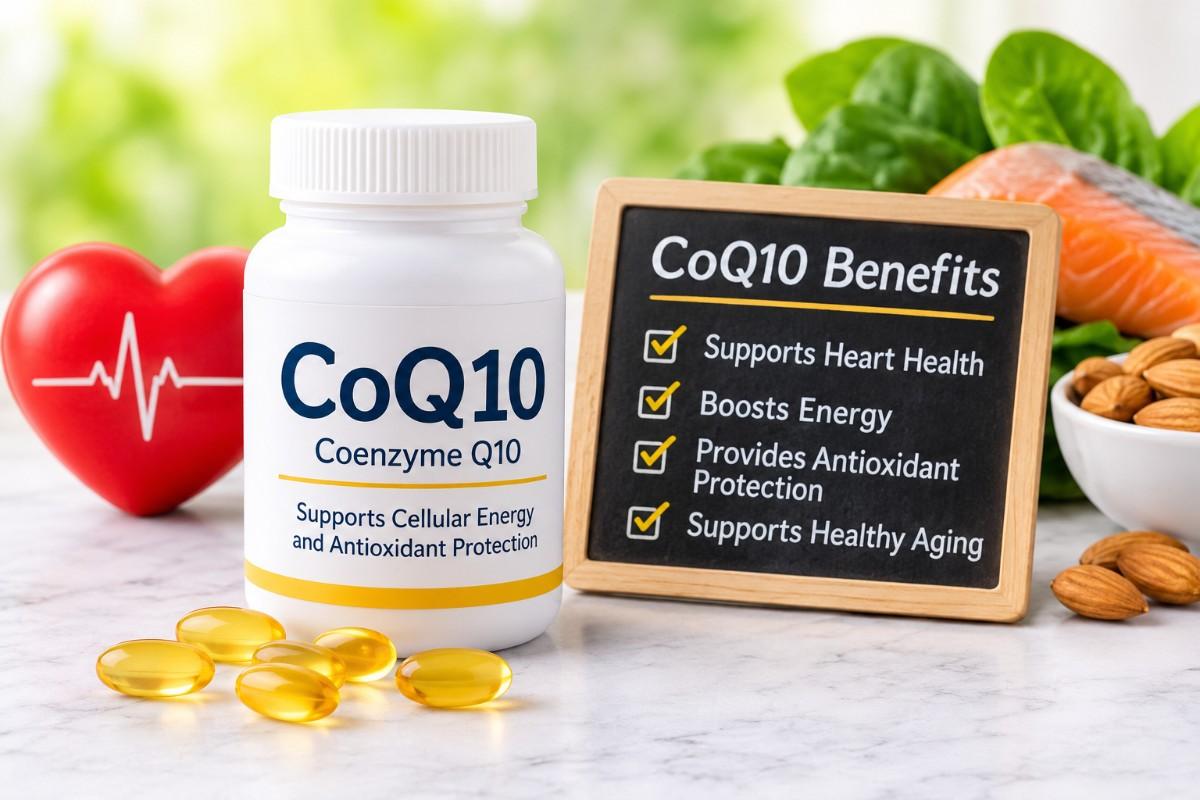
CoQ10 (Coenzyme Q10) is a naturally occurring compound that helps your body produce energy and protect cells from damage. It plays an important role in the health of your heart, muscles, and other organs that need a steady supply of energy.
CoQ10 supplements have become popular among people interested in heart health, healthy aging, energy levels, and antioxidant support. However, many people still have questions about what CoQ10 actually does, whether it works, how much to take, and whether it is safe for daily use.
This guide explains the science behind CoQ10, its potential health benefits, food sources, recommended supplement use, and possible side effects.
What Is CoQ10?
CoQ10 stands for coenzyme Q10. It is a vitamin-like compound that your body naturally produces. It is present in almost every cell, with higher concentrations in organs such as the heart, liver, kidneys, and pancreas.
CoQ10 is also known as ubiquinone or ubidecarenone. Its reduced form is called ubiquinol.
Your body needs CoQ10 for two major functions:
- Energy production: Coenzyme Q10 helps mitochondria, the energy-producing structures inside your cells, make adenosine triphosphate (ATP). ATP supplies energy for many essential body functions.
- Antioxidant protection: Coenzyme Q10 helps protect cells from oxidative damage caused by unstable molecules called free radicals.
Your body can produce CoQ10 on its own, and you can also obtain small amounts from foods. However, Coenzyme Q10 production and levels may change with age and certain health conditions.
Quick Facts About CoQ10
| Nutrient or property | Details |
|---|---|
| Compound name | Coenzyme Q10 |
| Common name | CoQ10 |
| Chemical forms | Ubiquinone and ubiquinol |
| Main function | Cellular energy production |
| Antioxidant activity | Yes |
| Naturally produced by the body | Yes |
| Dietary sources | Meat, fish, nuts, and oils |
| Official RDA | Not established |
| Supplement forms | Capsules, softgels, tablets, and liquids |
20 Potential Health Benefits of CoQ10
CoQ10 supports important cellular functions, but the strength of scientific evidence differs for each health benefit. Some uses have been studied in clinical trials, while others remain uncertain.
1. Supports Cellular Energy Production
Coenzyme Q10 helps mitochondria produce ATP, which your cells use for energy. This process is especially important for organs that require a continuous energy supply, including your heart and muscles.
2. Provides Antioxidant Protection
CoQ10 acts as an antioxidant and helps protect cell membranes and other cellular components from oxidative stress.
3. Supports Heart Health
The heart needs a large amount of energy to pump blood throughout the body. Coenzyme Q10 contributes to the energy-producing process in heart muscle cells.
However, taking Coenzyme Q10 does not guarantee protection against heart disease.
4. May Help People With Heart Failure
Some clinical studies suggest that CoQ10 supplementation may reduce hospitalizations and certain risks in people with chronic heart failure.
A Cochrane review found promising results, but researchers also noted limitations in the available evidence. Coenzyme Q10 should never replace prescribed heart failure medication.
5. May Support Blood Vessel Function
CoQ10 has antioxidant properties that may help protect blood vessels. Some studies have examined its effects on endothelial function, which refers to how well the inner lining of blood vessels works.
The results are still developing, and Coenzyme Q10 is not a proven treatment for vascular disease.
6. May Help Maintain Healthy Blood Pressure
Some research suggests that CoQ10 may have a small effect on blood pressure. However, the overall evidence is inconsistent, and it should not be used as a substitute for blood pressure medication.
7. Supports Muscle Function
Muscle cells require ATP for movement and normal function. Coenzyme Q10 contributes to the energy production process that supports muscle activity.
8. May Help With Migraine Prevention
CoQ10 has been studied as a supplement for migraine prevention. Some small studies suggest it may reduce migraine frequency in certain people.
It is not an immediate pain reliever, and results can vary.
9. Supports Healthy Aging
CoQ10 production may decrease with age. Because it contributes to cellular energy production and antioxidant protection, researchers have studied its possible role in healthy aging.
However, Coenzyme Q10 supplements have not been proven to slow aging or extend human lifespan.
10. May Support Fertility in Some People
CoQ10 has been studied for its role in sperm quality and egg-related cellular energy. Some research suggests possible benefits for certain fertility measures.
More evidence is needed before it can be recommended as a fertility treatment.
11. Helps Protect Cells From Oxidative Stress
Oxidative stress occurs when free radical production exceeds the body’s ability to manage them. Coenzyme Q10 helps support the body’s antioxidant defenses.
12. Supports Brain Cell Energy
Brain cells require substantial energy to function properly. CoQ10 participates in mitochondrial energy production, which is essential for normal brain cell activity.
This does not mean Coenzyme Q10 supplements have been proven to prevent neurological diseases.
13. May Support Skin Health
CoQ10 is involved in antioxidant protection, and it is also used in some skincare products. Topical Coenzyme Q10 may help protect skin cells from oxidative stress.
Evidence for oral Coenzyme Q10 supplements improving wrinkles or skin aging is limited.
14. May Support Exercise Performance
Because CoQ10 contributes to cellular energy production, researchers have studied whether supplementation improves exercise performance.
Some studies report possible benefits, but findings are inconsistent. Coenzyme Q10 is not a proven performance-enhancing supplement.
15. May Help Reduce Oxidative Damage During Exercise
Intense exercise can increase oxidative stress. CoQ10’s antioxidant activity may help support the body’s defenses during physical activity.
The effect of supplementation on recovery and muscle soreness remains uncertain.
16. Supports Normal Cell Function
Coenzyme Q10 is present in nearly all cells and plays a role in essential cellular processes. Maintaining normal Coenzyme Q10 levels supports the basic functions of healthy cells.
17. May Support Metabolic Health
CoQ10 has been studied in people with metabolic conditions because of its role in energy production and antioxidant activity.
Some studies have examined blood sugar and lipid markers, but results are not consistent enough to recommend Coenzyme Q10 as a treatment for diabetes or high cholesterol.
18. May Help With Certain CoQ10 Deficiencies
Some people have rare inherited conditions that affect Coenzyme Q10 production. In these cases, medically supervised CoQ10 supplementation may be part of treatment.
These conditions require specialist care and should not be self-diagnosed.
19. May Be Studied Alongside Statin Therapy
Statin medications can reduce the body’s production of cholesterol and may also affect Coenzyme Q10 levels. This has led researchers to investigate whether Coenzyme Q10 supplements help with statin-associated muscle symptoms.
20. May Support General Cellular Health
CoQ10 contributes to energy production and antioxidant protection, two processes involved in normal cellular health.
Taking a supplement does not necessarily improve health if your body already has adequate Coenzyme Q10 levels.
CoQ10 Food Sources
You can obtain CoQ10 from a variety of foods. Animal-based foods generally provide more Coenzyme Q10 than most plant foods, although amounts vary.
| Food | CoQ10 content |
|---|---|
| Beef heart | Relatively high |
| Beef liver | Relatively high |
| Pork | Contains Coenzyme Q10 |
| Chicken | Contains CoQ10 |
| Sardines | Contains Coenzyme Q10 |
| Mackerel | Contains CoQ10 |
| Salmon | Contains Coenzyme Q10 |
| Peanuts | Plant-based source |
| Pistachios | Plant-based source |
| Sesame seeds | Plant-based source |
| Soybean oil | Plant-based source |
| Canola oil | Plant-based source |
| Spinach | Plant-based source |
| Broccoli | Plant-based source |
| Cauliflower | Plant-based source |
Eating a varied diet can help you obtain Coenzyme Q10 along with other nutrients. Food amounts are generally much lower than the doses found in supplements.
CoQ10 Supplements: Ubiquinone vs. Ubiquinol
CoQ10 supplements commonly contain one of two forms.
Ubiquinone
Ubiquinone is the oxidized form of Coenzyme Q10. It is commonly found in dietary supplements and is converted into ubiquinol inside the body.
Ubiquinol
Ubiquinol is the reduced form of CoQ10. It is also available as a supplement and may be absorbed differently depending on the formulation.
Both forms can raise Coenzyme Q10 levels in the body. There is no universal evidence that one form is best for everyone.
When choosing a supplement, consider the product quality, dose, cost, and advice from your healthcare professional.
CoQ10 Dosage: How Much Should You Take?
There is no official recommended daily allowance for CoQ10, and the appropriate dose depends on the reason for taking it.
Many adult supplements contain 100 to 200 mg per day, while some clinical studies have used higher doses under medical supervision.
| Purpose | Commonly studied amount |
|---|---|
| General supplementation | Often 100 mg daily |
| Some heart-related studies | 100 to 300 mg daily |
| Migraine prevention studies | Often around 100 to 300 mg daily |
| Certain medical conditions | Individualized by a specialist |
These amounts are examples of doses used in research, not personal medical recommendations.
If you are considering Coenzyme Q10, ask your healthcare professional what dose is appropriate for your health needs and medications.
What Is the Best Time to Take CoQ10?
CoQ10 is fat-soluble, which means it is generally absorbed better when taken with a meal that contains some fat.
For example, you may take it with breakfast or lunch that includes foods such as eggs, yogurt, nuts, or healthy oils.
Some people report difficulty sleeping when they take Coenzyme Q10 late in the day. If this happens, consider taking it earlier, after discussing the timing with your healthcare professional.
How to Take CoQ10
Follow the instructions on your supplement label or the directions provided by your healthcare professional.
Practical tips include:
- Take Coenzyme Q10 with a meal containing fat.
- Use the same time each day if you take it regularly.
- Do not take extra doses to make up for a missed dose.
- Avoid combining multiple Coenzyme Q10 products without checking the total amount.
- Store the supplement according to the label instructions.
CoQ10 supplements may come in softgels, capsules, tablets, or liquid forms. Choose a form you can take comfortably and consistently.
CoQ10 Side Effects
CoQ10 is generally well tolerated by many adults. However, some people may experience side effects, especially when taking higher doses.
Possible side effects include:
- Digestive discomfort: Some people experience stomach upset after taking Coenzyme Q10.
- Nausea: Coenzyme Q10 may cause nausea in certain individuals.
- Diarrhea: Loose stools can occur in some people.
- Loss of appetite: Some users report reduced appetite.
- Insomnia: Coenzyme Q10 may cause difficulty sleeping in some individuals.
- Headache: Headaches have been reported occasionally.
- Dizziness: Some people may experience dizziness.
If you experience persistent or severe symptoms, stop taking the supplement and seek medical advice.
Who Should Avoid or Use CoQ10 With Caution?
CoQ10 may not be suitable for everyone.
- People Taking Warfarin: Coenzyme Q10 may reduce warfarin’s effectiveness and affect blood clotting.
- People Taking Blood Pressure Medication: Coenzyme Q10 may lower blood pressure further in some individuals.
- People Taking Diabetes Medication: Coenzyme Q10 may affect blood sugar levels and require monitoring.
- Pregnant or Breastfeeding Women: There is insufficient evidence about Coenzyme Q10 supplement safety during pregnancy and breastfeeding.
- People Receiving Cancer Treatment: CoQ10 may interact with certain cancer treatments, so consult your oncologist before use.
- People Preparing for Surgery: Inform your surgeon about Coenzyme Q10 supplements before undergoing a planned procedure.
- People With Chronic Medical Conditions: Consult a healthcare professional before taking Coenzyme Q10 regularly, especially if you use prescription medications.
CoQ10 Drug Interactions
CoQ10 may interact with certain medications, including:
| Medication | Possible concern |
|---|---|
| Warfarin | May reduce anticoagulant effectiveness |
| Insulin | May affect blood sugar control |
| Blood pressure medicines | May affect blood pressure |
| Certain cancer treatments | Potential interaction with treatment |
Always tell your doctor or pharmacist about your supplements, even if you bought them without a prescription.
Is CoQ10 Safe for Daily Use?
CoQ10 is generally considered well tolerated when used appropriately. However, long-term safety depends on the dose, your health conditions, and the medicines you take.
Taking more Coenzyme Q10 does not automatically provide greater benefits. High doses may increase the chance of side effects and should be used only when medically appropriate.
If you take Coenzyme Q10 daily, review your supplement use with a healthcare professional, especially if you take prescription medication.
CoQ10 Precautions and Safety
- Consult Your Doctor: Speak with your healthcare professional before taking CoQ10 supplements, especially if you have a medical condition.
- Follow the Recommended Dosage: Avoid taking high doses without medical advice, as excessive amounts may increase the risk of side effects.
- Take With Food: Coenzyme Q10 is fat-soluble and is generally absorbed better when taken with a meal containing fat.
- Check Medication Interactions: Coenzyme Q10 may interact with warfarin, blood pressure medicines, insulin, and certain cancer treatments.
- Monitor Blood Pressure: If you take blood pressure medication, monitor your readings because Coenzyme Q10 may lower blood pressure in some people.
- Monitor Blood Sugar: People with diabetes should check their blood sugar regularly when starting Coenzyme Q10 supplements.
- Avoid During Pregnancy Without Advice: Pregnant and breastfeeding women should consult a healthcare professional before using Coenzyme Q10.
- Watch for Side Effects: Stop taking Coenzyme Q10 and seek medical advice if you experience persistent nausea, diarrhea, dizziness, or other unusual symptoms.
- Inform Your Surgeon: Tell your healthcare team if you take Coenzyme Q10 before a scheduled surgery.
- Choose Quality Supplements: Purchase Coenzyme Q10 from reputable manufacturers and check the supplement label for ingredients, dosage, and quality testing.
FAQ’s
What is CoQ10 good for?
Coenzyme Q10 supports cellular energy production, antioxidant protection, and normal heart and muscle function.
Can CoQ10 help with fatigue?
Coenzyme Q10 helps cells produce energy, but supplements may not improve fatigue in people who already have adequate Coenzyme Q10 levels.
Is CoQ10 good for heart health?
Coenzyme Q10 supports energy production in heart cells and may benefit some people with heart failure when used alongside medical treatment.
What is the recommended daily dose of CoQ10?
There is no official RDA. Many supplements contain 100 to 200 mg daily, but the appropriate dose depends on your health needs.
Is CoQ10 safe for pregnant women?
There is insufficient evidence about its safety during pregnancy. Ask your healthcare professional before taking Coenzyme Q10 supplements.
Is ubiquinol better than ubiquinone?
Both forms can increase Coenzyme Q10 levels. The best choice depends on the supplement formulation and individual needs.
Can CoQ10 help prevent migraines?
Some studies suggest Coenzyme Q10 may reduce migraine frequency when taken regularly as a preventive supplement.
Does CoQ10 help with statin muscle pain?
Research is mixed, and Coenzyme Q10 has not consistently been shown to relieve muscle pain caused by statins.
Can CoQ10 lower blood pressure?
Some studies suggest a possible modest effect on blood pressure, but Coenzyme Q10 is not a replacement for prescribed medication.
What does CoQ10 do for the body?
Coenzyme Q10 helps your body produce cellular energy, protects cells from oxidative damage, and supports normal heart and muscle function.
Does CoQ10 cause blood clots?
Coenzyme Q10 is not known to directly cause blood clots. However, it may interact with warfarin and reduce its effectiveness, potentially affecting blood clotting. Consult your healthcare provider before taking Coenzyme Q10 if you use blood-thinning medication.
Does CoQ10 give you energy?
Coenzyme Q10 helps your cells produce energy, but taking a supplement does not guarantee that you will feel more energetic. Benefits may depend on your Coenzyme Q10 status and health condition.
Is CoQ10 safe to take every day?
Many adults tolerate Coenzyme Q10 well, but daily use should depend on your health needs, dose, and medications. Ask your healthcare professional before starting regular supplementation.
Should I take CoQ10 in the morning or at night?
Taking Coenzyme Q10 with breakfast or lunch may be convenient because it is absorbed better with food containing fat. Some people prefer taking it earlier because it may interfere with sleep.
Can I get enough CoQ10 from food?
You can obtain Coenzyme Q10 from foods such as meat, oily fish, nuts, and vegetable oils. However, food generally provides smaller amounts than supplements.
Sources / References:
- National Center for Complementary and Integrative Health (NCCIH)
- National Cancer Institute
- American Heart Association
- NIH Office of Dietary Supplements
- National Library of Medicine
Disclaimer: This article is for informational purposes only and does not replace professional medical advice. Consult your healthcare provider before taking CoQ10 supplements.
Also Read: