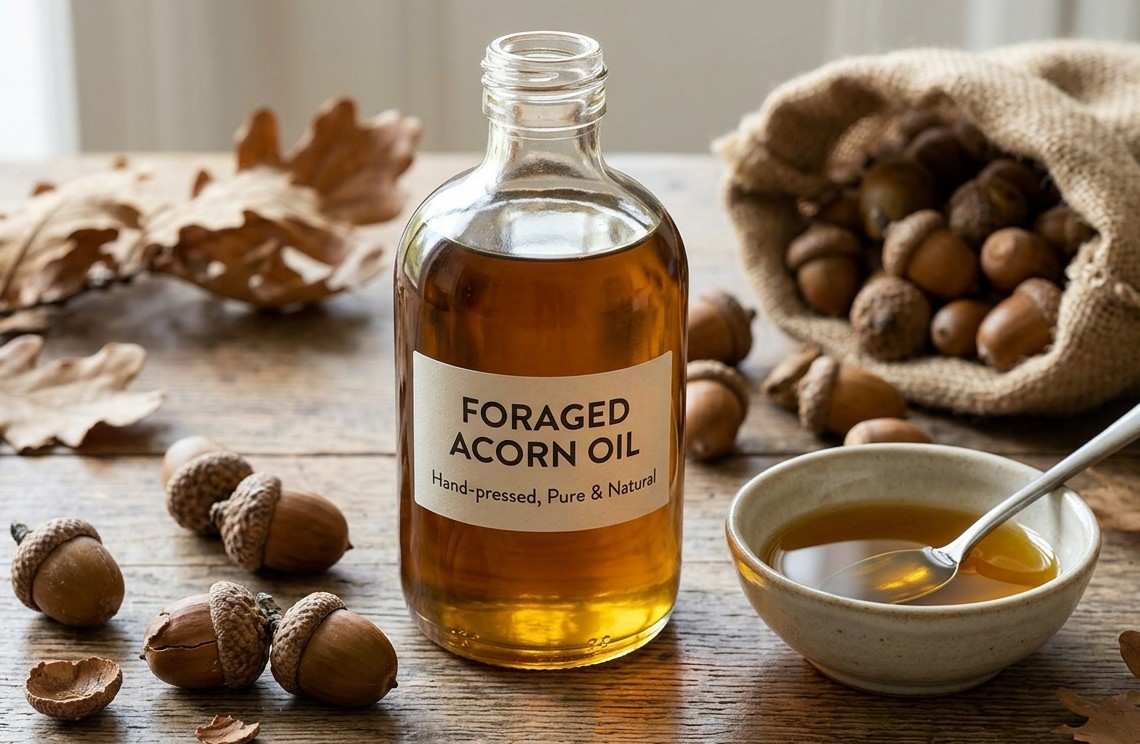
Acorns have nourished humans for thousands of years. Long before modern vegetable oils became common, communities across Asia, Europe, and North America relied on acorns as a survival food. Today, acorn oil is slowly re-emerging as a niche, nutrient-rich oil valued for its unique flavor and potential health benefits. If you are curious about natural, traditional oils and want to explore something beyond olive or coconut oil, this guide will walk you through everything you need to know about acorn oil.
What is Acorn Oil?
Acorn oil is a plant-based oil extracted from the nuts of oak trees (Quercus species). Acorns are the seeds of oak trees and have historically been used as food after proper processing to remove tannins.
Acorn oil is typically obtained by cold-pressing dried, shelled acorns. The resulting oil is light to medium golden in color with a mild, nutty, slightly earthy flavor. Its composition varies depending on the oak species and growing conditions, but it is generally rich in healthy fats, especially monounsaturated fatty acids.
Traditionally, acorns were ground into flour, made into porridge, or used in bread. The oil extracted from acorns is less common commercially but is gaining interest in natural health and culinary communities.
Nutrition Facts of Acorn Oil
The nutritional profile of acorn nut oil depends on the oak variety, but it is broadly similar to other nut-based oils. Below is an approximate nutritional breakdown per 1 tablespoon (14 grams):
| Nutrient | Approximate Amount |
|---|---|
| Calories | 120 kcal |
| Total Fat | 14 g |
| Monounsaturated Fat | 8–10 g |
| Polyunsaturated Fat | 2–3 g |
| Saturated Fat | 1–2 g |
| Vitamin E | 1–3 mg |
| Phytosterols | Small amounts |
| Antioxidant Compounds | Present (varies) |
Acorn oil is naturally cholesterol-free and contains no carbohydrates or protein, as it is a pure fat source.
20 Proven Benefits of Acorn Oil
- Supports Heart Health: The high monounsaturated fat content in acorns oil may help improve cholesterol balance and support overall cardiovascular function.
- May Lower Bad Cholesterol: Oil’s healthy fats may help reduce LDL cholesterol levels when used in place of saturated fats.
- Rich in Antioxidants: Natural antioxidants in acorn oil may help protect cells from oxidative stress and free radical damage.
- Promotes Healthy Skin: The vitamin E and fatty acids in acorn nut oil may nourish the skin and improve its elasticity.
- Hydrates Dry Skin: When applied topically, oil may help lock in moisture and soothe dryness.
- Supports Brain Function: Healthy fats in acorn oil may contribute to proper brain structure and cognitive function.
- May Reduce Inflammation: Its unsaturated fat profile may help lower inflammation markers in the body when used as part of a balanced diet.
- Boosts Energy Levels: As a calorie-dense fat source, acorn oil provides sustained energy.
- Improves Nutrient Absorption: The fat in oil helps the body absorb fat-soluble vitamins such as A, D, E, and K.
- Supports Digestive Health: Moderate use may help lubricate the digestive tract and support smoother bowel movements.
- May Aid Weight Management: When used wisely, healthy fats like those in acorn nut oil can promote satiety and reduce overeating.
- Enhances Hair Health: Applied to the scalp, acorn oil may improve hair softness and reduce dryness.
- Strengthens the Skin Barrier: Its fatty acid profile may help reinforce the skin’s natural protective barrier.
- Supports Hormone Balance: Healthy dietary fats are essential for hormone production, and acorn nut oil may contribute to this process.
- May Improve Blood Circulation: Nutrient-rich oils can support vascular health and circulation.
- Helps Reduce Dry Scalp: Topical application may soothe irritation and dryness on the scalp.
- Natural Emollient: Oil acts as a gentle emollient, softening rough or cracked skin.
- May Support Immune Health: Antioxidants and vitamin E may play a role in supporting immune defenses.
- Traditional Energy Food: Historically, acorn-derived foods were used as energy-dense nourishment during harsh seasons.
- Versatile Nutritional Oil: As a plant-based oil, it offers an alternative to conventional cooking oils for those seeking diversity in their diet.
10 Side Effects of Acorn Oil
Although generally considered safe in moderate amounts, acorn nut oil may have some potential side effects.
- Digestive Upset: Consuming large amounts of acorn oil may cause nausea, bloating, or diarrhea.
- Allergic Reactions: Individuals allergic to tree nuts may experience allergic symptoms after consuming acorn nut oil.
- High Calorie Intake: Excess use may contribute to weight gain due to its high calorie density.
- Tannin Sensitivity: Improperly processed acorn products may contain residual tannins that can irritate the digestive system.
- Blood Pressure Changes: Overuse of oils may indirectly influence blood pressure if it leads to weight gain.
- Skin Irritation: Some individuals may experience mild irritation when applying acorn oil topically.
- Interaction with Medications: High fat intake may affect the absorption of certain medications.
- Rancidity Risk: Oxidized or spoiled oil may cause digestive discomfort.
- Not Suitable for Infants: Babies and toddlers should not consume specialty oils without medical advice.
- Liver Stress in Excess: Overconsumption of any fat, including acorn nut oil, may strain liver function in sensitive individuals.
How to Use Acorn Oil?
Oil can be used both internally and externally.
In cooking, it can be:
- Drizzled over salads
- Used in dressings and marinades
- Added to roasted vegetables
- Mixed into dips and spreads
- Used for light sautéing (low to medium heat)
For skin and hair care:
- Applied as a facial oil
- Used as a body moisturizer
- Massaged into the scalp
- Mixed into DIY skincare recipes
Other Uses of Acorn Oil
Beyond culinary and cosmetic use, acorn nut oil may also be used for:
- Traditional herbal preparations
- Massage oil blends
- Soap and natural skincare formulations
- Wood conditioning (in some traditional applications)
- Carrier oil for essential oils
Tips for Consuming Acorn Oil
- Start with small amounts to see how your body responds.
- Use it as a finishing oil rather than deep-frying oil.
- Pair it with leafy greens to enhance vitamin absorption.
- Store properly to avoid rancidity.
- Choose cold-pressed, high-quality oil when possible.
How to Take Acorn Oil?
Oil can be taken:
- Mixed into salads or warm dishes
- Blended into smoothies (small amounts)
- Taken by the teaspoon if recommended by a health professional
- Used as a substitute for other edible oils in recipes
Avoid heating it at very high temperatures, as this may degrade nutrients.
How to Make Acorn Oil at Home?
Making acorns oil at home is labor-intensive but possible.
- Step 1: Collect mature acorns from healthy oak trees.
- Step 2: Remove shells and discard damaged nuts.
- Step 3: Leach tannins by soaking or boiling the acorns until bitterness reduces.
- Step 4: Dry the acorns completely.
- Step 5: Grind into a paste.
- Step 6: Use a manual oil press to extract oil.
- Step 7: Filter the oil using cheesecloth.
- Step 8: Store in a clean, airtight glass bottle.
Because tannins must be properly removed, careful preparation is essential.
How Much Acorn Oil Can You Use Per Day?
For most healthy adults, 1–2 tablespoons per day of acorn oil as part of total daily fat intake is generally considered reasonable.
It should replace other fats rather than be added on top of an already high-fat diet.
Acorn Oil Dosage
- General wellness: 1 tablespoon daily
- Culinary use: 1–2 tablespoons in meals
- Topical use: Few drops to 1 teaspoon depending on area
Always adjust based on individual tolerance and dietary needs.
Best Time to Use Acorn Oil
There is no strict timing requirement, but:
- With meals: Enhances nutrient absorption
- Morning: As part of breakfast for energy
- Night (topical): For overnight skin nourishment
Consistency matters more than timing.
Who Should Use Acorn Oil?
Oil may be suitable for:
- Individuals seeking plant-based oils
- People looking for heart-friendly fats
- Those with dry skin or scalp
- Natural skincare enthusiasts
- Individuals exploring traditional foods
Who Should Not Use Acorn Oil?
Oil may not be suitable for:
- People with tree nut allergies
- Individuals on strict low-fat diets
- Those with severe digestive disorders
- Infants and young children without medical advice
- People advised by doctors to limit fat intake
How to Store Acorn Oil?
Proper storage is crucial to maintain quality.
- Keep in a dark glass bottle
- Store in a cool, dry place
- Avoid direct sunlight
- Seal tightly after use
- Refrigerate if living in a hot climate
Properly stored oil may last 6–12 months depending on processing and storage conditions.
Precautions and Interactions
- Consult a healthcare provider if you have chronic illness.
- Use cautiously if you have nut allergies.
- Monitor total fat intake to avoid excessive calories.
- Do not use rancid-smelling oil.
- If using alongside medications that require specific fat intake timing, seek medical advice.
- Pregnant or breastfeeding women should consult a doctor before using specialty oils regularly.
Final Thoughts
Acorns oil is a fascinating, traditional oil with a rich history and promising nutritional profile. While it is not yet as mainstream as olive or coconut oil, its healthy fats, antioxidant content, and versatility make it an interesting addition to both kitchen and skincare routines. As with any oil, moderation is key. When used wisely as part of a balanced diet and lifestyle, oil may offer both culinary enjoyment and supportive wellness benefits.
FAQ’s
What is acorn oil used for?
Oil is used for cooking, salad dressings, light sautéing, and as a natural moisturizer for skin and hair.
Does acorn oil taste good?
Oil has a mild, nutty, slightly earthy flavor that works well in savory dishes and dressings.
Is acorn oil good for heart health?
Its monounsaturated fat content may support heart health when used in place of saturated fats as part of a balanced diet.
Can acorn oil help with weight loss?
Oil itself does not cause weight loss, but healthy fats may promote satiety and help control overeating when used moderately.
Is acorn oil good for skin?
Yes, oil contains vitamin E and fatty acids that may help moisturize dry skin and improve skin softness.
Can acorn oil be used on hair?
Oil can be applied to the scalp or hair to help reduce dryness and improve shine.
Does acorn oil contain cholesterol?
No, oil is plant-based and naturally cholesterol-free.
Can people with nut allergies use acorn oil?
People with tree nut allergies should avoid acorn nut oil unless cleared by a healthcare professional.
Is acorn oil safe during pregnancy?
Moderate culinary use is generally considered safe, but pregnant or breastfeeding women should consult a doctor before regular use.
Can acorn oil be used for frying?
It is better suited for low to medium heat cooking or as a finishing oil rather than deep frying.
How long does acorn oil last?
When stored properly in a cool, dark place, acorn nut oil can last approximately 6–12 months.
How do I know if acorn oil has gone bad?
Rancid acorns oil may develop a sour or unpleasant smell and should not be consumed.
Can acorn oil improve digestion?
In small amounts, healthy fats like acorn nut oil may support smooth digestion, but excessive intake can cause digestive discomfort.
Is acorn oil suitable for children?
Children should only consume specialty oils like acorn oil under parental guidance and, if necessary, medical advice.
Can acorn oil help reduce inflammation?
Its unsaturated fat content may contribute to reducing inflammation when included in a balanced diet.
Is acorn oil vegan?
Yes, oil is completely plant-based and suitable for vegan and vegetarian diets.
Can acorn oil be taken on an empty stomach?
It can be taken with or without food, but consuming it with meals may improve tolerance and nutrient absorption.
Is homemade acorn oil safe?
Homemade oil can be safe if acorns are properly processed to remove tannins and the oil is extracted and stored hygienically.
Can I use Acorn Oil every day?
Yes, oil can be used daily in small amounts, typically 1–2 tablespoons as part of your total daily fat intake, provided you do not have allergies or medical restrictions.
How long does it take for Acorn Oil to work?
Results depend on how you use it; skin benefits may be noticed within a few days to weeks, while internal wellness effects may take several weeks of consistent use.
What is acorn oil good for?
Oil is commonly used to support heart health, nourish dry skin and hair, provide healthy dietary fats, and add a mild nutty flavor to foods.
Is acorn oil edible?
Yes, properly processed and cold-pressed acorns oil is edible and safe for consumption when used in moderation.
Also Read: