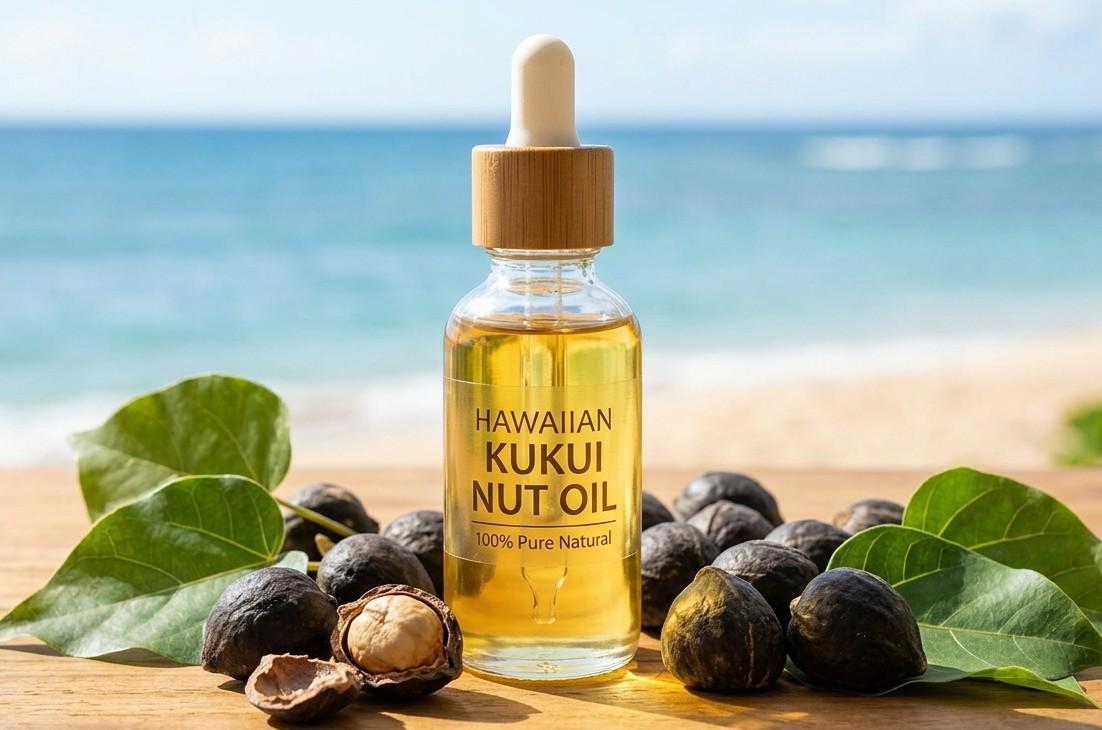
Kukui Nut Oil (also known as candlenut oil) is one of nature’s most nourishing and versatile plant oils. Traditionally treasured in Hawaii for centuries, this lightweight yet deeply moisturizing oil is now gaining global popularity in skincare, haircare, and holistic wellness routines. Whether you are looking for a natural skin hydrator, a soothing oil for irritation, or a gentle scalp treatment, Kukui Nut Oil offers remarkable benefits.
In this guide, we will explore everything you need to know about Kukui Nut Oil — from its nutrition profile and science-backed health benefits to dosage, side effects, storage, and precautions.
What is Kukui Nut Oil?
Kukui Nut Oil is extracted from the nuts of the kukui tree (Aleurites moluccanus), also known as the candlenut tree. Native to Hawaii and other tropical regions, the kukui tree holds cultural and medicinal significance in Hawaiian tradition.
The oil is typically cold-pressed from roasted or dried kukui nuts. It has a light texture, mild nutty aroma, and quick-absorbing properties, making it ideal for skin and hair care. Unlike heavier oils, Kukui Nut Oil penetrates deeply without leaving a greasy residue. It is rich in essential fatty acids, antioxidants, and vitamins that help nourish, repair, and protect the skin barrier.
Nutrition Facts of Kukui Nut Oil
| Nutrient | Amount (Per 1 Tablespoon – 14g) |
|---|---|
| Calories | 120 kcal |
| Total Fat | 14 g |
| Saturated Fat | 1.5 g |
| Monounsaturated Fat | 3 g |
| Polyunsaturated Fat | 9 g |
| Omega-3 Fatty Acids | 1.5 g |
| Omega-6 Fatty Acids | 6–7 g |
| Vitamin E | Moderate amount |
| Antioxidants | Present |
| Protein | 0 g |
| Carbohydrates | 0 g |
Note: Nutritional values may vary slightly depending on processing methods.
20 Proven Benefits of Kukui Nut Oil
1. Deep Skin Hydration – Candlenut oil penetrates deeply into the skin layers to provide long-lasting moisture without clogging pores.
2. Supports Skin Barrier Repair – Its high omega fatty acid content helps restore the skin’s protective barrier and prevent moisture loss.
3. Reduces Dryness and Flaking – Regular application softens rough, flaky skin and improves overall skin texture.
4. Soothes Eczema Symptoms – The anti-inflammatory properties may help calm itching, redness, and irritation associated with eczema.
5. Helps with Psoriasis Relief – Kukui Nut Oil may reduce scaling and dryness linked to psoriasis.
6. Improves Skin Elasticity – Essential fatty acids support collagen structure, improving firmness and flexibility.
7. Minimizes Fine Lines – Vitamin E and antioxidants help protect skin from oxidative stress that accelerates aging.
8. Supports Wound Healing – Traditional Hawaiian medicine used Kukui Nut Oil to promote minor wound healing.
9. Calms Sunburned Skin – The oil provides cooling hydration to sun-damaged or overexposed skin.
10. Reduces Inflammation – Omega-3 and omega-6 fatty acids help decrease skin inflammation.
11. Nourishes the Scalp – Kukui Nut Oil hydrates dry scalp and reduces dandruff.
12. Promotes Healthy Hair Growth – A healthy scalp environment supports stronger hair growth.
13. Adds Shine to Hair – Lightweight texture enhances natural shine without heaviness.
14. Prevents Hair Breakage – Moisturizing properties strengthen strands and reduce split ends.
15. Gentle for Sensitive Skin – Its mild nature makes it suitable for delicate and reactive skin types.
16. Helps with Stretch Marks – Improved skin elasticity may reduce the appearance of stretch marks.
17. Supports Lip Hydration – Kukui Nut Oil works well in natural lip balms for cracked lips.
18. Enhances Massage Therapy – Its smooth glide makes it ideal as a massage oil.
19. Protects Against Environmental Damage – Antioxidants help shield skin from pollution and UV stress.
20. May Support Joint Comfort – When used topically in massage, it may help ease minor joint discomfort.
10 Side Effects of Kukui Nut Oil
1. Allergic Reactions – Individuals allergic to tree nuts may experience skin reactions.
2. Skin Irritation – Overuse or sensitive skin may develop redness or itching.
3. Acne Breakouts – Although lightweight, excessive use may clog pores in acne-prone individuals.
4. Digestive Upset – Oral consumption in large amounts may cause stomach discomfort.
5. Diarrhea – High-fat intake from kukui oil may loosen stools.
6. Nausea – Some individuals may feel mild nausea if taken internally.
7. Contact Dermatitis – Rare cases of allergic dermatitis have been reported.
8. Interaction with Medications – High omega fatty acids may interact with blood-thinning medications.
9. Rancidity Risk – Improperly stored oil can oxidize and cause skin irritation.
10. Not Safe in Raw Nut Form – Raw kukui nuts are toxic and should never be consumed directly.
How to Use Kukui Nut Oil?
Kukui Nut Oil is versatile and easy to include in daily routines:
- Apply a few drops to damp skin after showering.
- Use as a facial oil at night.
- Massage into scalp before shampooing.
- Mix into lotions or creams.
- Use as a carrier oil for essential oils.
- Apply to cuticles and dry elbows.
Always perform a patch test before first use.
Other Uses of Kukui Nut Oil
Beyond skincare, candlenut oil can be used for:
- Aromatherapy blends
- Natural makeup remover
- Beard conditioning oil
- Aftershave soothing treatment
- Nail strengthening oil
- Baby massage oil (with pediatric approval)
Tips for Consuming Kukui Nut Oil
While candlenut oil is mainly used topically, some refined versions may be edible. If consuming:
- Use only food-grade oil.
- Start with small quantities.
- Avoid raw kukui nuts.
- Consult a healthcare provider before internal use.
- Do not heat at high temperatures.
How to Take Kukui Nut Oil?
If taken internally (only food-grade oil):
- ½ to 1 teaspoon per day.
- Mix into smoothies.
- Drizzle over salads.
- Add to dips or dressings.
Always consult a professional before oral use.
How to Make Kukui Nut Oil at Home?
Making Kukui Nut Oil at home requires caution:
- Collect dried kukui nuts.
- Roast them thoroughly to remove toxicity.
- Crack open the shells and extract kernels.
- Crush kernels using a mortar or oil press.
- Use a cold-press method if available.
- Strain the oil using cheesecloth.
- Store in a dark glass bottle.
Note: Improper preparation may result in toxicity. Purchasing ready-made oil is safer.
How Much Kukui Nut Oil Can You Use Per Day?
For topical use:
- 3–5 drops for face
- 1–2 teaspoons for body application
- 1 tablespoon for full-body massage
For oral use:
- ½ to 1 teaspoon daily (food-grade only)
Kukui Nut Oil Dosage
Topical dosage varies depending on area of use. For scalp treatment, 1–2 tablespoons are sufficient. For facial care, a few drops are adequate. Internal dosage should not exceed 1 teaspoon daily unless guided by a healthcare provider.
Best Time to Use Kukui Nut Oil
- Nighttime for facial hydration.
- After shower for body moisture.
- Before shampoo for scalp treatment.
- Post-sun exposure for calming skin.
- During massage sessions.
Who Should Use Kukui Nut Oil?
- People with dry or sensitive skin
- Individuals with eczema-prone skin
- Those experiencing scalp dryness
- People seeking anti-aging skincare
- Individuals wanting natural massage oil
- Those looking for lightweight hair oil
Who Should Not Use Kukui Nut Oil?
- Individuals with tree nut allergies
- People with highly acne-prone skin (without patch test)
- Those on blood-thinning medication (without medical advice)
- Pregnant or breastfeeding women (consult doctor before internal use)
- Children without pediatric approval
How to Store Kukui Nut Oil?
Proper storage ensures maximum potency:
- Keep in a dark glass bottle.
- Store in a cool, dry place.
- Avoid direct sunlight.
- Keep tightly sealed.
- Refrigerate in hot climates.
- Use within 6–12 months.
Discard if the oil smells rancid or sour.
Precautions and Interactions
- Always conduct a patch test.
- Avoid contact with eyes.
- Do not ingest raw kukui nuts.
- Consult healthcare provider before internal use.
- Be cautious if taking blood thinners.
- Discontinue use if irritation occurs.
- Use caution during pregnancy.
Final Thoughts
Kukui Nut Oil is a time-honored natural oil with powerful moisturizing and soothing properties. From calming irritated skin to nourishing hair and enhancing massage therapy, it serves as a versatile addition to holistic self-care routines.
While generally safe for topical use, it is important to choose high-quality, cold-pressed oil and follow recommended dosage guidelines. When used correctly, candlenut oil can become a gentle yet effective solution for healthier skin, scalp, and overall well-being.
FAQ’s
What is kukui nut oil used for?
Oil is primarily used for moisturizing dry skin, soothing irritation, improving skin elasticity, and nourishing the scalp and hair. It is also commonly used in massage therapy, natural skincare products, and after-sun treatments.
Is kukui oil good for hair growth?
Kukui oil supports healthy hair growth by moisturizing the scalp, reducing dryness, and strengthening hair strands, though it does not directly stimulate new hair follicles. A well-nourished scalp creates better conditions for stronger and healthier hair over time.
Is kukui nut oil a natural sunscreen?
Oil is not a true natural sunscreen and does not provide reliable SPF protection. While it contains antioxidants that may help protect the skin from environmental stress, it should not replace proper sun protection products.
What is another name for kukui nut oil?
Kukui nut oil is also known as candlenut oil, as it is extracted from the nuts of the candlenut tree (Aleurites moluccanus).
What does kukui nut oil smell like?
Oil has a very mild, slightly nutty scent that is light and subtle, and the fragrance typically fades quickly after application.
Is Kukui Nut Oil good for the face?
Yes, candlenut oil is excellent for the face because it is lightweight, non-greasy, and rich in essential fatty acids that deeply hydrate without clogging pores.
Can Kukui Nut Oil clog pores?
Oil has a low comedogenic rating, meaning it is unlikely to clog pores, but individuals with extremely acne-prone skin should still do a patch test.
Is Kukui Nut Oil safe for sensitive skin?
Yes, it is generally safe for sensitive skin due to its soothing and anti-inflammatory properties, though a patch test is always recommended.
Is Kukui Nut Oil edible?
Only food-grade candlenut oil is safe for consumption, and raw kukui nuts should never be eaten as they can be toxic.
Can Kukui Nut Oil be used daily?
Yes, candlenut oil can be used daily on skin and hair in moderate amounts without causing buildup.
Is Kukui Nut Oil good for dry scalp?
Yes, it deeply moisturizes the scalp and helps reduce dandruff and flaking.
Can Kukui Nut Oil reduce wrinkles?
Its antioxidant and vitamin E content may help minimize fine lines and improve skin elasticity with consistent use.
Is Kukui Nut Oil suitable for oily skin?
Yes, its lightweight texture absorbs quickly and may help balance natural oil production when used sparingly.
How long does it take to see results?
Most people notice improved hydration within a few days, while skin texture and elasticity improvements may take several weeks of regular use.
Can pregnant women use Kukui Nut Oil?
Topical use is generally considered safe, but pregnant or breastfeeding women should consult a healthcare provider before internal consumption.
Can Kukui Nut Oil be used as a carrier oil?
Yes, it works well as a carrier oil for essential oils due to its light consistency and skin-friendly properties.
Can Kukui Nut Oil cause allergies?
People with tree nut allergies may experience reactions, so caution and patch testing are important.
Is Kukui Nut Oil good for sunburn?
Yes, it can help soothe and hydrate sunburned skin due to its calming and moisturizing properties.
Can children use Kukui Nut Oil?
Topical use may be safe for children with pediatric approval, but it should never be given internally without medical advice.
Does Kukui Nut Oil expire?
Yes, like all natural oils, it can go rancid and should typically be used within 6–12 months of opening.
Can Kukui Nut Oil be used for massage?
Yes, it is an excellent massage oil because it spreads easily, absorbs well, and leaves the skin soft without excessive greasiness.
Also Read: