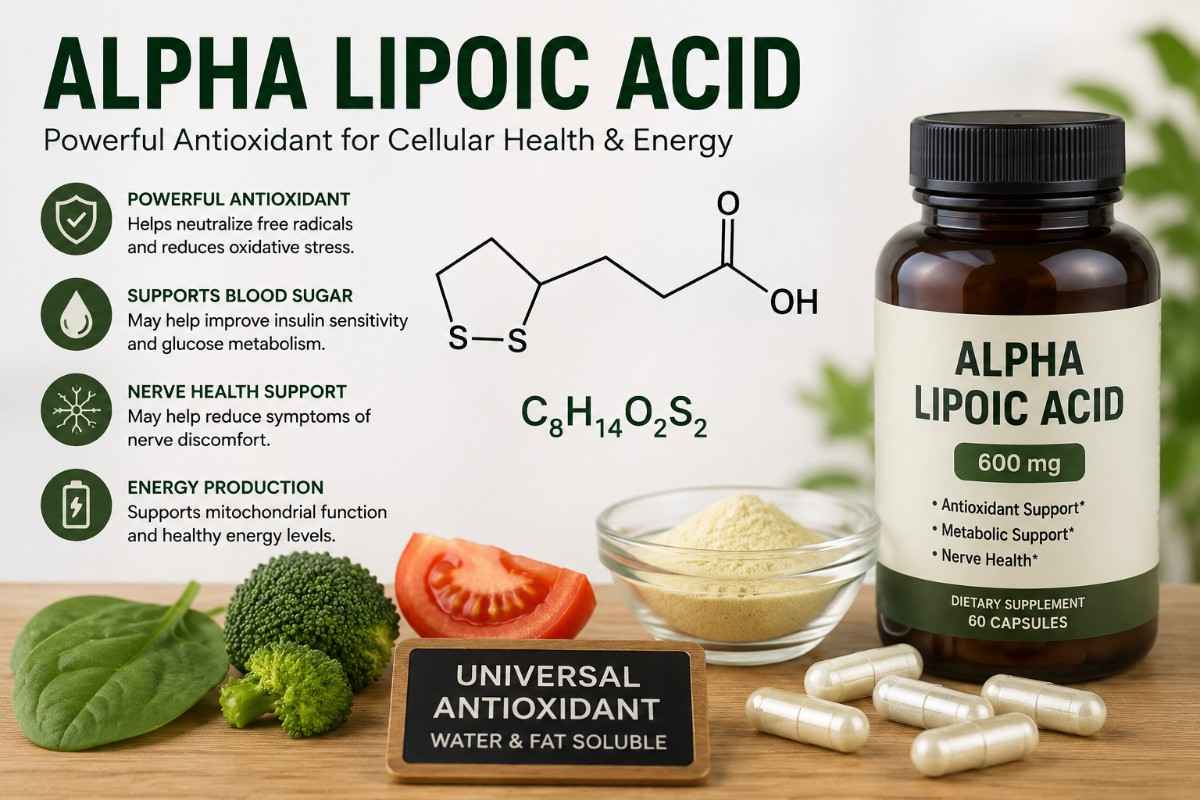
Alpha Lipoic Acid (ALA) is a powerful antioxidant naturally produced by the body and found in certain foods. It has gained significant attention in recent years for its potential role in blood sugar management, nerve health, anti-aging, weight management, and overall wellness.
Unlike many antioxidants that work only in water or fat, Alpha Lipoic Acid works in both environments, making it unique and highly versatile. Researchers continue to study its effects on metabolic health, inflammation, cognitive function, and age-related conditions.
What is Alpha Lipoic Acid?
Alpha Lipoic Acid (ALA), also known as thioctic acid, is a sulfur-containing compound naturally synthesized in small amounts by the body. It acts as a coenzyme in energy metabolism and helps convert nutrients into cellular energy.
ALA is found in every cell of the body and plays a crucial role in mitochondrial function. It is considered a “universal antioxidant” because it can function in both water-soluble and fat-soluble environments.
In supplement form, Alpha Lipoic Acid is widely used to support:
- Blood sugar regulation
- Nerve health
- Antioxidant protection
- Healthy aging
- Weight management
- Heart health
About Alpha Lipoic Acid
| Property | Description |
|---|---|
| Scientific Name | Alpha Lipoic Acid (ALA) |
| Other Names | Thioctic Acid |
| Chemical Formula | C8H14O2S2 |
| Type | Antioxidant |
| Natural Source | Produced by the body and found in foods |
| Solubility | Water and Fat Soluble |
| Primary Function | Cellular energy production |
| Major Action | Antioxidant and anti-inflammatory |
| Supplement Forms | Capsules, Tablets, Softgels, Liquid |
| Common Dosage Range | 300–600 mg daily |
| Absorption | Best on an empty stomach |
| Biological Role | Supports mitochondrial function |
How Does Alpha Lipoic Acid Work?
Alpha Lipoic Acid works primarily by supporting mitochondrial energy production and protecting cells from oxidative stress.
After entering the body, ALA helps:
- Neutralize harmful free radicals.
- Regenerate antioxidants such as vitamin C, vitamin E, and glutathione.
- Improve insulin sensitivity.
- Reduce inflammation.
- Support healthy nerve function.
- Protect cells from oxidative damage.
- Enhance energy production inside mitochondria.
Because it can cross the blood-brain barrier, ALA may also provide antioxidant support for brain and nervous system health.
20 Science-Backed Benefits of Alpha Lipoic Acid
- Powerful Antioxidant Protection: Alpha Lipoic Acid helps neutralize free radicals that contribute to cellular damage and aging.
- Supports Healthy Blood Sugar Levels: Research suggests ALA may improve insulin sensitivity and glucose utilization.
- May Help Diabetic Neuropathy: Studies indicate it can reduce symptoms such as tingling, burning, and numbness in nerves.
- Promotes Nerve Health: ALA helps protect nerve cells from oxidative stress and damage.
- Supports Brain Function: Its ability to cross the blood-brain barrier may help protect brain cells.
- May Improve Memory: Some studies suggest antioxidant protection may support cognitive performance.
- Reduces Oxidative Stress: ALA lowers markers associated with oxidative damage throughout the body.
- Supports Heart Health: It may help maintain healthy blood vessels and circulation.
- May Help Lower Inflammation: ALA has demonstrated anti-inflammatory properties in several studies.
- Supports Healthy Cholesterol Levels: Research suggests it may contribute to improved lipid metabolism.
- May Assist Weight Management: Some evidence indicates ALA could support modest weight reduction efforts.
- Promotes Healthy Skin Aging: Antioxidant activity may help protect skin from environmental damage.
- Supports Eye Health: ALA may help protect eye tissues from oxidative stress.
- Enhances Cellular Energy Production: It plays a key role in mitochondrial energy metabolism.
- Supports Liver Health: ALA may help reduce oxidative burden on liver cells.
- May Improve Exercise Recovery: Antioxidant effects may assist post-exercise recovery.
- Supports Healthy Circulation: It may contribute to improved blood flow and vascular function.
- May Protect Against Glycation Damage: ALA helps reduce oxidative processes associated with aging.
- Supports Immune Function: Healthy antioxidant status contributes to normal immune responses.
- Promotes Overall Healthy Aging: Its broad antioxidant activity supports long-term cellular wellness.
Related Articles:
10 Side Effects of Alpha Lipoic Acid
- Nausea: Some users may experience mild stomach discomfort or nausea.
- Headache: Headaches can occur, particularly when starting supplementation.
- Skin Rash: Allergic skin reactions may occasionally develop.
- Dizziness: Certain individuals may experience temporary dizziness.
- Low Blood Sugar: ALA may enhance glucose utilization and potentially lower blood sugar excessively.
- Digestive Upset: Bloating, indigestion, or abdominal discomfort may occur.
- Fatigue: Some users report temporary tiredness during initial use.
- Vomiting: High doses may increase the risk of vomiting.
- Insomnia: Rare cases of sleep disturbances have been reported.
- Allergic Reactions: Severe allergic reactions are uncommon but possible.
Sources of Alpha-Lipoic Acid
| Food Source | Approximate ALA Content |
|---|---|
| Beef Liver | Moderate |
| Beef Kidney | Moderate |
| Heart Meat | Moderate |
| Spinach | Low |
| Broccoli | Low |
| Tomatoes | Low |
| Brussels Sprouts | Low |
| Peas | Low |
| Potatoes | Low |
| Rice Bran | Low |
Note: Food sources contain relatively small amounts compared to supplements.
How to Take Alpha Lipoic Acid?
Alpha Lipoic Acid is commonly available as:
- Capsules
- Tablets
- Softgels
- Powder formulations
- Liquid supplements
For optimal absorption:
- Take on an empty stomach.
- Drink with water.
- Follow label instructions.
- Avoid exceeding recommended doses.
- Consult a healthcare professional if taking medications.
What is the Best Time to Take Alpha Lipoic Acid?
Most experts recommend taking Alpha Lipoic Acid:
- 30–60 minutes before breakfast.
- Between meals on an empty stomach.
- At the same time each day for consistency.
Some people split higher doses into two servings, such as morning and afternoon.
Who Should Take Alpha Lipoic Acid?
- People Seeking Antioxidant Support: Individuals looking to combat oxidative stress may benefit.
- Adults Managing Blood Sugar Levels: Those aiming to support healthy glucose metabolism may consider ALA.
- People with Nerve Discomfort: Individuals experiencing nerve-related symptoms may find support from ALA.
- Healthy Aging Enthusiasts: Adults focused on longevity and cellular wellness may benefit.
- Athletes and Active Individuals: ALA may support recovery and energy metabolism.
- People Interested in Brain Health: Antioxidant protection may help support cognitive wellness.
- Individuals Concerned About Heart Health: ALA may contribute to cardiovascular support.
- People Seeking Skin Health Support: Antioxidant properties may help maintain healthy skin.
Who Should Not Take Alpha Lipoic Acid?
- Pregnant Women Without Medical Advice: Supplement use should be discussed with a healthcare provider.
- Breastfeeding Mothers Without Approval: Safety data remain limited.
- People with Low Blood Sugar Issues: ALA may further reduce glucose levels.
- Individuals Taking Diabetes Medications: Medical supervision is recommended.
- People with Thyroid Disorders: Potential interactions should be evaluated.
- Individuals Scheduled for Surgery: Supplementation may need temporary discontinuation.
- People with Known Allergies to ALA: Use should be avoided if hypersensitivity exists.
- Children Unless Recommended by a Physician: Professional guidance is essential.
How Much Alpha Lipoic Acid Should You Take Daily?
Daily intake depends on individual goals:
| Purpose | Typical Daily Amount |
|---|---|
| General Wellness | 100–300 mg |
| Antioxidant Support | 300–600 mg |
| Nerve Health | 600 mg |
| Clinical Applications | As directed by healthcare professionals |
Alpha Lipoic Acid Dosage
| Dosage | Common Use |
|---|---|
| 100 mg | Basic antioxidant support |
| 200 mg | General wellness |
| 300 mg | Metabolic support |
| 600 mg | Nerve and blood sugar support |
| 1200 mg+ | Only under medical supervision |
Other Uses of Alpha Lipoic Acid
Beyond antioxidant support, Alpha Lipoic Acid is commonly used for:
- Healthy aging programs
- Sports nutrition
- Skin wellness routines
- Metabolic health support
- Cognitive health support
- Liver wellness
- Eye health support
- Cellular energy enhancement
- Cardiovascular support
- Recovery support
Tips for Consuming Alpha Lipoic Acid
- Take on an empty stomach when possible.
- Follow recommended serving sizes.
- Store supplements in a cool, dry place.
- Stay hydrated throughout the day.
- Purchase products from reputable brands.
- Maintain a balanced diet rich in antioxidants.
- Pair supplementation with healthy lifestyle habits.
- Consult a healthcare professional for long-term use.
Precautions and Interactions
- Blood Sugar Medications: Alpha Lipoic Acid may enhance glucose-lowering effects.
- Thyroid Medications: It may interfere with thyroid treatment effectiveness.
- Chemotherapy Treatments: Consult an oncologist before use.
- Mineral Supplements: ALA may affect absorption of certain minerals.
- Alcohol Consumption: Excessive alcohol use may reduce effectiveness.
- Surgery Considerations: Discontinue use before surgery if advised by a physician.
- Existing Medical Conditions: Professional guidance is recommended for chronic illnesses.
- Combination Supplements: Monitor total antioxidant intake from multiple products.
- High Doses: Excessive intake may increase side effect risk.
- Long-Term Supplementation: Periodic medical review is advisable.
Conclusion:
Alpha Lipoic Acid is a unique antioxidant that supports energy production, metabolic health, nerve function, and overall cellular protection. Its ability to work in both water- and fat-based environments distinguishes it from many other antioxidants. While research continues to uncover new applications, Alpha Lipoic Acid remains one of the most widely studied antioxidant supplements available today.
FAQ’s
How much Alpha-Lipoic Acid for weight loss?
Studies commonly use 600–1,200 mg daily, which may support modest weight loss by improving metabolism and insulin sensitivity. Consult a healthcare professional before using Alpha-Lipoic Acid for weight management.
How to Incorporate Alpha Lipoic Acid into Your Diet?
Include foods such as spinach, broccoli, tomatoes, peas, potatoes, and organ meats, or take an Alpha-Lipoic Acid supplement for higher intake. For best results, combine it with a balanced diet and regular exercise.
What is Alpha Lipoic Acid used for?
Alpha Lipoic Acid is commonly used to support antioxidant protection, healthy blood sugar levels, nerve health, energy production, and overall cellular wellness.
Is Alpha Lipoic Acid safe to take every day?
For most healthy adults, Alpha Lipoic Acid is generally considered safe when taken daily in recommended amounts. However, people with medical conditions or those taking medications should consult a healthcare professional first.
Can Alpha Lipoic Acid help with weight loss?
Some studies suggest Alpha Lipoic Acid may support weight management by improving metabolism and insulin sensitivity, though it is not a substitute for a healthy diet and exercise.
Does Alpha Lipoic Acid lower blood sugar?
Yes, research indicates that Alpha Lipoic Acid may help improve insulin sensitivity and support healthy blood sugar regulation.
How long does Alpha Lipoic Acid take to work?
Results vary by individual, but some people notice benefits within a few weeks, while others may require several months of consistent use.
Can Alpha Lipoic Acid be taken with other vitamins?
Yes, Thioctic acid is often taken alongside vitamins C, E, and other antioxidants because it may help regenerate these nutrients within the body.
Is Alpha Lipoic Acid good for nerve pain?
Thioctic acid has been studied extensively for diabetic neuropathy and may help reduce symptoms such as tingling, burning, and numbness.
Can Alpha Lipoic Acid improve skin health?
Its antioxidant properties may help protect skin cells from oxidative stress and support healthy aging skin.
Is Alpha Lipoic Acid good for the liver?
Some research suggests Alpha Lipoic Acid may help protect liver cells from oxidative damage and support overall liver health.
Can Alpha Lipoic Acid be taken during pregnancy?
Pregnant women should only take Alpha Lipoic Acid under the guidance of a healthcare professional due to limited safety data.
Can Alpha Lipoic Acid increase energy levels?
Because it plays a role in mitochondrial energy production, Alpha Lipoic Acid may help support healthy energy metabolism.
Is Alpha Lipoic Acid natural?
Yes, Thioctic acid is naturally produced by the body and is also present in certain foods.
What happens if I take too much Alpha Lipoic Acid?
Excessive amounts may increase the risk of side effects such as nausea, dizziness, stomach upset, headaches, and low blood sugar.
Can Alpha Lipoic Acid help with aging?
Its antioxidant and anti-inflammatory properties may help protect cells from age-related oxidative damage and support healthy aging.
Is Alpha Lipoic Acid good for the brain?
Since Thioctic acid can cross the blood-brain barrier, it may help protect brain cells from oxidative stress and support cognitive health.
Should Alpha Lipoic Acid be taken with food?
While it can be taken with food if stomach discomfort occurs, absorption is generally better when taken on an empty stomach.
Can Alpha Lipoic Acid be taken long-term?
Many people use Thioctic acid long-term, but regular consultation with a healthcare professional is recommended for ongoing supplementation.
Sources / References:
- National Center for Biotechnology Information (NCBI) – Alpha-Lipoic Acid Review
- National Institutes of Health (NIH) – Dietary Supplements Information
- MedlinePlus – Alpha-Lipoic Acid Overview
- Mayo Clinic – Supplements Guide
Also Read:
- Polyglutamic Acid: 20 Benefits, Side Effects, Precautions & How to Use
- Collagen Banking: Benefits, Side Effects, Treatments & How to Build It
- Glycerin: 20 Benefits, Side Effects, Precautions & How to Use It
About the Author:
Written by: Kirti Solanki (Health Content Researcher)
Kirti Solanki is a health content researcher who specializes in evidence-based nutrition, wellness, skincare, natural health remedies, supplements, pregnancy health, and preventive healthcare topics. Her content focuses on simplifying complex medical and nutritional information into practical, reader-friendly guides supported by credible scientific research and trusted health sources.
Disclaimer:
This guide is for educational and informational purposes only and should not be considered medical advice, diagnosis, or treatment. Always consult a qualified healthcare professional before starting any supplement, medication, or health program, especially if you are pregnant, breastfeeding, taking medications, or managing a medical condition.