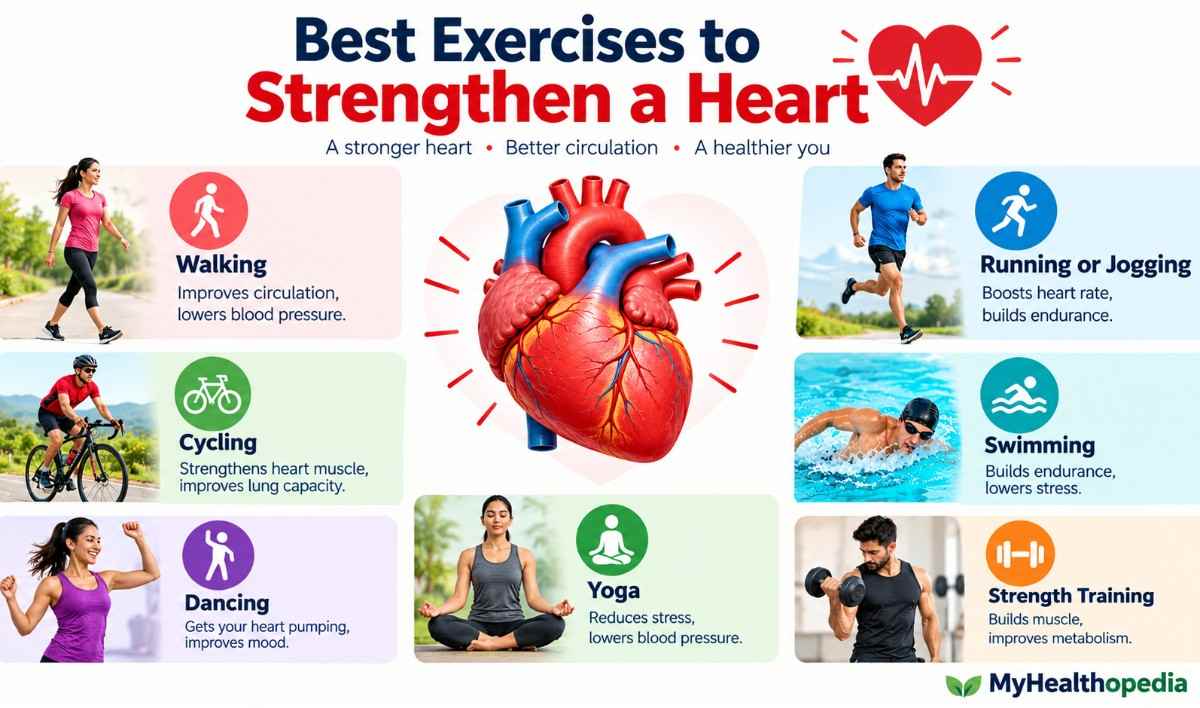
Your heart works continuously to pump blood throughout your body, and regular physical activity is one of the simplest ways to support its health. You do not need to become a marathon runner or spend hours in the gym. Brisk walking, cycling, swimming, dancing, jogging, and strength training can all become part of a heart-friendly routine.
The American Heart Association recommends that adults aim for at least 150 minutes of moderate-intensity aerobic activity per week or 75 minutes of vigorous activity, preferably spread throughout the week. It also recommends muscle-strengthening activity at least twice weekly.
The key is consistency. If you have been inactive, starting with short sessions and gradually increasing your activity can be more sustainable than suddenly doing intense workouts.
What Does Exercise Do for Your Heart?
Exercise makes your heart work harder temporarily, which helps improve cardiovascular fitness over time. Regular physical activity can help your heart pump blood more efficiently and is associated with a lower risk of cardiovascular disease.
Aerobic activities that involve rhythmic movement of large muscle groups, such as walking, swimming, cycling, and jogging, are particularly useful for improving cardiorespiratory fitness.
Regular exercise can also support:
- Healthy blood pressure
- Healthy cholesterol levels
- Blood sugar control
- Weight management
- Better stamina and endurance
- Improved circulation
- Better sleep
- Stress management
- Overall cardiovascular fitness
15 Best Exercises to Strengthen Your Heart
1. Brisk Walking
Brisk walking is one of the easiest exercises for improving cardiovascular fitness. Walking at a pace that makes you breathe faster while still allowing you to talk can provide moderate-intensity exercise.
How to start: Begin with 10–15 minutes and gradually work toward 30 minutes or more on most days.
2. Jogging
Jogging increases your heart rate more than ordinary walking and can provide vigorous aerobic exercise for people who are accustomed to it.
Best for: People who already have a reasonable fitness base and can tolerate higher-impact activity.
3. Cycling
Cycling is an effective cardiovascular exercise that works the legs while keeping you moving continuously. Outdoor cycling or a stationary bike can both be useful.
Beginner tip: Start with a comfortable pace and gradually increase the duration or resistance.
4. Swimming
Swimming provides a full-body aerobic workout while placing relatively little impact on the joints. Swimming laps can become a vigorous cardiovascular workout as fitness improves.
For beginners, water walking or gentle swimming can be an easier starting point.
5. Dancing
Dancing can raise your heart rate while making exercise feel less like a workout. Fast-paced dancing can provide moderate-to-vigorous aerobic activity.
You can dance at home, join a class, or simply add several songs to your daily movement routine.
6. Jumping Rope
Jumping rope can quickly increase your heart rate and provide vigorous cardiovascular exercise. However, it is a higher-impact activity and may not be appropriate for everyone.
Start with short intervals rather than attempting long continuous sessions.
7. Stair Climbing
Walking up stairs challenges your heart and leg muscles and can be an effective way to add intensity to your routine.
If you are new to exercise, begin with a few flights and take breaks as needed. Gradually increase your workload as your fitness improves.
8. Rowing
Rowing, whether performed on a rowing machine or in a boat, combines cardiovascular exercise with muscular work. It can provide a strong full-body workout when performed correctly.
Focus on technique before increasing resistance or speed.
9. Hiking
Hiking combines walking with changes in terrain and elevation. A flat trail can provide moderate exercise, while hills can make the workout considerably more challenging.
Choose a route appropriate for your current fitness level.
10. Elliptical Training
An elliptical machine provides continuous aerobic movement while generally placing less impact on the joints than running.
It can be a useful option for people who want to exercise indoors or prefer a lower-impact workout.
11. Water Aerobics
Water aerobics combines aerobic movement with resistance from the water. It can be particularly appealing for people who prefer lower-impact exercise.
The American Heart Association lists water aerobics among moderate-intensity aerobic activities that can benefit cardiovascular fitness.
12. Resistance Training
Strength training is not only about building muscle. It can complement aerobic exercise as part of an overall heart-healthy activity routine.
Examples include:
- Squats
- Lunges
- Resistance-band exercises
- Bodyweight exercises
- Free-weight exercises
- Weight-machine exercises
The American Heart Association recommends muscle-strengthening activity at least two days per week.
13. Bodyweight Squats
Squats work several large muscle groups and can be performed without equipment. They can complement your cardiovascular workouts by improving lower-body strength.
Start with bodyweight squats and focus on controlled movement rather than speed.
14. Interval Walking
Interval walking alternates between easier and faster walking periods. For example, you might walk comfortably for several minutes, increase your pace for one or two minutes, and then return to a comfortable pace.
As your fitness improves, you can gradually increase the faster intervals.
15. Marching in Place
Marching in place is a convenient home exercise that can raise your heart rate without requiring special equipment.
Try several short sessions throughout the day if completing one longer workout feels difficult.
Which Exercise Is Best for Heart Health?
There is no single exercise that is best for everyone. The most useful choice is an activity you can perform safely and consistently.
For many adults, a combination of brisk walking, cycling, swimming, jogging, dancing, and strength training provides a well-rounded routine.
The American Heart Association recommends combining aerobic activity with muscle-strengthening exercises rather than relying on only one type of exercise.
How Much Exercise Do You Need for a Stronger Heart?
For most adults, a practical weekly target is:
| Type of Activity | Recommended Amount |
|---|---|
| Moderate aerobic exercise | At least 150 minutes/week |
| Vigorous aerobic exercise | At least 75 minutes/week |
| Combination of moderate + vigorous | Equivalent combination |
| Muscle-strengthening exercise | At least 2 days/week |
| Additional moderate activity | Up to 300 minutes/week may provide additional benefits |
You do not necessarily need to complete all your exercise in one session. You can divide activity across the week and build up gradually.
A Simple 7-Day Heart-Healthy Exercise Plan
If you are generally healthy and already able to exercise, the following can serve as a simple example:
| Day | Activity | Suggested Duration |
|---|---|---|
| Monday | Brisk walking | 30 minutes |
| Tuesday | Strength training | 20–30 minutes |
| Wednesday | Cycling or swimming | 30 minutes |
| Thursday | Brisk walking | 30 minutes |
| Friday | Strength training + light walking | 20–30 minutes |
| Saturday | Hiking, dancing, or cycling | 30–45 minutes |
| Sunday | Easy walking and stretching | 20–30 minutes |
This is only an example. Your ideal exercise plan should reflect your age, fitness level, health conditions, medications, and previous activity level.
How to Start Exercising for Heart Health
If you currently do little or no exercise, you do not need to immediately aim for 30–60 minutes every day.
Try this approach:
- Start small: Begin with 10–15 minutes of comfortable activity.
- Increase gradually: Add a few minutes as your stamina improves.
- Choose activities you enjoy: Walking, cycling, swimming, or dancing can all count.
- Spread activity across the week: Regular movement is easier to maintain than occasional intense workouts.
- Move more during the day: Take walking breaks, use stairs when appropriate, and avoid sitting for long uninterrupted periods.
The American Heart Association specifically encourages people who are new to exercise to start slowly and gradually build their duration and intensity.
Do You Need to Exercise Every Day?
Not necessarily. The important goal is to accumulate enough physical activity throughout the week.
However, moving regularly is beneficial. Even light activity can help reduce the amount of time you spend sitting, while moderate-to-vigorous aerobic activity provides greater cardiovascular benefits.
A simple daily walk can therefore be a valuable addition even on days when you are not doing a formal workout.
Can Strength Training Help Your Heart?
Yes. Strength training should complement, rather than replace, aerobic exercise for most people.
Exercises such as squats, lunges, resistance-band movements, and weight training can improve muscular strength and help you perform everyday activities more easily. The American Heart Association recommends strength training at least twice a week.
A balanced routine can include:
- Aerobic exercise for cardiovascular endurance
- Strength training for muscular fitness
- Stretching for flexibility
- Balance exercises when appropriate, particularly for older adults
What Is the Best Time to Exercise for Heart Health?
There is no single universally best time of day to exercise. The best time is generally the time you can follow consistently and safely.
Some people prefer exercising in the morning, while others find an afternoon or evening workout easier to maintain. Consistency matters more than choosing a specific hour.
Should You Warm Up Before Exercise?
Yes. A few minutes of easy movement before a workout can gradually raise your heart rate and prepare your muscles for activity.
For example, before brisk walking, start with a slower pace and gradually increase your speed.
Warming up can gently raise the heart rate and help prepare the muscles for exercise.
When Should You Stop Exercising?
Stop exercising and seek appropriate medical attention if you experience concerning symptoms such as:
- Chest pain or pressure
- Severe or unusual shortness of breath
- Fainting or near-fainting
- Severe dizziness
- A sudden or unusual racing or irregular heartbeat
- Symptoms that feel serious or different from your normal exercise response
People with known heart disease or those recovering from a heart attack, heart surgery, or another cardiac event should work with their healthcare team to develop an appropriate exercise plan.
Who Should Talk to a Doctor Before Starting Exercise?
If you have heart disease, significant cardiovascular risk factors, uncontrolled blood pressure, diabetes, a recent cardiac event, or another medical condition that could affect exercise tolerance, talk with your healthcare professional before beginning a new exercise program.
Someone recovering from a heart attack or cardiac procedure may benefit from a medically supervised cardiac rehabilitation program.
Can Exercise Prevent Heart Disease?
Regular physical activity can help lower the risk of cardiovascular disease and support several factors associated with heart health, including physical fitness, weight management, blood pressure, blood sugar, and overall metabolic health.
However, exercise is only one part of cardiovascular prevention. A heart-healthy lifestyle also includes nutritious eating, avoiding tobacco, getting adequate sleep, managing stress, and keeping important health measurements under control.
FAQ’s
Is walking enough to strengthen the heart?
Yes. Brisk walking can provide moderate-intensity aerobic activity and is an accessible way to improve cardiovascular fitness.
Is jogging better than walking for heart health?
Jogging provides higher-intensity exercise, but it is not automatically better for everyone. The best activity depends on your fitness, health, preferences, and ability to exercise safely.
How long should I exercise for a healthy heart?
Most adults should aim for at least 150 minutes of moderate-intensity aerobic activity or 75 minutes of vigorous activity each week.
Is 30 minutes of walking enough for heart health?
A 30-minute brisk walk can contribute meaningfully toward the recommended weekly amount of moderate physical activity.
Which exercise is best for a weak heart?
For people with heart disease or reduced heart function, the safest exercise depends on their individual condition. A healthcare professional or cardiac rehabilitation team can recommend an appropriate routine.
Can exercise lower the risk of heart disease?
Regular physical activity can help lower cardiovascular disease risk and support healthy blood pressure, blood sugar, cholesterol, weight, and fitness levels.
Is cardio or strength training better for the heart?
Both are beneficial. Aerobic exercise directly improves cardiovascular fitness, while strength training supports overall fitness and should complement aerobic activity.
Can I strengthen my heart without going to the gym?
Yes. Walking, jogging, dancing, climbing stairs, cycling, marching in place, and bodyweight exercises can all be done without gym equipment.
Is jogging good for the heart?
Yes. Jogging is a vigorous aerobic activity that can improve cardiovascular fitness, provided it is appropriate for your fitness level and health condition.
Can I exercise every day for heart health?
Yes, many people can safely include some form of physical activity every day, although the intensity and duration can vary between days.
What exercises are good for heart and lungs?
Brisk walking, cycling, swimming, jogging, dancing, and other aerobic activities can improve cardiorespiratory fitness.
Can exercise help lower blood pressure?
Regular physical activity can help support healthy blood pressure and is an important part of a heart-healthy lifestyle.
What is the best exercise for beginners to improve heart health?
Brisk walking is often a practical starting point because it is accessible, easy to control in intensity, and requires little equipment.
Should I exercise if I have heart disease?
People with heart disease should discuss their exercise plan with a healthcare professional, particularly before starting vigorous or unfamiliar activities.
How can I improve my heart health in 30 days?
You can support better heart health in 30 days by gradually increasing physical activity, aiming for at least 150 minutes of moderate exercise per week, eating a heart-healthy diet, getting enough sleep, managing stress, and avoiding tobacco.
What are good cardio workouts at home?
Good at-home cardio workouts include brisk walking in place, marching in place, dancing, stair climbing, jumping jacks, jogging in place, and low-impact aerobic exercises.
Final Takeaway
The best exercises for a stronger, healthier heart are not necessarily the hardest ones. Brisk walking, cycling, swimming, jogging, dancing, stair climbing, and other aerobic activities can improve cardiovascular fitness when performed regularly. Adding strength training at least twice a week creates a more complete fitness routine.
If you are currently inactive, start small. Even a short walk is a meaningful first step, and you can gradually work toward the recommended 150 minutes of moderate activity each week.
Sources / References:
Disclaimer:
This guide is for general educational purposes only and does not replace personalized medical advice. If you have heart disease, symptoms during exercise, or another medical condition, consult your healthcare professional before starting or changing an exercise program.
Also Read: