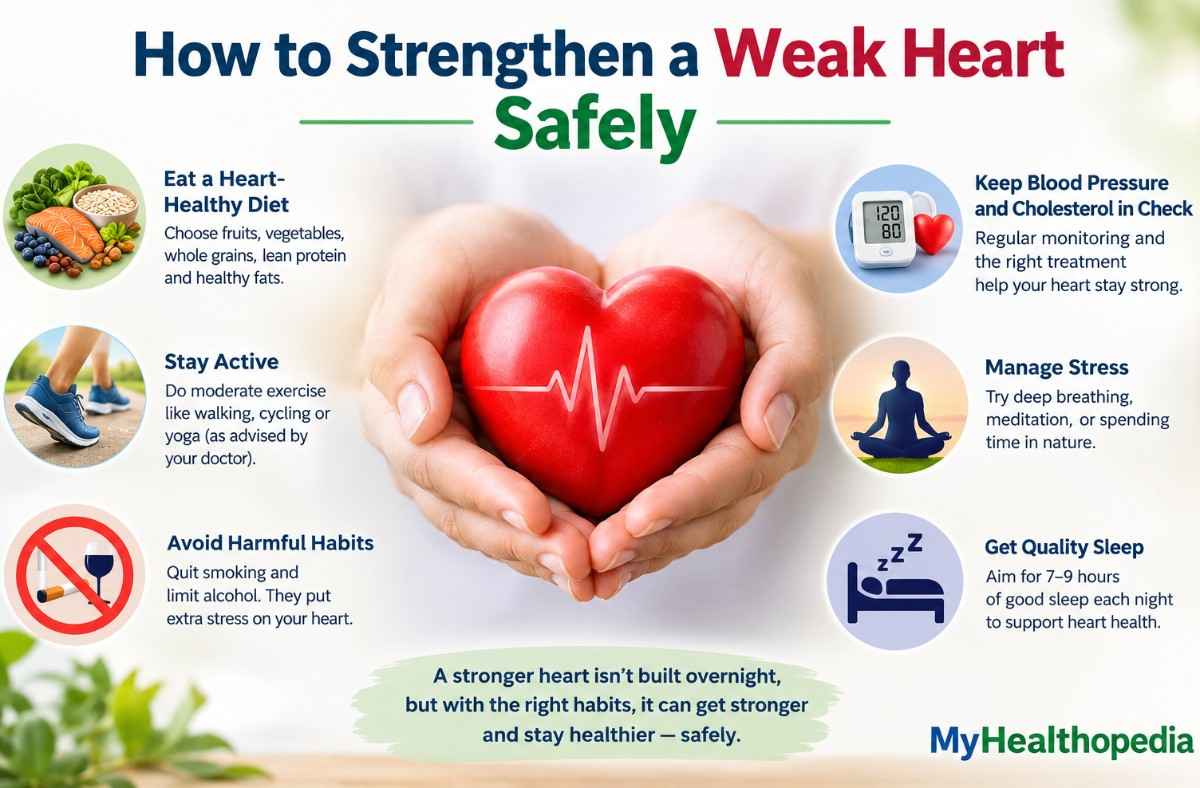
A “weak heart” is a common phrase people use when the heart is not pumping or functioning as efficiently as it should. Medically, this can refer to several different conditions, including heart failure, a reduced ejection fraction, cardiomyopathy, heart valve problems, or damage after a heart attack.
The good news is that many people can improve their heart health and daily function with the right combination of medical treatment, physical activity, nutrition, healthy weight management, and control of conditions such as high blood pressure and diabetes. However, there is no single food, drink, exercise, or supplement that can safely “strengthen” every weak heart.
If you already have heart disease or heart failure, the safest approach is to work with a healthcare professional before making major changes to exercise, fluids, salt intake, or medications. Treatment for heart failure can improve symptoms and help people live longer and more active lives.
What Does a Weak Heart Mean?
A weak heart generally means that the heart muscle is not working as effectively as it should. In some people, the heart cannot pump enough blood to meet the body’s needs. In others, the heart may pump normally but become stiff and unable to fill properly.
One measurement doctors may use is the ejection fraction (EF), which describes how much blood the left ventricle pumps out with each contraction.
A reduced ejection fraction can be associated with heart failure with reduced ejection fraction, but ejection fraction is only one part of evaluating heart function.
A weak heart can have many causes, including:
- Coronary artery disease
- Previous heart attack
- High blood pressure
- Heart valve disease
- Cardiomyopathy
- Abnormal heart rhythms
- Certain infections
- Diabetes and metabolic conditions
- Excess alcohol use
- Some medications or medical treatments
- Congenital heart conditions
Because the underlying cause matters, treatment should be individualized.
12 Safe Ways to Support and Strengthen a Weak Heart
1. Get the Cause of Heart Weakness Identified
The first step is understanding why the heart is weak.
A healthcare professional may use your medical history, physical examination, blood tests, an electrocardiogram, echocardiogram, imaging, or other tests to determine what is affecting your heart.
Treating the underlying cause can be much more effective than relying on lifestyle changes alone.
2. Take Prescribed Heart Medicines Consistently
If you have been prescribed medication for heart failure, blood pressure, cholesterol, abnormal heart rhythm, or another heart condition, take it exactly as directed.
Depending on the condition, heart medicines may reduce the heart’s workload, control blood pressure, remove excess fluid, improve circulation, or reduce the risk of complications.
Do not stop or change a heart medication because you feel better unless your healthcare professional tells you to do so.
3. Start Physical Activity Gradually
Exercise can help improve cardiovascular fitness, circulation, weight management, blood pressure, and overall physical function.
But someone with a weak heart should not suddenly begin intense workouts.
A safer approach is to start with activity appropriate for your condition and gradually increase it. Walking may be suitable for many people, but the appropriate intensity depends on the person’s diagnosis and fitness level.
For people with heart failure or other cardiovascular conditions, a supervised cardiac rehabilitation program may be recommended. Cardiac rehabilitation can help people exercise more safely while improving fitness and quality of life.
4. Follow a Heart-Healthy Eating Pattern
Your daily diet can influence blood pressure, cholesterol, blood sugar, body weight, and cardiovascular health.
Build meals around foods such as:
- Vegetables
- Fruits
- Whole grains
- Beans and lentils
- Nuts and seeds
- Fish and other lean protein sources
- Low-fat or unsweetened dairy products when appropriate
- Healthy unsaturated fats
At the same time, reduce highly processed foods that are often high in sodium, saturated fat, added sugar, or excess calories.
A healthy eating pattern supports several major heart-health risk factors at the same time.
5. Reduce Excess Sodium
Too much sodium can contribute to fluid retention and increased blood pressure. This can be particularly important for people with heart failure.
Common sources of excess sodium include:
- Packaged soups
- Instant noodles
- Processed meats
- Pickles
- Salty snacks
- Fast food
- Packaged sauces
- Ready-to-eat meals
- Restaurant foods
Instead of relying heavily on salt, use herbs, spices, lemon, garlic, ginger, or other flavoring ingredients.
If you have heart failure, ask your healthcare professional how much sodium you should consume because your individual recommendation may differ.
6. Maintain a Healthy Weight
Carrying excess body weight can place additional demands on the cardiovascular system and is associated with conditions such as high blood pressure, diabetes, and abnormal cholesterol.
If weight loss is appropriate for you, focus on gradual, sustainable changes rather than crash diets.
A healthcare professional or registered dietitian can help create a weight-management plan that takes your heart condition into account.
7. Keep Blood Pressure Under Control
High blood pressure makes the heart work harder over time and can contribute to heart disease and heart failure.
Check your blood pressure as recommended and take prescribed blood-pressure medication consistently.
Lifestyle measures such as regular physical activity, healthy eating, maintaining a healthy weight, reducing excess sodium, and not smoking can also support healthier blood pressure.
8. Manage Cholesterol and Blood Sugar
High LDL cholesterol can contribute to plaque buildup in the arteries, while uncontrolled diabetes can damage blood vessels and increase cardiovascular risk.
Regular monitoring and appropriate treatment can help protect the heart and blood vessels.
If you have diabetes, following your prescribed treatment plan and maintaining healthy blood sugar levels are important parts of cardiovascular care.
9. Stop Smoking and Avoid Tobacco
Smoking damages blood vessels, raises cardiovascular risk, and can make the heart work harder.
Quitting smoking is one of the most important steps you can take for cardiovascular health, even if you have smoked for many years.
If quitting is difficult, talk with a healthcare professional about evidence-based smoking-cessation support.
10. Limit or Avoid Alcohol
Alcohol can raise blood pressure and may worsen certain heart conditions.
For some people with heart failure or alcohol-related heart disease, avoiding alcohol completely may be recommended.
Do not assume that moderate drinking is appropriate simply because you have heard that alcohol can be “heart healthy.” Ask your healthcare professional whether alcohol is safe for your particular condition.
11. Get Enough Sleep and Address Sleep Problems
Poor sleep can affect blood pressure, metabolism, energy levels, and cardiovascular health.
If you snore heavily, wake up gasping, experience excessive daytime sleepiness, or have been told that you stop breathing during sleep, discuss the possibility of sleep apnea with a healthcare professional.
Treating sleep-related conditions may be an important part of managing cardiovascular health.
12. Manage Stress in Healthy Ways
Long-term stress can make it harder to maintain healthy habits and may contribute to behaviors such as smoking, overeating, excessive alcohol use, or physical inactivity.
Try practical stress-management techniques such as:
- Slow breathing
- Gentle stretching
- Walking when medically appropriate
- Meditation
- Relaxation exercises
- Spending time with supportive people
- Speaking with a counselor when needed
Stress management should complement, not replace, medical treatment.
Signs That Heart Function May Be Improving
Here are some signs that may suggest your heart function is improving. However, symptoms alone cannot confirm that heart function has improved—medical tests such as an echocardiogram are often needed for a more accurate assessment.
1. Less Shortness of Breath
If you notice that breathing becomes easier during daily activities or while walking, it may indicate that your heart is pumping blood more effectively.
2. Reduced Swelling in the Legs, Ankles, or Feet
Decreased swelling may suggest better fluid balance and improved circulation.
3. More Energy and Less Fatigue
Feeling less tired and having more stamina for routine activities can be a positive sign.
4. Better Exercise Tolerance
Being able to walk longer distances, climb stairs more easily, or perform physical activities with less effort may indicate improved cardiovascular fitness.
5. Easier Breathing While Lying Down
Some people with heart failure experience shortness of breath when lying flat. If this improves, it can be a positive change.
6. More Stable Body Weight
For people with heart failure, stable body weight without sudden gains may suggest reduced fluid retention.
7. Improved Sleep Quality
Better breathing and fewer nighttime symptoms may lead to more restful sleep.
8. Fewer Hospital Visits or Flare-Ups
Needing fewer emergency visits or hospitalizations for heart-related symptoms may indicate better management of the condition.
9. Improved Blood Pressure and Heart Rate
Healthy and stable blood pressure and heart rate levels can support better heart function.
10. Better Test Results
Medical tests such as echocardiograms, blood tests, or improved ejection fraction may provide stronger evidence that heart function has improved.
How Much Exercise Is Safe for a Weak Heart?
There is no universal exercise prescription for someone with a weak heart.
The appropriate amount depends on your diagnosis, symptoms, ejection fraction, medications, fitness level, and whether you have recently experienced a heart attack or another cardiac event.
For many people, gradually increasing low- to moderate-intensity activity may be appropriate after medical clearance. Cardiac rehabilitation can provide structured, supervised exercise for people with certain heart conditions.
A simple principle is:
Start low, go slowly, and increase activity only as your healthcare professional recommends.
Stop exercising and seek medical advice if you develop unusual chest discomfort, severe breathlessness, dizziness, fainting, or other concerning symptoms.
Foods That Support Heart Health
No individual food can repair a weak heart, but an overall heart-healthy eating pattern can support cardiovascular health.
Good choices may include:
1. Vegetables
Leafy greens, carrots, tomatoes, broccoli, cauliflower, bell peppers, and other vegetables provide fiber and a variety of nutrients.
2. Fruits
Berries, apples, oranges, bananas, pears, and other whole fruits can be part of a balanced diet.
3. Whole Grains
Oats, brown rice, whole-wheat foods, barley, and other whole grains provide dietary fiber.
4. Beans and Lentils
Beans, chickpeas, peas, and lentils provide plant protein and fiber.
5. Nuts and Seeds
Unsalted nuts and seeds provide unsaturated fats and other nutrients.
6. Fish
Fatty fish such as salmon, sardines, and trout provide omega-3 fatty acids.
7. Healthy Fats
Unsaturated fats from foods such as olive oil, nuts, seeds, and avocados can replace some sources of saturated fat.
The overall eating pattern matters more than any single “heart-strengthening” food.
Foods to Limit When You Have a Weak Heart
Depending on your medical condition, you may need to limit:
- Highly salty foods
- Processed meats
- Deep-fried foods
- Foods high in saturated fat
- Highly processed snacks
- Sugary drinks
- Excess added sugar
- Large portions of refined carbohydrates
- Excess alcohol
If you have heart failure, sodium and fluid recommendations may need to be individualized by your healthcare team.
Should You Drink More Water for a Weak Heart?
Not necessarily.
People often assume that drinking more water is always beneficial for the heart. However, some people with heart failure develop fluid retention, and their healthcare professional may recommend a specific daily fluid intake.
Do not dramatically increase or restrict your water intake without medical advice if you have heart failure or significant heart disease.
Your healthcare team can tell you how much fluid is appropriate for you.
Can Supplements Strengthen a Weak Heart?
Be careful with supplements marketed as “heart-strengthening” products.
Some supplements can interact with prescription medicines or affect blood pressure, heart rhythm, bleeding, kidney function, or fluid balance.
Supplements should not replace prescribed heart treatment.
Always tell your doctor or pharmacist about vitamins, herbal products, powders, and supplements you take.
Monitor Your Symptoms and Weight
If you have heart failure, monitoring changes in your symptoms can help identify worsening fluid retention early.
Possible warning signs include:
- Increasing shortness of breath
- Difficulty breathing when lying down
- New or worsening swelling in the feet or ankles
- Unusual fatigue
- Rapid or irregular heartbeat
- Reduced ability to perform normal activities
- Unexpected weight gain
The American Heart Association notes that a rapid increase in weight can be a warning sign of fluid retention. Your healthcare professional can tell you exactly what change should prompt a call.
When Is a Weak Heart an Emergency?
Seek emergency medical care for symptoms such as:
- Sudden or unexplained chest pain
- Severe difficulty breathing
- Fainting
- Severe weakness
- A rapid or irregular heartbeat accompanied by chest pain, shortness of breath, or fainting
- Sudden severe breathlessness, particularly with other concerning symptoms
These symptoms can have several causes, including potentially life-threatening heart problems, so they should not be self-diagnosed.
Can Walking Strengthen a Weak Heart?
Walking can be an excellent form of physical activity for many people because it is simple, accessible, and easy to adjust.
However, if you have diagnosed heart failure or significant heart disease, do not assume that more walking is always better.
Your healthcare professional can help determine:
- How long you should walk
- How fast you should walk
- How often you should exercise
- Whether you need supervised cardiac rehabilitation
- What symptoms mean you should stop
For people who are medically cleared for activity, gradually building an exercise routine can support cardiovascular fitness and overall health.
A Simple Daily Routine for Better Heart Health
A heart-supportive routine might include:
- Morning: Take prescribed medications as directed, eat a balanced breakfast, and check your weight if your healthcare team has recommended daily monitoring.
- Daytime: Stay physically active within your recommended limits, choose minimally processed foods, and avoid excessive sodium.
- Evening: Eat a moderate, balanced meal, avoid tobacco, and use relaxation techniques to reduce stress.
- Every day: Follow your treatment plan, monitor symptoms when advised, and keep medical appointments.
Consistency is more important than trying to make dramatic changes overnight.
What Not to Do If You Have a Weak Heart?
Avoid trying to “train” a weak heart through sudden intense exercise.
Also avoid:
- Stopping prescription medication without medical advice
- Starting extreme diets
- Taking heart supplements without checking for interactions
- Drinking excessive amounts of water
- Using herbal remedies as replacements for treatment
- Ignoring increasing breathlessness or swelling
- Continuing exercise through serious symptoms
- Assuming that a low ejection fraction can be fixed by diet alone
A weak heart requires an individualized approach.
FAQ’s
Is milk good for a weak heart?
Low-fat or unsweetened dairy may fit into a heart-healthy diet, but the best choice depends on your overall diet and medical condition.
Should people with a weak heart avoid salt?
Many people with heart failure benefit from limiting excess sodium because it can contribute to fluid retention, but your recommended sodium intake should be individualized.
Can a weak heart be strengthened naturally?
Healthy eating, appropriate physical activity, smoking cessation, weight management, good sleep, and stress management can support heart health, but they should not replace prescribed treatment.
Can a low ejection fraction improve?
Yes, ejection fraction can improve in some people depending on the underlying cause and treatment, although improvement is not guaranteed.
Is exercise safe with a weak heart?
Exercise can be beneficial, but people with a diagnosed heart condition should follow an exercise plan appropriate for their condition and medical advice.
What are the warning signs of a worsening weak heart?
Increasing shortness of breath, swelling, unusual fatigue, reduced exercise tolerance, rapid weight gain, and difficulty breathing when lying down can be warning signs.
When should I seek emergency help?
Seek emergency medical care for severe breathing difficulty, sudden chest pain, fainting, or other sudden severe symptoms that could indicate a serious heart problem.
Can stress make a weak heart worse?
Long-term stress can negatively affect cardiovascular health and make healthy habits harder to maintain, so healthy stress-management strategies can be useful.
Can vitamins strengthen a weak heart?
Vitamins cannot be relied upon to strengthen a weak heart, and some supplements may interact with heart medications, so discuss supplements with your healthcare professional first.
Which drink is best for the heart?
Water is a healthy everyday choice, while unsweetened green tea and other unsweetened beverages can also fit into a heart-healthy diet.
What is the No. 1 fruit for heart health?
There is no single best fruit for everyone, but berries, apples, oranges, and other whole fruits can support heart health as part of a balanced diet.
What are three foods cardiologists say not to eat?
Highly processed meats, foods high in saturated or trans fats, and heavily processed high-sodium foods are generally best limited for better heart health.
How do I improve my heart health quickly?
You can start by becoming physically active as medically appropriate, eating more vegetables and whole foods, avoiding tobacco, managing blood pressure and cholesterol, and following prescribed treatment.
What heals the heart naturally?
No food or natural remedy can reliably “heal” a damaged heart, but regular physical activity, a heart-healthy diet, good sleep, stress management, and avoiding tobacco can support cardiovascular health.
What are 10 signs that my heart is healthy?
Good exercise tolerance, normal blood pressure, a healthy resting heart rate, healthy cholesterol levels, stable weight, good energy, normal blood sugar, no unexplained chest discomfort, no unusual shortness of breath, and the ability to perform daily activities comfortably can all be reassuring signs.
Can you recover from heart failure?
Heart failure is usually a long-term condition, but symptoms and heart function can improve substantially in some people with appropriate treatment and lifestyle changes. Some people experience improved or recovered heart function, but ongoing medical follow-up remains important.
The Bottom Line
Strengthening a weak heart safely is not about finding one miracle food or exercise. It is about identifying the underlying heart problem and consistently managing the factors that affect heart function.
Take prescribed medicines, follow an appropriate exercise plan, eat a heart-healthy diet, reduce excess sodium when recommended, maintain a healthy weight, control blood pressure and cholesterol, avoid smoking, limit or avoid alcohol when advised, get adequate sleep, and monitor changes in symptoms.
Most importantly, do not try to treat a diagnosed weak heart on your own. A cardiologist or other qualified healthcare professional can determine why the heart is weak and create a treatment and activity plan suited to your condition.
Sources / References:
- National Heart, Lung, and Blood Institute (NHLBI)
- American Heart Association
- Centers for Disease Control and Prevention
- Mayo Clinic
Disclaimer:
This guide is for educational purposes only and does not replace professional medical advice, diagnosis, or treatment. If you have heart disease, heart failure, chest pain, severe breathlessness, or other concerning symptoms, seek medical care promptly.
Also Read: