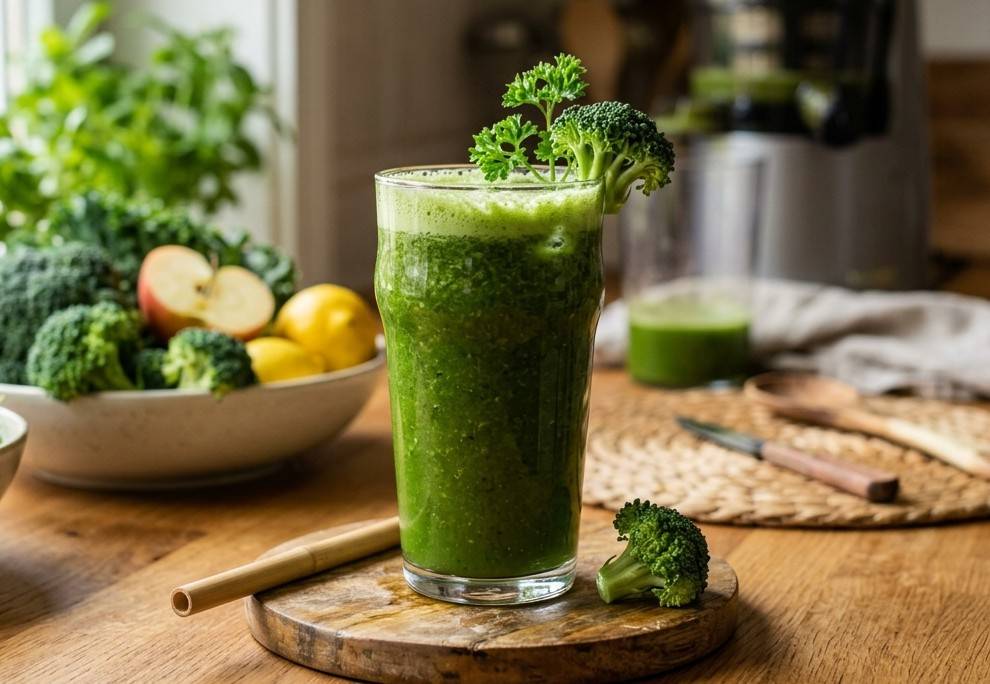
Broccoli juice is a nutrient-rich green beverage made by blending or juicing fresh broccoli florets and stems, often combined with fruits or vegetables to improve its taste. It is naturally packed with vitamins, minerals, antioxidants, and plant compounds that support overall health. Although drinking broccoli juice is not as common as eating cooked or raw broccoli, it offers a convenient way to increase your daily intake of cruciferous vegetables.
Broccoli contains beneficial compounds such as sulforaphane, glucosinolates, vitamin C, vitamin K, folate, potassium, and fiber (when blended rather than filtered). While broccoli juice should not replace whole vegetables in your diet, it can be a healthy addition to a balanced eating plan.
What is Broccoli Juice?
Broccoli juice is a fresh vegetable juice prepared by extracting or blending broccoli with water and other ingredients like cucumber, celery, apple, lemon, ginger, spinach, or mint. Since broccoli has a naturally earthy flavor, these additions improve both taste and nutritional value.
Unlike sugary fruit juices, broccoli juice is naturally low in calories and sugar while providing numerous vitamins, antioxidants, and bioactive compounds that may help protect the body against oxidative stress and inflammation.
Nutrition Facts of Broccoli Juice
Approximate nutrition per 1 cup (240 ml) of freshly prepared broccoli juice (values vary depending on ingredients):
| Nutrient | Amount |
|---|---|
| Calories | 40–55 kcal |
| Protein | 2–3 g |
| Carbohydrates | 8–10 g |
| Dietary Fiber* | 1–2 g (if blended) |
| Natural Sugars | 2–4 g |
| Fat | <1 g |
| Vitamin C | 80–100% DV |
| Vitamin K | 70–90% DV |
| Folate | 15–20% DV |
| Potassium | 300–400 mg |
| Calcium | 50–70 mg |
| Iron | 0.7–1 mg |
| Magnesium | 20–30 mg |
| Sulforaphane Precursors | Naturally Present |
| Glucosinolates | Naturally Present |
Fiber is significantly reduced when the juice is strained.
20 Proven Health Benefits of Broccoli Juice
- Rich in Antioxidants: Broccoli juice provides antioxidants that help protect cells from oxidative damage caused by free radicals.
- Supports Immune Health: Its high vitamin C content helps strengthen immune function and supports the body’s natural defense system.
- May Reduce Inflammation: Sulforaphane and other plant compounds may help reduce chronic inflammation.
- Promotes Heart Health: Potassium, antioxidants, and phytonutrients may support healthy blood pressure and cardiovascular function.
- Supports Healthy Digestion: When consumed unstrained, broccoli juice provides fiber that supports digestive health and bowel regularity.
- May Support Detoxification: Sulforaphane activates natural detoxification enzymes in the liver.
- Helps Maintain Healthy Blood Sugar: Some studies suggest broccoli compounds may improve insulin sensitivity when combined with a healthy lifestyle.
- Supports Eye Health: Lutein, zeaxanthin, and vitamin C contribute to maintaining healthy vision.
- Promotes Healthy Skin: Vitamin C supports collagen production and helps protect skin from environmental damage.
- Supports Bone Health: Vitamin K and calcium work together to maintain strong bones.
- May Help Protect Brain Function: Antioxidants may help reduce oxidative stress associated with age-related cognitive decline.
- Supports Healthy Cholesterol Levels: Regular broccoli consumption may contribute to improved cholesterol balance.
- May Lower Oxidative Stress: Sulforaphane has been widely studied for its antioxidant properties.
- Supports Healthy Weight Management: Low in calories and rich in nutrients, broccoli juice fits well into weight-management diets.
- Promotes Healthy Blood Vessels: Antioxidants help support healthy circulation and vascular function.
- Supports Liver Function: Bioactive compounds in broccoli may assist the body’s natural detoxification pathways.
- May Reduce Cellular Damage: Phytochemicals help protect healthy cells against oxidative stress.
- Supports Healthy Pregnancy Nutrition: Folate contributes to normal fetal development when included as part of a balanced pregnancy diet.
- Contributes to Healthy Aging: Vitamins and antioxidants help support overall cellular health as you age.
- Helps Increase Vegetable Intake: Drinking broccoli juice can be an easy way to consume more vegetables, especially for people who dislike eating broccoli.
10 Side Effects of Broccoli Juice
- Digestive Discomfort: Drinking large amounts may cause bloating, gas, or stomach discomfort.
- May Affect Thyroid Function: Excessive intake of raw cruciferous vegetables may interfere with iodine utilization in susceptible individuals.
- Can Cause Diarrhea: Drinking too much broccoli juice may upset digestion in some people.
- Vitamin K Interaction: High vitamin K intake may interfere with blood-thinning medications like warfarin.
- Possible Allergic Reactions: Although uncommon, some individuals may experience allergic symptoms.
- May Cause Bitter Taste: Its natural compounds can leave a strong aftertaste that some people find unpleasant.
- Potential Pesticide Exposure: Poorly washed broccoli may contain pesticide residues.
- Can Increase Gas Production: Sulfur-containing compounds may contribute to intestinal gas.
- May Lower Blood Sugar: People taking diabetes medications should monitor blood glucose levels.
- Not a Meal Replacement: Relying only on broccoli juice may lead to nutritional imbalances because it lacks adequate protein and healthy fats.
How to Make Broccoli Juice at Home?
Ingredients:
- 1½ cups fresh broccoli florets
- 1 cucumber
- 1 green apple (optional)
- ½ lemon
- Small piece of ginger
- 1 cup cold water
- Ice cubes (optional)
Instructions:
- Wash all ingredients thoroughly.
- Cut broccoli into small pieces.
- Add broccoli, cucumber, apple, ginger, lemon juice, and water to a blender.
- Blend until smooth.
- Strain if desired, although keeping the pulp preserves more fiber.
- Serve immediately for maximum nutrient retention.
Tips for Consuming Broccoli Juice
- Drink it fresh immediately after preparation.
- Blend instead of straining to retain fiber.
- Start with small servings if you are new to green juices.
- Pair broccoli with apple or cucumber for better taste.
- Use fresh organic broccoli whenever possible.
- Avoid adding refined sugar.
- Keep ingredients chilled for a refreshing drink.
- Consume as part of a balanced diet rather than as a meal replacement.
Other Uses of Broccoli Juice
- Base for green smoothies.
- Healthy breakfast beverage.
- Vegetable detox drink.
- Ingredient in homemade popsicles.
- Addition to soups and vegetable broths.
- Mixed into protein smoothies.
- Nutrient-rich post-workout beverage.
- Healthy drink during wellness programs.
How Much Broccoli Juice Can You Drink in a Day?
Most healthy adults can safely drink about 120–240 ml (½ to 1 cup) of freshly prepared broccoli juice per day as part of a balanced diet.
If you are new to green juices, begin with approximately 120 ml and gradually increase the amount if well tolerated. Drinking excessive quantities is not recommended because it may cause digestive discomfort and increase vitamin K intake.
Best Time to Drink Broccoli Juice
Many people prefer drinking broccoli juice:
- In the morning with breakfast.
- Between meals as a healthy snack.
- About 30–60 minutes before exercise.
- During lunch alongside a balanced meal.
Avoid drinking large amounts late at night if it causes digestive discomfort.
Who Should Drink Broccoli Juice?
- Health-Conscious Adults: It provides concentrated vitamins, minerals, and antioxidants.
- People Looking to Increase Vegetable Intake: It helps those who struggle to eat enough vegetables.
- Individuals Supporting Heart Health: Its nutrients complement a heart-friendly diet.
- People Managing Weight: Its low-calorie profile supports healthy weight management.
- Active Individuals: Vitamins and antioxidants may support exercise recovery.
- Older Adults: Nutrients may help support healthy aging.
- Busy Professionals: It offers a convenient way to consume vegetables.
- People Following Plant-Based Diets: It contributes valuable micronutrients.
Who Should Avoid Broccoli Juice?
- People Taking Warfarin: High vitamin K intake may affect medication effectiveness.
- Individuals with Broccoli Allergy: They should avoid consuming broccoli juice completely.
- People with Certain Thyroid Disorders: Excessive raw broccoli intake should be discussed with a healthcare provider.
- Individuals with Sensitive Digestion: Large servings may worsen bloating or gas.
- People with Kidney Conditions: Those requiring potassium restriction should seek medical advice.
- Infants: Broccoli juice is generally not recommended without pediatric guidance.
- People with Recent Gastrointestinal Surgery: Medical advice is recommended before consuming raw vegetable juices.
How to Store Broccoli Juice?
- Refrigerate Immediately: Store within 30 minutes of preparation.
- Use an Airtight Glass Bottle: This helps reduce oxidation.
- Consume Within 24 Hours: Fresh juice retains the highest nutrient content.
- Avoid Room Temperature Storage: Bacteria multiply quickly in fresh juices.
- Shake Before Drinking: Natural separation is normal.
- Do Not Freeze for Long Periods: Freezing may reduce flavor and some nutrients.
Precautions and Interactions
- Wash broccoli thoroughly before juicing.
- Drink fresh rather than storing for extended periods.
- Individuals taking anticoagulant medications should maintain consistent vitamin K intake and consult their healthcare provider.
- People with diabetes should monitor blood sugar if consuming broccoli juice regularly.
- Those with thyroid disorders should discuss frequent consumption of raw cruciferous vegetables with their healthcare professional.
- Broccoli juice should complement—not replace—a balanced diet rich in whole foods.
- Pregnant or breastfeeding women should consume freshly prepared juice made under hygienic conditions and consult their healthcare provider if they have dietary concerns.
FAQ’s
Is it safe to drink broccoli juice daily?
Yes, most healthy adults can drink about ½–1 cup (120–240 ml) of fresh broccoli juice daily unless advised otherwise by a healthcare professional.
What does broccoli juice taste like?
Juice has a fresh, earthy, and slightly bitter flavor. Adding apple, cucumber, lemon, or ginger can make it more enjoyable.
Is broccoli juice good for weight loss?
Juice is low in calories and nutrient-dense, making it a healthy addition to a weight-loss diet when paired with regular exercise and balanced meals.
Can broccoli juice detox the body?
Broccoli contains compounds that support the body’s natural detoxification processes, but no juice can “detox” the body on its own.
Is broccoli juice better than eating broccoli?
Whole broccoli is generally a better choice because it contains more fiber. However, juice is a convenient way to increase vegetable intake.
Is broccoli juice safe during pregnancy?
Freshly prepared juice can be part of a healthy pregnancy diet. Pregnant women should ensure proper hygiene during preparation and consult their healthcare provider before making dietary changes.
Does broccoli juice improve skin health?
Its vitamin C and antioxidants may support collagen production and help protect the skin from oxidative stress.
Is broccoli juice good for the liver?
Broccoli contains sulforaphane and other plant compounds that may support normal liver function and the body’s natural detoxification pathways.
Can broccoli juice lower cholesterol?
Some research suggests that broccoli may help support healthy cholesterol levels when combined with a balanced diet and healthy lifestyle.
Does broccoli juice help boost immunity?
Yes. Its high vitamin C content and antioxidants help support normal immune function.
Can children drink broccoli juice?
Children can drink small amounts of fresh juice occasionally, but whole vegetables are generally a better source of fiber and balanced nutrition.
How long does fresh broccoli juice last?
Fresh broccoli juice is best consumed immediately but can be stored in an airtight container in the refrigerator for up to 24 hours.
Can I mix broccoli juice with other vegetables?
Yes. Broccoli juice pairs well with cucumber, celery, spinach, kale, lemon, ginger, and green apple for added flavor and nutrition.
Is broccoli juice healthier than green juice?
Juice is one type of green juice. Its nutritional value depends on the ingredients used, but it is an excellent source of vitamins, antioxidants, and beneficial phytochemicals.
How long does it take for broccoli juice to work?
Juice does not produce immediate results. While it provides nutrients right away, potential health benefits are generally seen with regular consumption as part of a balanced diet and healthy lifestyle.
What does broccoli juice smell like?
Juice has a fresh, earthy, and slightly grassy aroma with a mild sulfur-like scent that is typical of cruciferous vegetables.
What is broccoli juice good for?
Juice is a good source of vitamins C and K, antioxidants, and plant compounds that may support immune function, heart health, skin health, digestion, and overall wellness.
Can you put raw broccoli in a juicer?
Yes. Raw broccoli florets and tender stems can be added to a juicer. For a smoother flavor, many people combine broccoli with cucumber, apple, celery, lemon, or ginger.
Is broccoli juice good for diabetes?
Juice may be a healthy choice for people with diabetes because it is naturally low in sugar and contains beneficial plant compounds. However, it should be consumed in moderation and as part of an overall diabetes-friendly diet. People with diabetes should consult their healthcare provider before making significant dietary changes.
Does broccoli juice raise blood sugar?
Plain broccoli juice is unlikely to cause a significant rise in blood sugar because broccoli is low in carbohydrates. However, adding fruits or sweeteners can increase its sugar content and affect blood glucose levels.
Sources / References:
- Harvard T.H. Chan School of Public Health – Vegetables & Health
- U.S. Department of Agriculture (USDA) FoodData Central
- National Institutes of Health – Office of Dietary Supplements (Vitamin K)
- Centers for Disease Control and Prevention (CDC) – Healthy Eating
- World Health Organization (WHO) – Healthy Diet
- Linus Pauling Institute, Oregon State University – Cruciferous Vegetables and Sulforaphane
About the Author:
Written by: Kirti Solanki (Health Content Researcher)
Kirti Solanki is a Health Content Researcher who creates evidence-based, reader-friendly articles on nutrition, healthy eating, wellness, and preventive healthcare. Her content is developed using information from reputable medical organizations and peer-reviewed scientific research to provide accurate, practical, and trustworthy health guidance.
Disclaimer:
This guide is intended for educational and informational purposes only and should not be considered medical advice. Broccoli juice is not a substitute for professional diagnosis, treatment, or a balanced diet. Always consult a qualified healthcare professional before making significant dietary changes.
Also Read: