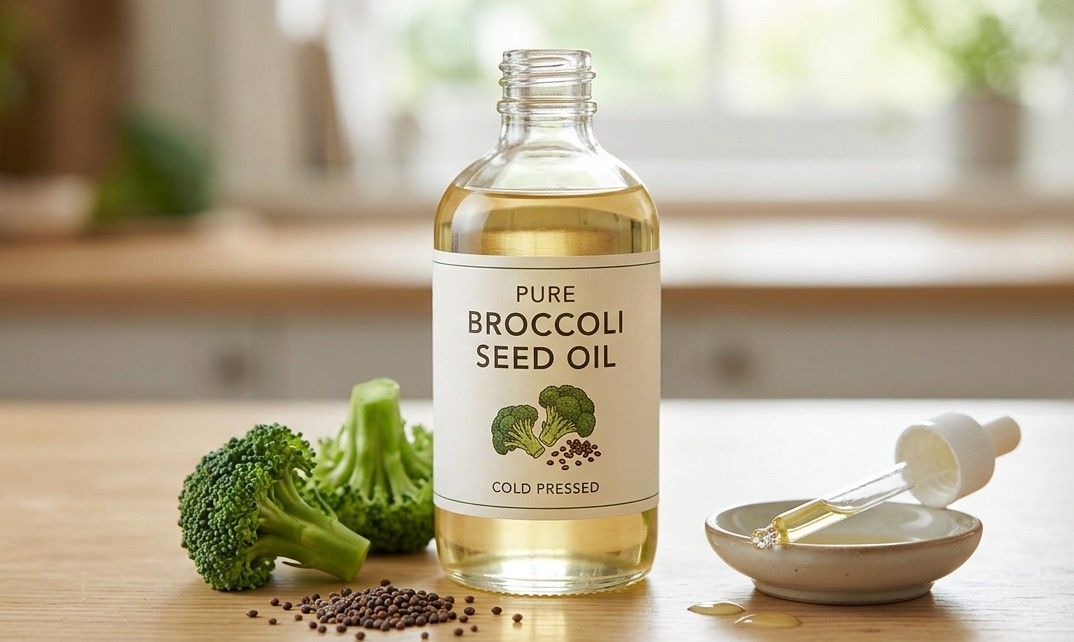
Broccoli is often praised as a nutritional powerhouse, but did you know that the tiny seeds of this green vegetable produce a highly valuable oil? Broccoli Seed Oil has become increasingly popular in the beauty, wellness, and natural health industries due to its impressive nutrient profile and wide range of benefits.
In this guide, you will learn everything about Broccoli Seed Oil — what it is, its nutrition facts, science-backed health benefits, side effects, how to use it, dosage recommendations, precautions, and much more.
What is Broccoli Seed Oil?
Broccoli Seed Oil is a natural oil extracted from the seeds of the broccoli plant (Brassica oleracea). It is typically produced through cold-press extraction, which helps preserve its nutrients and bioactive compounds.
Unlike the vegetable itself, broccoli seed oil is rich in fatty acids, particularly erucic acid, along with omega-9, omega-6, and omega-3 fatty acids. It is widely used in skincare, haircare, and sometimes as a dietary supplement.
What makes broccoli seed oil unique is its silicone-like texture. It provides shine and smoothness to hair and skin without clogging pores or feeling greasy. This makes it a popular natural alternative to synthetic silicones in cosmetics.
Nutrition Facts of Broccoli Seed Oil
Below is an approximate nutritional breakdown per 1 tablespoon (14 grams) of broccoli seed oil:
| Nutrient | Approximate Amount |
|---|---|
| Calories | 120 kcal |
| Total Fat | 14 g |
| Saturated Fat | 2 g |
| Monounsaturated Fat | 8–9 g |
| Polyunsaturated Fat | 3–4 g |
| Omega-9 (Erucic Acid) | 30–40% |
| Omega-6 (Linoleic Acid) | 10–20% |
| Omega-3 (Alpha-linolenic Acid) | 5–10% |
| Vitamin E | Small amounts |
| Phytosterols | Present |
| Antioxidants | Present |
Note: Nutritional composition may vary depending on the extraction method and seed quality.
20 Proven Benefits of Broccoli Seed Oil
- Deep Skin Hydration – Oil penetrates deeply into the skin and provides long-lasting moisture without leaving a greasy residue.
- Natural Silicone Alternative – Its smooth texture mimics silicone, making hair soft and shiny without synthetic chemicals.
- Improves Skin Elasticity – The fatty acids in broccoli seed oil help maintain skin firmness and reduce signs of aging.
- Supports Anti-Aging – Antioxidants in the oil protect the skin from free radical damage that contributes to wrinkles and fine lines.
- Reduces Inflammation – Its anti-inflammatory properties may soothe irritated or sensitive skin.
- Boosts Hair Shine – It coats the hair shaft naturally, enhancing shine and smoothness.
- Tames Frizz – Broccoli seed oil helps control frizz by sealing the hair cuticle.
- Strengthens Hair – The nourishing fatty acids improve hair strength and reduce breakage.
- Improves Scalp Health – It moisturizes the scalp and may help reduce dryness and flaking.
- Supports Nail Health – Regular application can strengthen brittle nails and soften cuticles.
- Enhances Skin Barrier – The lipid content reinforces the skin’s protective barrier against environmental stressors.
- May Help Acne-Prone Skin – Its lightweight, non-comedogenic nature makes it suitable for acne-prone individuals.
- Rich in Antioxidants – It contains natural compounds that help combat oxidative stress.
- Softens Rough Skin – It improves the texture of dry and rough patches.
- Improves Complexion – Consistent use may promote a smoother and more radiant skin tone.
- Promotes Healthy Beard Growth – It conditions facial hair while nourishing the skin underneath.
- Supports Lip Care – Broccoli seed oil hydrates dry and cracked lips effectively.
- Reduces Split Ends – It smooths hair strands and minimizes the appearance of split ends.
- Helps with Stretch Marks – Its moisturizing properties may support skin elasticity and reduce stretch mark visibility.
- May Support Heart Health (When Consumed Carefully) – The presence of beneficial fatty acids may contribute to cardiovascular wellness when used in moderation.
10 Side Effects of Broccoli Seed Oil
While generally safe, broccoli seed oil may have some side effects in certain individuals.
- Allergic Reactions – People allergic to cruciferous vegetables may experience itching or rashes.
- Skin Irritation – Sensitive skin types may develop redness or mild irritation.
- Digestive Discomfort – Consuming excessive amounts may cause stomach upset or nausea.
- Hormonal Concerns – High erucic acid intake may pose concerns if consumed in very large quantities.
- Clogged Pores (Rare Cases) – Although lightweight, overuse may contribute to breakouts in some people.
- Scalp Sensitivity – Applying undiluted oil may cause scalp irritation in sensitive individuals.
- Interaction with Medications – It may interact with certain medications if taken orally.
- Greasy Residue – Overapplication can leave hair or skin feeling oily.
- Rancidity Risk – Improperly stored oil can oxidize and cause skin irritation.
- Not Suitable for Infants Without Medical Advice – Internal or topical use in babies should be discussed with a doctor.
How to Use Broccoli Seed Oil?
Oil is versatile and can be used in multiple ways:
For Skin
- Apply 2–3 drops directly to clean, damp skin.
- Mix with your moisturizer for enhanced hydration.
- Use as a facial oil before bedtime.
For Hair
- Apply a few drops to damp hair as a leave-in serum.
- Massage into the scalp before shampooing.
- Add to conditioner for extra nourishment.
For Nails
- Massage a drop into cuticles daily.
Other Uses of Broccoli Seed Oil
- Ingredient in natural shampoos and conditioners
- Base oil in DIY serums and lotions
- Carrier oil for essential oils
- Ingredient in beard oils
- Natural makeup primer
Tips for Consuming Broccoli Seed Oil
- Choose cold-pressed, organic oil.
- Start with very small amounts.
- Consult a healthcare professional before regular consumption.
- Do not overheat the oil, as it may degrade nutrients.
- Avoid using rancid-smelling oil.
How to Take Broccoli Seed Oil?
If taking internally:
- Start with ½ teaspoon daily.
- Mix into smoothies or salad dressings.
- Do not exceed recommended dosage unless advised by a healthcare provider.
For topical use, simply apply directly as described above.
How to Make Broccoli Seed Oil at Home?
Making pure broccoli seed oil at home is challenging because it requires specialized oil extraction equipment. However, you can create a broccoli-infused oil:
- Dry broccoli seeds thoroughly.
- Crush them lightly.
- Soak in a carrier oil (such as olive oil) for 2–3 weeks.
- Strain and store in a dark bottle.
Note: This is infused oil, not pure cold-pressed broccoli seeds oil.
How Much Broccoli Seed Oil Can You Use Per Day?
For topical use, 2–5 drops for the face and a few drops for hair are typically sufficient.
For internal use, limit to ½–1 teaspoon per day unless otherwise advised by a professional.
Broccoli Seed Oil Dosage
- Topical skincare: 2–3 drops per application
- Hair serum: 3–5 drops depending on hair length
- Oral use: ½ teaspoon daily
Always begin with small amounts to assess tolerance.
Best Time to Use Broccoli Seed Oil
- For skin: At night for deep hydration
- For hair: After washing while hair is damp
- For oral use: With meals to improve absorption
Who Should Use Broccoli Seed Oil?
- People with dry or frizzy hair
- Individuals with dry or aging skin
- Those seeking natural silicone alternatives
- People looking for lightweight, non-greasy moisturizers
- Individuals interested in plant-based skincare
Who Should Not Use Broccoli Seed Oil?
- Individuals allergic to broccoli or cruciferous vegetables
- People with extremely oily, acne-prone skin (without patch testing)
- Those advised to avoid high erucic acid intake
- Pregnant or breastfeeding women without medical consultation
- Individuals with chronic medical conditions without doctor approval
How to Store Broccoli Seed Oil?
Proper storage is essential to maintain freshness.
- Store in a dark glass bottle.
- Keep away from direct sunlight.
- Refrigerate after opening for longer shelf life.
- Ensure the cap is tightly closed.
- Discard if it smells sour or rancid.
Shelf life is usually 6–12 months when stored correctly.
Precautions and Interactions
- Always perform a patch test before topical use.
- Do not exceed recommended oral doses.
- Consult a healthcare provider if taking blood pressure or cholesterol medications.
- Avoid use if you experience persistent irritation.
- Use caution when combining with other oils containing high erucic acid.
Final Thoughts
Broccoli Seed Oil is a nutrient-rich, versatile oil that offers remarkable benefits for skin, hair, and overall wellness. Its lightweight texture, moisturizing properties, and natural shine-enhancing effects make it a popular choice in clean beauty and natural health communities.
While generally safe, moderation and proper usage are essential, especially if consumed internally. Choosing high-quality, cold-pressed oil and storing it properly will ensure you get the maximum benefits from this powerful plant-based oil.
FAQ’s
What is Broccoli Seed Oil made from?
Oil is extracted from the seeds of the broccoli plant (Brassica oleracea), usually through a cold-press process that preserves its nutrients.
Is Broccoli Seed Oil good for hair?
Yes, oil is excellent for hair because it adds shine, reduces frizz, smooths strands, and nourishes the scalp without making hair greasy.
Can I use Broccoli Seed Oil on my face?
Yes, it is lightweight and non-comedogenic for most skin types, making it suitable for facial use, especially for dry or mature skin.
Does Broccoli Seed Oil clog pores?
In most cases, oil does not clog pores, but individuals with very oily or acne-prone skin should patch test first.
Is Broccoli Seed Oil safe to eat?
Oil can be consumed in small amounts, but due to its erucic acid content, it should be used in moderation and ideally under medical guidance.
How often can I use Broccoli Seed Oil on my hair?
You can use it 2–3 times per week as a leave-in serum or scalp treatment, depending on your hair type and needs.
Can Broccoli Seed Oil help with frizzy hair?
Yes, its natural silicone-like properties help smooth the hair cuticle and significantly reduce frizz.
Is Broccoli Seed Oil suitable for sensitive skin?
It may be suitable for sensitive skin due to its soothing properties, but a patch test is strongly recommended before full application.
Can I mix Broccoli Seed Oil with other oils?
Yes, it blends well with carrier oils like jojoba oil, argan oil, or rosehip oil to enhance hydration and nourishment.
How long does it take to see results from Broccoli Seed Oil?
Topical benefits such as shine and smoothness can be noticed immediately, while skin improvements may take a few weeks of consistent use.
Is Broccoli Seed Oil good for beard growth?
It supports healthy beard growth by moisturizing facial hair and nourishing the skin underneath.
Can I leave Broccoli Seed Oil on overnight?
Yes, you can leave it on your skin or hair overnight, provided you use a small amount and do not experience irritation.
What does Broccoli Seed Oil smell like?
It typically has a mild, slightly nutty or earthy scent that is not overpowering.
Is Broccoli Seed Oil good for anti-aging?
Yes, its antioxidant and fatty acid content helps protect against environmental damage and supports smoother, firmer-looking skin.
How do I know if Broccoli Seed Oil has gone bad?
If the oil smells sour, sharp, or rancid, or if its texture changes significantly, it should be discarded.
Can pregnant or breastfeeding women use Broccoli Seed Oil?
Topical use is generally considered safe, but internal use should only be done after consulting a healthcare professional.
Is Broccoli Seed Oil vegan and cruelty-free?
Yes, oil is plant-based and vegan, though you should verify brand certifications for cruelty-free assurance.
Can I use Broccoli Seed Oil every day?
Yes, daily use is typically safe for topical application if your skin or hair tolerates it well.
Does Broccoli Seed Oil help with dry scalp?
Yes, it deeply moisturizes the scalp and may help reduce dryness and flaking.
What is the best way to apply Broccoli Seed Oil for glowing skin?
Apply 2–3 drops to clean, slightly damp skin and gently massage it in, preferably at night for maximum absorption.
Is Broccoli Seed Oil safe for children?
Oil is generally safe for topical use in children when applied in small amounts and properly diluted, but a patch test is recommended first and internal use should only be done under medical supervision.
What is Broccoli Seed Oil good for?
Oil is good for moisturizing dry skin, reducing frizz, adding shine to hair, improving scalp health, supporting anti-aging skincare, strengthening nails, and providing lightweight, non-greasy hydration.
Also Read: