Fish is well known for being a nutritious source of protein, omega-3 fatty acids, vitamins, and minerals. But what about the skin? If you usually remove the skin before cooking fish, you may be wondering whether it is actually safe and healthy to eat.
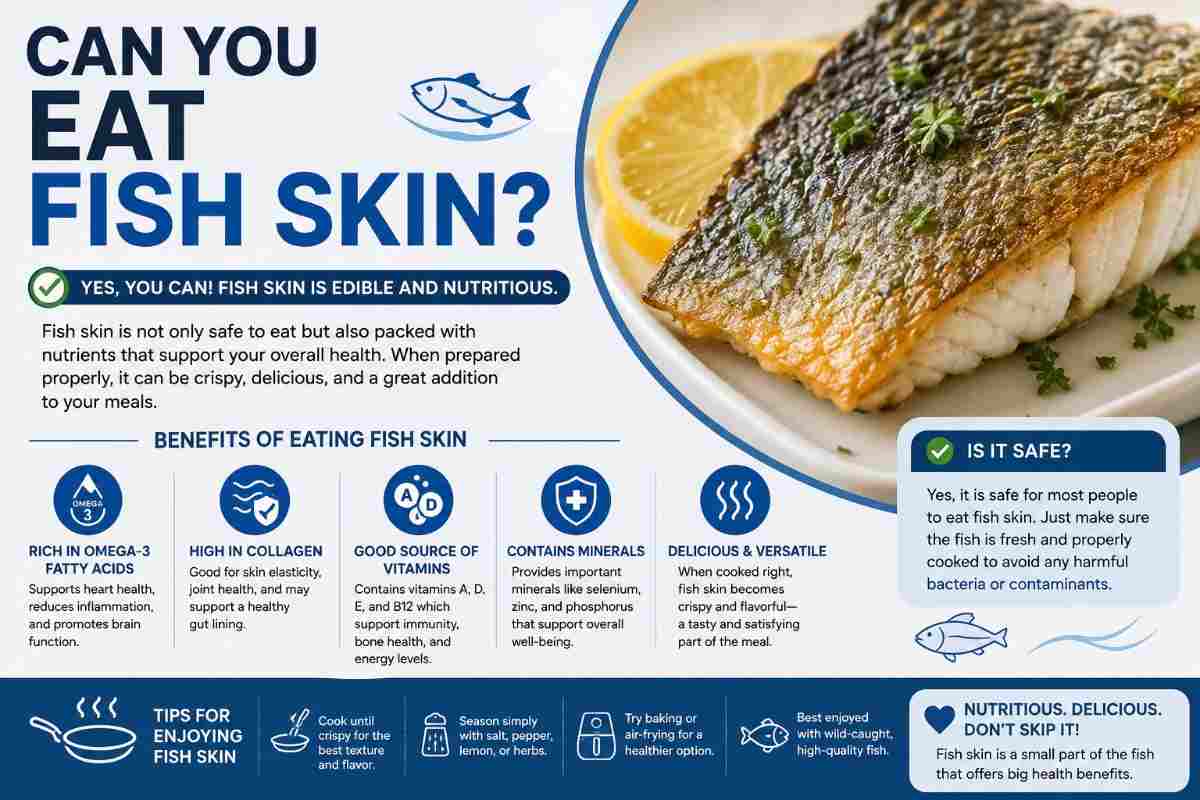
Yes, you can eat fish skin when it comes from a properly handled, edible fish and is thoroughly cooked. In fact, crispy fish skin can be one of the tastiest parts of a meal. It may also provide protein, healthy fats, and other nutrients.
However, there are a few important exceptions. The type of fish, where it came from, how it was prepared, and whether it was cooked properly all matter. Fish skin can also contain environmental contaminants, particularly in some locally caught fish, so food-safety guidance should not be ignored.
This guide explains whether fish skin is healthy, which fish skins are commonly eaten, possible benefits and risks, how to cook it safely, and who may need to be more cautious.
What Is Fish Skin?
Fish skin is the outer protective layer covering a fish. It contains connective tissue, fat, proteins, and structural compounds that help protect the fish from its environment.
When fish is cooked with the skin on, the skin can become tender, chewy, or crispy depending on the cooking method. Pan-searing and grilling are particularly popular because they can produce a crisp texture.
Fish skin is not automatically unsafe or unhealthy. The important question is whether the fish itself is safe to eat and the skin has been properly cleaned and cooked.
Choosing fish from safer, lower-mercury options and handling seafood properly to reduce the risk of foodborne illness.
Can You Eat Fish Skin?
Yes, most edible fish skins can be eaten.
Fish skin is commonly eaten from species such as salmon, trout, sardines, mackerel, snapper, sea bass, and other edible fish. However, not every fish should be treated the same way.
The skin should be removed if the fish comes from a waterway with an advisory recommending that skin, fat, or other tissues be discarded. FDA guidance specifically notes that contaminants other than mercury can vary according to location and that people eating recreationally caught fish should check local fish advisories.
Another important point is cooking. Seafood should generally be cooked to an internal temperature of 145°F (63°C) to reduce the risk of foodborne illness.
Is Fish Skin Healthy?
Fish skin can be a nutritious part of a balanced meal, particularly when it comes from a nutritious fish such as salmon or trout.
However, it is important not to think of fish skin as a miracle food. Its nutritional value varies considerably depending on the species of fish, portion size, cooking method, and amount of fat in the skin.
Fish itself provides high-quality protein and nutrients including omega-3 fatty acids, vitamin D, vitamin B12, selenium, iodine, and other vitamins and minerals.
Some of these nutrients are also present in or around the skin, especially when the fish has a naturally higher fat content.
Nutrition Facts of Fish Skin
There is no single nutrition profile for “fish skin” because salmon skin, cod skin, sardine skin, and other fish skins can differ substantially.
| Nutrient | General nutritional contribution |
|---|---|
| Protein | Provides protein from the skin and underlying fish tissue |
| Fat | Can contain varying amounts of fish fat |
| Omega-3 fatty acids | May be present, especially when skin is attached to fatty fish |
| Collagen | Fish skin contains structural proteins including collagen |
| Vitamin D | May be present depending on the fish species |
| Vitamin B12 | Primarily supplied by the underlying fish |
| Selenium | Fish can be a useful dietary source |
| Calories | Vary depending on species, skin thickness, and cooking method |
Important: These values should not be treated as a universal nutrition label for all fish skin.
15 Potential Benefits of Eating Fish Skin
1. It Adds Protein to Your Meal
Fish skin contains structural proteins and is attached to the protein-rich fish underneath, making skin-on fish a convenient way to include more protein in a meal.
2. It Can Provide Healthy Fats
The skin and the layer of fat beneath it can contain beneficial unsaturated fats, particularly in fatty fish.
3. It May Provide Omega-3 Fatty Acids
When the skin is attached to fatty fish such as salmon or mackerel, eating the skin can contribute to your overall intake of EPA and DHA omega-3 fatty acids.
4. It Contains Collagen
Fish skin contains collagen and other structural proteins, which are important components of connective tissue.
5. It Helps Reduce Food Waste
Eating edible fish skin can make use of more of the fish instead of automatically throwing away a nutritious part.
6. It Adds Texture to Meals
Properly cooked fish skin can become crisp and provide a pleasant contrast to soft, flaky fish.
7. It Can Make Fish More Satisfying
The combination of protein and fat can make a skin-on fish meal more satisfying than a meal consisting of a very lean protein alone.
8. It Can Complement a Heart-Healthy Eating Pattern
Fish is widely recognized as part of a healthy dietary pattern, and choosing fish that is lower in saturated fat can be a useful way to replace some less-healthful protein sources.
9. It Provides Nutrients Found in Fish
Eating the skin together with the fish means you retain more of the edible portion of the food rather than removing it.
10. It Can Be a Source of Selenium
Fish are dietary sources of selenium, a mineral involved in normal antioxidant and thyroid-related functions.
11. It Can Supply Vitamin B12
Fish are a source of vitamin B12, which is important for normal red blood cell formation and nervous-system function.
12. It Can Contribute Vitamin D
Some fish, particularly fatty fish, provide vitamin D, although the exact amount varies by species.
13. It Makes Lean Fish More Flavorful
Leaving the skin on can help retain moisture during cooking and add flavor, particularly when the skin is browned and crisp.
14. It Can Make Simple Meals More Interesting
Crispy fish skin can add texture to salads, rice bowls, roasted vegetables, and other meals without requiring complicated ingredients.
15. It Encourages Eating More of the Fish
For people who enjoy the taste and texture, keeping the skin on can make fish more appealing and reduce unnecessary food waste.
Are There Any Risks of Eating Fish Skin?
Fish skin is generally safe when properly sourced and cooked, but there are situations where caution is appropriate.
1. Environmental Contaminants
Fish can contain mercury and other environmental contaminants. Nearly all fish contain at least trace amounts of methylmercury, although levels vary greatly between species.
2. Locally Caught Fish May Need Extra Caution
Fish caught from rivers, lakes, or coastal areas may be subject to local contamination advisories. FDA guidance notes that people who eat recreationally caught fish should check local advisories and may be advised to remove skin and fat because certain pollutants can accumulate there.
3. Undercooked Fish Can Cause Foodborne Illness
Raw or undercooked fish can contain harmful bacteria or parasites. Thorough cooking is the safer choice, especially for pregnant people, children, older adults, and people with weakened immune systems.
4. Fried Fish Skin Can Be High in Calories
Fish skin itself is not necessarily unhealthy, but deep-frying it can significantly increase the calorie and fat content of the meal.
5. Excessive Salt Can Reduce the Healthfulness of the Meal
Heavily salted or highly processed fish skin may contribute a substantial amount of sodium.
6. Allergies Are Still Possible
Someone with a fish allergy should avoid fish skin from the fish species that triggers their allergy.
Which Fish Skin Is Best to Eat?
Some fish skins are particularly popular because they become crisp and flavorful when cooked.
| Fish | Skin commonly eaten? | Notes |
|---|---|---|
| Salmon | Yes | Fatty, flavorful, and becomes crispy |
| Trout | Yes | Often cooked skin-on |
| Sardines | Yes | Small edible skin and bones when properly prepared |
| Mackerel | Yes | Strong flavor and naturally oily |
| Snapper | Yes | Can become crisp when pan-seared |
| Sea bass | Yes | Commonly served skin-on |
| Tilapia | Yes | Mild flavor; skin can be crisped |
| Cod | Yes | Skin can be eaten when properly prepared |
| Haddock | Yes | Edible when fresh and thoroughly cooked |
| Carp | Caution | Check local advisories when locally caught |
The safest choice is not necessarily determined by the skin alone. The species and source of the fish matter.
The FDA’s current fish advice categorizes salmon, sardines, trout, tilapia, pollock, and several other species among its lower-mercury “Best Choices.”
Can You Eat Salmon Skin?
Yes. Salmon skin is edible and is commonly eaten.
Salmon skin contains fat and can become deliciously crispy when pan-seared. Leaving the skin attached can also help protect the delicate salmon flesh while cooking.
For the best texture, pat the skin dry before cooking and place the skin side against a hot pan. Avoid relying on appearance alone to determine whether the fish is safe; use proper cooking practices and temperature guidance.
Salmon is also listed by the FDA as a lower-mercury “Best Choice” fish.
Can You Eat Fish Skin Raw?
It is not recommended to eat raw fish skin simply because it looks clean or fresh.
Raw fish can contain parasites and harmful microorganisms. Freezing can kill some parasites, but it does not eliminate every harmful germ, so thorough cooking remains the safest approach.
If you are pregnant, preparing food for a young child, or have a weakened immune system, avoiding raw or undercooked fish is especially important.
How to Cook Fish Skin Safely?
Cooking fish skin properly is easier than many people think.
Pan-Seared Fish Skin
- Pat the fish completely dry with paper towels.
- Remove any remaining scales.
- Season lightly.
- Heat a suitable pan.
- Place the fish skin-side down.
- Press gently for the first few moments to prevent curling.
- Cook until the skin becomes crisp and the fish is thoroughly cooked.
- Check that the thickest part reaches 145°F (63°C).
Grilled Fish Skin
Place the fish skin-side down on a properly heated grill. Avoid moving it too frequently because the skin can stick before it becomes crisp.
Baked Fish With Skin
Bake the fish with the skin attached and facing upward. A higher oven temperature can help the skin brown, although the exact cooking time depends on the thickness and species of fish.
How to Make Crispy Fish Skin?
If crispy skin is your goal, moisture is the main enemy.
- Dry the skin well: Excess moisture can cause steaming rather than crisping.
- Use enough heat: A properly heated pan helps the skin brown.
- Don’t constantly move the fish: Allow the skin to develop a crust before trying to flip it.
- Avoid overcrowding: Too many pieces in the pan can lower the temperature.
- Use moderate oil: A small amount of cooking oil can help with browning without turning the dish into a deep-fried meal.
Should You Remove Fish Scales Before Eating the Skin?
Yes. Fish skin and fish scales are not the same thing. If you intend to eat the skin, the fish should be properly scaled unless you are using a preparation where the scales are intentionally removed or handled in a specific culinary way.
When purchasing fish, you can ask the fishmonger to descale it while leaving the skin attached.
Can Pregnant Women Eat Fish Skin?
Pregnant women can eat properly cooked fish, but the type of fish matters more than simply whether the skin is attached.
Pregnant and breastfeeding people eat 8–12 ounces of a variety of lower-mercury fish each week. Fish such as salmon and trout are among the FDA’s “Best Choices.”
For locally caught fish, check local advisories because contaminants other than mercury can vary by location.
Pregnant people should also avoid raw or undercooked fish because of the increased risk of foodborne illness.
Can Children Eat Fish Skin?
Children can eat properly cooked fish, including edible skin, provided the fish is appropriate for their age and prepared safely.
However, parents should pay particular attention to mercury levels, bones, portion size, and choking hazards. The FDA recommends choosing fish from the lower-mercury “Best Choices” category for children.
Always remove bones carefully before serving fish to young children.
Is Fish Skin High in Mercury?
This is a common misconception.
Mercury is not simply concentrated in fish skin. Methylmercury is present throughout fish tissue, so removing the skin does not remove mercury from the fish.
The better way to reduce mercury exposure is to choose fish species that are lower in mercury and vary the types of fish you eat.
Does Cooking Remove Mercury From Fish Skin?
No.
Cooking does not remove methylmercury because it is distributed throughout fish tissue. Managing mercury exposure primarily by choosing lower-mercury fish rather than relying on cooking or cleaning methods.
When Should You Avoid Eating Fish Skin?
Consider removing the skin when:
- The fish comes with a local advisory recommending removal of skin and fat.
- You are unsure where recreationally caught fish came from.
- The fish has not been properly cleaned or scaled.
- The fish smells sour, rancid, or strongly ammonia-like.
- The fish has been improperly stored.
- You are dealing with a species that you have not confirmed is safe to eat.
- The fish is raw or undercooked and you are in a higher-risk group.
Fresh fish should have a mild, fresh smell rather than a sour, rancid, or ammonia-like odor.
How to Choose Fish With Edible Skin?
When buying fish, look for properly refrigerated or iced seafood.
Fresh fish should generally have a mild smell, firm flesh, and no obvious discoloration. Purchasing seafood from properly refrigerated displays and handling it carefully after purchase.
If you want to eat the skin, tell the fishmonger that you want the skin left on but the fish properly scaled.
How to Store Fish Before Cooking?
Fresh fish should be refrigerated promptly if it is not being cooked immediately. Frozen fish should remain properly frozen until you are ready to thaw it.
For frozen fish, thawing overnight in the refrigerator is a safe approach. If seafood is thawed quickly using cold water or a microwave, it should be cooked immediately afterward.
Fish Skin vs. Removing Fish Skin
| Keeping the Skin | Removing the Skin |
|---|---|
| Adds texture | Produces a softer overall texture |
| Can become crispy | May be preferable for certain recipes |
| Reduces food waste | May reduce exposure to some contaminants in locally caught fish |
| Can retain flavorful fat | Useful when the recipe specifically calls for skinless fish |
| Provides additional edible tissue | May be preferred by people who dislike the texture |
Neither choice is automatically healthier for everyone. The decision should depend on the fish, its source, cooking method, and personal preference.
FAQ’s
Can you eat fish skin every day?
It is better to eat a variety of fish rather than the same fish every day. Choose lower-mercury options and follow recommended seafood intake guidelines.
Does fish skin contain collagen?
Yes. Fish skin naturally contains collagen and other structural proteins.
Does fish skin help your skin?
Fish skin contains collagen and nutrients, but eating it does not guarantee better skin. Overall nutrition, hydration, sleep, and skincare habits are more important.
What is the healthiest way to cook fish skin?
Baking, grilling, or pan-searing are generally healthier options than deep-frying because they can make the skin crispy without adding large amounts of oil.
Should you remove scales before eating fish skin?
Yes. Fish should generally be properly scaled if you plan to eat the skin.
Can you eat fried fish skin?
Yes, but deep-fried fish skin can contain more calories and fat than baked or grilled fish skin, so moderation is recommended.
Can you eat cod skin?
Yes. Cod skin is edible when properly cleaned and cooked, although its texture can be different from fattier fish such as salmon.
Is fish skin good for weight loss?
Fish skin can fit into a weight-management diet, but it still contributes calories and fat. Portion size and the overall cooking method matter.
Can you eat fish skin with bones?
Fish skin itself is edible, but bones should be removed carefully, especially when serving children or people who have difficulty detecting small bones.
Final Takeaway
So, can you eat fish skin? Yes.
For most people, properly cleaned and thoroughly cooked fish skin can be a perfectly reasonable part of a healthy meal. It can add protein, fat, texture, flavor, and potentially collagen and other nutrients.
The bigger issue is not the skin itself but the type and source of fish and how safely it is handled and cooked. Choose lower-mercury fish, vary the species you eat, follow local advisories for recreationally caught fish, and cook seafood thoroughly.
If you enjoy crispy salmon skin or skin-on trout, there is generally no need to remove the skin simply because you think it is unhealthy.
Sources / References:
Disclaimer:
This article is for general educational purposes and is not medical advice. Individual dietary needs vary. If you are pregnant, have a seafood allergy, or have concerns about mercury exposure or locally caught fish, consult a qualified healthcare professional.
Also Read: