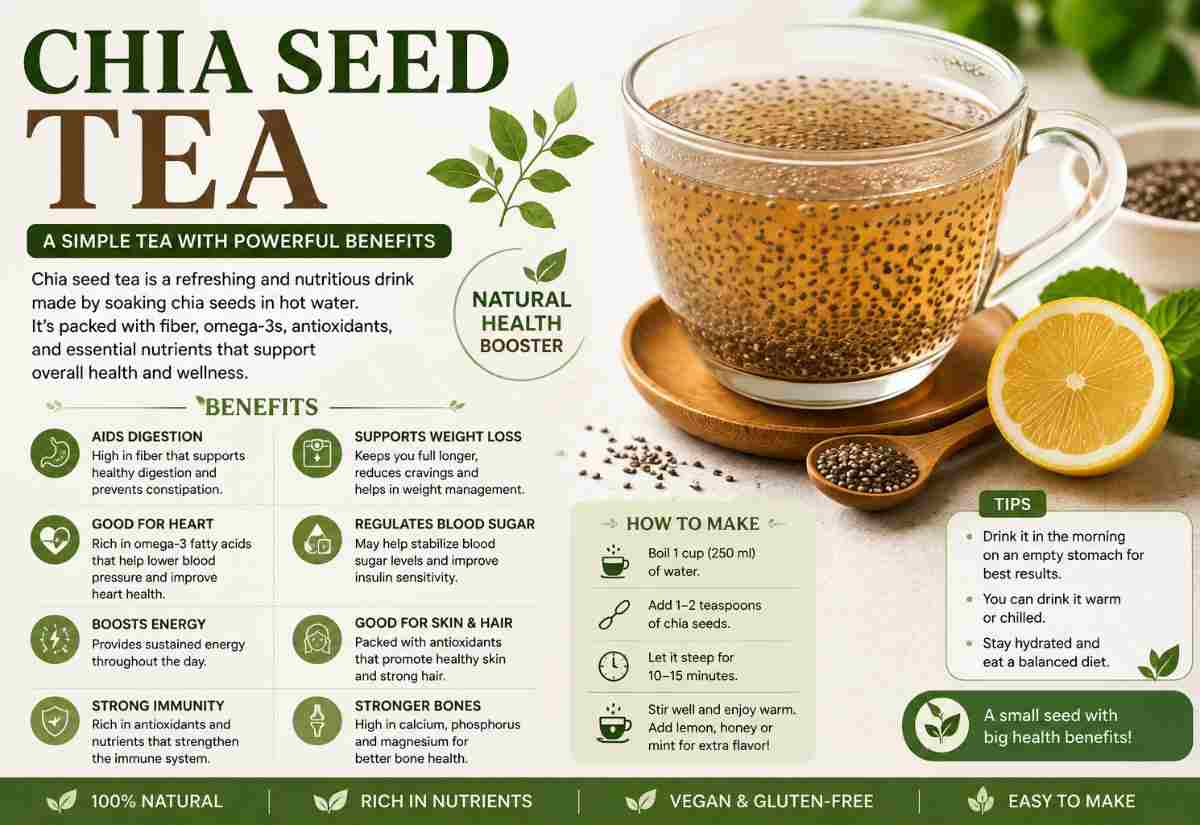
Chia seeds have become a popular addition to smoothies, oatmeal, puddings, and wellness drinks. One simple way to use them is chia seed tea, a drink made by soaking chia seeds in water or tea and allowing them to swell before drinking.
Unlike ordinary herbal tea, chia seed tea is not simply an infusion. The seeds themselves are usually consumed along with the liquid, which means you can get fiber, plant-based omega-3 fatty acid (ALA), protein, minerals, and other nutrients from the seeds.
Chia seeds are particularly rich in fiber and ALA. According to the National Institutes of Health, 1 ounce (28.35 g) of chia seeds provides about 5.06 g of ALA. However, it is important to keep expectations realistic. Most research has studied whole chia seeds or chia seed supplementation, not chia seed tea specifically. Therefore, potential benefits of the tea largely depend on how many chia seeds you actually consume.
What Is Chia Seed Tea?
Chia seed tea is a beverage prepared by combining chia seeds with water or brewed tea and allowing the seeds to soak until they develop a soft, gel-like coating.
Chia seeds can absorb a considerable amount of liquid and swell during soaking. This creates the characteristic slightly thick texture of chia seed drinks.
You can prepare it with:
- Warm or cold water
- Green tea
- Black tea
- Herbal tea
- Lemon water
- Ginger tea
- Cinnamon-infused water
A simple version contains only chia seeds and water, while other recipes may include lemon, lime, ginger, mint, cinnamon, or a small amount of fruit.
One important distinction is that chia seed tea is nutritionally different from plain tea. If you strain out the chia seeds, you will remove much of the fiber, protein, fat, and minerals. For the nutritional benefits associated with chia seeds, the soaked seeds should generally be consumed rather than discarded.
Nutritional Facts of Chia Seed Tea
The following is an approximate nutritional profile based on 1 tablespoon (about 12–14 g) of chia seeds prepared in water, without sugar or milk.
| Nutrient | Approximate Amount |
|---|---|
| Calories | 58–70 kcal |
| Protein | 2–2.5 g |
| Total fat | 3.5–4.5 g |
| Carbohydrates | 5–6 g |
| Dietary fiber | 4–5 g |
| Sugars | Less than 1 g |
| Omega-3 ALA | About 2.4–2.5 g |
| Calcium | About 75–85 mg |
| Magnesium | About 40–50 mg |
| Phosphorus | About 110–120 mg |
| Potassium | About 50–60 mg |
| Sodium | Very low |
The exact amounts depend on the quantity and brand of chia seeds and whether additional ingredients are included. USDA-derived nutritional data show that 28.35 g of chia seeds contains approximately 9.75 g of fiber, 4.69 g of protein, 8.72 g of fat, and about 5.06 g of ALA.
Important: The nutritional values above refer primarily to the chia seeds in the drink. Plain water or unsweetened tea contributes very few calories and nutrients.
20 Science-Backed Benefits of Chia Seed Tea
1. Supports Digestive Health: The soluble and insoluble fiber in chia seeds can increase stool bulk and support regular bowel movements, making a properly prepared chia drink a convenient way to add fiber to the diet.
2. Helps Increase Daily Fiber Intake: A single tablespoon of chia seeds can contribute several grams of dietary fiber, helping people move toward recommended daily fiber intake.
3. May Promote Fullness: Chia seeds absorb liquid and form a gel-like texture, while their fiber and protein content may contribute to feelings of fullness after eating.
4. Provides Plant-Based Omega-3 ALA: Chia seeds are one of the richer plant sources of alpha-linolenic acid (ALA), an essential omega-3 fatty acid that must be obtained from food.
5. May Support Cardiovascular Health: Chia seeds provide fiber, ALA, minerals, and other compounds that can contribute to an overall heart-supportive eating pattern.
6. May Help Maintain Healthy Blood Pressure: Clinical research suggests chia supplementation may reduce blood pressure in some adults, although results vary and chia tea should not be considered a treatment for hypertension.
7. May Support Healthy Cholesterol Levels: Some randomized trials and meta-analyses have reported improvements in certain lipid measures with chia consumption, although findings across studies are inconsistent.
8. May Help Lower Triglycerides: A 2024 systematic review and meta-analysis of 14 randomized controlled trials found significant reductions in triglycerides among people consuming chia, although the amount and duration varied between studies.
9. Supplies Important Minerals: Chia seeds provide minerals including calcium, magnesium, and phosphorus, which contribute to normal bone, muscle, nerve, and cellular functions.
10. Supports Bone Nutrition: Calcium, magnesium, phosphorus, protein, and other nutrients found in chia seeds can contribute to a balanced diet that supports normal bone health.
11. May Support Normal Blood Sugar Management: The fiber in chia can slow digestion and carbohydrate absorption, although clinical evidence does not currently show consistent improvements in fasting glucose or HbA1c.
12. May Support Metabolic Health: Research suggests chia consumption may positively influence certain cardiometabolic markers, although results differ between studies and should not be interpreted as proof of disease prevention.
13. Provides Plant-Based Protein: Chia seeds contribute protein to the diet, making the drink more nutritionally substantial than plain water or unsweetened tea.
14. Contains Antioxidant Compounds: Chia seeds contain naturally occurring antioxidant compounds that help protect their fats from oxidation and contribute to their overall nutritional value.
15. May Support Healthy Weight Management: The fiber and protein in chia may improve satiety, but clinical trials have not consistently demonstrated meaningful reductions in body weight from chia supplementation alone.
16. May Support Waist-Circumference Management: Some research has observed reductions in waist circumference following chia supplementation, although this does not mean chia tea directly causes abdominal fat loss.
17. Helps Create a More Satisfying Beverage: Soaked chia seeds add texture, fiber, and nutrients to a drink, which may make it more filling than plain water.
18. Can Be a Convenient Plant-Based Nutrient Source: Chia seed tea can provide ALA, fiber, protein, and minerals without requiring animal-based ingredients.
19. May Complement a Heart-Healthy Diet: Replacing sugary beverages with an unsweetened chia drink can be a practical dietary choice when it helps reduce added-sugar intake while adding nutrient-dense seeds.
20. Supports Overall Nutrient-Dense Eating: When incorporated into a balanced diet, chia seeds can contribute several important nutrients at once, making chia tea a simple addition rather than a replacement for nutritious meals.
10 Side Effects of Chia Seed Tea
Chia seeds are generally well tolerated when properly prepared, but consuming too much or consuming them incorrectly can cause problems.
1. Bloating: Suddenly increasing fiber intake through chia seeds may cause bloating, especially in people who are not accustomed to high-fiber foods.
2. Gas: Large amounts of chia can increase intestinal fermentation and lead to gas or abdominal discomfort.
3. Constipation: Although chia contains substantial fiber, insufficient fluid intake combined with a large amount of fiber may worsen constipation in some people.
4. Diarrhea: Excessive fiber intake can cause loose stools or diarrhea in sensitive individuals.
5. Abdominal Discomfort: Eating a large serving of swollen chia seeds may feel heavy or uncomfortable for some people.
6. Choking or Esophageal Blockage: Dry chia seeds can rapidly absorb liquid and expand, and there has been a documented case of esophageal obstruction after dry chia seeds were consumed followed by water.
7. Allergic Reactions: Although uncommon, allergic reactions to chia seeds have been reported, including serious reactions requiring emergency treatment.
8. Blood Pressure May Become Too Low: Because chia consumption may modestly lower blood pressure in some studies, people taking blood-pressure-lowering medicines should discuss regular high intake with their healthcare professional.
9. Medication Absorption Concerns: The high fiber content of chia may affect the timing or absorption of some oral medicines, so people taking regular medications should ask a pharmacist about appropriate spacing.
10. Added Sugar Can Reduce Its Healthfulness: Turning chia tea into a sugary beverage with large amounts of honey, syrup, or sweetened juice can substantially increase its calorie and added-sugar content.
How to Make Chia Seed Tea?
Making chia seed tea is simple, but the most important step is soaking the seeds properly.
Basic Chia Seed Tea Recipe
Ingredients:
- 1 tablespoon chia seeds
- 1 cup (240 ml) water
- 1 teaspoon lemon juice, optional
- A few slices of fresh ginger, optional
- Cinnamon, optional
- Mint leaves, optional
Method:
Step 1: Add the chia seeds.
Place 1 tablespoon of chia seeds into a glass or jar.
Step 2: Add liquid.
Pour in approximately 1 cup of water or cooled brewed tea.
Step 3: Stir thoroughly.
Stir immediately so the seeds do not settle into one large clump.
Step 4: Allow the seeds to soak.
Let the mixture stand for approximately 15–30 minutes, stirring once or twice during soaking. The seeds should become surrounded by a gel-like coating.
Step 5: Add flavor.
Add lemon, lime, ginger, mint, cinnamon, or another unsweetened flavoring if desired.
Step 6: Drink slowly.
Consume the soaked seeds along with the liquid rather than swallowing dry seeds.
Memorial Sloan Kettering specifically warns against consuming dry chia seeds by themselves because they can absorb liquid and expand, potentially becoming lodged in the throat or esophagus.
Simple Lemon Chia Seed Tea
For a refreshing version, combine:
- 1 tablespoon soaked chia seeds
- 1 cup water
- 1–2 teaspoons fresh lemon juice
- Optional mint leaves
Avoid adding large amounts of sugar if your goal is to keep the beverage low in added sugar.
Other Uses of Chia Seed Tea
Chia seed tea does not have to be limited to plain water.
1. Chia Green Tea
Prepare green tea, allow it to cool to a comfortable temperature, and add pre-soaked chia seeds.
2. Chia Ginger Tea
Add fresh ginger to the water while preparing the tea and combine it with soaked chia seeds.
3. Chia Lemon Water
Combine soaked chia seeds with cold water and fresh lemon juice for a simple flavored drink.
4. Chia Herbal Tea
Chia seeds can be added to caffeine-free herbal teas such as peppermint or chamomile.
5. Chia Fruit Water
Add a few slices of strawberry, orange, cucumber, or lemon for flavor without relying on sugary syrups.
6. Smoothies
Soaked chia seeds can be blended into fruit or vegetable smoothies for additional fiber and texture.
7. Overnight Oats
The same soaked chia mixture can be combined with oats, yogurt, or milk to create a high-fiber breakfast.
How Much Chia Seed Tea Can You Drink a Day?
There is no universally established medical dosage for chia seed tea.
For most healthy adults, starting with approximately 1 tablespoon of chia seeds per day is a reasonable dietary amount, particularly if you are not accustomed to eating high-fiber foods.
Some studies have used approximately 25–35 g or more of chia seeds per day, but research doses should not automatically be interpreted as a recommended daily dose for everyone.
A practical approach is:
| Amount | Suggested Approach |
|---|---|
| 1 teaspoon | Good starting amount for sensitive individuals |
| 1 tablespoon | Common everyday serving |
| 2 tablespoons | Can provide a substantial fiber and nutrient boost |
| More than 2 tablespoons | Best discussed with a healthcare professional if consumed regularly |
If you increase your intake, do it gradually and drink adequate fluids throughout the day.
Tips for Consuming Chia Seed Tea
- Start Small: If you rarely eat high-fiber foods, begin with 1 teaspoon and gradually increase the amount.
- Soak the Seeds: Always allow chia seeds to absorb liquid before drinking them.
- Drink Enough Fluids: A high-fiber diet works best when accompanied by adequate hydration.
- Avoid Excessive Sweeteners: Lemon, mint, ginger, cinnamon, or fruit can add flavor without turning the drink into a high-sugar beverage.
- Stir Before Drinking: Chia seeds tend to settle at the bottom of the glass, so stir the drink before consuming it.
- Consume the Seeds: If you strain the seeds out, you lose much of the fiber, fat, protein, and mineral content.
- Choose Fresh Seeds: Store chia seeds in a cool, dry place and keep them protected from moisture and excessive heat.
- Increase Fiber Gradually: A sudden increase in fiber can cause gas, bloating, or abdominal discomfort.
- Don’t Treat It as a Detox: Your liver and kidneys already perform the body’s major detoxification functions; chia tea does not need to be marketed as a detox treatment.
- Use It as Part of a Balanced Diet: Chia seed tea works best as one small component of an overall nutritious eating pattern.
Best Time to Drink Chia Seed Tea
There is no scientifically established “best” time to drink chia seed tea.
The ideal timing depends on your preferences and how your digestive system responds.
Morning
Chia seed tea can be consumed in the morning as a low-sugar beverage. Its fiber content may make breakfast feel more satisfying.
Before a Meal
Some people prefer drinking a small serving before meals because the fiber and gel-forming properties of chia can contribute to fullness.
Afternoon
It can be a convenient alternative to sugary drinks during the afternoon.
Evening
There is no strong evidence that chia seed tea must be consumed at night. However, drinking a large, high-fiber serving immediately before bed may cause bloating or digestive discomfort in some people.
Best practical choice: Choose the time when you can comfortably digest it and maintain the habit.
Who Should Drink Chia Seed Tea?
Chia seed tea may be suitable for healthy adults who want to add more fiber and plant-based ALA to their diet.
It may be particularly useful for people who:
- Want a low-sugar alternative to sweetened beverages.
- Want to increase dietary fiber.
- Enjoy plant-based foods.
- Want to add chia seeds to their regular eating pattern.
- Need more variety in their healthy beverage choices.
- Want a convenient source of plant-based ALA.
- Are looking for a more filling alternative to plain flavored water.
However, chia seed tea is not necessary for good health. You can obtain the same nutrients by eating chia seeds in oatmeal, yogurt, smoothies, puddings, salads, or other foods.
Who Should Not Drink Chia Seed Tea?
Some people should use extra caution with chia seed drinks.
1. People With Swallowing Difficulties
Anyone with difficulty swallowing should avoid improperly prepared chia drinks because swollen seeds can potentially cause obstruction.
2. People With Chia Allergy
Anyone with a known chia allergy should avoid chia seeds and products containing them.
3. People Taking Blood Pressure Medication
Chia may contribute to lower blood pressure in some individuals, so those taking antihypertensive medicines should discuss regular or high-dose chia consumption with their healthcare professional.
4. People With Sensitive Digestion
Those who are sensitive to large amounts of dietary fiber may need to start with a very small serving.
5. Young Children
Young children should not be given dry chia seeds because of the choking and expansion risk. If chia is introduced into a child’s diet, it should be prepared appropriately and according to age-appropriate feeding guidance.
Precautions and Interactions
Chia seed tea is a food-based beverage, but “natural” does not automatically mean risk-free.
1. Never Swallow Dry Chia Seeds
This is one of the most important precautions. Dry chia seeds can absorb liquid and expand. A published case involved an adult developing an esophageal blockage after consuming dry chia seeds followed by water.
2. Be Careful With Blood Pressure Medicines
Clinical evidence suggests chia can modestly reduce blood pressure in some circumstances. If you already take blood-pressure medication, discuss regular chia supplementation with your doctor or pharmacist.
3. Monitor Blood Sugar if You Take Diabetes Medication
Although meta-analyses have not consistently demonstrated significant improvements in fasting glucose or HbA1c, people taking glucose-lowering medication should still discuss substantial dietary changes with their healthcare professional.
4. Introduce Fiber Slowly
If your normal diet is low in fiber, suddenly consuming several tablespoons of chia may cause bloating, gas, cramps, or changes in bowel movements.
5. Consider Medication Timing
Because chia is rich in fiber, people taking prescription medicines should ask their pharmacist whether the medication should be separated from high-fiber foods.
6. Watch for Allergic Symptoms
Stop consuming chia and seek medical attention if you experience symptoms such as facial swelling, difficulty breathing, widespread hives, or severe dizziness. Allergic reactions to chia have been documented.
7. Pregnancy and Breastfeeding
Chia seeds are commonly consumed as a food, but there is limited research specifically evaluating concentrated chia seed preparations during pregnancy and breastfeeding. If you plan to consume large amounts regularly, discuss it with your healthcare professional.
8. Do Not Replace Medical Treatment
Chia seed tea should not replace medication, a medically recommended diet, or treatment for high blood pressure, diabetes, high cholesterol, or other medical conditions.
Chia Seed Tea vs. Chia Seeds: What’s the Difference?
The biggest difference is how the seeds are consumed.
If you drink the liquid and eat the soaked seeds, you receive much of the nutritional value of the seeds.
If you soak the seeds and then strain them out, the resulting liquid is unlikely to contain the same amount of fiber, protein, fat, and minerals as the whole seeds.
For this reason, calling chia seed tea a “nutrient-rich tea” is most accurate when the soaked seeds remain in the drink and are consumed.
FAQ’s
Can I drink chia seed tea every day?
Yes, most healthy adults can drink chia seed tea daily in moderate amounts, especially when the chia seeds are properly soaked.
Can I drink chia seed tea at night?
Yes, but avoid a large serving immediately before bed if chia tends to cause you bloating or digestive discomfort.
Can chia seed tea help with weight loss?
Chia seed tea may help you feel fuller because chia seeds contain fiber and protein, but it does not directly burn fat or guarantee weight loss.
Does chia seed tea help with constipation?
Yes, the fiber in soaked chia seeds can support regular bowel movements, especially when you drink enough fluids.
Can I drink chia seed tea on an empty stomach?
Yes, if you tolerate it well. However, there is no strong evidence that drinking it on an empty stomach provides extra health benefits.
How long should chia seeds soak for tea?
Allow chia seeds to soak for about 15–30 minutes, stirring occasionally, until they develop a gel-like coating.
Can I drink chia seed tea before bed?
Yes, but a smaller serving may be more comfortable at night because a large amount of fiber can cause bloating or gas.
Does chia seed tea contain omega-3?
Yes. When you consume the soaked chia seeds, you get plant-based alpha-linolenic acid (ALA), an essential omega-3 fatty acid.
Can I add lemon to chia seed tea?
Yes. Lemon juice can add flavor without significantly increasing calories when used in a small amount.
Can chia seed tea lower blood pressure?
Chia consumption has been associated with modest reductions in blood pressure in some research, but chia seed tea should not replace prescribed blood-pressure treatment.
Can chia seed tea lower blood sugar?
Chia contains fiber that may affect digestion and carbohydrate absorption, but current research does not establish chia seed tea as a treatment for high blood sugar.
Is chia seed tea good for digestion?
It can be. The fiber in chia seeds may support digestive regularity, although suddenly consuming too much can cause gas and bloating.
Can I drink chia seed tea during pregnancy?
Chia seeds can be consumed as a food during pregnancy, but research specifically on concentrated chia seed tea is limited. Pregnant women should discuss regular or high amounts with their healthcare provider.
Can children drink chia seed tea?
Children should never be given dry chia seeds because they can expand after absorbing liquid and may create a choking or obstruction risk. Proper preparation and age-appropriate guidance are important.
What happens if I drink too much chia seed tea?
Excessive intake may cause bloating, gas, abdominal discomfort, constipation, or diarrhea because chia seeds are very high in fiber.
Should chia seeds be soaked before making tea?
Yes. Soaking chia seeds before drinking them helps them absorb liquid and reduces the risk associated with swallowing dry seeds.
Is chia seed tea a detox drink?
No. There is no strong scientific evidence that chia seed tea detoxifies the body. Its main nutritional benefit comes from the fiber, healthy fats, protein, and minerals in the chia seeds.
How long does it take for Chia Seed Tea to work?
Chia Seed Tea does not have an immediate therapeutic effect. Its fiber may support digestion and fullness within several hours, while potential benefits from regular chia consumption may take weeks to become noticeable.
What is Chia Seed Tea good for?
Chia Seed Tea is mainly good for increasing dietary fiber and providing plant-based omega-3 ALA, protein, calcium, magnesium, and other nutrients when the soaked seeds are consumed.
What does Chia Seed Tea taste like?
Chia Seed Tea has a mild, neutral taste with a slightly thick or gel-like texture from the soaked seeds. Lemon, ginger, mint, or cinnamon can make it more flavorful.
Final Thought
Chia seed tea can be a nutritious, simple beverage when prepared correctly and consumed as part of a balanced diet. Its main nutritional advantages come from the soaked chia seeds themselves, which provide fiber, plant-based ALA omega-3, protein, calcium, magnesium, phosphorus, and other nutrients.
Research suggests chia consumption may have potential benefits for blood pressure and some cardiovascular markers, but evidence for weight loss and blood-sugar improvements is less convincing.
The most important safety rule is simple: do not swallow dry chia seeds and then drink water to make them swell in your digestive tract. Soak them thoroughly before consuming them.
For most people, starting with around 1 tablespoon of soaked chia seeds in a cup of water or unsweetened tea is a practical approach. If you are taking medication, have swallowing difficulties, have a known food allergy, or plan to consume large amounts of chia regularly, speak with a healthcare professional first.
Sources / References:
- USDA FoodData Central
- NIH Office of Dietary Supplements
- Memorial Sloan Kettering Cancer Center
- PubMed
- ScienceDirect
About the Author:
Written by: Kirti Solanki (Health Content Researcher)
Kirti Solanki writes research-based health and nutrition content, focusing on making complex wellness information clear, practical, and easy to understand.
Disclaimer:
This article is for general educational purposes only and is not a substitute for professional medical advice, diagnosis, or treatment.
Also Read: