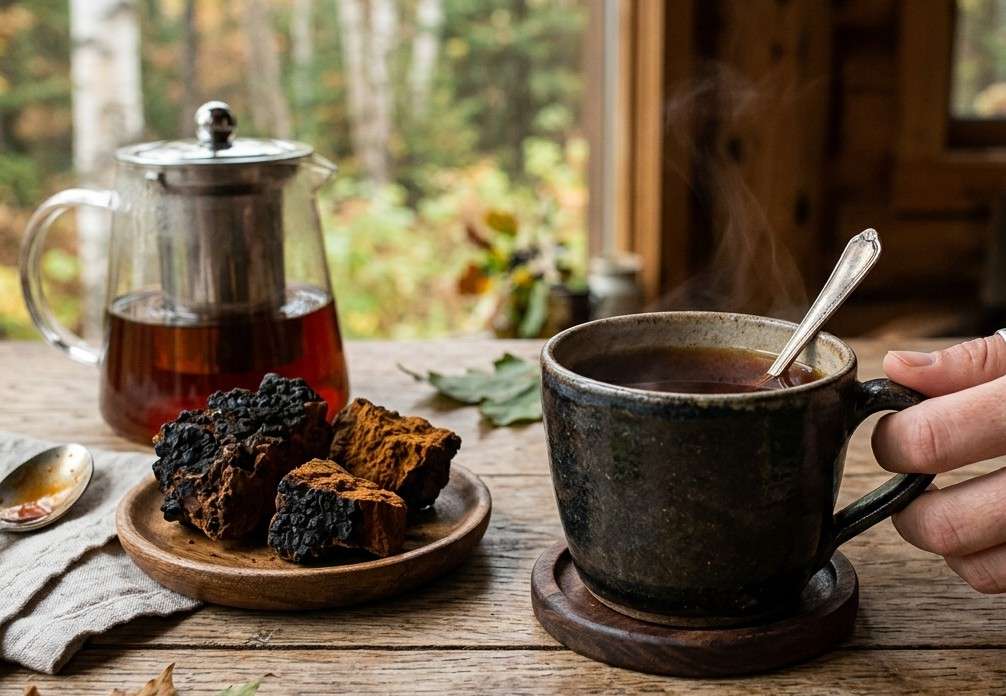
Chaga Tea has become one of the most talked-about herbal beverages in the wellness world. Made from the Chaga mushroom, a dark and woody fungus that grows mainly on birch trees in cold climates, this earthy tea has been used in traditional folk medicine for centuries. People drink Chaga Tea for its antioxidant content, immune-supporting properties, and potential wellness benefits.
Unlike regular tea made from tea leaves, Chaga Tea is brewed from chunks or powder of the Chaga mushroom. It has a mild earthy flavor with hints of vanilla and wood, making it a comforting drink for many tea lovers. Modern research has also explored its bioactive compounds, which may support immunity, reduce oxidative stress, and contribute to overall health.
In this guide, you’ll learn everything about Chaga Tea, including its nutritional value, benefits, side effects, preparation methods, and precautions.
What is Chaga Tea?
Chaga Tea is a herbal beverage prepared by steeping or simmering pieces of the Chaga mushroom in hot water. Chaga, scientifically known as Inonotus obliquus, grows primarily on birch trees in colder regions such as Siberia, Russia, Northern Europe, Canada, and parts of the United States.
The mushroom appears black and charcoal-like on the outside, while the inside is orange-brown. Chaga has been traditionally used in herbal medicine for centuries, especially in Russia and Eastern Europe, where it was consumed to support immunity and vitality.
Chaga Tea contains several natural compounds including antioxidants, polysaccharides, melanin, beta-glucans, and polyphenols. These compounds are believed to contribute to many of its health-supporting effects.
Components of Chaga Tea
The nutritional content of Chaga Mushroom Tea may vary depending on brewing strength and preparation method.
| Nutrient | Approximate Amount per Cup |
|---|---|
| Calories | 5 |
| Carbohydrates | 1 g |
| Fiber | Trace |
| Protein | Trace |
| Fat | 0 g |
| Potassium | Small amount |
| Zinc | Small amount |
| Iron | Small amount |
| Manganese | Small amount |
| Antioxidants | High |
| Polyphenols | Present |
| Beta-Glucans | Present |
| Melanin | Present |
20 Proven Benefits of Chaga Tea
- Rich in Antioxidants: Chaga Mushroom Tea contains powerful antioxidants that help protect cells from oxidative stress and free radical damage.
- Supports Immune Function: Beta-glucans in Chaga Tea may help strengthen the body’s natural immune response.
- May Reduce Inflammation: Natural compounds in Chaga Mushroom Tea may help lower inflammation in the body.
- Supports Healthy Skin: The antioxidants and melanin in Chaga Tea may contribute to healthier-looking skin.
- May Promote Healthy Aging: Chaga Tea’s antioxidant profile may help reduce signs of premature aging.
- Supports Liver Health: Some studies suggest Chaga may help protect liver cells from oxidative damage.
- May Help Balance Blood Sugar: Preliminary research indicates Chaga compounds may support healthy blood sugar levels.
- Supports Heart Health: Chaga Mushroom Tea may help support cardiovascular wellness by reducing oxidative stress.
- May Lower Cholesterol Levels: Certain compounds in Chaga may contribute to healthier cholesterol balance.
- Supports Digestive Health: Chaga Tea may help soothe digestion and support gut health.
- May Enhance Energy Naturally: Many people report feeling more energized after drinking Chaga Tea without caffeine jitters.
- Supports Mental Clarity: Chaga Mushroom Tea may help improve focus and concentration through its adaptogenic properties.
- May Help Fight Oxidative Stress: Polyphenols in Chaga Mushroom Tea help neutralize harmful free radicals.
- Supports Cellular Health: Bioactive compounds in Chaga Mushroom Tea may help maintain healthy cells.
- May Have Antimicrobial Properties: Some studies suggest Chaga extracts may help combat certain harmful microbes.
- Supports Respiratory Wellness: Traditional herbal medicine has used Chaga Tea to support respiratory health.
- May Help Reduce Fatigue: Adaptogenic compounds may help the body cope with physical and mental stress.
- Supports Overall Wellness: Regular moderate consumption may contribute to general health maintenance.
- May Support Healthy Blood Pressure: Chaga’s antioxidant effects may help support normal circulation.
- May Support the Body During Stress: Chaga Mushroom Tea is traditionally consumed to help the body adapt to stress more effectively.
10 Side Effects of Chaga Tea
- May Cause Digestive Upset: Some people may experience nausea, bloating, or stomach discomfort after drinking Chaga Mushroom Tea
- Can Lower Blood Sugar Too Much: Chaga Tea may interact with diabetes medications and reduce blood sugar excessively.
- May Increase Bleeding Risk: Chaga may slow blood clotting and increase bleeding risk in sensitive individuals.
- Possible Kidney Concerns: Chaga contains oxalates, which may contribute to kidney stone formation in high amounts.
- May Trigger Allergic Reactions: Certain individuals may experience allergic symptoms after consuming Chaga Tea.
- Can Interact with Medications: Chaga Tea may interfere with blood thinners and immune-related medications.
- Possible Autoimmune Reactions: Chaga may stimulate the immune system and worsen autoimmune conditions in some people.
- May Cause Dizziness: Excessive consumption could potentially lead to dizziness or weakness.
- Not Ideal During Pregnancy: There is limited research regarding Chaga Mushroom Tea safety during pregnancy and breastfeeding.
- May Affect Blood Pressure: Chaga Mushroom Tea may alter blood pressure levels in some individuals.
How to Make Chaga Tea?
Ingredients:
- 1–2 tablespoons Chaga chunks or Chaga powder
- 3–4 cups water
- Honey, cinnamon, lemon, or ginger (optional)
Method:
- Bring water to a gentle simmer in a pot.
- Add the Chaga chunks or powder.
- Simmer for 20–45 minutes for a stronger brew.
- Strain the tea into a cup.
- Add optional flavorings if desired.
- Serve warm and enjoy.
Cold Brew Method:
You can also soak Chaga chunks in cold water overnight and strain before drinking for a milder flavor.
Other Uses of Chaga Tea
- Smoothie Ingredient: Chaga Mushroom Tea can be blended into smoothies for added antioxidants.
- Soup Base: Some people use Chaga Mushroom Tea as a flavorful base for soups and broths.
- Coffee Alternative: Chaga Mushroom Tea serves as a caffeine-free alternative to coffee.
- Herbal Latte Base: Chaga Tea can be mixed with milk and spices to create herbal lattes.
- Skin Rinse: Cooled Chaga Mushroom Tea is sometimes used as a natural skin rinse.
- Bath Soak Addition: Chaga Mushroom Tea may be added to bathwater for relaxation purposes.
- Cooking Liquid: Chaga Mushroom Tea can replace water in some recipes for an earthy flavor.
- Meditation Drink: Many people drink Chaga Tea during relaxation or meditation routines.
- Wellness Tonics: Chaga Mushroom Tea is commonly added to herbal wellness tonics.
- Iced Herbal Beverage: Chaga Mushroom Tea can be chilled and served as a refreshing iced drink.
How Much Chaga Tea Can You Drink a Day?
Moderation is important when consuming Chaga Tea. Most people drink 1–2 cups daily as part of a balanced routine. Some individuals may tolerate up to 3 cups, but excessive intake is not recommended due to the high oxalate content and possible interactions with medications.
If you are new to Chaga Mushroom Tea, start with a small amount to see how your body responds. People with health conditions or those taking medications should consult a healthcare professional before consuming Chaga Tea regularly.
Tips for Consuming Chaga Tea
- Choose high-quality organic Chaga from trusted sources.
- Avoid consuming extremely concentrated Chaga Mushroom Tea daily.
- Start with small servings if you are new to herbal teas.
- Drink Chaga Tea without excessive sweeteners for best results.
- Store dried Chaga in a cool and dry place.
- Reuse Chaga chunks several times until the water becomes light in color.
- Combine Chaga with ginger or cinnamon for improved flavor.
- Stay hydrated while consuming herbal teas regularly.
- Avoid drinking Chaga Mushroom Tea immediately before surgery.
- Consult a healthcare provider if you have chronic health conditions.
Best Time to Drink Chaga Tea
Morning
Many people enjoy Chaga Tea in the morning as a caffeine-free energy-supporting beverage.
Afternoon
Chaga Mushroom Tea can be consumed in the afternoon to support focus and relaxation without caffeine crashes.
Evening
Because it is naturally caffeine-free, Chaga Mushroom Tea can also be enjoyed in the evening by many individuals.
Before Meditation or Yoga
The calming and grounding nature of Chaga Mushroom Tea makes it popular before mindfulness practices.
Who Should Drink Chaga Tea?
- People Seeking Antioxidants: Individuals wanting antioxidant-rich beverages may benefit from Chaga Tea.
- Those Looking for Caffeine-Free Drinks: Chaga Mushroom Tea is suitable for people avoiding caffeine.
- Adults Interested in Herbal Wellness: Many wellness enthusiasts consume Chaga Mushroom Tea as part of healthy routines.
- People Managing Stress: Adaptogenic compounds may help support stress management.
- Individuals Wanting Immune Support: Chaga Mushroom Tea may help support healthy immune function.
- Those Seeking Natural Energy: Chaga Tea may provide gentle energy support without stimulants.
- People Interested in Traditional Herbal Remedies: Chaga Mushroom Tea has a long history in folk medicine.
- Adults Looking for Warm Comforting Drinks: The earthy taste makes it appealing as a cozy beverage.
- Individuals Exploring Functional Mushrooms: Chaga Mushroom Tea is popular among functional mushroom users.
- People Wanting Variety in Herbal Teas: Chaga Mushroom Tea offers a unique flavor compared to common herbal teas.
Who Should Not Drink Chaga Tea?
- People with Kidney Stones: High oxalate levels may worsen kidney stone risk.
- Individuals Taking Blood Thinners: Chaga Mushroom Tea may increase bleeding risk.
- People with Autoimmune Disorders: Chaga may overstimulate the immune system in certain cases.
- Pregnant Women: Safety during pregnancy has not been well established.
- Breastfeeding Mothers: Limited research exists regarding safety during breastfeeding.
- People with Mushroom Allergies: Allergic reactions may occur in sensitive individuals.
- Individuals with Low Blood Sugar: Chaga Tea may further reduce blood glucose levels.
- People Preparing for Surgery: Chaga Mushroom Tea may interfere with blood clotting.
- Children Without Medical Guidance: Chaga Mushroom Tea should only be given to children under professional advice.
- Individuals Taking Immune Medications: Chaga may interact with immunosuppressive drugs.
Precautions and Interactions
- Blood Thinner Interaction: Chaga Mushroom Tea may increase the effects of anticoagulant medications.
- Diabetes Medication Interaction: Chaga Mushroom Tea may enhance blood sugar-lowering medications.
- Autoimmune Condition Precaution: Chaga may stimulate immune activity in autoimmune disorders.
- Kidney Health Precaution: Excessive Chaga intake may increase oxalate accumulation.
- Surgery Precaution: Stop consuming Chaga Mushroom Tea at least two weeks before surgery.
- Allergy Precaution: Avoid Chaga Tea if you are allergic to mushrooms.
- Medication Consultation Needed: Speak with a healthcare provider before combining Chaga Mushroom Tea with prescription medications.
- Pregnancy Precaution: Avoid excessive use during pregnancy due to limited safety data.
- Breastfeeding Precaution: Use cautiously while breastfeeding unless approved by a healthcare professional.
- Moderation is Important: Drinking excessive amounts of Chaga Tea may increase the risk of side effects.
Conclusion
Chaga Tea is a unique herbal beverage known for its earthy flavor and impressive antioxidant profile. Traditionally used for centuries, it continues to gain popularity among people seeking natural wellness support. From supporting immunity and reducing oxidative stress to providing a caffeine-free alternative to coffee, Chaga Mushroom Tea offers many potential benefits when consumed in moderation.
However, like all herbal products, Chaga Mushroom Tea is not suitable for everyone. People with kidney issues, autoimmune conditions, or those taking certain medications should use caution and seek professional advice before regular use.
FAQ’s
What does Chaga Tea taste like?
Chaga Mushroom Tea has a mild earthy flavor with woody, slightly vanilla-like notes and very little bitterness.
Is Chaga Tea caffeinated?
No, Chaga Mushroom Tea is naturally caffeine-free, making it suitable for people avoiding caffeine.
Can I drink Chaga Tea every day?
Yes, many people drink 1–2 cups daily in moderation as part of a balanced lifestyle.
How long does it take for Chaga Tea to work?
Some people notice calming or energizing effects within a few days, while long-term wellness benefits may take several weeks of regular use.
Is Chaga Tea good for immunity?
Chaga Mushroom Tea contains antioxidants and beta-glucans that may help support healthy immune function.
Can Chaga Tea help with inflammation?
Research suggests Chaga contains compounds that may help reduce inflammation in the body.
Does Chaga Tea help with weight loss?
Chaga Mushroom Tea is low in calories and may support healthy wellness habits, but it is not a direct weight-loss solution.
Can diabetics drink Chaga Tea?
People with diabetes should consult a healthcare professional because Chaga Mushroom Tea may affect blood sugar levels.
Is Chaga Tea safe during pregnancy?
There is limited research on Chaga Mushroom Tea during pregnancy, so it is best to avoid it unless approved by a doctor.
Does Chaga Tea contain antioxidants?
Yes, Chaga Mushroom Tea is rich in antioxidants, including polyphenols and melanin.
Can Chaga Tea replace coffee?
Many people use Chaga Mushroom Tea as a caffeine-free alternative to coffee because of its rich and earthy flavor.
How should Chaga Tea be stored?
Store dried Chaga chunks or powder in an airtight container in a cool, dry place away from moisture.
Can I reuse Chaga chunks?
Yes, Chaga chunks can often be reused several times until the tea becomes lighter in color.
Is Chaga Tea good for skin health?
Its antioxidants may help support healthy skin and protect against oxidative stress.
Can children drink Chaga Tea?
Children should only consume Chaga Mushroom Tea under medical guidance due to limited safety research.
Does Chaga Tea help with stress?
Chaga Mushroom Tea is considered an adaptogenic beverage that may help the body manage stress more effectively.
What is Chaga Tea good for?
Chaga Mushroom Tea is commonly consumed for antioxidant support, immune wellness, stress management, and overall health support.
Is chaga tea better than green tea?
Chaga Mushroom Tea is caffeine-free and rich in antioxidants, while green tea provides natural caffeine and metabolism support. The better choice depends on your health goals and preferences.
Also Read: