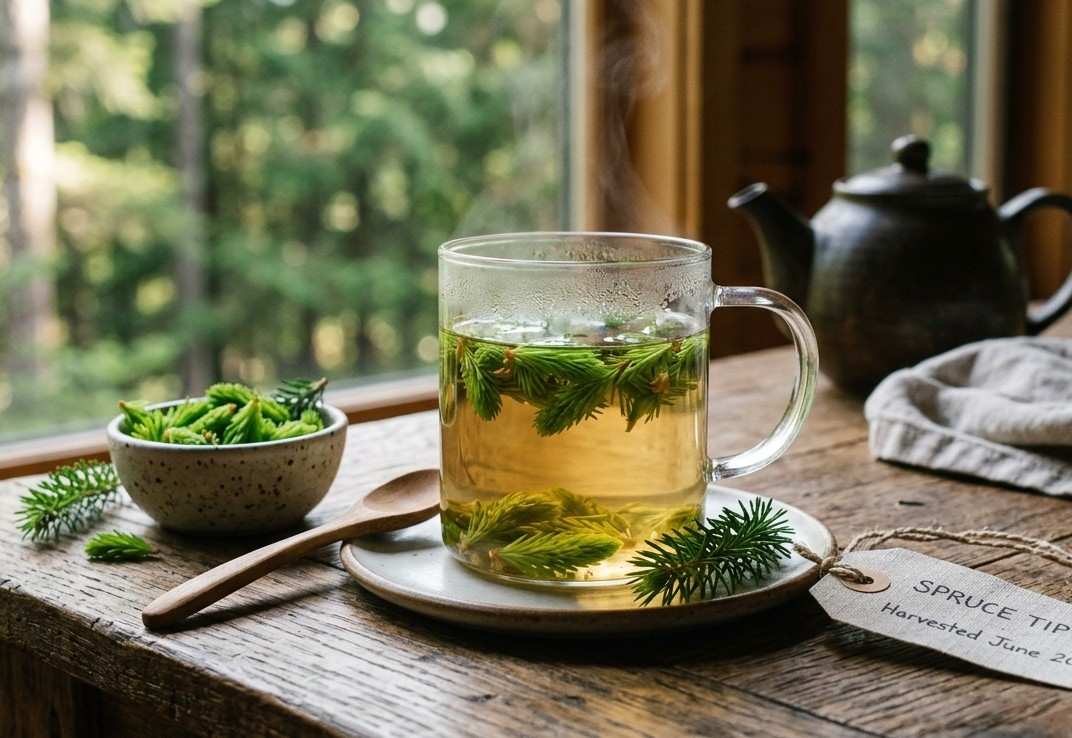
Spruce Tip Tea is a refreshing herbal drink made from the young, bright green tips of spruce trees. Traditionally used in northern regions and Indigenous cultures, this earthy and citrusy tea has gained popularity for its unique flavor and potential wellness benefits. Rich in antioxidants, vitamin C, and aromatic plant compounds, Spruce Tip Tea is often enjoyed for immune support, relaxation, and respiratory comfort.
This guide explores everything you need to know about Spruce Tip Tea, including its nutritional value, science-backed health benefits, side effects, preparation methods, and safety tips.
What is Spruce Tip Tea?
Spruce Tip Tea is an herbal infusion prepared from the tender new growth tips of spruce trees, especially during spring. These soft green tips contain natural oils, antioxidants, and nutrients that give the tea its pine-like aroma and slightly citrusy taste.
The tea has been traditionally consumed in parts of North America and Northern Europe to help combat fatigue, support respiratory health, and provide vitamin C during colder months. Unlike standard teas made from the Camellia sinensis plant, Spruce Tip Tea is naturally caffeine-free.
Common spruce species used for tea include:
- White spruce
- Black spruce
- Norway spruce
- Blue spruce
Spruce tips are usually harvested fresh and steeped in hot water to create a fragrant herbal beverage.
Components of Spruce Tip Tea
| Nutrient | Approximate Amount per Cup |
|---|---|
| Calories | 2–5 |
| Carbohydrates | Less than 1 g |
| Sugar | 0 g |
| Protein | 0 g |
| Fat | 0 g |
| Vitamin C | Moderate to High |
| Antioxidants | Present |
| Essential Oils | Small amounts |
| Polyphenols | Present |
| Potassium | Trace amounts |
| Magnesium | Trace amounts |
| Iron | Trace amounts |
| Caffeine | 0 mg |
Note: Nutritional values may vary depending on the spruce species, harvesting method, and brewing strength.
20 Proven Benefits of Spruce Tip Tea
- Rich in Vitamin C: Spruce Tip Tea contains natural vitamin C that may help strengthen the immune system and protect against oxidative stress.
- Supports Immune Health: The antioxidants and plant compounds in spruce tips may help the body fight infections more effectively.
- Provides Antioxidant Protection: Polyphenols and flavonoids in the tea may help reduce damage caused by free radicals.
- May Ease Respiratory Congestion: Traditional use suggests the aromatic oils in spruce tips may help open airways and soothe breathing discomfort.
- Helps Soothe Sore Throat: Warm Spruce Tip Tea may calm throat irritation and dryness.
- Supports Digestive Comfort: The tea may help reduce mild bloating and support healthy digestion.
- Naturally Caffeine-Free: Spruce Tip Tea offers hydration and relaxation without the stimulating effects of caffeine.
- May Reduce Inflammation: Plant antioxidants may help lower inflammation levels in the body.
- Supports Hydration: Drinking herbal tea contributes to daily fluid intake and hydration.
- May Help Relieve Stress: The fresh pine aroma may promote relaxation and mental calmness.
- Supports Skin Health: Antioxidants and vitamin C may assist collagen production and skin repair.
- May Help Fight Seasonal Fatigue: Traditional use suggests the tea may help improve energy during seasonal changes.
- Contains Antimicrobial Compounds: Certain spruce oils may possess mild antimicrobial properties.
- Supports Lung Health: Herbal infusions from conifer tips have historically been used to support respiratory wellness.
- May Improve Circulation: Some plant compounds may help promote healthy blood flow.
- Can Warm the Body Naturally: The warming nature of herbal tea may provide comfort in cold weather.
- May Help Detoxification: Antioxidants and hydration may support the body’s natural detox processes.
- Supports Oral Health: The natural antimicrobial properties may help maintain fresher breath.
- May Help with Mild Headaches: Relaxing herbal teas can sometimes help reduce tension-related discomfort.
- Provides a Refreshing Herbal Flavor: The citrusy and forest-like taste offers a natural alternative to sugary drinks.
10 Side Effects of Spruce Tip Tea
- May Cause Allergic Reactions: Some individuals sensitive to pine or conifer plants may experience allergies after drinking the tea.
- Can Trigger Stomach Upset: Excessive consumption may lead to nausea or digestive discomfort.
- May Cause Skin Irritation: Handling fresh spruce tips may irritate sensitive skin in some people.
- Risk of Misidentification: Incorrectly identifying tree species may expose individuals to toxic plants.
- May Interact with Medications: Certain herbal compounds could potentially affect medication absorption or effectiveness.
- Can Cause Dizziness in Excess: Drinking very concentrated tea may occasionally lead to mild dizziness.
- May Affect Pregnancy Safety: Some evergreen species are not considered safe during pregnancy without medical advice.
- Potential Kidney Irritation: Overconsumption of strong herbal infusions may stress sensitive kidneys.
- Can Lead to Overconsumption of Essential Oils: Highly concentrated spruce preparations may irritate the digestive tract.
- May Cause Breathing Irritation: Strong aromas may irritate individuals with severe respiratory sensitivity.
How to Make Spruce Tip Tea
Ingredients:
- 1 cup fresh spruce tips
- 2–3 cups water
- Honey or lemon (optional)
Instructions:
- Rinse the fresh spruce tips thoroughly with clean water.
- Bring water to a gentle boil in a saucepan.
- Add the spruce tips to the hot water.
- Reduce heat and simmer for 5–10 minutes.
- Remove from heat and let the tea steep for another 5 minutes.
- Strain the tea into a cup.
- Add honey or lemon if desired and serve warm.
Cold Brew Method:
You can also soak fresh spruce tips in cold water overnight in the refrigerator for a lighter and milder flavor.
Other Uses of Spruce Tip Tea
- Natural Steam Inhalation: The aromatic vapors may help clear nasal passages during congestion.
- Soup Flavoring: Spruce tea can be used as a flavorful base for soups and broths.
- Homemade Herbal Syrup: Concentrated spruce tea can be mixed with honey to create herbal syrup.
- Cooking Ingredient: The tea may add forest-like flavor to marinades and sauces.
- Bath Soak Addition: Spruce-infused water can be added to baths for a refreshing experience.
- Natural Room Aroma: Warm spruce tea may release a calming woodland scent indoors.
- Hair Rinse: Some people use cooled spruce tea as a refreshing scalp rinse.
- Compost Enrichment: Used spruce tips can be composted to reduce kitchen waste.
- Herbal Ice Cubes: Frozen spruce tea cubes can flavor drinks naturally.
- Seasonal Wellness Drink: The tea is commonly enjoyed during winter and spring wellness routines.
How Much Spruce Tip Tea Can You Drink a Day?
Most healthy adults can safely drink 1–3 cups of Spruce Tip Tea daily in moderate amounts. Beginners should start with one cup to monitor how their body responds.
Drinking excessive quantities may increase the risk of digestive discomfort or irritation from natural plant oils. Concentrated preparations should be consumed cautiously.
Children, pregnant women, breastfeeding mothers, and individuals with medical conditions should consult a healthcare professional before regular use.
Tips for Consuming Spruce Tip Tea
- Use Young Spruce Tips: Fresh light-green spring tips usually provide the best flavor and nutritional value.
- Avoid Over-Boiling: Gentle simmering helps preserve delicate nutrients and aromatic compounds.
- Harvest Safely: Only collect spruce tips from correctly identified non-toxic trees.
- Drink Freshly Brewed Tea: Fresh tea generally tastes better and retains more nutrients.
- Pair with Honey and Lemon: Natural sweeteners and citrus may improve flavor and soothe the throat.
- Start with Small Amounts: Beginners should monitor for allergies or sensitivities.
- Store Properly: Refrigerate leftover tea and consume within 1–2 days.
- Avoid Polluted Areas: Do not harvest spruce tips near roadsides or chemically treated areas.
- Use Filtered Water: Good-quality water can improve the taste of herbal tea.
- Rotate Herbal Teas: Variety in herbal beverages may help reduce the risk of overconsumption of specific compounds.
Best Time to Drink Spruce Tip Tea
Morning
Drinking Spruce Tip Tea in the morning may help refresh the body and support hydration without caffeine.
During Cold Weather
The warming properties of the tea make it ideal during winter or rainy seasons.
When Experiencing Congestion
Warm herbal steam and aromatic compounds may help soothe breathing discomfort.
Evening Relaxation
Because it is caffeine-free, the tea may be enjoyed in the evening as a calming beverage.
After Meals
Light herbal teas may help support digestion after eating.
Who Should Drink Spruce Tip Tea?
- People Seeking Caffeine-Free Drinks: Spruce Tip Tea offers a natural herbal alternative without caffeine.
- Individuals Wanting Immune Support: The vitamin C content may help support immune wellness.
- People with Mild Seasonal Congestion: Traditional use suggests it may provide respiratory comfort.
- Outdoor and Nature Enthusiasts: The tea provides a refreshing forest-inspired flavor experience.
- Individuals Looking for Herbal Variety: Spruce tea can diversify herbal beverage choices.
- People Interested in Traditional Remedies: The tea has historical use in folk wellness practices.
- Those Seeking Warm Winter Drinks: The warming flavor makes it comforting during colder months.
- People Wanting Low-Calorie Beverages: The tea contains minimal calories and sugar.
- Individuals Seeking Relaxation: The aroma may help encourage calmness and relaxation.
- People Interested in Wildcrafted Foods: Spruce tips are commonly used in foraging traditions.
Who Should Not Drink Spruce Tip Tea?
- People Allergic to Conifers: Individuals sensitive to evergreen trees should avoid the tea.
- Pregnant Women Without Medical Advice: Some evergreen herbs may not be suitable during pregnancy.
- Breastfeeding Mothers with Concerns: Professional guidance is recommended before regular use.
- Young Children in Large Amounts: Children may be more sensitive to concentrated herbal infusions.
- Individuals with Severe Kidney Disorders: Excessive herbal intake may stress compromised kidneys.
- People Taking Certain Medications: Herbal compounds could potentially interact with medications.
- Individuals with Sensitive Stomachs: Strong tea may worsen digestive irritation in some people.
- People Unsure About Tree Identification: Consuming incorrectly identified plants can be dangerous.
- Individuals with Respiratory Sensitivity: Strong aromas may irritate certain respiratory conditions.
- People Avoiding Essential Oils: Spruce contains natural aromatic compounds that may not suit everyone.
Precautions and Interactions
- Consult a Healthcare Professional: Speak with a doctor before regular use if you have chronic medical conditions.
- Avoid Toxic Tree Species: Proper identification is essential when harvesting wild spruce tips.
- Monitor for Allergic Reactions: Stop use immediately if itching, swelling, or breathing issues occur.
- Use Moderate Amounts: Excessive consumption may increase side effect risks.
- Be Careful During Pregnancy: Safety data on heavy consumption during pregnancy is limited.
- Check Medication Interactions: Herbal teas may affect certain medications or supplements.
- Avoid Highly Concentrated Preparations: Strong infusions may irritate the stomach or kidneys.
- Harvest from Clean Environments: Avoid collecting tips from polluted or chemically treated areas.
- Store Fresh Tips Correctly: Refrigerate unused tips to maintain freshness and reduce spoilage.
- Do Not Replace Medical Treatment: Spruce Tip Tea should complement, not replace, professional healthcare.
Conclusion
Spruce Tip Tea is a flavorful and aromatic herbal drink with a long history of traditional use. Packed with antioxidants, vitamin C, and refreshing plant compounds, it may support immune health, respiratory comfort, hydration, and relaxation. Its earthy citrus flavor and caffeine-free nature make it an appealing choice for herbal tea lovers.
Like any herbal remedy, moderation and proper identification are important. When consumed responsibly, Spruce Tip Tea can be a refreshing addition to a balanced lifestyle and wellness routine.
FAQ’s
What does Spruce Tip Tea taste like?
Spruce Tip Tea has a fresh, pine-like flavor with mild citrusy and earthy notes that many people find refreshing.
Is Spruce Tip Tea caffeine-free?
Yes, Spruce Tip Tea is naturally caffeine-free, making it suitable for both daytime and evening consumption.
Can you drink Spruce Tip Tea every day?
Most healthy adults can safely enjoy 1–3 cups daily in moderation unless advised otherwise by a healthcare professional.
What is Spruce Tip Tea good for?
Spruce Tip Tea may support immune health, hydration, relaxation, respiratory comfort, and antioxidant protection.
Does Spruce Tip Tea contain vitamin C?
Yes, young spruce tips naturally contain vitamin C, especially when freshly harvested.
Can Spruce Tip Tea help with colds?
Traditionally, Spruce Tip Tea has been used to soothe sore throats, support breathing comfort, and provide warmth during colds.
Can you drink Spruce Tip Tea cold?
Yes, Spruce Tip Tea can be enjoyed both hot and cold depending on personal preference.
Is Spruce Tip Tea safe during pregnancy?
Pregnant women should consult a healthcare professional before drinking Spruce Tip Tea regularly.
How long should you steep Spruce Tip Tea?
Spruce tips are commonly steeped for about 5–10 minutes for balanced flavor and aroma.
Can children drink Spruce Tip Tea?
Small amounts may be acceptable for older children, but concentrated herbal teas should only be given with medical guidance.
How do you sweeten Spruce Tip Tea?
Honey, maple syrup, or lemon are commonly added to improve flavor naturally.
Can Spruce Tip Tea help with digestion?
Some people use the tea to support digestion and reduce mild bloating after meals.
What color is Spruce Tip Tea?
The tea usually has a pale green, golden, or light amber appearance depending on brewing strength.
How should Spruce Tip Tea be stored?
Prepared tea should be refrigerated and consumed within 1–2 days for the best freshness.
Can you use dried spruce tips for tea?
Yes, dried spruce tips can also be used, though fresh tips often provide a brighter flavor.
Is Spruce Tip Tea good for winter?
Yes, its warming aroma and traditional respiratory uses make it especially popular during colder seasons.
Are all spruce trees safe for tea?
Not all evergreen trees are safe, so proper identification of edible spruce species is very important.
Can Spruce Tip Tea help with stress?
The calming aroma and warm nature of the tea may help promote relaxation and comfort.
Does Spruce Tip Tea contain antioxidants?
Yes, spruce tips contain antioxidants and beneficial plant compounds that may support overall wellness.
Also Read: