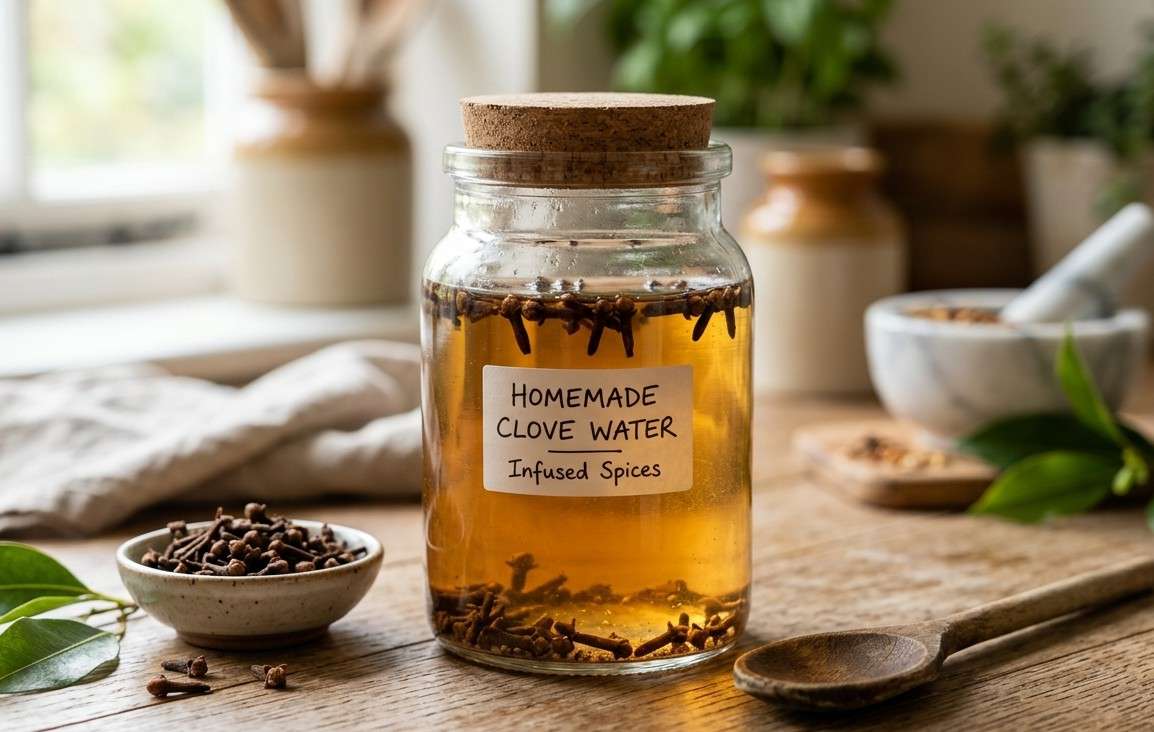
Clove water is one of those simple traditional remedies that has quietly stood the test of time. From ancient Ayurvedic practices to modern wellness routines, cloves have long been valued for their powerful medicinal properties. When infused in water, these tiny dried flower buds release a wealth of bioactive compounds that can support digestion, immunity, oral health, and more.
In this guide, we will explore everything you need to know about clove water—its nutrition profile, science-backed health benefits, possible side effects, preparation methods, and who should or should not drink it.
What is Clove Water?
Clove water is a herbal infusion made by soaking or boiling dried cloves (Syzygium aromaticum) in water. Cloves are aromatic flower buds harvested from the clove tree and widely used as a spice in Indian, Asian, and Middle Eastern cuisines.
When cloves are steeped in water, they release their essential oils—especially eugenol—along with antioxidants, vitamins, and minerals. The result is a warm, slightly spicy, and mildly sweet herbal drink known for its therapeutic properties. Clove water can be consumed hot or at room temperature and is often taken on an empty stomach in the morning for maximum benefits.
Nutrition Facts of Clove Water
While clove water is not calorie-dense, it contains trace amounts of nutrients extracted from cloves during infusion. Below is an approximate nutritional breakdown per 1 cup (240 ml) of clove-infused water (made with 3–4 cloves):
| Nutrient | Approximate Amount |
|---|---|
| Calories | 3–5 kcal |
| Carbohydrates | 0.5–1 g |
| Fiber | Trace |
| Vitamin C | Small amount |
| Vitamin K | Trace |
| Calcium | 5–10 mg |
| Potassium | 10–15 mg |
| Magnesium | Trace |
| Manganese | Small amount |
| Antioxidants (Eugenol) | Significant |
| Polyphenols | Present |
The most important compound in clove-infused water is eugenol, a potent antioxidant and anti-inflammatory compound responsible for many of its health benefits.
20 Proven Benefits of Clove Water
- Rich in Antioxidants – Clove-infused water contains high levels of eugenol and polyphenols that help neutralize harmful free radicals in the body.
- Boosts Immunity – Its antimicrobial and antioxidant properties strengthen the immune system and help the body fight infections.
- Improves Digestion – Clove water stimulates digestive enzymes, reducing bloating, gas, and indigestion.
- Relieves Acidity – The natural compounds in cloves help balance stomach acids and soothe irritation.
- Supports Liver Health – Eugenol may protect liver cells from oxidative stress and inflammation.
- Promotes Oral Health – Its antibacterial properties help reduce bad breath, gum inflammation, and harmful oral bacteria.
- Reduces Toothache Pain – Clove’s natural analgesic effect can temporarily relieve dental discomfort.
- Balances Blood Sugar – Some studies suggest cloves may improve insulin sensitivity and help regulate blood glucose levels.
- Supports Weight Management – Clove water may boost metabolism and reduce unhealthy cravings.
- Improves Respiratory Health – Its anti-inflammatory properties may help relieve cough, congestion, and throat irritation.
- Reduces Inflammation – Eugenol acts as a natural anti-inflammatory agent that may ease joint pain.
- Enhances Skin Health – The antioxidants in clove-infused water may help reduce acne and promote clearer skin.
- Improves Blood Circulation – Clove compounds may stimulate circulation and support cardiovascular health.
- Supports Bone Health – Trace minerals like manganese contribute to bone strength.
- May Reduce Ulcer Risk – Clove extracts may increase mucus production in the stomach, protecting against ulcers.
- Improves Gut Microbiome – Antimicrobial compounds may help balance harmful gut bacteria.
- Supports Detoxification – Clove water may assist the body’s natural detox pathways, especially the liver.
- Helps Relieve Menstrual Discomfort – Its anti-inflammatory properties may reduce cramps and discomfort.
- Promotes Healthy Hair – Nutrients and antioxidants may support scalp health when consumed regularly.
- May Lower Oxidative Stress – Regular intake may reduce cellular damage linked to aging and chronic diseases.
10 Side Effects of Clove Water
While clove water is generally safe in moderation, excessive consumption may lead to side effects.
- Stomach Irritation – Overconsumption may cause burning sensation or gastric discomfort.
- Low Blood Sugar Risk – It may lower blood glucose excessively in people on diabetes medications.
- Blood Thinning Effect – Cloves may slow blood clotting and increase bleeding risk.
- Allergic Reactions – Some individuals may experience itching, swelling, or rashes.
- Liver Toxicity (Excess Use) – Very high amounts of eugenol may harm the liver.
- Mouth Irritation – Concentrated clove water may irritate oral tissues.
- Nausea – Drinking very strong clove infusion may trigger nausea.
- Drug Interactions – It may interact with anticoagulants and certain medications.
- Heartburn – In sensitive individuals, it may worsen acid reflux.
- Not Safe for Infants – Clove-based remedies are not recommended for babies.
How to Make Clove Water?
There are two easy methods to prepare clove water at home.
Method 1: Soaking Method (Overnight)
Ingredients:
- 3–4 whole cloves
- 1 cup water
Steps:
- Add cloves to a glass of water.
- Cover and leave overnight.
- Strain and drink in the morning on an empty stomach.
Method 2: Boiling Method
Ingredients:
- 4–5 cloves
- 1.5 cups water
Steps:
- Bring water to a boil.
- Add cloves and simmer for 5–7 minutes.
- Turn off heat and let it steep for 5 minutes.
- Strain and drink warm.
Avoid making it too concentrated.
Tips for Consuming Clove Water
- Start with a mild infusion (3 cloves per cup).
- Drink on an empty stomach for digestive benefits.
- Avoid adding too much sugar.
- Honey or lemon can be added in small amounts.
- Do not exceed recommended daily intake.
- Take breaks after 2–3 weeks of continuous use.
Other Uses of Clove Water
Clove water is not just for drinking. It can also be used externally.
- Natural mouth rinse
- Skin toner (diluted)
- Hair rinse for scalp health
- Steam inhalation for congestion
- Natural kitchen deodorizer
How Much Clove Water Can You Drink in a Day?
For most healthy adults:
- 1 cup (200–250 ml) per day is sufficient.
- Maximum safe limit: 1–2 cups daily.
- Avoid strong concentrations.
Moderation is key. Excess intake may increase side effects.
Best Time to Drink Clove Water
- Morning on empty stomach for digestion and metabolism support.
- After meals for bloating relief.
- During cold or cough episodes.
Avoid drinking right before bed if it causes acidity.
Who Should Drink Clove Water?
- People with mild digestive issues
- Individuals with low immunity
- Those looking for natural detox support
- Adults managing mild blood sugar concerns
- People prone to bloating
Who Should Avoid Clove Water?
- Pregnant or breastfeeding women (consult doctor first)
- People on blood thinners
- Individuals with bleeding disorders
- Children under 5 years
- Those with liver disease
- People with severe acid reflux
How to Store Clove Water?
- Store in a glass container.
- Keep refrigerated.
- Use within 24 hours for best potency.
- Reheat gently if needed.
- Avoid plastic storage for long periods.
Fresh preparation is always better.
Precautions and Interactions
- Consult a doctor if taking anticoagulants or diabetes medications.
- Stop use 2 weeks before surgery due to bleeding risk.
- Do not consume highly concentrated clove extract daily.
- Perform allergy test if using topically.
- Avoid combining with other strong herbal remedies without guidance.
Final Thoughts
Clove water is a simple yet powerful herbal drink that offers numerous health benefits when consumed responsibly. Its antioxidant, anti-inflammatory, and antimicrobial properties make it a valuable addition to a balanced lifestyle.
However, like any natural remedy, it should be used mindfully and in moderation. Listening to your body and consulting a healthcare professional when necessary ensures you reap the benefits without unwanted side effects.
FAQ’s
What does Clove Water smell like?
It has a warm, spicy, slightly sweet aroma with a strong earthy scent.
What is Clove Water good for?
Clove-infused water is commonly used to support digestion, boost immunity, freshen breath, reduce bloating, ease mild cough and throat irritation, and provide antioxidant protection that supports overall health.
What does clove water taste like?
Clove-infused water has a warm, slightly spicy, mildly sweet, and aromatic taste with a strong herbal aftertaste due to eugenol.
Can I drink clove water every day?
Yes, most healthy adults can drink 1 cup daily in moderation, but it’s best to take occasional breaks after 2–3 weeks of continuous use.
Is clove water good for weight loss?
Clove-infused water may support metabolism and digestion, which can indirectly help weight management when combined with a healthy diet and exercise.
Can clove water help with bloating?
Yes, Clove-infused water stimulates digestive enzymes and may reduce gas, bloating, and indigestion.
Does clove water help with cough and cold?
Its antimicrobial and anti-inflammatory properties may soothe throat irritation and support respiratory health during mild cough or cold.
Can clove water improve skin health?
The antioxidants in clove-infused water may help reduce oxidative stress and support clearer, healthier-looking skin.
Is clove water safe during pregnancy?
Pregnant women should consult a healthcare professional before consuming clove-infused water regularly, as high amounts may not be recommended.
Can clove water lower blood sugar?
Clove compounds may help regulate blood sugar levels, but individuals on diabetes medication should monitor levels closely and consult a doctor.
How long does it take for clove water to show results?
Digestive benefits may be noticed within a few days, while other benefits like improved immunity or skin health may take several weeks of consistent use.
Can I drink clove water at night?
Yes, but if you are prone to acidity or heartburn, it may be better to consume it earlier in the day.
Can children drink clove water?
Clove-infused water is not recommended for young children unless advised by a pediatrician.
Is it better to boil cloves or soak them overnight?
Both methods are effective; boiling extracts more active compounds quickly, while soaking produces a milder infusion.
Can I add honey or lemon to clove water?
Yes, small amounts of honey or lemon can enhance taste and add extra benefits.
Does clove water detox the body?
Clove-infused water may support natural detox pathways, particularly liver function, but it does not replace medical detox treatments.
Should clove water be consumed hot or cold?
It can be consumed either way, but warm clove-infused water may be more soothing for digestion and throat comfort.
Can clove water help with bad breath?
Yes, its antibacterial properties may help reduce odor-causing bacteria in the mouth.
Can I reuse cloves for a second batch?
You can reuse them once for a milder infusion, but the potency will be reduced.
Is clove water better on an empty stomach?
Many people prefer drinking it on an empty stomach for digestive and metabolic benefits, though it can also be consumed after meals.
Also Read: